Sign in or register
for additional privileges

Birth of An Industry: Blackface Minstrelsy and the Rise of American Animation

Nicholas Sammond, Author
Space, page 19 of 36


You appear to be using an older verion of Internet Explorer. For the best experience please upgrade your IE version or switch to a another web browser.

Space, Page 172

The Paramount Publix Opinion pairs a review of the short Si, Si, Senor with the Fleischer Talkartoon Swing You Sinners! (1930), which trades on minstrel stereotypes. 
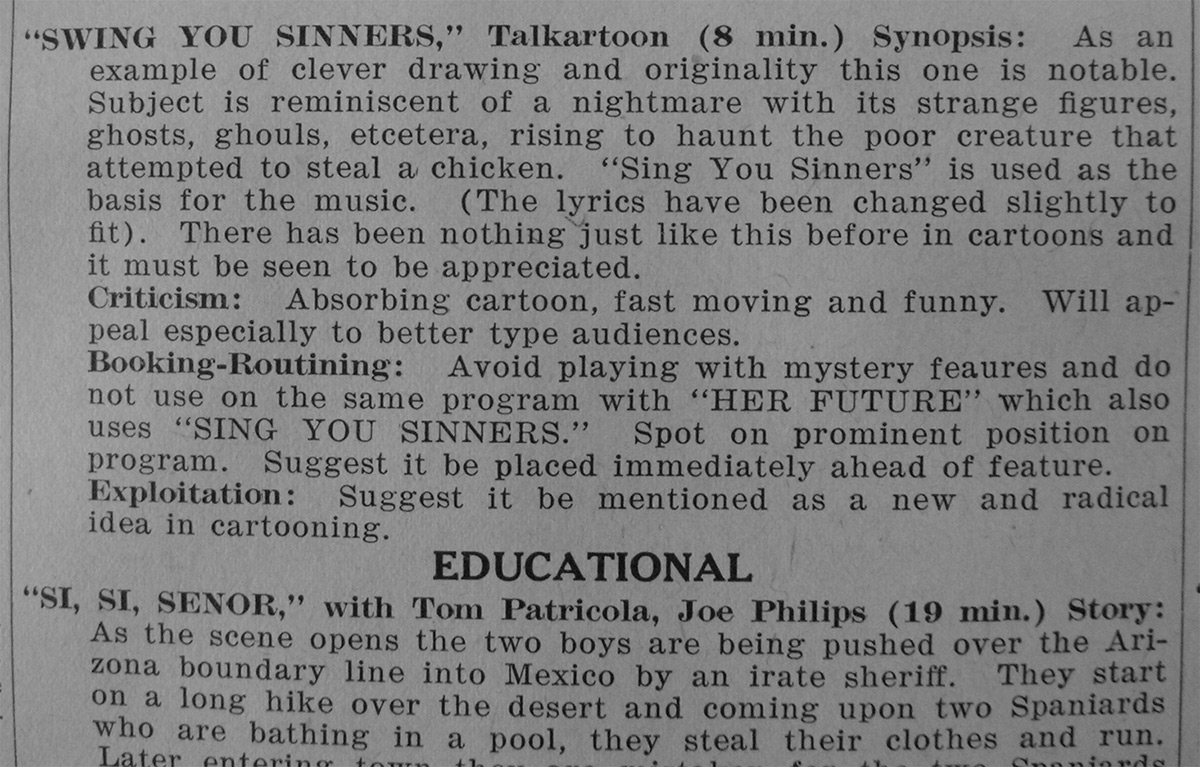
The reviewer suggests how to fit the cartoon in film programs and describes the it as "a new and radical idea in cartooning." The short features an early version of the minstrel figure Bimbo and opens with him attempting to steal a chicken, pursued by the police and ending up in a graveyard of animated tombstones who warn him to change his no-account ways. The song is a parody of the popular tune "Sing You Sinners" and is one of many instances in which the Fleischers celebrated popular culture while reinscribing racial stereotypes.
Comment on this page
 

Discussion of "Space, Page 172"

Add your voice to this discussion.

Checking your signed in status ...

Previous page on path Space, page 19 of 36 Next page on path

Related:  Performance, Page 72Labor, Page 109Introduction, Page 30Race, Page 225Space, Page 177Race, Page 247Race, Page 261Introduction, Page 21Space, Page 152Space, Page 146Space, Page 141Space, Page 178Introduction, Page 14Introduction, Page 20Space, Page 194Performance, Page 82Race, Page 230Race, Page 221Race, Page 253Space, Page 156Conclusion, Page 304Labor, Page 119Space, Page 148Space, Page 193Race, Page 206Race, Page 252Race, Page 254Race, Page 204Space, Page 182Introduction, Page 29Performance, Page 52Performance, Page 34Labor, Page 98Race, Page 239Conclusion, Page 286Introduction, Page 9Space, Page 170Performance, Page 50Performance, Page 77Space, Page 162Conclusion, Page 296Space, Page 190Performance, Page 47introduction-page-22Conclusion, Page 273Race, Page 229Race, Page 251Introduction, Page 2Conclusion, Page 272Introduction, Page 4Space, Page 175Performance, Page 78Space, Page 163Space, Page 159Labor, Page 112Space, Page 155Conclusion, Page 284Race, Page 231Race, Page 232Conclusion, Page 289Performance, Page 54Performance, Page 45Introduction, Page 6Race, Page 248Introduction, Page 26Conclusion, Page 298Labor, Page 113Space, Page 150Performance, Page 74Labor, Page 123Space, Page 138Race, Page 219Performance, Page 43Labor, Page 110Introduction, Page 23Labor, Page 96Space, Page 188Labor, Page 132Race, Page 235Race, Page 224Labor, Page 129Space, Page 187Conclusion, Page 302Labor, Page 133Performance, Page 35Space, Page 184Performance, Page 42Space, Page 181Race, Page 258Labor, Page 122Space, Page 143Labor, Page 131Conclusion, Page 300Conclusion, Page 274Conclusion, Page 290Labor, Page 102Performance, Page 84Labor, Page 88Space, Page 191Space, Page 171Space, Page 165Space, Page 197Labor, Page 128Space, Page 137Labor, Page 101Labor, Page 93Space, Page 189Space, Page 192Conclusion, Page 291Introduction, Page 18Introduction, Page 1Performance, Page 44Labor, Page 126Performance, Page 41Performance, Page 46Race, Page 257Introduction, Page 12Performance, Page 62Performance, Page 67Race, Page 220Race, Page 213Conclusion, Page 278Race, Page 245Space, Page 183Conclusion, Page 292Performance, Page 56Conclusion, Page 303Labor, Page 97Conclusion, Page 275Performance, Page 70Space, Page 195Performance, Page 60Performance, Page 40Space, Page 169Performance, Page 80Conclusion, Page 268