Sign in or register
for additional privileges

Birth of An Industry: Blackface Minstrelsy and the Rise of American Animation

Nicholas Sammond, Author

You appear to be using an older verion of Internet Explorer. For the best experience please upgrade your IE version or switch to a another web browser.

Introduction, Page 14

A central conceit of early minstrelsy was that its ostensibly white performers had traveled to plantations and witnessed the authentic songs, dances and wordplay of African American slaves. This fantasy treated the slave as a natural commodity, an object and owner of nothing, not even her own thoughts and gestures. 

In the 1800s, this minstrel as happy trickster was embodied by Jim Crow, later by Tambo and Bones. In the twentieth century there are echoes of the minstrel in characters such as Lincoln Perry's Stepin Fetchit and Redd Foxx's Fred Sanford from Sanford and Sons. 

Even as late as 1953, in John Ford's The Sun Shines Bright, Perry performs his controversial Fetchit persona, falling asleep and snoring loudly in the courtroom. He speaks with heavy-lidded eyes and droopy lips, and excitedly joins in with the banjo player to sing and dance to the minstrel tune "Dixieland". 

Perry's character is also parodied in the 1935 Disney Silly Symphony short Broken Toys. In this uplifting Depression-era short, a group of discarded toys bands together to repair each other, then marches off to give themselves to orphans. While most of the toys make valuable contributions to the repair effort, the Stepin Fetchit doll has a hard time staying awake; African Americans had a harder time embodying racialized ideals of New Deal uplift.

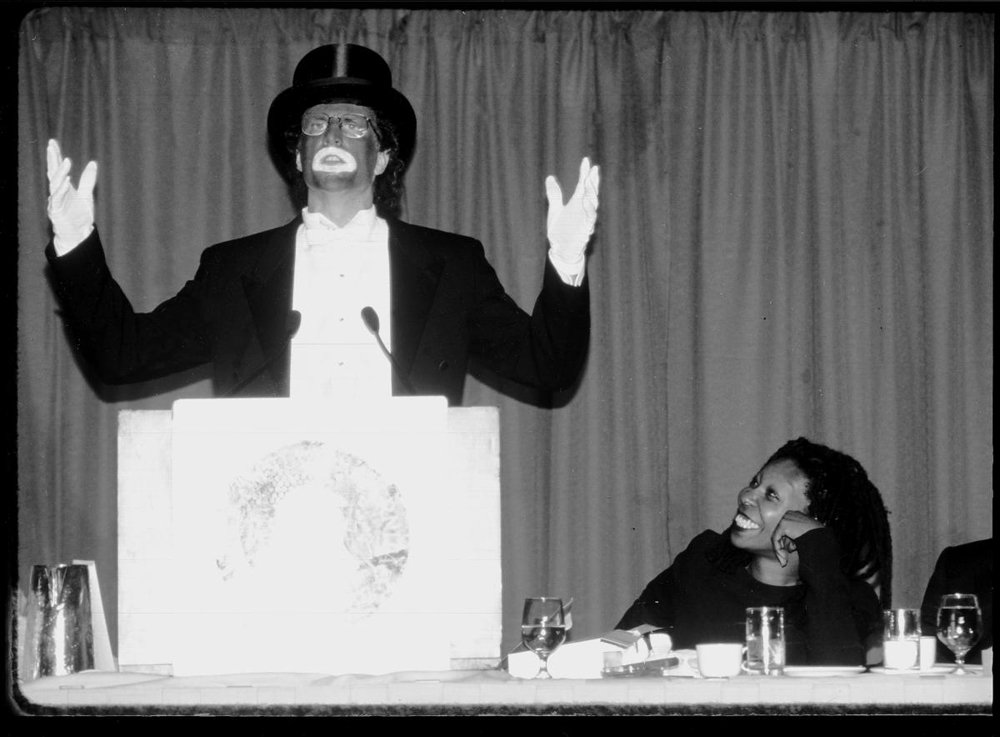
More recently, white entertainers have used blackface in attempts to comment on the racial formation of the moment, an example being Ted Danson's widely criticized appearance in burnt cork alongside his then-girlfriend Whoopie Goldberg at a 1993 Friar's Club roast. 
Comment on this page
 

Discussion of "Introduction, Page 14"

Add your voice to this discussion.

Checking your signed in status ...

Previous page on path Introduction, page 7 of 17 Next page on path
Bones    Tambo    1930s    Color    1950s    Walt Disney    1970s    Live Cinema    Image    Moving Image    Sound    Black and White

Related:  Introduction, Page 9Performance, Page 45Labor, Page 133Performance, Page 77Introduction, Page 2Race, Page 232Introduction, Page 29Space, Page 146Race, Page 225Space, Page 187Race, Page 221Performance, Page 47Labor, Page 122Space, Page 189Introduction, Page 4Conclusion, Page 291Conclusion, Page 302Introduction, Page 30Labor, Page 128Race, Page 230Race, Page 204Labor, Page 119Performance, Page 70Race, Page 261Performance, Page 52Performance, Page 74Race, Page 213Labor, Page 132Conclusion, Page 273Introduction, Page 26Space, Page 172Space, Page 162Conclusion, Page 304Space, Page 152Performance, Page 35Conclusion, Page 278Race, Page 252Performance, Page 82Performance, Page 50Race, Page 258Labor, Page 113Race, Page 206Labor, Page 102Space, Page 193Race, Page 247Performance, Page 84Space, Page 178Race, Page 251Race, Page 254Performance, Page 46Labor, Page 112Space, Page 170Race, Page 229Race, Page 235Labor, Page 98Space, Page 169Space, Page 171Performance, Page 72Space, Page 181Space, Page 137Labor, Page 110Race, Page 219Conclusion, Page 300Space, Page 177Performance, Page 56Conclusion, Page 275Introduction, Page 23Space, Page 143Labor, Page 123Space, Page 188Race, Page 248Introduction, Page 6Performance, Page 41Conclusion, Page 292Race, Page 253introduction-page-22Labor, Page 88Performance, Page 43Introduction, Page 15Race, Page 224Space, Page 165Space, Page 190Performance, Page 34Performance, Page 54Conclusion, Page 286Introduction, Page 16Conclusion, Page 290Labor, Page 129Conclusion, Page 296Race, Page 239Space, Page 182Space, Page 156Space, Page 175Space, Page 141Space, Page 138Introduction, Page 21Space, Page 197Labor, Page 109Performance, Page 44Race, Page 257Space, Page 184Performance, Page 78Space, Page 183Race, Page 220Space, Page 163Race, Page 231Performance, Page 62Introduction, Page 20Space, Page 194Labor, Page 101Space, Page 148Introduction, Page 1Performance, Page 60Conclusion, Page 298Space, Page 159Introduction, Page 18Space, Page 150Performance, Page 42Space, Page 195Labor, Page 126Conclusion, Page 289Conclusion, Page 284Conclusion, Page 303Labor, Page 96Conclusion, Page 272Performance, Page 80Introduction, Page 12Space, Page 155Labor, Page 93Space, Page 191Conclusion, Page 268Performance, Page 67Space, Page 192Labor, Page 131Race, Page 245Conclusion, Page 274Performance, Page 40