Thanks for your patience during our recent outage at scalar.usc.edu. While Scalar content is loading normally now, saving is still slow, and Scalar's 'additional metadata' features have been disabled, which may interfere with features like timelines and maps that depend on metadata. This also means that saving a page or media item will remove its additional metadata. If this occurs, you can use the 'All versions' link at the bottom of the page to restore the earlier version. We are continuing to troubleshoot, and will provide further updates as needed. Note that this only affects Scalar projects at scalar.usc.edu, and not those hosted elsewhere.
Jeptha Homer Wade Travel Journals: Germany July 18 to October 16, 1914Main MenuAbout this TranscriptionThe Travel Journals of Jeptha Homer Wade II (1857-1926) Germany & the UK July 18, 1914 to October 16, 1914A verbatim description of a handwritten travel journal created by Jeptha Homer Wade (1857-1926) in MS. 3292 The Jeptha Homer Wade Family Papers, the Cleveland History Center, Cleveland, OhioPage 01: July 18, 1914Page 09: July 31-August 1, 1914Page 48: August 31-September 1, 1914Page 77: September 30-October 1, 1914Motor Trip, Cont: Farnham, Aldershot, and Frith HillHolly M. Witchey19088b74475107330529d28176d24cbcb2b99ec0
Page 67: September 25-26, 1914
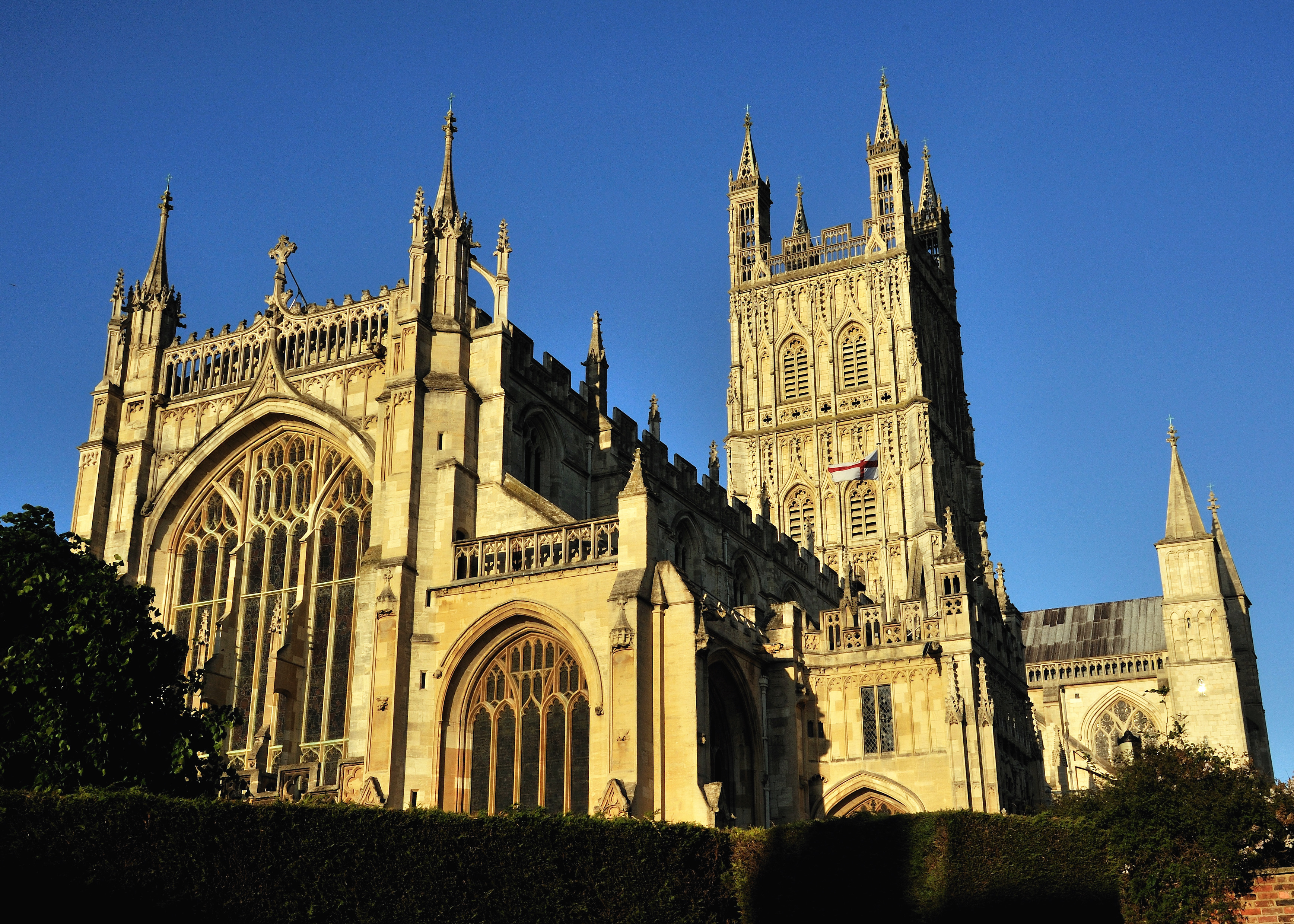
12016-07-08T12:31:24-07:00Kelly Muellerd3b0d952cffe3f21edc6c5541645a2fc75bf2bec101626Motor Trip, Cont: Gloucester, Stroud, Bath, and Wells.google_maps2016-08-18T07:16:03-07:00Kelly Muellerd3b0d952cffe3f21edc6c5541645a2fc75bf2becGloucester where we went first to Cathedral. Cloisters especially fine + some parts of church. Lunched at Bell Hotel where we found a few letters. Good lunch. Left at 2 for Bath via Stroud. Fine views + rolling country after Gloucester + before Bath. Intermediate high land + flat plateau Got fine rooms incl. S.R. at Empire Hotel $2010 Went to the services at Abbey church but no music as organ is being repaired. Walked about town. Dinner very good in apt. Nellie went to bed before on a/c head aches. Sept 26 Left at 10 for Wells 20 miles. Pleasant country Stopped an hour to visit the Cathedral. Fine exterior facades with its statues + some fine + delicate screens around the Choir + church
This page has paths:
1media/jh-wade-ii.jpg2016-07-06T08:40:29-07:00Kelly Muellerd3b0d952cffe3f21edc6c5541645a2fc75bf2becThe Travel Journals of Jeptha Homer Wade II (1857-1926) Germany & the UK July 18, 1914 to October 16, 1914Holly M. Witchey11A verbatim description of a handwritten travel journal created by Jeptha Homer Wade (1857-1926) in MS. 3292 The Jeptha Homer Wade Family Papers, the Cleveland History Center, Cleveland, Ohiosplash2017-04-22T08:18:46-07:00Holly M. Witchey19088b74475107330529d28176d24cbcb2b99ec0
12016-08-03T11:28:22-07:00Wells Cathedral1The Cathedral Church of Saint Andrew, commonly known as Wells Cathedral, is an Anglican cathedral in Wells, Somerset. The cathedral, dedicated to St Andrew the Apostle, is the seat of the Bishop of Bath and Wells. It is the mother church of the diocese and contains the bishop's throne (cathedra). It was built between 1175 and 1490, replacing an earlier church built on the same site in 705. It is moderately sized among the medieval cathedrals of England, between those of massive proportion such as Lincoln and York and the smaller cathedrals in Oxford and Carlisle. With its broad west front and large central tower, it is the dominant feature of its small cathedral city and a landmark in the Somerset countryside. Wells has been described as "unquestionably one of the most beautiful" and as "the most poetic" of English cathedrals. The cathedral's architecture presents a harmonious whole which is entirely Gothic and mostly in the Early English style of the late 12th and early 13th centuries. In this respect Wells differs from most other English medieval cathedrals, which have parts in the earlier Romanesque style introduced to Britain by the Normans in the 11th century. Work commenced in about 1175 at the eastend with the building of the choir. The historian John Harvey considers it to be the first truly Gothic structure in Europe, having broken from the last constraints of Romanesque. The stonework of its pointed arcades and fluted piers is enriched by the complexity of pronounced mouldings and the vitality of its carved capitals in a foliate style known as "stiff leaf". Its exterior has an Early English façade displaying more than 300 sculpted figures, described by Harvey as "the supreme triumph of the combined plastic arts in England". The east end retains much ancient stained glass, which is rare in England. Unlike many English cathedrals of monastic foundation, Wells has an exceptional number of surviving secular buildings associated with its chapter of secular canons, including the Bishop's Palace and Vicars' Close, a residential street that has remained intact since the 15th century. The cathedral is a Grade I listed building.plain2016-08-03T11:28:22-07:00