The Great Wall of Los Angeles
1 media/spring-17bacagreatwall2a_thumb.webp 2023-05-25T12:41:44-07:00 Maria Hernandez 8c5d3a6c8021c0623f5c8be8fd20d720c5c8beca 42723 6 "The Great Wall of Los Angeles" by Judy Baca is a monumental mural spanning a half-mile, depicting the history and contributions of diverse communities in Los Angeles. #Chicanx #Muralism #Community plain 2023-06-13T18:51:13-07:00 1984 34.052235, -118.243683 Adelmar Ramirez a4bf3b19b77c9f4b12cc64aa3ed1a273dcebf85aThis page has annotations:
- 1 2023-06-01T08:00:33-07:00 Maria Hernandez 8c5d3a6c8021c0623f5c8be8fd20d720c5c8beca Rosie the Riveter Maria Hernandez 2 plain 2023-06-01T08:10:52-07:00 Maria Hernandez 8c5d3a6c8021c0623f5c8be8fd20d720c5c8beca
- 1 2023-06-01T10:13:25-07:00 Maria Hernandez 8c5d3a6c8021c0623f5c8be8fd20d720c5c8beca Annotation Maria Hernandez 1 plain 2023-06-01T10:13:26-07:00 Maria Hernandez 8c5d3a6c8021c0623f5c8be8fd20d720c5c8beca
This page has paths:
- 1 media/younglordscocina.jpeg 2023-05-18T12:33:30-07:00 Christopher Gilman 1985b99a2acd541caa12a10c3ebf6896565283ab Media Thumbnails Elise Oliver 7 structured_gallery 2023-06-11T14:29:20-07:00 Elise Oliver d99044ad38ce76bdbc04601c337e701e6ac85911
This page has tags:
- 1 2023-06-01T12:57:13-07:00 Adelmar Ramirez a4bf3b19b77c9f4b12cc64aa3ed1a273dcebf85a Hashtag Experiment (tag) Adelmar Ramirez 3 #chicanx visconnections 2023-06-01T12:59:44-07:00 Adelmar Ramirez a4bf3b19b77c9f4b12cc64aa3ed1a273dcebf85a
This page is referenced by:
-
1
2023-05-18T13:22:26-07:00
The Works of Judy Baca
165
This page analyzes the art of Judy Baca during the Chicano movement, highlighting her significant contribution and impact. Baca’s murals, characterized by vibrant colors and intricate symbolism, became powerful visual narratives of the struggles and resilience of the Chicano community. Through her artwork, she challenged dominant narratives and celebrated the rich cultural heritage of Mexican Americans. Baca’s art continues to serve as a reminder of the transformative power of art by promoting social justice, representation, and community empowerment.
image_header
2023-06-12T08:59:06-07:00
Judy Baca, an innovative artist, muralist, and community organizer of the Chicano descent, played a vital role in capturing the essence of the Chicano movement through her groundbreaking artwork. The Chicano Movement was a significant period of social mobilization and cultural renaissance for Mexican American in the United States during the late 1960s and early 1970s. Baca harnessed her artistic talent as a form of activism, empowering the marginalized Chicano community through her murals and public installations. Through her art, she provided a platform for the often neglected Chicano experience, giving it a voice. Having grown up in Los Angeles, she personally witnessed the challenges faced by her community and developed a profound connection to the Chicano movement. Recognizing the potential of art as a means of expression, Judy Baca embraced its power to challenge prevailing narratives, tracking subjects of identity, cultural heritage, and societal transformation.
Chicanas played a crucial role in the Chicano Movement, facing unique challenges and contributing to the movement's goals. The significance of Baca's mural above, titled "Uprising of the Mujeres," lies in its representation of the spirit of the Chicano Movement and the celebration of Chicana identity. The mural's theme revolves around the empowerment of women, highlighting their strength, resilience, and struggles. It aims to emphasize the importance of women's rights, liberation, and their contributions to social movements. Through the use of imagery and symbolism, the mural depicts women in action with raised fists, breaking away from traditional roles assigned to women, such as being stay-at-home mothers. The mural symbolizes women as revolutionaries who fight for their rights by placing an indigenous women leading a rebellion. Additionally, the mural addresses the issue of capitalism, depicting women laborers with meager wages, symbolized by the change in the woman's left hand. The artwork portrays the political challenges faced by the Chicanx community in a predominantly Anglo society that often regarded minority groups as inferior. However, the mural ultimately represents resilience, resistance, and cultural pride, honoring and affirming the rights and dignity of the Chicano experience and community.
Judy Baca's artwork, "Las Tres Marías," explores the cultural and social issues within the Chicanx community, with a particular emphasis on the experiences and significance of Chicanas. The piece delves deep into the complexities of femininity and cultural beliefs, celebrating the diverse range of women within the community and highlighting the importance of representation. The artwork features three central women symbolizing "Las Tres Marías," challenging traditional gender roles and aiming to empower the stories and voices of women.
On the left side, a portrayal of a 1950s pachuca emerges, representing young Mexican-American women who defied societal norms and cultural expectations of the time. These courageous pachucas became symbols of resistance, resilience, and cultural pride, adopting a distinctive style that challenged gendered fashion and engaging in activities typically reserved for men. Their actions paved the way for future generations to question and challenge restrictive gender roles. On the right side of the artwork, a representation of a 1970s chola emerges, a proud embodiment of a unique cultural identity that defied mainstream societal norms. Cholas expressed their Mexican heritage with pride and challenged traditional gender roles through their distinct style and attitudes. Their existence challenged stereotypes, and their sense of belonging within gangs or cliques provided support and protection as they shared their experiences. Through these portrayals, Baca highlights the diverse identities within the Mexican-American community and celebrates the resilience and beauty found in the defiance of societal expectations. Positioned in the middle of these two women, a mirror symbolically invites viewers to reflect on their own identities and place in society. Baca encourages individuals to break free from societal labels, allowing them to establish their authentic identities within the Chicanx community without judgment. This painting underscores the importance of community engagement, representation, and the power of collective storytelling in celebrating and preserving the rich cultural heritage of Chicanas.
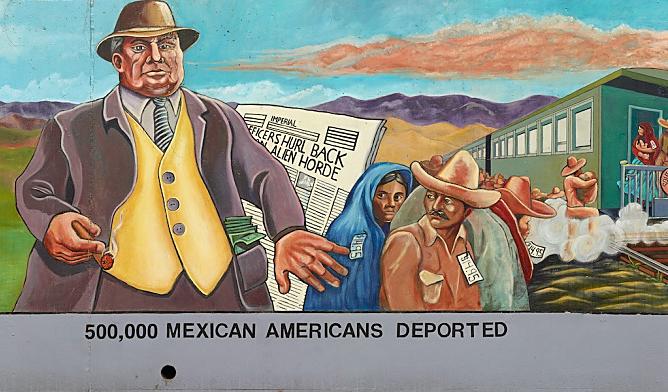
One of her most iconic works, "The Great Wall of Los Angeles" stands as a monumental testament to Baca's artistic dedication to promoting social change. Spanning half a mile, the mural depicts the history of California from prehistoric times to the 1950s, emphasizing the contribution and often overlooked stories of indigenous peoples, Mexican Americans, and other communities of color. Through meticulous attention to detail and commitment to historical accuracy, Baca crafted a visual narrative that challenged the dominant historical discourse and fostered a more inclusive understanding of California's past. The Great Wall of Los Angeles provides a space for reflection on the struggles faced by Chicano individuals and their communities, while also celebrating their vibrant traditions, custom, and artistic expressions. The mural has served as a gathering place for community events, artistic performances, and educational initiatives that highlight the Chicano experience. The mural remains a reminder that public art can serve as a catalyst for social change and provide a platform for marginalized communities to reclaim their narratives and assert their rightful place in history.Within The Great Wall of Los Angeles, a remarkable mural by Judith Baca, two sections stand out as poignant reminders of historical struggles. "Farewell to Rosie the Riveter" celebrates the resilience and defiance of women during World War II. Depicting the determined faces of those who shattered societal expectations, Baca immortalizes their contributions and champions gender equality. In contrast, "The Red Scare & McCarthyism" unveils a dark chapter of American history, capturing the oppressive atmosphere of fear and political persecution. Through vivid imagery, Baca portrays the targeted individuals and the devastating impact of McCarthyism on lives and civil liberties. Together, these sections serve as powerful symbols of unity, resilience, and the ongoing fight for equality and justice.
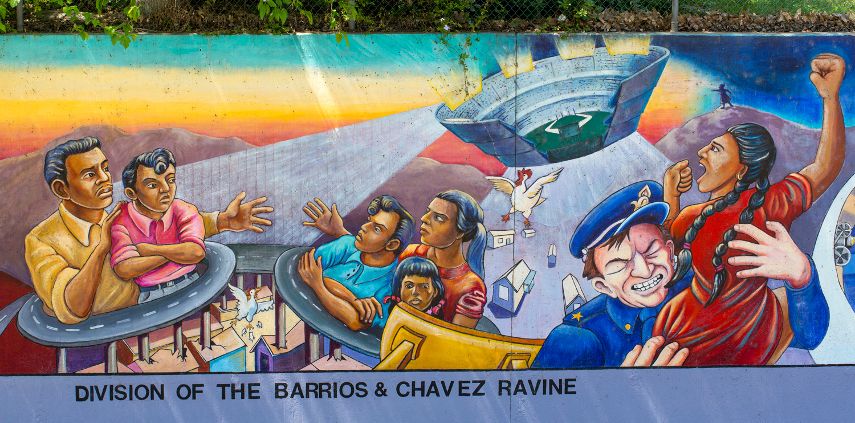
Judy Baca's Great Wall of Los Angeles mural explores the displacement and struggles faced by the Chicanx community in Los Angeles through two integral sections: the division of the barrios and the story of Chavez Ravine. The section dedicated to the division of the barrios showcases the discriminatory practices and policies that segregated and marginalized Chicanx neighborhoods. Baca's mural vividly portrays the consequences of urban planning, redlining, and discriminatory housing practices that physically separated barrios, isolating Chicanx communities from vital resources and opportunities.
Within this section, the story of Chavez Ravine holds significant importance. Baca draws attention to the historical injustice inflicted upon the Chicanx community living in Chavez Ravine, a vibrant barrio forcefully cleared to make way for an abandoned housing development project. The mural depicts the devastating destruction of homes, the displacement of families, and the loss of a cherished community. By depicting the division of the barrios and the story of Chavez Ravine, Baca honors the resilience and resistance of the Chicanx community in the face of systemic oppression. It serves as a powerful reminder of the ongoing struggle for social and environmental justice and highlights the significance of community, cultural heritage, and equitable urban planning.
In conclusion, Judy Baca's groundbreaking artwork and murals have played a vital role in capturing the essence of the Chicano movement and empowering the marginalized Chicanx community. Through her art, she challenged prevailing narratives, celebrated the strength and resilience of Chicanas, and provided a platform for collective storytelling. Baca's dedication to promoting social change and inclusivity is evident in her iconic works such as "The Great Wall of Los Angeles." Her legacy as an innovative artist and community organizer will continue to inspire and uplift marginalized communities, reminding us of the power of art to challenge, transform, and give voice to the marginalized.