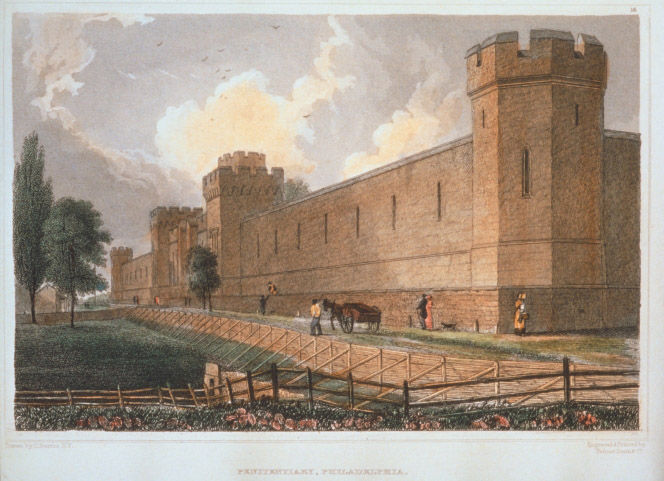
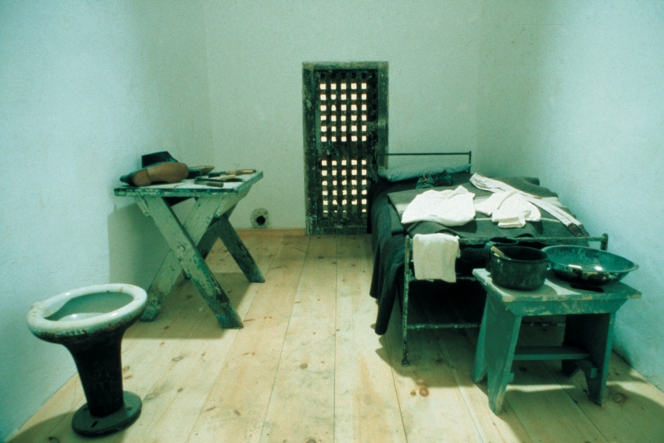
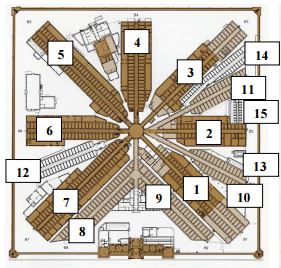
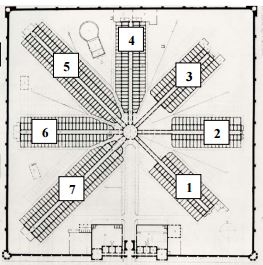
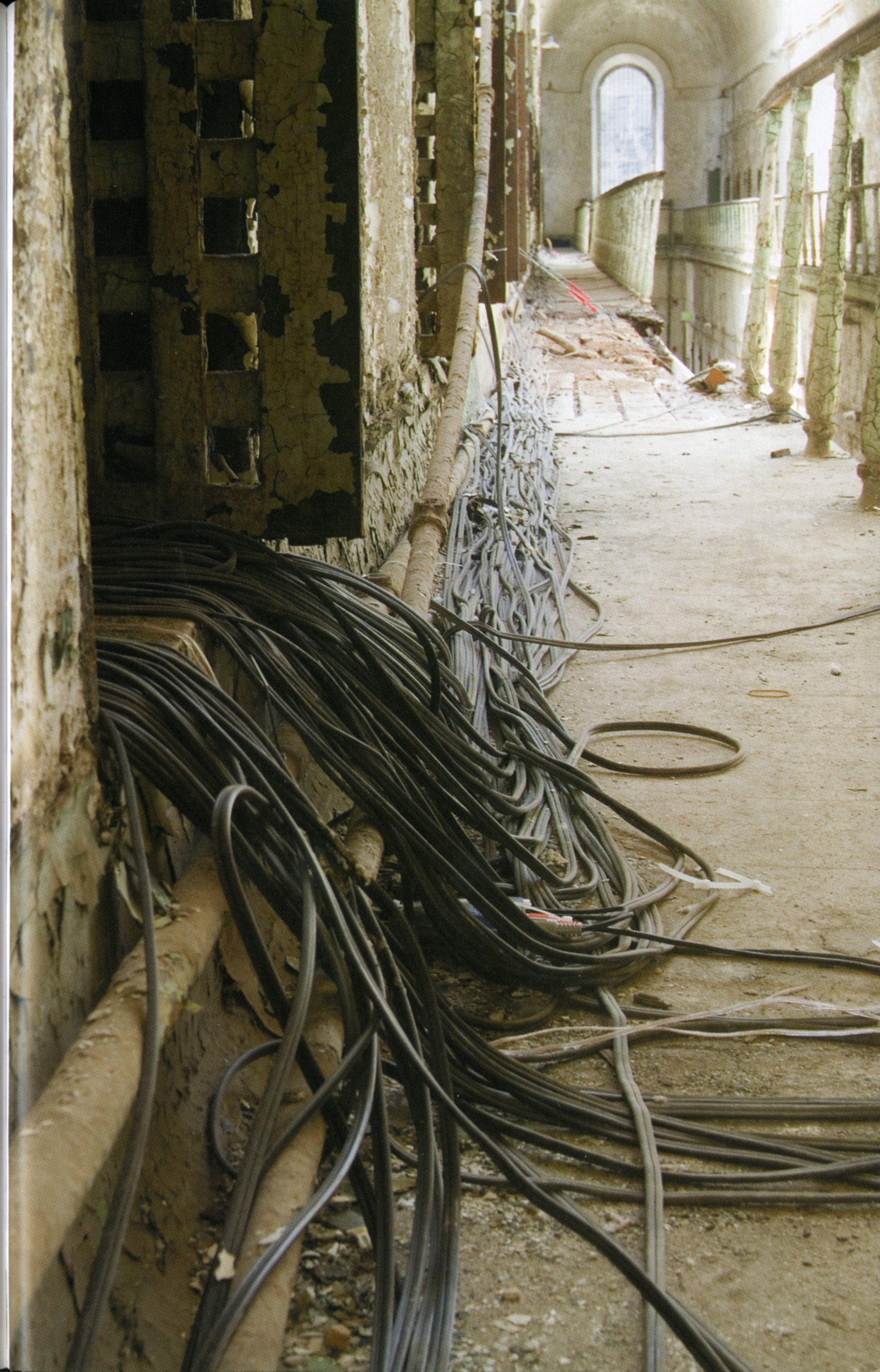
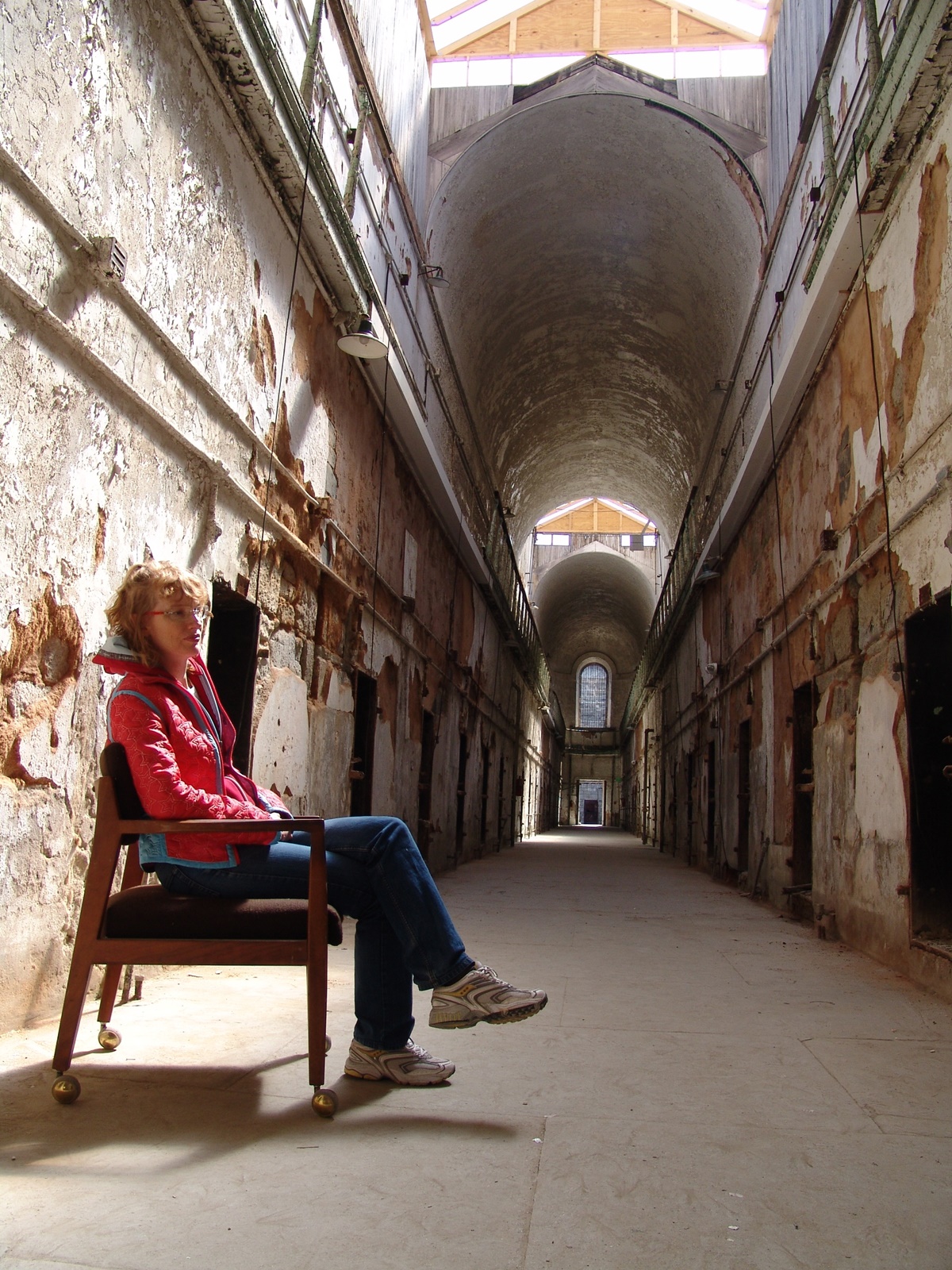
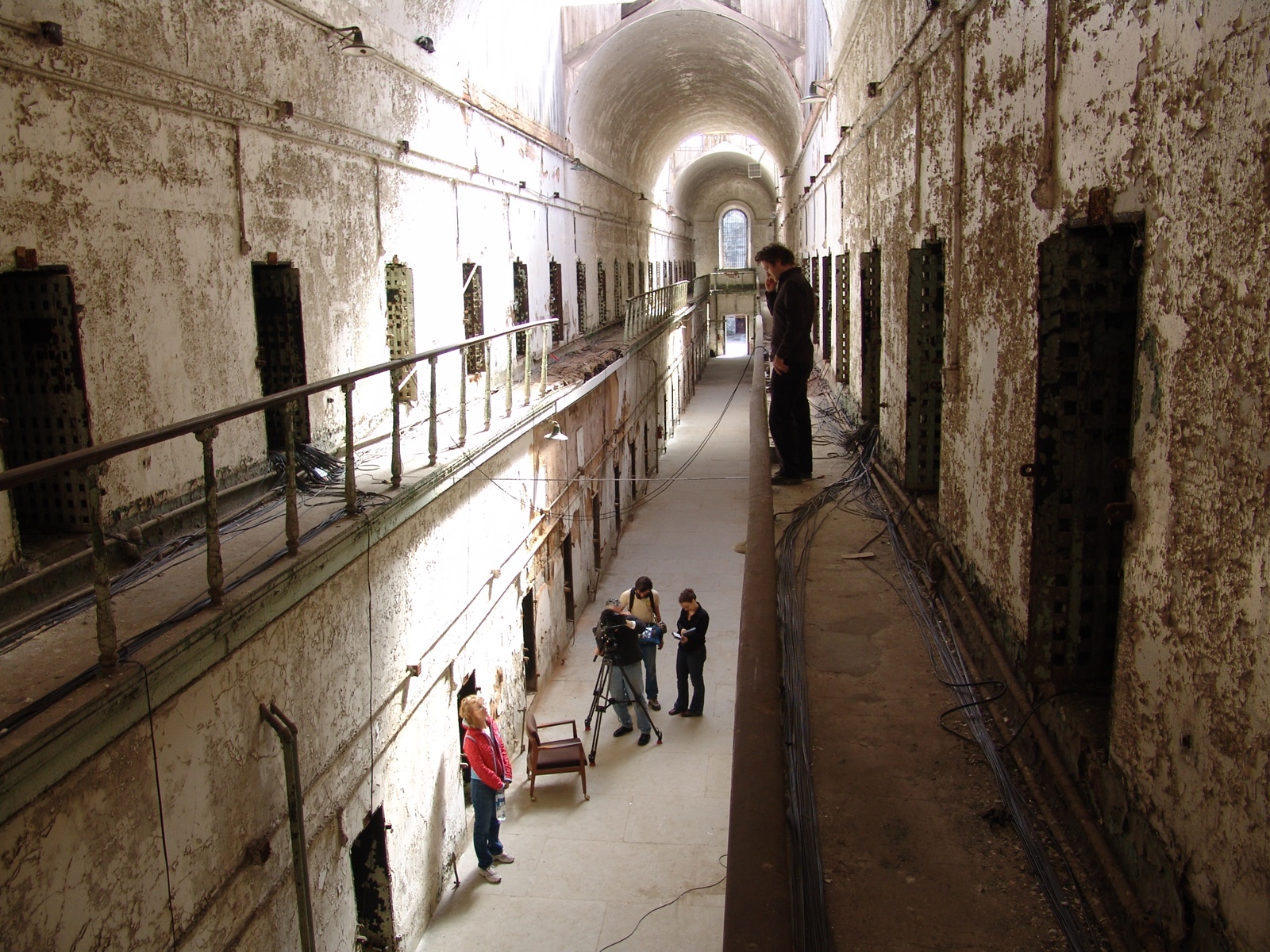
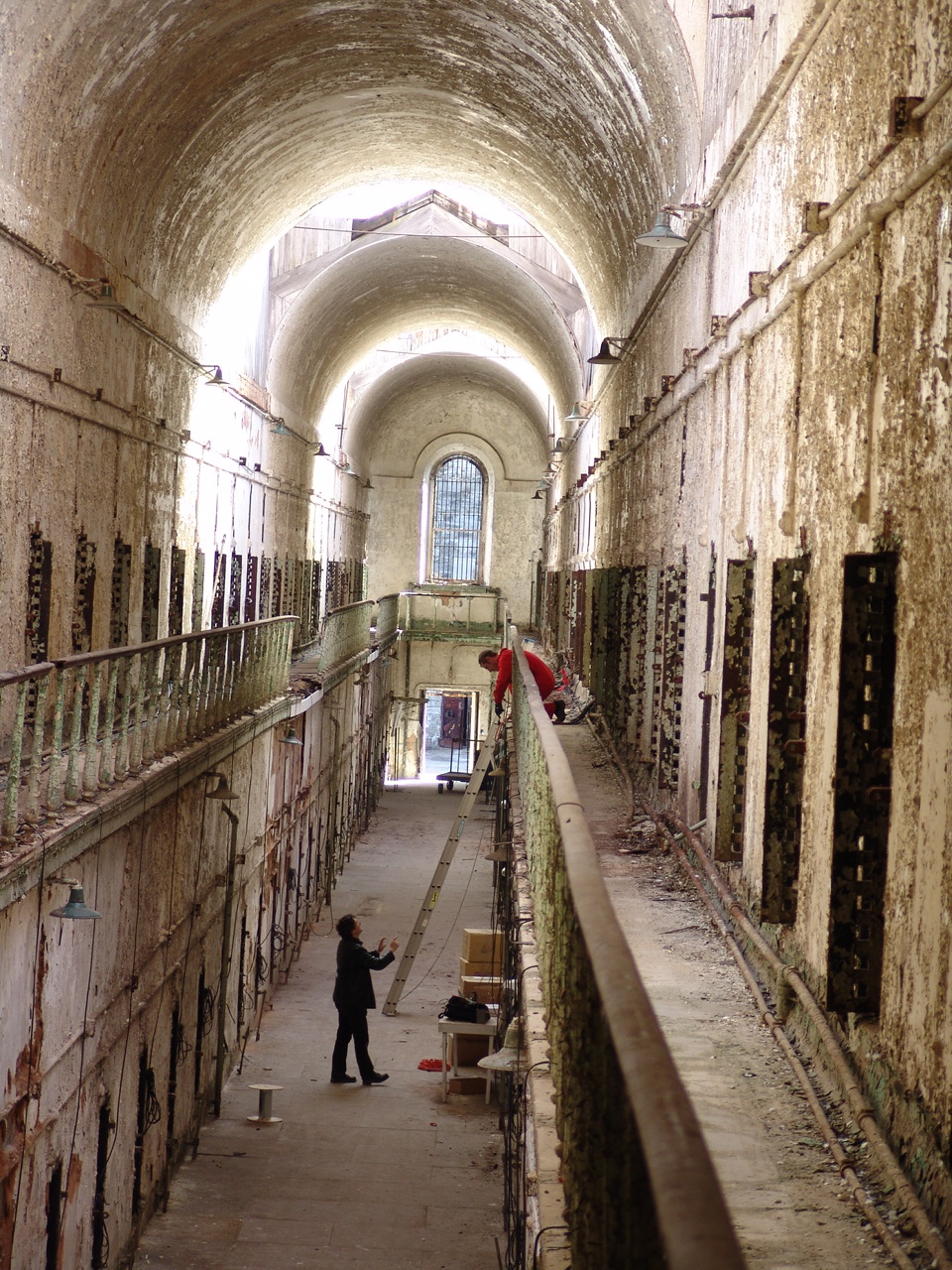
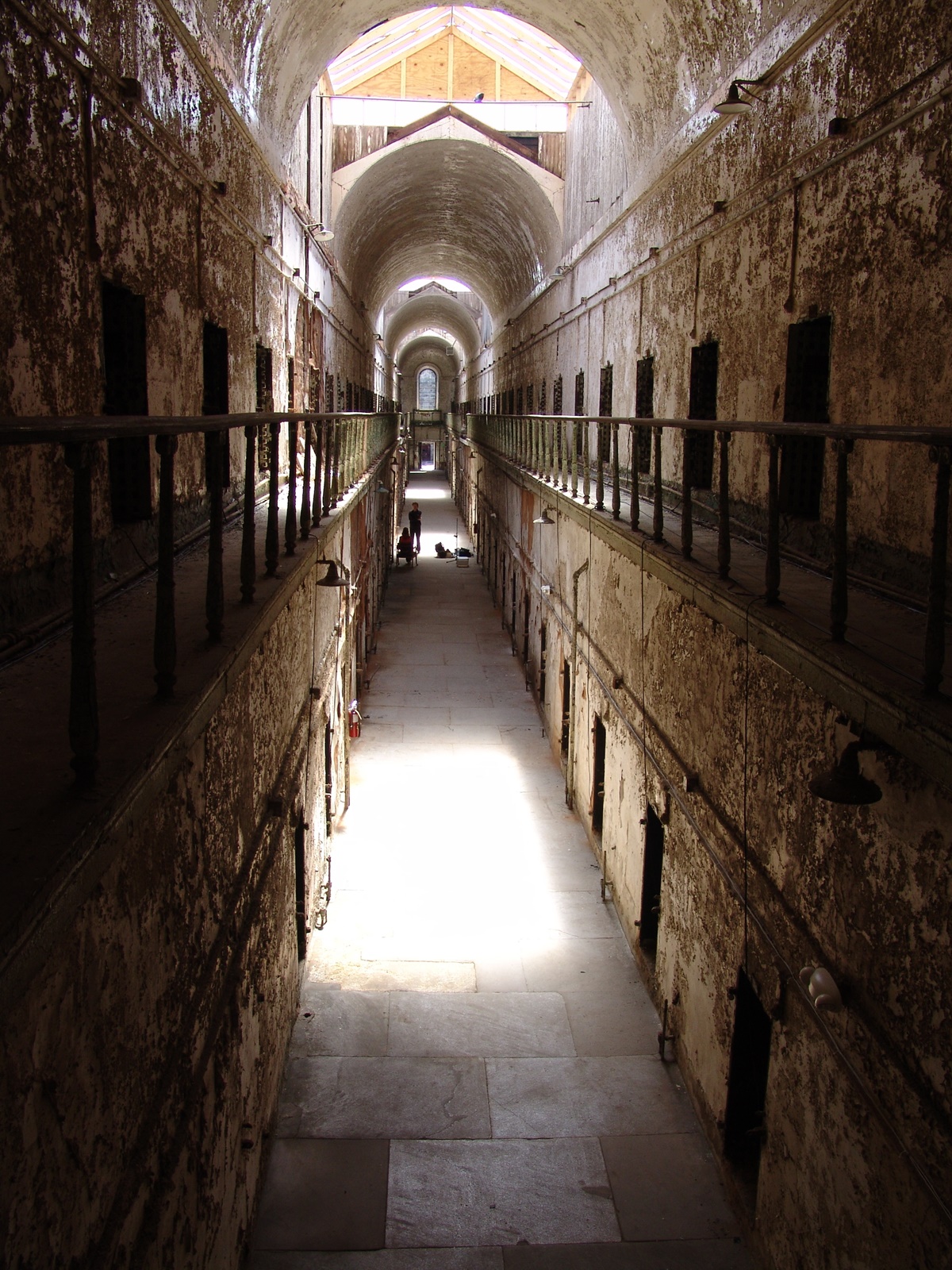
Eastern State Penitentiary turns out to be a remarkably apt setting in which to explore interconnection and intimacy, presence and absence. Inmates lived here in isolation and compulsory silence from 1829 until 1913. Haviland incorporated these planned policies into his design, dividing cells with twenty inches of masonry and routing heating and plumbing along corridors so that inmates could not easily access pipes to tap messages.
[44] Prison staff wore thick woolen socks and sound-proofed meal-carts with leather straps so that their patrols would not shelter illegal communications.
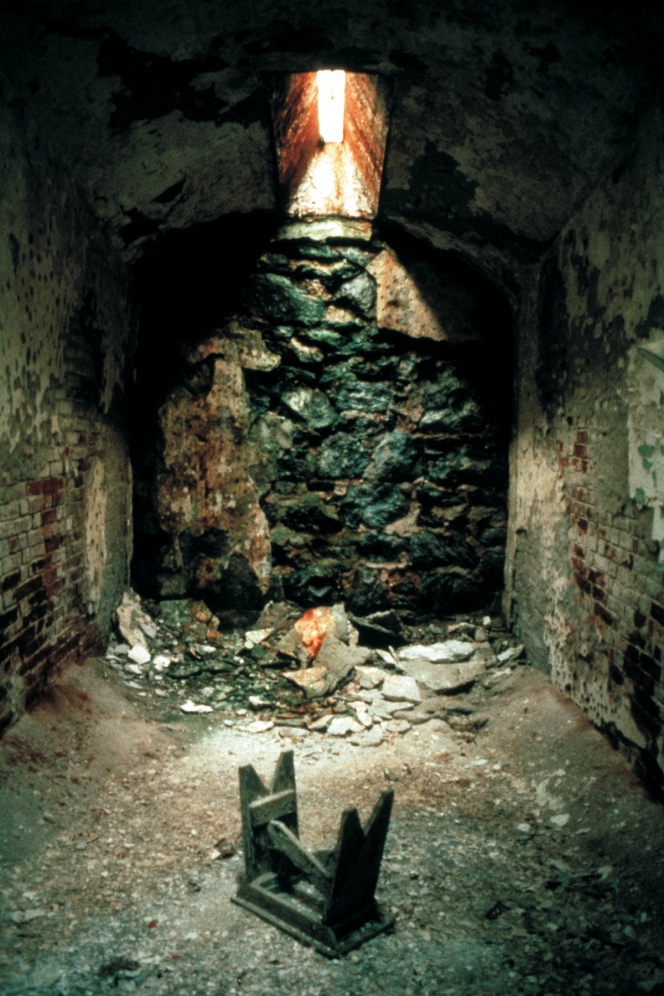
[45] Though enforcement was uneven, punishments for breaching the silence ranged from withheld meals to the straightjacket, iron gag, or days of confinement in a small, dark cell.
[46]
In fact, prison policy circumscribed sensory experience of most kinds.
[47] Until 1903, “a
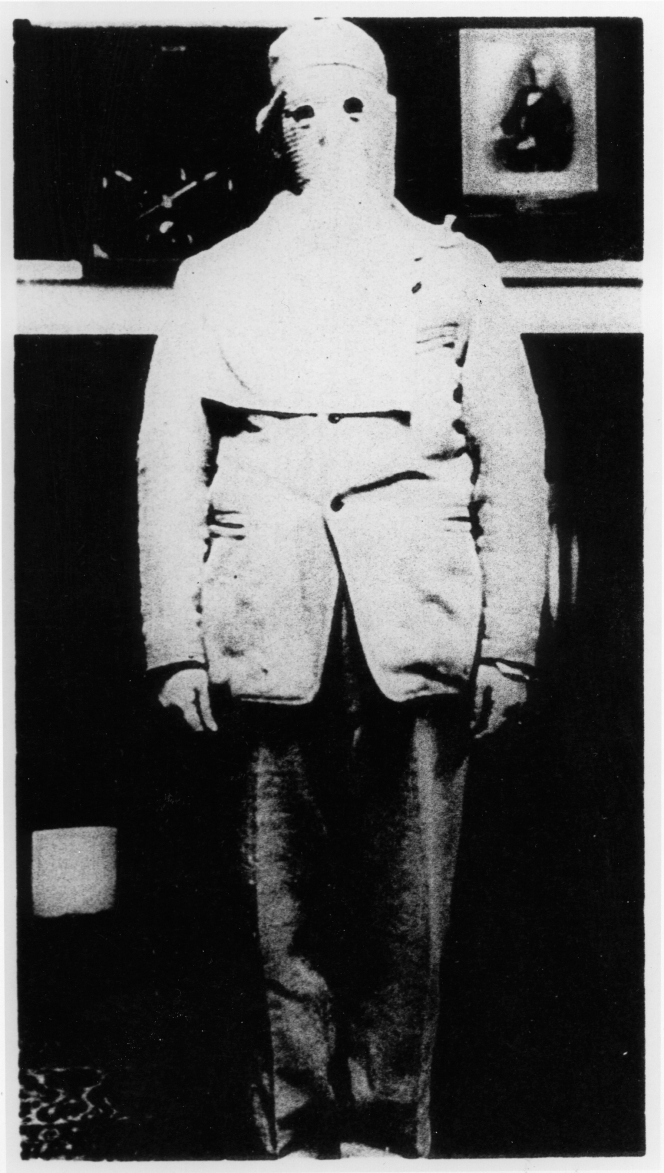
hood was . . . placed over the prisoner’s head” at intake, “to prevent his gaining ‘topographical knowledge’ of the prison layout or catching a glimpse of another inmate . . .”
[48] Each cell was outfitted with a private exercise yard in which inmates were allowed at most an hour of air per day.
[49] Cells were
whitewashed.
[50] Masturbation was policed.
[51] Visitors, and indeed news of the outside world in any medium, were prohibited.
[52] Depriving the criminal body of sensory experience was understood as an expedient means by which to morally purify the body and administer its place in a modern system.
[53]
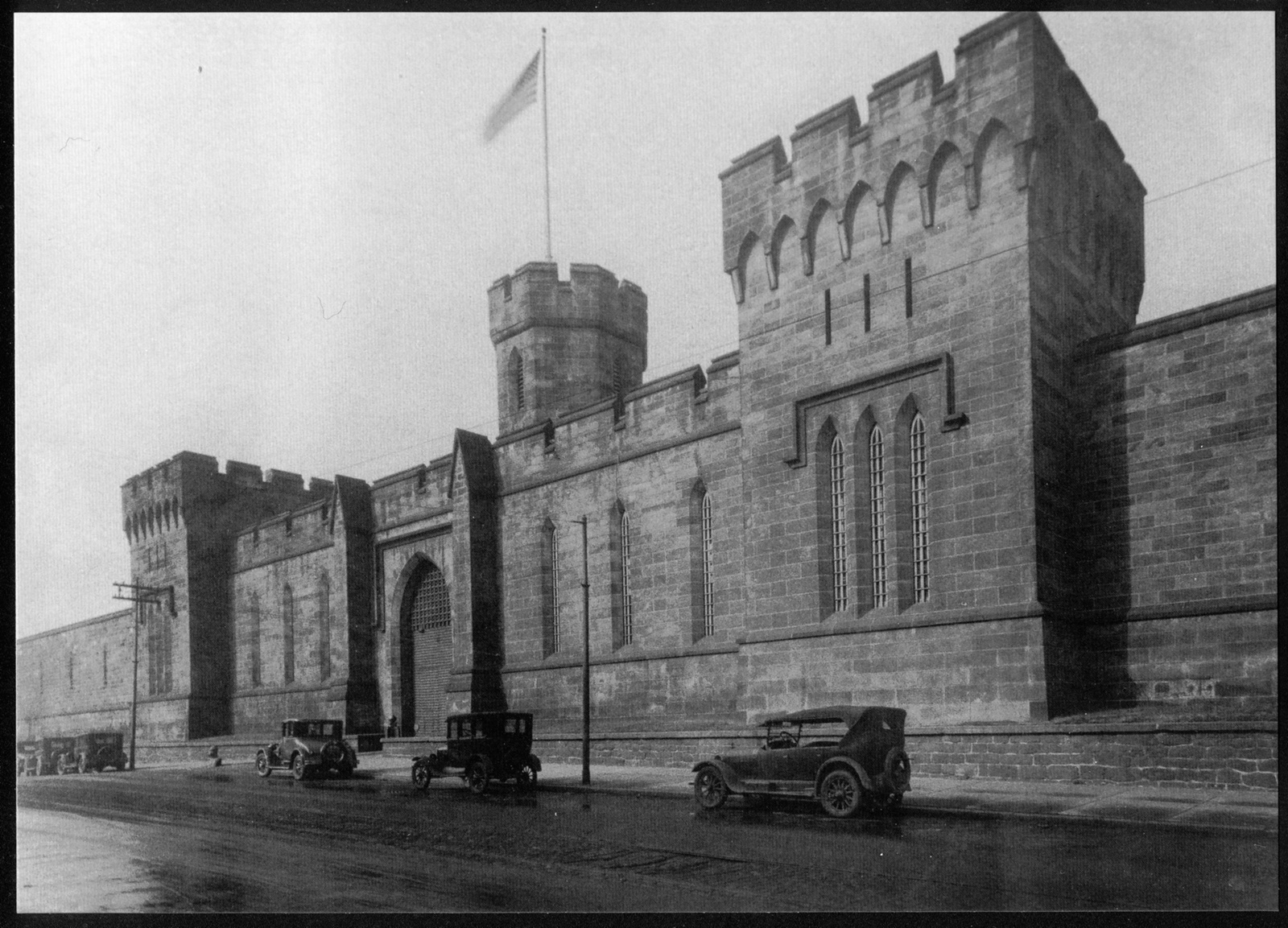
Eastern State Penitentiary was part of a massive reimagining of Philadelphia in the early nineteenth century as a modern metropolis that nonetheless strived to live up to founder William Penn’s Quaker ideals. [54] In this context, a rapidly growing population required public infrastructure—orphanages, alms houses, hospitals, schools, hygienic water supply, reliable transit. [55] The penitentiary was conceived as an exemplary force in this, “intricate web of social planning.” [56] It would alleviate overcrowding at the city’s Walnut Street Jail and respond to calls for reform by the Pennsylvania Prison Society, a group of prominent citizens who advocated Enlightenment rationality and Quaker compassion. [57] Faith in social progress and belief in the perfectibility of human nature came together in a tightly administered model of criminal justice. The Society held the purpose of imprisonment to be threefold: to deter the public from crime, to remove the perpetrator from the criminal environment, and to rehabilitate him or her through an experience of, “painfulness, labor, watchfulness, solitude and silence.” [58] Its members believed rigorous solitary confinement would produce penitence and streamline behavior, neutralizing the threat of the unpredictable body to society. [59] As Eastern State Penitentiary processed its first inmate in 1829, Pennsylvania legislated the Philadelphia System, making solitary labor and habitation compulsory statewide. [60]
Eastern State Penitentiary quickly became a fully-fledged tourist destination. Delegates came to study the Philadelphia System on behalf of foreign governments. [61] Alexis de Tocqueville and Gustave de Beaumont sent a report to the French government in 1831 about its promising correlation of isolation and reform. [62] From 1862 to 1872, over 100,000 sightseers logged visits. [63] The prison sold admissions tickets and offered tours. Yet its defining practice of solitary confinement was proving untenable. Charles Dickens (1812–1870), who included Eastern State Penitentiary on his US tour, published a controversial critique in 1842 that equated sensory deprivation with torture:
. . . I hold this slow and daily tampering with the mysteries of the brain to be immeasurably worse than any torture of the body; and because its ghastly signs and tokens are not so palpable to the eye and sense of touch as scars upon the flesh; because its wounds are not upon the surface, and it extorts few cries that human ears can hear; therefore I the more denounce it, as a secret punishment in which slumbering humanity is not roused up to stay. [64]
Dickens’ account articulated a widely held concern that the Philadelphia System was “maniac-making.” [65] Meanwhile, the penitentiary’s more pressing issue was overcrowding. By 1870, a swelling population exceeded the supply of individual cells. [66] Four new cellblocks added in 1877 and another in 1911 could not mitigate the situation, and the Philadelphia System was abandoned legally in 1913. [67]
Eastern State Penitentiary traded its “unearthly silence” for sounds that announced social change and the inevitable failure of human beings to conform the Philadelphia System.
Women, who comprised a small percentage of the inmate population, were transferred in 1923 to a gender-segregated facility in rural Pennsylvania.
[68] Increasing numbers of men, convicted of increasingly violent crimes, crowded the space. They formed bands, listened to radio, practiced religion, and played baseball, noisy physical activities all now conceded by administrators.
[69] In 1933, a
riot broke out. Reports blamed insufficient recreation, guard brutality, and resentment over uneven sentencing.
[70] They noted that the architecture had betrayed its panoptical purpose in preventing the event as, “nooks and crannies make guard observation difficult.”
[71]
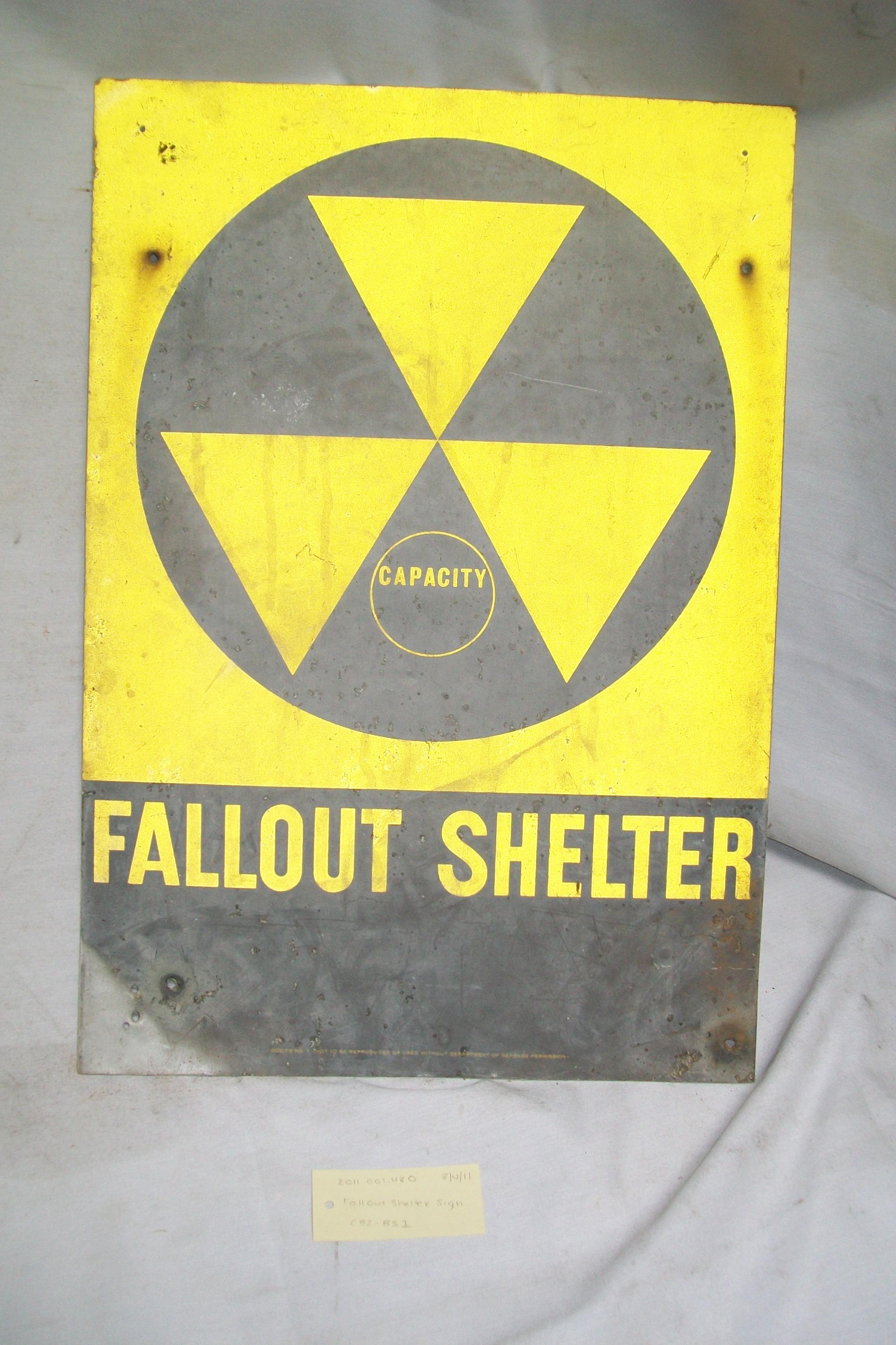
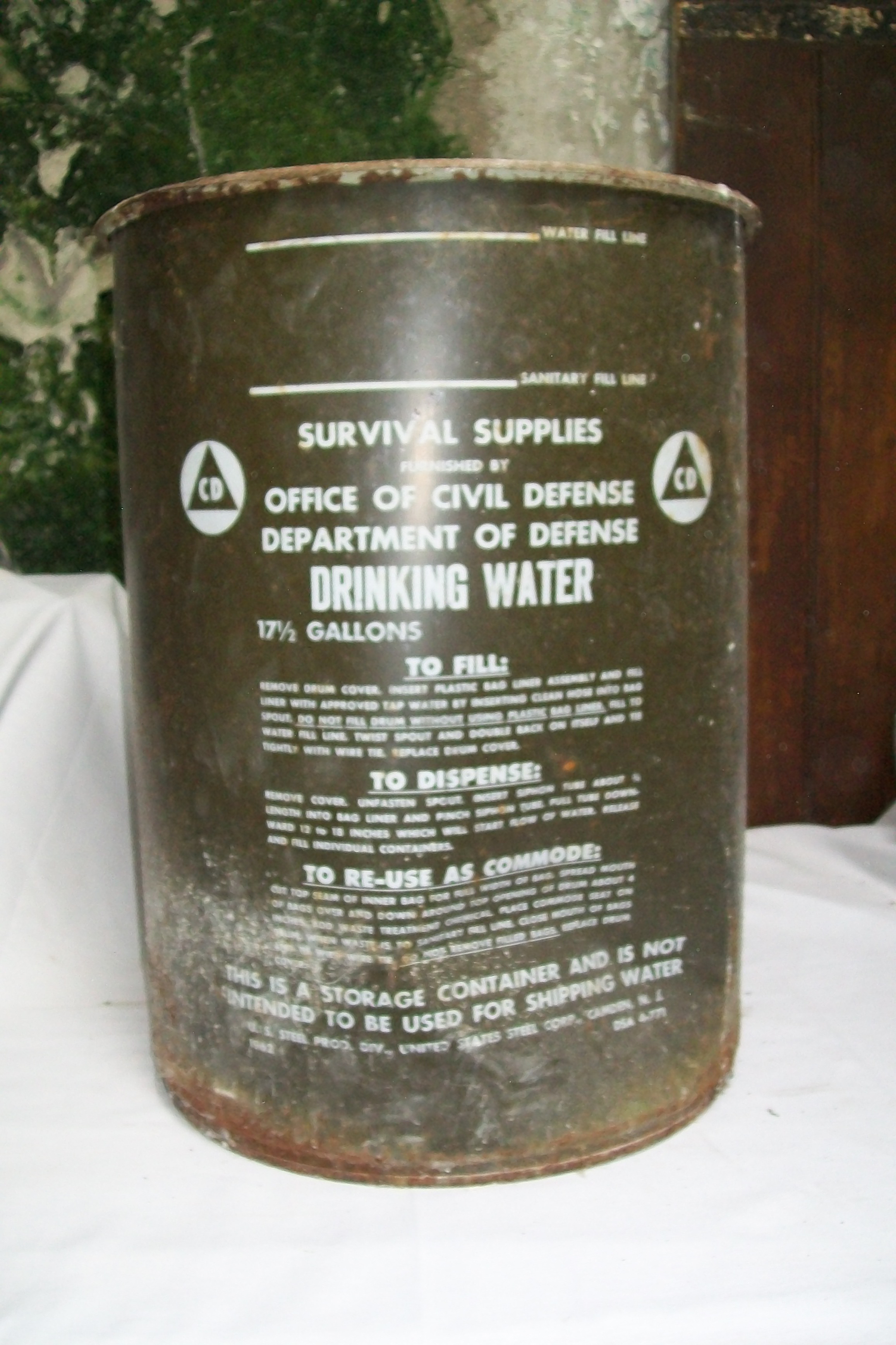
Change continued toward mid-century. Part of the massive structure was adapted as an air raid shelter during World War II and thereafter as a
nuclear fallout shelter.
[72] The facility was racially desegregated in 1961.
[73] The penitentiary’s most violent riot broke out on January 9, 1961, when an inmate asked an inexperienced guard to grant him access to a cell to retrieve a guitar and, after the guard complied, the inmate stabbed him, took his keys, and released prisoners.
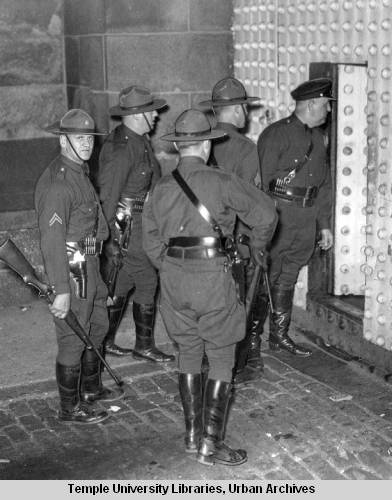
[74] Rioters prevailed for an hour, taking tactical hold of the octagonal center until 50 state police arrived, unleashing tear gas grenades and K-9 dogs.
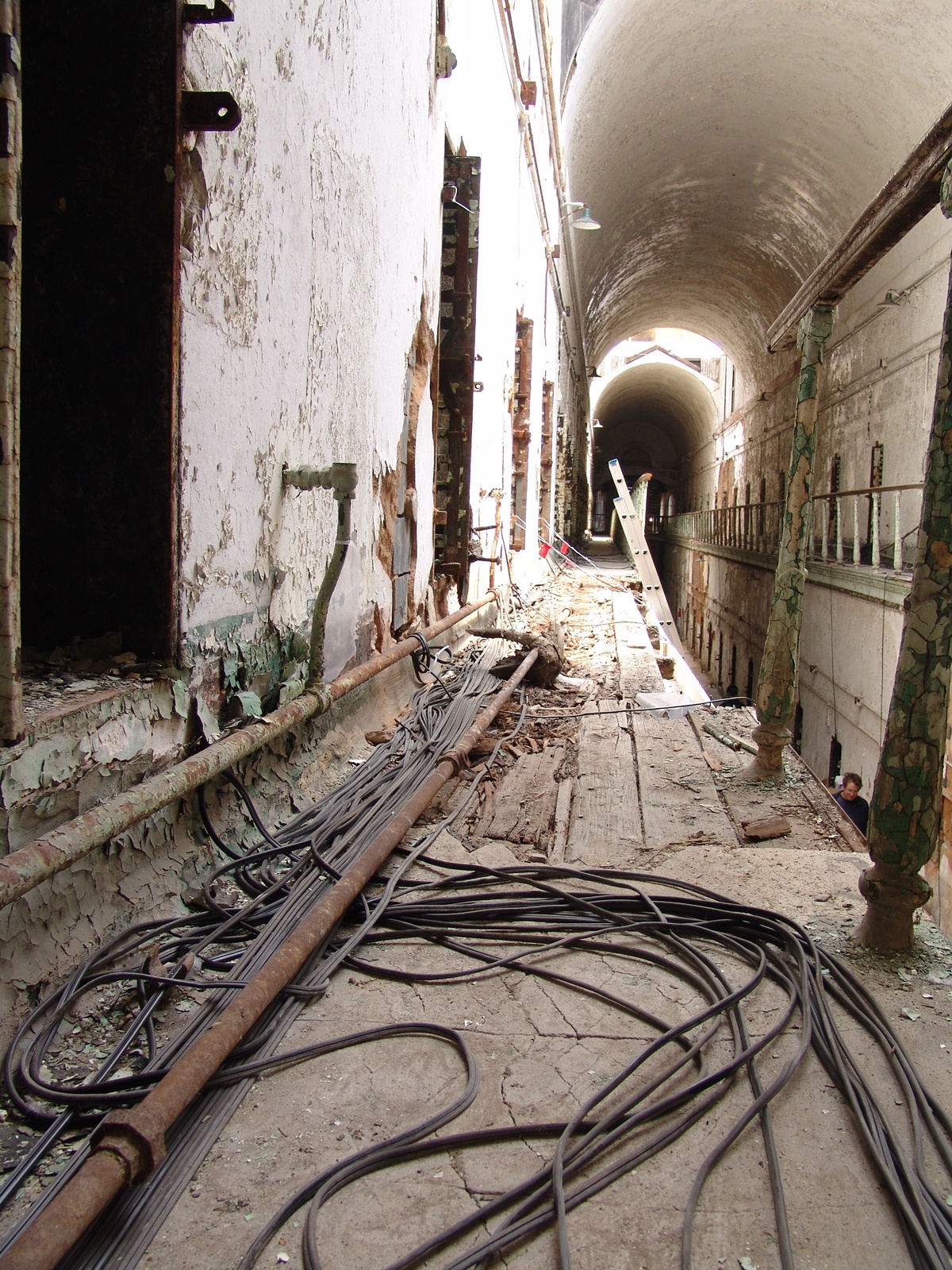
[75] This event cinched arguments to shut down Eastern State Penitentiary, a process completed one decade later. Once abandoned, its sounds became those of entropy and ecological proliferation as leaking water, feral cats, and Paulownia trees spread throughout the space.
[76]
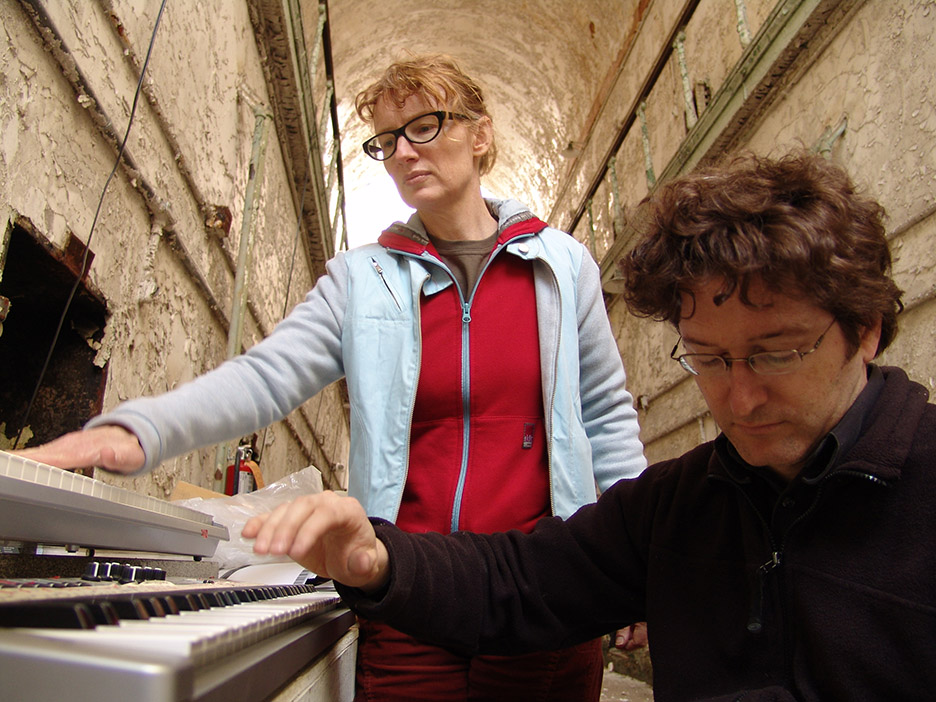
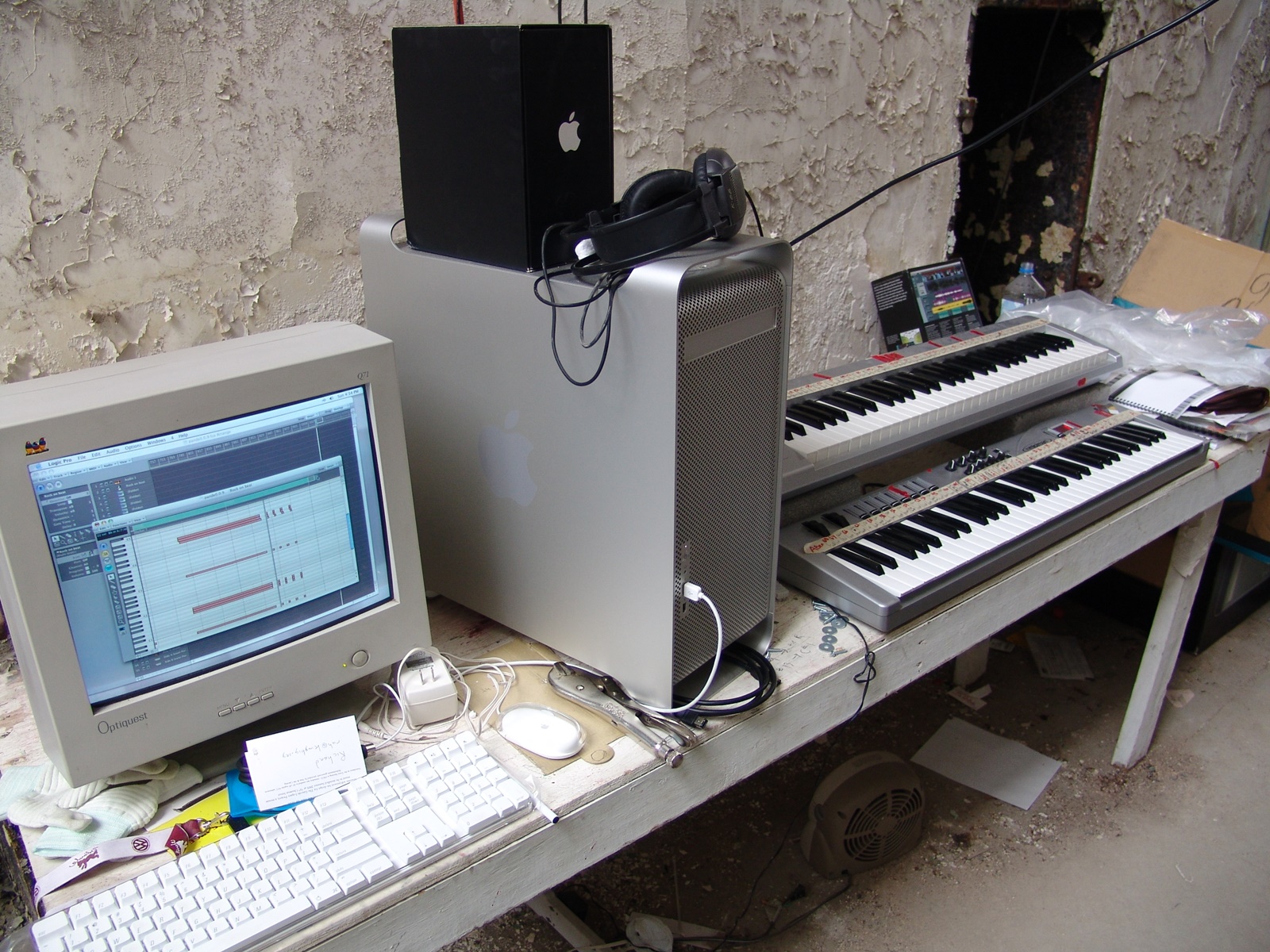
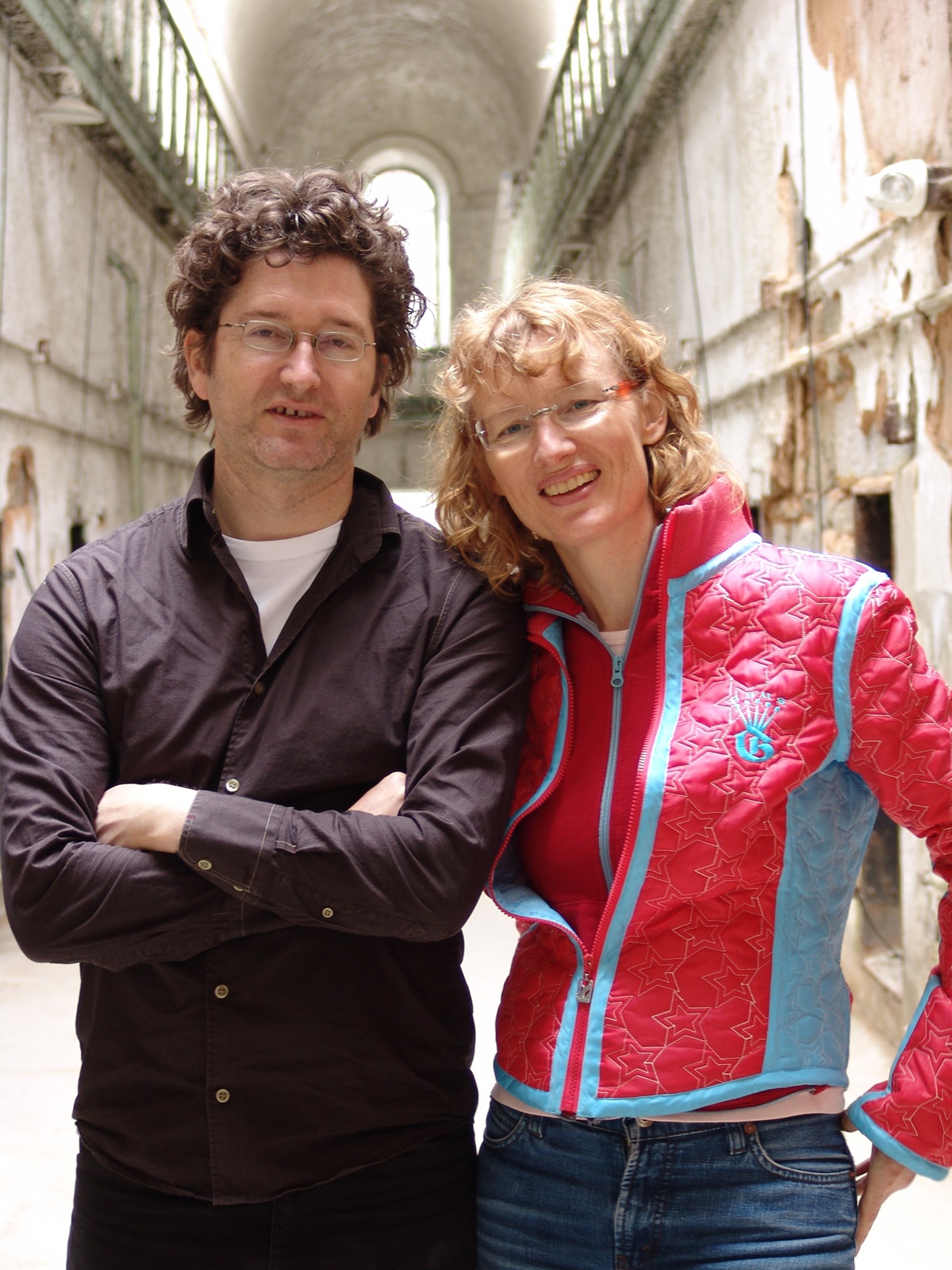
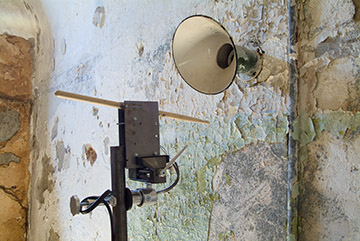
Cardiff and Miller were aware of some, though probably not all, of these historical details. They researched prisoners’ writings and histories of capital punishment in the United States. [77] Sean Kelley sent them materials about Eastern State Penitentiary’s architecture and history, and Richard Torchia told them about the prison’s riots. [78] In the end, the subject of the work came out of the artists’ interpretation of these basic historical facts, as summarized by Cardiff: “The whole concept of the cells was that they were torturing people through silence. [Prisoners] couldn’t even hear tapping from the next person. They had indoor plumbing before the White House because they wanted everyone to be so isolated they’d turn to God but what they turned to was insanity.” [79] Cardiff and Miller responded disruptively to this slice of historical narrative on its own terms by employing sound as a defiantly communicative and connecting force. In Cardiff’s words, “[Pandemonium] went from just tapping to creating a cacophony of noise to actually creating a club atmosphere.” [80] It broke Eastern State Penitentiary’s legendary rules, trading sensory deprivation for sensory assault, and rigged the built environment to demonstrate that its silence and totalizing visibility had been illusions all along.
The artists’ decision to create so ephemeral an installation, rather than an
audio walk for example, allowed Cardiff and Miller to interpret this history in a manner at once more provisional and more inclusive than the site’s official version. They honed in on the way Eastern State Penitentiary’s founders had attempted to reshape human relations by transforming the individual person—one who interrelates sensually to others through his environment—into a discrete, rational unit that conforms to an abstracted civic and moral system, a process consonant more broadly with modernization.
[81] Cardiff and Miller included with their choice of
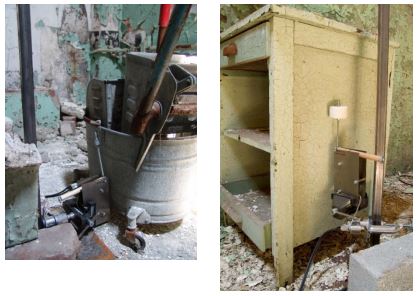
found instruments not only the site’s extraordinary silent period but also its later unraveling and transformation into a museum.
Pandemonium revealed Eastern State Penitentiary to be an intriguingly unstable model of modernization, materializing in its very architecture the scale and power of that effort yet also representing an instance of its failure at the level of the sentient body.
Pandemonium amplified that failure, flouting the modern denigration of “nonvisual senses . . . as coarse, uncivilized, and . . . potentially damaging.”
[82] Heightening sensory awareness of cellblock seven,
Pandemonium invited each percipient’s body to become a medium by which to meditate on Eastern State Penitentiary’s material environment in order to discover aspects of its own sensory relations in the present.
.JPG)

_sized.jpg)
.JPG)











.jpg)
.jpg)