Thanks for your patience during our recent outage at scalar.usc.edu. While Scalar content is loading normally now, saving is still slow, and Scalar's 'additional metadata' features have been disabled, which may interfere with features like timelines and maps that depend on metadata. This also means that saving a page or media item will remove its additional metadata. If this occurs, you can use the 'All versions' link at the bottom of the page to restore the earlier version. We are continuing to troubleshoot, and will provide further updates as needed. Note that this only affects Scalar projects at scalar.usc.edu, and not those hosted elsewhere.
Episcopal Diocese of Northern Indiana ArchivesMain MenuIntroduction to the CollectionBishops of the Diocese of IndianaBishops of the Diocese of Northern IndianaParishes and MissionsConventionsOrdinations and PostulantsCamps and YouthEcumenical ServicesDiocesan Officers and GovernanceWomen's Auxiliary - Episcopal Church WomenMiscellaneousJohn David Beatty85388be94808daa88b6f1a0c89beb70cd0fac252
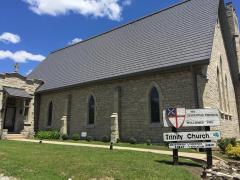
Trinity Episcopal Church, Logansport
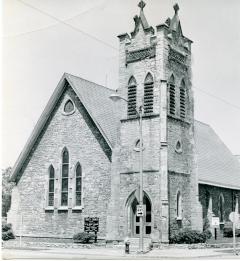
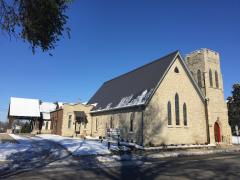
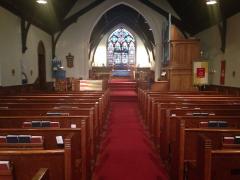
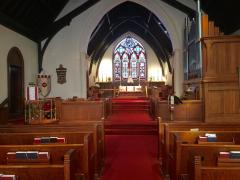
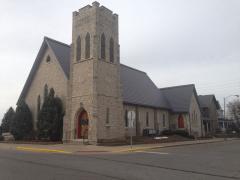
1media/Trinity Episcopal Church, Logansport, 22 Nov 2015 exterior.jpg2019-07-19T04:56:31-07:00John David Beatty85388be94808daa88b6f1a0c89beb70cd0fac2523271685image_header2025-10-23T09:44:34-07:00John David Beatty85388be94808daa88b6f1a0c89beb70cd0fac252In 1840, Bishop Jackson Kemper visited Logansport as he traveled west on the Wabash & Erie Canal. His visit likely marked the first time a service in the Episcopal Church was held in the town. A missionary, the Rev. Charles Todd, also worked briefly in the area. A year later the Rev. Francis H. L. Laird arrived to establish a congregation, conducting services in a schoolhouse at 228 Market Street. On 29 July 1841, a vestry was elected and chose the name of Trinity for the new congregation. For the next two years the congregation met on the third floor of a downtown building. The vestry raised subscriptions for a church building. Bishop Kemper reported to the Diocesan Council in 1842 that Laird had gone east to raise funds for a church. In 1843, what Kemper called "a fine stone church" measuring 38 by 50 feet was erected on a hill at the northwest corner of Seventh and Market streets. Other accounts suggest it was white and wood frame. A prime mover of the church was Graham Fitch, who had brought his family from New York in 1834 and had built a house at Seventh and Market streets. A strong abolitionist, he may have given support to fugitive slaves on the Underground Railroad. Bishop George Upfold did not consecrate the building until 26 May 1853, when it was free from debt.
Between 1843 and 1863, the church held services irregularly as a variety of clergy of short duration came and went. They often held dual pastoral roles with St. Mary's in Delphi. After the Civil War, the church experienced structural problems, and when the Rev. Edward Purdy was called as rector in 1869, he accepted with the understanding that the building would be demolished and a new one of stone constructed. Work on the new edifice began immediately with limestone quarried locally on Fitch's farm on the west side of town and hauled to the site via the Wabash & Erie Canal. On February 19, 1870, the congregation worshiped for the first time in the new building. A new transept and chancel were added six years later as the parish grew under Purdy's leadership. A tracker organ built by the firm Hook and Hastings of Boston was installed in 1877 and is still in use. Many members of the early congregation had been members of the Church of Ireland.
During the 1890s and early 1900s, the parish experienced financial shortages and a number of divisions as various rectors came and went. In 1894, the Rev. Douglas Hobbs reported that in the wake of the financial depression, the year had been the hardest financially in the history of the parish, but he commended the congregation for "the practice of self-denial in meeting their obligations." The Rev. George H. Richardson arrived in 1918 and led the parish in celebrating a jubilee in 1919 and helping to raise funds for an episcopal residence in South Bend for Bishop White. When he left in 1920, he was criticized for self-boasting and for not following canons. His successor, the Rev. Clinton B Cromwell, arrived in 1920 and found the parish "utterly impossible" and "resigned as soon as he could find work elsewhere." A history in the parish register written by Cromwell explained, "a clique wanting to run the church in absolute defiance of the canons and the Bishop resulted, just as in the case of every other priest for 12 or 15 years, in the attempt to starve the Rector." He added, "God only knows what the next man can do - unless he is an angel from heaven."
The next two rectors, Edward Roland and W. Edward Hoffenbacher, had longer rectorates. Over time, especially under Bishop Campbell Gray, Trinity became increasingly Anglo-Catholic. Gray's son, Francis Campbell Gray, served briefly as rector from 1936 to 1937.
In the 1980s, the vestry made plumbing and heating renovations, and the edifice underwent a major renovation. Then in November 1989, during the rectorate of William Hibbert, a severe thunderstorm struck the church, tearing off part of the roof in a downdraft. Much of the interior was severely damaged, but funds arrived to help rebuild the church. In addition to insurance money, financial help came from many parts of the diocese. In November 1990, the restored church was rededicated by Bishop Frank Gray.
Under the ministry of the Rev. Clark Miller, who became rector in 2010, the parish began giving away school supplies to needy children, which quickly expanded to providing clothes and free haircuts. It also opened a food pantry that serves between 75 and 80 people on the second and fourth Wednesdays of each month.
1media/Walter J Lockton_thumb.jpg2020-08-27T04:51:54-07:00Rev. Walter Jay Lockton2Rev. Walter Jay Lockton, St. John's Elkhart and other parishesmedia/Walter J Lockton.jpgplain2020-08-31T09:06:39-07:00
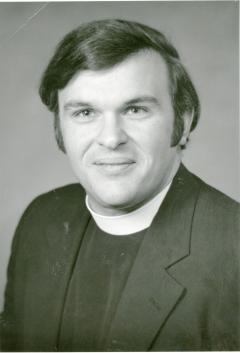
1media/Rev Francis C Coolbaugh, Trinity Logansport_thumb.jpg2020-09-06T19:21:18-07:00Rev. Francis C. Coolbaugh, rector of Trinity, Logansport2Rev. Francis C. Coolbaugh, rector of Trinity, Logansport (courtesy Holderness School website)media/Rev Francis C Coolbaugh, Trinity Logansport.jpgplain2020-09-06T19:22:12-07:00
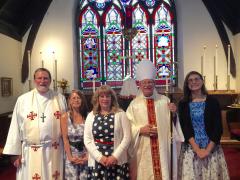
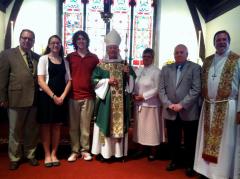
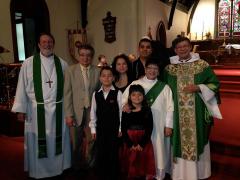
12019-08-05T18:57:49-07:00Trinity Episcopal Church, Logansport, 2015, Bishop Little Visitation1Trinity Episcopal Church, Logansport, 2015, Rev. Clark S. Miller, Rhonda Sue, Mary, Bishop Edward Little, and Emilymedia/Trinity Logansport with Rev. Clark S Miller, Rhonda Sue, Mary, Bishop Edward Little,m and Emily Nov 2015.jpgplain2019-08-05T18:57:49-07:00
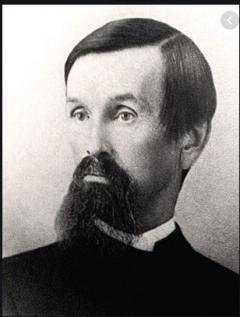
12019-09-20T11:58:18-07:00Rev. Elias Birdsall of Mishawaka1Rev. Elias Birdsall of Mishawakamedia/Elias Birdsall.JPGplain2019-09-20T11:58:18-07:00
1media/Rev John Trimble, Trinity Logansport_thumb.JPG2020-08-29T12:31:07-07:00Rev. John Trimble, Trinity Church, Logansport1Rev. John Trimble, Trinity Church, Logansportmedia/Rev John Trimble, Trinity Logansport.JPGplain2020-08-29T12:31:08-07:00
1media/Rev Benjamin Franklin Miller_thumb.jpg2020-09-06T13:08:24-07:00Rev. Benjamin Franklin Miller, rector of Trinity, Logansport1Rev. Benjamin Franklin Miller, rector of Trinity, Logansport, in Civil War uniform (Find a Grave)media/Rev Benjamin Franklin Miller.jpgplain2020-09-06T13:08:25-07:00
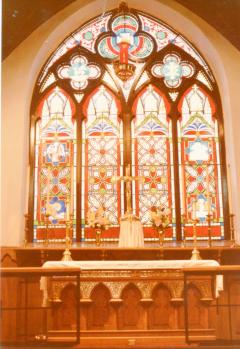
12019-07-24T16:29:25-07:00Trinity Episcopal Church, Logansport, east window1Trinity Episcopal Church, Logansport, east windowmedia/Trinity Logansport east window563.jpgplain2019-07-24T16:29:26-07:00
1media/Rev Douglas Irvine Hobbs, Trinity Logansport_thumb.jpg2020-09-06T13:25:38-07:00Rev. Douglas Irvine Hobbs, rector of Trinity, Logansport1Rev. Douglas Irvine Hobbs, rector of Trinity, Logansportmedia/Rev Douglas Irvine Hobbs, Trinity Logansport.jpgplain2020-09-06T13:25:38-07:00