This site requires Javascript to be turned on. Please enable Javascript and reload the page.
Thanks for your patience during our recent outage at scalar.usc.edu. While Scalar content is loading normally now, saving is still slow, and Scalar's 'additional metadata' features have been disabled, which may interfere with features like timelines and maps that depend on metadata. This also means that saving a page or media item will remove its additional metadata. If this occurs, you can use the 'All versions' link at the bottom of the page to restore the earlier version. We are continuing to troubleshoot, and will provide further updates as needed. Note that this only affects Scalar projects at scalar.usc.edu, and not those hosted elsewhere.
Race and the Digital : Racial Formation and 21st Century Technologies
Main Menu
"From Tweets to Streets?" A Research Project with Digital Supplement
"The Digital Divide" Research Projects
Race and the Digital Blog
Intersectionality and Tagging
Course Syllabus
Syllabus for Race and the Digital at UCLA
Statement of Values: Digital Ethnic Studies
Contributors' Portfolios
About "Race and the Digital"
Genevieve Carpio
cbaef6f4fe1847cc774ee8ef5c2d6efb0a58fda3
Kid Comet
b62a4423d252f961609f416b7188ffbc7d84a7d3
Yesenia Melgoza-Fernandez
a6a8d8933b14c7be3a522d5102f92c9dfe52e9b2
Michie Ortiz
25daabac1577ec1d12a68b2c0b0a15c4dba1374b
Eduardo D. Garcia
6e60d0784abf2b990f3510cceb60101259a8bdd3
Alan Evangelista
f3e41e7c002a037bb13d71a1e837eb5bf5bef12f
Ana Victoria H.
37ae5307effd9bccccea4f0fe7958d15cee30e07
Arturo Sotelo
38025c1bb15e36f2beff44b22df47fac513c339f
aa
de8e08161ecdfbe4206b74479dee1c1d007a58c4
Ashley Martinez-Munoz
a5a71a08c4c1c5dc7904ffcbc148c4f2edb1e723
Ebony Paramo
dca8ce0b7a38097adb1b511e4c75690f833171f0
"Out of the Shadows, Into the Streets!" Introduction - By Ana V. H.
1
2016-05-18T00:24:59-07:00
Ana Victoria H.
37ae5307effd9bccccea4f0fe7958d15cee30e07
8877
12
Ana V Hernandez
plain
2016-05-18T01:49:52-07:00
Ana Victoria H.
37ae5307effd9bccccea4f0fe7958d15cee30e07
Media Summary : The video begins by talking about viral videos and how their subject matters change quickly, the video-creator specifically points to the viral KONY 2012 video. Even though it garnered thousands of views and public outrage, it passed on to be forgotten. The video addresses the question, "WHY DO WE NO LONGER CARE?" by citing a psychological study: The Good Samaritan Story. The video-creator connects this study to viral videos by saying that, even though both leave strong impressions, when one returns to daily life and drowns in its physical problems, the message and its impressions are forgotten. Therefore, hot-viral-videos do not translate into long-term action. The video's creator then offers an alternative: "do not try and change the person, try and change the context around them". He cites another psychology-field term: channel factors which are "small but critical factors that makes it easier to engage in certain actions". He concludes with: "activism on social media tries to evoke strong emotions within a person, hoping that it will fuel the necessary action for change, but this just doesn't happen."
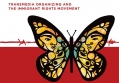
Reading Summary : The article opens with the author in the midst of the historic pro-immigrant rights May 2006 marches, triggered by the Sensenbrener bill H.R. 4437: The Border Protection, Anti-terrorism, and Illegal Immigration Control Act of 2005. In his recounting of the events, he brings in the role of Spanish-language media within the scope of these marches, which was: support and community engagement. He also makes a note of the English-language media, which didn’t acknowledge the scale of the movement until after the fact. This particular movement is important to Costanza because it not only highlighted the Latino working class, it also showed the growing power of media in social movements, most notably in this case: commercial Spanish language media in the United States. Costanza then takes a step back and talks about the widespread changes in our communications systems that have deeply altered the relationship between social movements and the media. The inclusion of media in movements, including the immigrant rights movement, have also engaged in participatory media . Although many activists remain weary of this, because there are large portions of the population who are excluded, they do recognize that these changes are occurring. Therefore, they think of ways to integrate participatory media into daily movement practices. On the other hand, others are not comfortable with this shift, they are uncomfortable with the loss of message control and resist to the opening to a greater diversity of voices. The author goes on to detail how the book was born: at The BorderSocial Forum for immigrant rights organizers who were interested in integrating digital tools and skills into their work (it took place on the southern side of the line between Texas and Chihuahua). Costanza then describes his own background as “a white, male-bodied, queer scholar/media-maker/activist with U.S. Citizenship who grew up in Ithica, New York” and “[who] work[s] to leverage [his] race, class, gender, and educational privilege to amplify the voices of the communities that have been systemically excluded from the public sphere. A shift in discourse occurs when he begins discussing how scholars and activists acknowledge that media and communications have started to become central to social movement and activity. He is critical and explains the shortcomings of scholarly analysis of media in relation to social movements: 1. Studies of social movements focus on mass media solely as an arena of public discourse 2. As social movements gained online visibility, the focus was on the latest communication technologies, overshadowing quotidian communication practices. Costanza coins the term transmedia organizing, which refers to social movement media-making trends as “cross-platform, participatory, and linked to action” 3. when theorizing about the internet as an important space in social movements, digital inequalities are overlooked: “understanding digital inequality means focusing on critical digital media literacy, in addition to basic questions of access to communication tools and connectivity”. The author then addresses Malcolm Gladwell, author of a controversial article, who claims that “social media fail[s] to produce the strong ties and vertical organization forms that he considered crucial to the success of the civil rights movement”. For Galdwell, the main component behind social movements has always been the personal connections. Costanza points out that Gladwell, however, failes to recognize that social media is a platform that is often used to extend and maintain these physical face-to-face relationships over time and space. Costanza also adamantly rejects Gladwell’s idea of vertical organizational structure, which in turn demands a military-styled hierarchy. Costanza provides examples of movements that have adopted a horizontal, anti-authoritarian organizational style (feminists, queer organizers, indigenous activists, etc). He also argues that these forms of movements have been aided and enabled by ICTs. Furthermore, he also explores the narratives around “clicktivism” and “anti-clictivism” by examining movements that were able to maintain a presence in both “tweets” and the “street”. Social media is complimentary to the physical manifestations of their activist efforts. In conclusion, Costanza once more focuses on Los Angeles and the immigrant rights movement, citing it as one that lies on juncture of cross-platform power. He emphasizes the immigrant workers who, after being antagonized by labor unions, are now engaging in them. He finds a paradox in the immigrant movement, which is one of the most powerful social movements that utilizes digital engagement yet many (like the immigrant laborers) are excluded from the digital sphere. He concludes his introduction by giving an overview of each chapter, which each describe key moments in the immigrant rights movement. Ultimately, his objective is to show the depth of how media-making is “actually part and parcel of movement building”. Costanza-Chock, Sasha. "Introduction." Out of the Shadows, into the Streets!: Transmedia Organizing and the Immigrant Rights Movement Analysis : The video and the article both represent two separate views regarding activism and the use of social media. While the Youtube video denounces online activism as fleeting and momentary, the book's chapter opens up to the exploration of how important digital media actually is to physical social movements. Since the text is only an introduction, it prefaces a more in-depth analysis of how media and digital technologies are actually changing social movements by complementing them. The video has a narrow focus with viral videos, but it makes a point that online social activism is a hot commodity based on trends that are in one day and out the next. Even though they make lasting impressions, on their own they do not lead to any long-term changes. Costanza argues that social activism is in fact an enhancement to social movements. On their own, the use of digital technologies don't make a movement. However, the use of social media does 1. broaden the scope of the movement by the people they reach, educate, and engage and 2. allows for more capabilities like the new relationships they form across time and space, the petitions they produce, the dialogue venues they open, etc. Something interesting that the Youtube video did provide was the concept of changing the context rather than the person. In a union between the video and the text, it seems plausible that online campaigns could, as an aiding supplement, be used to prompt contextual (i.e. structural) change. Costanza states: “Social movement media practices don’t take place on digital platforms alone; they are made up of myriad “small media” … that circulate online and off". Discussion Questions : 1. Do you have any recollection of the 2006 marches? Why do you think we have not been able to organize ourselves in those types of mass numbers. May Day just passed, and even though important immigration legislations are on the table (Deferred Action for Parents of Americans/Deferred Action for Childhood Arrivals Expansion), protests were not anywhere near the size of the 2006 marches. 2. What are your thoughts on the paradox of the heavy use of digital technologies in the immigrants rights movement and the inaccessibility that a lot of its participants have to these technologies? Can you think of specific examples with older adults (40+ years) and their engagement with social media activism? 3. What are some effective online activist techniques you've seen? Can you think of any video, or campaign that really resonated with you and prompted for further action beyond the screen?
This page has paths:
1
2016-03-18T13:52:38-07:00
Genevieve Carpio
cbaef6f4fe1847cc774ee8ef5c2d6efb0a58fda3
Race and the Digital Blog
Genevieve Carpio
28
plain
253675
2016-06-02T15:05:59-07:00
Genevieve Carpio
cbaef6f4fe1847cc774ee8ef5c2d6efb0a58fda3
Contents of this path:
1
2016-04-07T11:23:38-07:00
Out of The Closets, Out of the Shadows, and Into the Streets: Pathways to Participation in DREAM Activist Networks Blog Presentation by Addie Vielmas
23
Media Summary, Reading Summary, Analysis, and Discussion Questions for Week 10, May 31st. Ch.6
plain
2016-05-30T09:55:50-07:00
1
2016-05-18T00:24:59-07:00
"Out of the Shadows, Into the Streets!" Introduction - By Ana V. H.
12
Ana V Hernandez
plain
2016-05-18T01:49:52-07:00
1
2016-05-16T16:44:48-07:00
"Digital protest, hashtag ethnography, and the racial politics of social media in the United States" By Arturo Sotelo
12
plain
2016-05-17T22:17:07-07:00
1
2016-05-09T20:53:09-07:00
"Finding a Place in Cyberspace: Black Women, Technology, and Identity" by Ashley Martinez-Munoz
14
plain
2016-05-10T11:09:38-07:00
1
2016-05-08T22:04:41-07:00
"Intersecting Oppressions and Online Communities" by Eduardo D. Garcia
29
Examining the experience of women of color in Xbox Live
plain
2016-05-10T08:43:45-07:00
1
media/Screenshot (89).png
2016-05-04T05:38:08-07:00
"Beyond Margins: Intersectionality and the Digital Humanities By Kid Comet"
18
An Overview of, Risam Roopika's piece on Intersectionality and Digital Humanities
plain
2016-05-18T05:19:01-07:00
1
2016-04-28T15:26:34-07:00
"Cyberfeminism and Race" by Yesenia Melgoza-Fernandez
13
plain
2016-05-02T14:11:59-07:00
1
2016-04-23T22:32:21-07:00
"African American Women And Their Participation In Engineering and Technology Fields" By Alan Evangelista
27
plain
2016-04-24T11:43:51-07:00
1
2016-04-07T11:24:20-07:00
Measuring Race on the Internet: Users, Identity, and Cultural Difference in the United States by Michie Ortiz
21
plain
2016-04-20T14:00:16-07:00
1
2016-04-07T11:23:41-07:00
"Native Americans and the Digital Divide" by Ebony Paramo
9
plain
2016-04-13T13:09:26-07:00
1
2016-04-03T17:59:47-07:00
Blog Title by Joe Bruin
23
plain
2016-05-03T08:43:14-07:00
This page has replies:
1
2016-05-18T18:32:00-07:00
Eduardo D. Garcia
6e60d0784abf2b990f3510cceb60101259a8bdd3
Online Activism: A Failure or a Success?
Eduardo D. Garcia
1
plain
2016-05-18T18:32:00-07:00
Ana, your blog was well done and informative, and as Ashley mentioned, you broke down the introductory chapter really well. To answer your first discussion question, I was pretty young when the May Day Parade of 2006 occurred, but I am kind of surprise that this May Day was not as big or even bigger than 2006. This is an election year, and we do have a presidential candidate, Donald J. Trump, who started his campaign a year ago attacking Mexican immigrants and calling them "rapists" and "drug dealers;" I would assume that the May Day Parade would have been bigger this year. Sadly, that was not the case.
To answer your third question, which is also a response to my title, is the Bernie Sanders movement. The hashtag #feelthebern has become a catchphrase in the Sander's campaign and reading his tweets and hearing his speeches in his rallies, it made more care more about the political process. The Sanders' campaign inspire me to phonebank, go to rallies, go to some protests, the most recent one I went to was the #OccupyCNN, in which we protested in front of the CNN building on Sunset Blvd about their bias and their lack of coverage of the Sanders' campaign. In this case, online activism did work. Other times, it does not, which is evident in the Kony 2012 online campaign to arrest Ugandan Joseph Kony for the war crimes he committed. That was a failure and it was soon forgotten.
Eduardo D. Garcia
6e60d0784abf2b990f3510cceb60101259a8bdd3
Contents of this reply:
1
2016-05-18T00:24:59-07:00
"Out of the Shadows, Into the Streets!" Introduction - By Ana V. H.
12
Ana V Hernandez
plain
2016-05-18T01:49:52-07:00
Media Summary : The video begins by talking about viral videos and how their subject matters change quickly, the video-creator specifically points to the viral KONY 2012 video. Even though it garnered thousands of views and public outrage, it passed on to be forgotten. The video addresses the question, "WHY DO WE NO LONGER CARE?" by citing a psychological study: The Good Samaritan Story. The video-creator connects this study to viral videos by saying that, even though both leave strong impressions, when one returns to daily life and drowns in its physical problems, the message and its impressions are forgotten. Therefore, hot-viral-videos do not translate into long-term action. The video's creator then offers an alternative: "do not try and change the person, try and change the context around them". He cites another psychology-field term: channel factors which are "small but critical factors that makes it easier to engage in certain actions". He concludes with: "activism on social media tries to evoke strong emotions within a person, hoping that it will fuel the necessary action for change, but this just doesn't happen."
Reading Summary : The article opens with the author in the midst of the historic pro-immigrant rights May 2006 marches, triggered by the Sensenbrener bill H.R. 4437: The Border Protection, Anti-terrorism, and Illegal Immigration Control Act of 2005. In his recounting of the events, he brings in the role of Spanish-language media within the scope of these marches, which was: support and community engagement. He also makes a note of the English-language media, which didn’t acknowledge the scale of the movement until after the fact. This particular movement is important to Costanza because it not only highlighted the Latino working class, it also showed the growing power of media in social movements, most notably in this case: commercial Spanish language media in the United States. Costanza then takes a step back and talks about the widespread changes in our communications systems that have deeply altered the relationship between social movements and the media. The inclusion of media in movements, including the immigrant rights movement, have also engaged in participatory media . Although many activists remain weary of this, because there are large portions of the population who are excluded, they do recognize that these changes are occurring. Therefore, they think of ways to integrate participatory media into daily movement practices. On the other hand, others are not comfortable with this shift, they are uncomfortable with the loss of message control and resist to the opening to a greater diversity of voices. The author goes on to detail how the book was born: at The BorderSocial Forum for immigrant rights organizers who were interested in integrating digital tools and skills into their work (it took place on the southern side of the line between Texas and Chihuahua). Costanza then describes his own background as “a white, male-bodied, queer scholar/media-maker/activist with U.S. Citizenship who grew up in Ithica, New York” and “[who] work[s] to leverage [his] race, class, gender, and educational privilege to amplify the voices of the communities that have been systemically excluded from the public sphere. A shift in discourse occurs when he begins discussing how scholars and activists acknowledge that media and communications have started to become central to social movement and activity. He is critical and explains the shortcomings of scholarly analysis of media in relation to social movements: 1. Studies of social movements focus on mass media solely as an arena of public discourse 2. As social movements gained online visibility, the focus was on the latest communication technologies, overshadowing quotidian communication practices. Costanza coins the term transmedia organizing, which refers to social movement media-making trends as “cross-platform, participatory, and linked to action” 3. when theorizing about the internet as an important space in social movements, digital inequalities are overlooked: “understanding digital inequality means focusing on critical digital media literacy, in addition to basic questions of access to communication tools and connectivity”. The author then addresses Malcolm Gladwell, author of a controversial article, who claims that “social media fail[s] to produce the strong ties and vertical organization forms that he considered crucial to the success of the civil rights movement”. For Galdwell, the main component behind social movements has always been the personal connections. Costanza points out that Gladwell, however, failes to recognize that social media is a platform that is often used to extend and maintain these physical face-to-face relationships over time and space. Costanza also adamantly rejects Gladwell’s idea of vertical organizational structure, which in turn demands a military-styled hierarchy. Costanza provides examples of movements that have adopted a horizontal, anti-authoritarian organizational style (feminists, queer organizers, indigenous activists, etc). He also argues that these forms of movements have been aided and enabled by ICTs. Furthermore, he also explores the narratives around “clicktivism” and “anti-clictivism” by examining movements that were able to maintain a presence in both “tweets” and the “street”. Social media is complimentary to the physical manifestations of their activist efforts. In conclusion, Costanza once more focuses on Los Angeles and the immigrant rights movement, citing it as one that lies on juncture of cross-platform power. He emphasizes the immigrant workers who, after being antagonized by labor unions, are now engaging in them. He finds a paradox in the immigrant movement, which is one of the most powerful social movements that utilizes digital engagement yet many (like the immigrant laborers) are excluded from the digital sphere. He concludes his introduction by giving an overview of each chapter, which each describe key moments in the immigrant rights movement. Ultimately, his objective is to show the depth of how media-making is “actually part and parcel of movement building”. Costanza-Chock, Sasha. "Introduction." Out of the Shadows, into the Streets!: Transmedia Organizing and the Immigrant Rights Movement Analysis : The video and the article both represent two separate views regarding activism and the use of social media. While the Youtube video denounces online activism as fleeting and momentary, the book's chapter opens up to the exploration of how important digital media actually is to physical social movements. Since the text is only an introduction, it prefaces a more in-depth analysis of how media and digital technologies are actually changing social movements by complementing them. The video has a narrow focus with viral videos, but it makes a point that online social activism is a hot commodity based on trends that are in one day and out the next. Even though they make lasting impressions, on their own they do not lead to any long-term changes. Costanza argues that social activism is in fact an enhancement to social movements. On their own, the use of digital technologies don't make a movement. However, the use of social media does 1. broaden the scope of the movement by the people they reach, educate, and engage and 2. allows for more capabilities like the new relationships they form across time and space, the petitions they produce, the dialogue venues they open, etc. Something interesting that the Youtube video did provide was the concept of changing the context rather than the person. In a union between the video and the text, it seems plausible that online campaigns could, as an aiding supplement, be used to prompt contextual (i.e. structural) change. Costanza states: “Social movement media practices don’t take place on digital platforms alone; they are made up of myriad “small media” … that circulate online and off". Discussion Questions : 1. Do you have any recollection of the 2006 marches? Why do you think we have not been able to organize ourselves in those types of mass numbers. May Day just passed, and even though important immigration legislations are on the table (Deferred Action for Parents of Americans/Deferred Action for Childhood Arrivals Expansion), protests were not anywhere near the size of the 2006 marches. 2. What are your thoughts on the paradox of the heavy use of digital technologies in the immigrants rights movement and the inaccessibility that a lot of its participants have to these technologies? Can you think of specific examples with older adults (40+ years) and their engagement with social media activism? 3. What are some effective online activist techniques you've seen? Can you think of any video, or campaign that really resonated with you and prompted for further action beyond the screen?
1
2016-05-18T14:38:05-07:00
Ashley Martinez-Munoz
a5a71a08c4c1c5dc7904ffcbc148c4f2edb1e723
Above and beyond the screen
Ashley Martinez-Munoz
2
plain
2016-05-18T18:37:16-07:00
Ana, your blog was informative and helpful in pointing out the main topics of the introduction chapter, great job! I actually have no recollection of 2006 marches. I think people have not been able to organize themselves in those types of mass numbers, because there is not enough attention or “spotlight” put on them. I was not aware of May Day unfortunately. I am one prime example of how out of touch I am with the reality world unless it is posted on mass media that I put my attention to. This is a sad observation, but it does have a huge impact on social movements such as this. It definitely is ironic that such Immigrants’ rights movement have digital technologies play a huge role within them, and yet those part of the rights movement cannot even properly utilize such technology. We are all aware that many immigrants perhaps do not have access to such digital technologies or have knowledge on how to utilize them to their full potential. The only activist techniques I’ve seen are the videos that utilize guilt or fear within its viewers. Such videos are the ones that promote donating money to certain foundations and use a “sad” model that would ultimately have a better life if we, the viewers, took action into our own hands. I honestly am never fully inspired by a video to have me to take further action beyond the screen. As the reading initially states such videos do not have a long lasting effect, which I do believe is unfortunate. It takes a lot today to grab people’s attention and make them take action upon a certain dilemma/situation.
Ashley Martinez-Munoz
a5a71a08c4c1c5dc7904ffcbc148c4f2edb1e723
Contents of this reply:
1
2016-05-18T00:24:59-07:00
"Out of the Shadows, Into the Streets!" Introduction - By Ana V. H.
12
Ana V Hernandez
plain
2016-05-18T01:49:52-07:00
Media Summary : The video begins by talking about viral videos and how their subject matters change quickly, the video-creator specifically points to the viral KONY 2012 video. Even though it garnered thousands of views and public outrage, it passed on to be forgotten. The video addresses the question, "WHY DO WE NO LONGER CARE?" by citing a psychological study: The Good Samaritan Story. The video-creator connects this study to viral videos by saying that, even though both leave strong impressions, when one returns to daily life and drowns in its physical problems, the message and its impressions are forgotten. Therefore, hot-viral-videos do not translate into long-term action. The video's creator then offers an alternative: "do not try and change the person, try and change the context around them". He cites another psychology-field term: channel factors which are "small but critical factors that makes it easier to engage in certain actions". He concludes with: "activism on social media tries to evoke strong emotions within a person, hoping that it will fuel the necessary action for change, but this just doesn't happen."
Reading Summary : The article opens with the author in the midst of the historic pro-immigrant rights May 2006 marches, triggered by the Sensenbrener bill H.R. 4437: The Border Protection, Anti-terrorism, and Illegal Immigration Control Act of 2005. In his recounting of the events, he brings in the role of Spanish-language media within the scope of these marches, which was: support and community engagement. He also makes a note of the English-language media, which didn’t acknowledge the scale of the movement until after the fact. This particular movement is important to Costanza because it not only highlighted the Latino working class, it also showed the growing power of media in social movements, most notably in this case: commercial Spanish language media in the United States. Costanza then takes a step back and talks about the widespread changes in our communications systems that have deeply altered the relationship between social movements and the media. The inclusion of media in movements, including the immigrant rights movement, have also engaged in participatory media . Although many activists remain weary of this, because there are large portions of the population who are excluded, they do recognize that these changes are occurring. Therefore, they think of ways to integrate participatory media into daily movement practices. On the other hand, others are not comfortable with this shift, they are uncomfortable with the loss of message control and resist to the opening to a greater diversity of voices. The author goes on to detail how the book was born: at The BorderSocial Forum for immigrant rights organizers who were interested in integrating digital tools and skills into their work (it took place on the southern side of the line between Texas and Chihuahua). Costanza then describes his own background as “a white, male-bodied, queer scholar/media-maker/activist with U.S. Citizenship who grew up in Ithica, New York” and “[who] work[s] to leverage [his] race, class, gender, and educational privilege to amplify the voices of the communities that have been systemically excluded from the public sphere. A shift in discourse occurs when he begins discussing how scholars and activists acknowledge that media and communications have started to become central to social movement and activity. He is critical and explains the shortcomings of scholarly analysis of media in relation to social movements: 1. Studies of social movements focus on mass media solely as an arena of public discourse 2. As social movements gained online visibility, the focus was on the latest communication technologies, overshadowing quotidian communication practices. Costanza coins the term transmedia organizing, which refers to social movement media-making trends as “cross-platform, participatory, and linked to action” 3. when theorizing about the internet as an important space in social movements, digital inequalities are overlooked: “understanding digital inequality means focusing on critical digital media literacy, in addition to basic questions of access to communication tools and connectivity”. The author then addresses Malcolm Gladwell, author of a controversial article, who claims that “social media fail[s] to produce the strong ties and vertical organization forms that he considered crucial to the success of the civil rights movement”. For Galdwell, the main component behind social movements has always been the personal connections. Costanza points out that Gladwell, however, failes to recognize that social media is a platform that is often used to extend and maintain these physical face-to-face relationships over time and space. Costanza also adamantly rejects Gladwell’s idea of vertical organizational structure, which in turn demands a military-styled hierarchy. Costanza provides examples of movements that have adopted a horizontal, anti-authoritarian organizational style (feminists, queer organizers, indigenous activists, etc). He also argues that these forms of movements have been aided and enabled by ICTs. Furthermore, he also explores the narratives around “clicktivism” and “anti-clictivism” by examining movements that were able to maintain a presence in both “tweets” and the “street”. Social media is complimentary to the physical manifestations of their activist efforts. In conclusion, Costanza once more focuses on Los Angeles and the immigrant rights movement, citing it as one that lies on juncture of cross-platform power. He emphasizes the immigrant workers who, after being antagonized by labor unions, are now engaging in them. He finds a paradox in the immigrant movement, which is one of the most powerful social movements that utilizes digital engagement yet many (like the immigrant laborers) are excluded from the digital sphere. He concludes his introduction by giving an overview of each chapter, which each describe key moments in the immigrant rights movement. Ultimately, his objective is to show the depth of how media-making is “actually part and parcel of movement building”. Costanza-Chock, Sasha. "Introduction." Out of the Shadows, into the Streets!: Transmedia Organizing and the Immigrant Rights Movement Analysis : The video and the article both represent two separate views regarding activism and the use of social media. While the Youtube video denounces online activism as fleeting and momentary, the book's chapter opens up to the exploration of how important digital media actually is to physical social movements. Since the text is only an introduction, it prefaces a more in-depth analysis of how media and digital technologies are actually changing social movements by complementing them. The video has a narrow focus with viral videos, but it makes a point that online social activism is a hot commodity based on trends that are in one day and out the next. Even though they make lasting impressions, on their own they do not lead to any long-term changes. Costanza argues that social activism is in fact an enhancement to social movements. On their own, the use of digital technologies don't make a movement. However, the use of social media does 1. broaden the scope of the movement by the people they reach, educate, and engage and 2. allows for more capabilities like the new relationships they form across time and space, the petitions they produce, the dialogue venues they open, etc. Something interesting that the Youtube video did provide was the concept of changing the context rather than the person. In a union between the video and the text, it seems plausible that online campaigns could, as an aiding supplement, be used to prompt contextual (i.e. structural) change. Costanza states: “Social movement media practices don’t take place on digital platforms alone; they are made up of myriad “small media” … that circulate online and off". Discussion Questions : 1. Do you have any recollection of the 2006 marches? Why do you think we have not been able to organize ourselves in those types of mass numbers. May Day just passed, and even though important immigration legislations are on the table (Deferred Action for Parents of Americans/Deferred Action for Childhood Arrivals Expansion), protests were not anywhere near the size of the 2006 marches. 2. What are your thoughts on the paradox of the heavy use of digital technologies in the immigrants rights movement and the inaccessibility that a lot of its participants have to these technologies? Can you think of specific examples with older adults (40+ years) and their engagement with social media activism? 3. What are some effective online activist techniques you've seen? Can you think of any video, or campaign that really resonated with you and prompted for further action beyond the screen?
1
2016-05-18T21:00:02-07:00
aa
de8e08161ecdfbe4206b74479dee1c1d007a58c4
#BERNIE2016
aa
2
plain
2016-05-18T21:04:58-07:00
Like Eduardo mentioned, one of the movements that I have become involved with is the Presidential campaign of Bernie Sanders. I think I have become involved with this campaign because of the heavy influence of social media. Sure, I have shared my number of posts telling people to register, to vote for Bernie, and the media black out he tends to receive. But I think it's important to mention that I do that because of the many posts, pages, links, Bernie Sanders has. Many people on my news feed also share Bernie articles so that people #feelthebern . On Facebook, Instagram, and Twitter, there are many people who are advocating for Bernie and even get people out to events by posting on these social media websites. Recently, I went to a rally hosted by Bruins for Bernie because the flyer and event was shared a lot. I know I also have done more beyond the screen by helping registering people to vote, informing others about the views and how the primaries work, and finally going to dorms and telling people to register. When I was reading the chapter, and how immigrants are put in a bad light or made invisible, it also reminded me of the Bernie campaign. This is due to the fact that Bernie's wins, speeches and many other things are withheld from the media in a sort of media blackout . I mentioned this because the media, especially television news, has too much power in determine what , who is shown and in what light.
aa
de8e08161ecdfbe4206b74479dee1c1d007a58c4
Contents of this reply:
1
2016-05-18T00:24:59-07:00
"Out of the Shadows, Into the Streets!" Introduction - By Ana V. H.
12
Ana V Hernandez
plain
2016-05-18T01:49:52-07:00
Media Summary : The video begins by talking about viral videos and how their subject matters change quickly, the video-creator specifically points to the viral KONY 2012 video. Even though it garnered thousands of views and public outrage, it passed on to be forgotten. The video addresses the question, "WHY DO WE NO LONGER CARE?" by citing a psychological study: The Good Samaritan Story. The video-creator connects this study to viral videos by saying that, even though both leave strong impressions, when one returns to daily life and drowns in its physical problems, the message and its impressions are forgotten. Therefore, hot-viral-videos do not translate into long-term action. The video's creator then offers an alternative: "do not try and change the person, try and change the context around them". He cites another psychology-field term: channel factors which are "small but critical factors that makes it easier to engage in certain actions". He concludes with: "activism on social media tries to evoke strong emotions within a person, hoping that it will fuel the necessary action for change, but this just doesn't happen."
Reading Summary : The article opens with the author in the midst of the historic pro-immigrant rights May 2006 marches, triggered by the Sensenbrener bill H.R. 4437: The Border Protection, Anti-terrorism, and Illegal Immigration Control Act of 2005. In his recounting of the events, he brings in the role of Spanish-language media within the scope of these marches, which was: support and community engagement. He also makes a note of the English-language media, which didn’t acknowledge the scale of the movement until after the fact. This particular movement is important to Costanza because it not only highlighted the Latino working class, it also showed the growing power of media in social movements, most notably in this case: commercial Spanish language media in the United States. Costanza then takes a step back and talks about the widespread changes in our communications systems that have deeply altered the relationship between social movements and the media. The inclusion of media in movements, including the immigrant rights movement, have also engaged in participatory media . Although many activists remain weary of this, because there are large portions of the population who are excluded, they do recognize that these changes are occurring. Therefore, they think of ways to integrate participatory media into daily movement practices. On the other hand, others are not comfortable with this shift, they are uncomfortable with the loss of message control and resist to the opening to a greater diversity of voices. The author goes on to detail how the book was born: at The BorderSocial Forum for immigrant rights organizers who were interested in integrating digital tools and skills into their work (it took place on the southern side of the line between Texas and Chihuahua). Costanza then describes his own background as “a white, male-bodied, queer scholar/media-maker/activist with U.S. Citizenship who grew up in Ithica, New York” and “[who] work[s] to leverage [his] race, class, gender, and educational privilege to amplify the voices of the communities that have been systemically excluded from the public sphere. A shift in discourse occurs when he begins discussing how scholars and activists acknowledge that media and communications have started to become central to social movement and activity. He is critical and explains the shortcomings of scholarly analysis of media in relation to social movements: 1. Studies of social movements focus on mass media solely as an arena of public discourse 2. As social movements gained online visibility, the focus was on the latest communication technologies, overshadowing quotidian communication practices. Costanza coins the term transmedia organizing, which refers to social movement media-making trends as “cross-platform, participatory, and linked to action” 3. when theorizing about the internet as an important space in social movements, digital inequalities are overlooked: “understanding digital inequality means focusing on critical digital media literacy, in addition to basic questions of access to communication tools and connectivity”. The author then addresses Malcolm Gladwell, author of a controversial article, who claims that “social media fail[s] to produce the strong ties and vertical organization forms that he considered crucial to the success of the civil rights movement”. For Galdwell, the main component behind social movements has always been the personal connections. Costanza points out that Gladwell, however, failes to recognize that social media is a platform that is often used to extend and maintain these physical face-to-face relationships over time and space. Costanza also adamantly rejects Gladwell’s idea of vertical organizational structure, which in turn demands a military-styled hierarchy. Costanza provides examples of movements that have adopted a horizontal, anti-authoritarian organizational style (feminists, queer organizers, indigenous activists, etc). He also argues that these forms of movements have been aided and enabled by ICTs. Furthermore, he also explores the narratives around “clicktivism” and “anti-clictivism” by examining movements that were able to maintain a presence in both “tweets” and the “street”. Social media is complimentary to the physical manifestations of their activist efforts. In conclusion, Costanza once more focuses on Los Angeles and the immigrant rights movement, citing it as one that lies on juncture of cross-platform power. He emphasizes the immigrant workers who, after being antagonized by labor unions, are now engaging in them. He finds a paradox in the immigrant movement, which is one of the most powerful social movements that utilizes digital engagement yet many (like the immigrant laborers) are excluded from the digital sphere. He concludes his introduction by giving an overview of each chapter, which each describe key moments in the immigrant rights movement. Ultimately, his objective is to show the depth of how media-making is “actually part and parcel of movement building”. Costanza-Chock, Sasha. "Introduction." Out of the Shadows, into the Streets!: Transmedia Organizing and the Immigrant Rights Movement Analysis : The video and the article both represent two separate views regarding activism and the use of social media. While the Youtube video denounces online activism as fleeting and momentary, the book's chapter opens up to the exploration of how important digital media actually is to physical social movements. Since the text is only an introduction, it prefaces a more in-depth analysis of how media and digital technologies are actually changing social movements by complementing them. The video has a narrow focus with viral videos, but it makes a point that online social activism is a hot commodity based on trends that are in one day and out the next. Even though they make lasting impressions, on their own they do not lead to any long-term changes. Costanza argues that social activism is in fact an enhancement to social movements. On their own, the use of digital technologies don't make a movement. However, the use of social media does 1. broaden the scope of the movement by the people they reach, educate, and engage and 2. allows for more capabilities like the new relationships they form across time and space, the petitions they produce, the dialogue venues they open, etc. Something interesting that the Youtube video did provide was the concept of changing the context rather than the person. In a union between the video and the text, it seems plausible that online campaigns could, as an aiding supplement, be used to prompt contextual (i.e. structural) change. Costanza states: “Social movement media practices don’t take place on digital platforms alone; they are made up of myriad “small media” … that circulate online and off". Discussion Questions : 1. Do you have any recollection of the 2006 marches? Why do you think we have not been able to organize ourselves in those types of mass numbers. May Day just passed, and even though important immigration legislations are on the table (Deferred Action for Parents of Americans/Deferred Action for Childhood Arrivals Expansion), protests were not anywhere near the size of the 2006 marches. 2. What are your thoughts on the paradox of the heavy use of digital technologies in the immigrants rights movement and the inaccessibility that a lot of its participants have to these technologies? Can you think of specific examples with older adults (40+ years) and their engagement with social media activism? 3. What are some effective online activist techniques you've seen? Can you think of any video, or campaign that really resonated with you and prompted for further action beyond the screen?
1
2016-05-19T00:33:15-07:00
Alan Evangelista
f3e41e7c002a037bb13d71a1e837eb5bf5bef12f
#AllTalkNoAction?
Alan Evangelista
1
plain
2016-05-19T00:33:16-07:00
Does an online post or hashtag calling for social justice translate into real world action? Or is it all talk? This is the question that has often been debated and it poses for interesting and insightful dialogue. Online activism has certainly received its fair share of criticism and regardless of your stance on the effectiveness of it, it’s important not to discount the points made by critics (some of which are highlighted in the YouTube video). To a certain extent, I agree with those who argue that online activism is just all talk. There are thousands of individuals who engage in online activism where they post, share, and/or retweet a big social issue but that is as far as they go. Eventually the “online buzz” around the topic fades (as seen with Kony 2012) and no real world action takes place. With that being said however, I do believe that online activism is important and there have been many individuals and groups who have taken their activism beyond the confines of the digital world into the real world and vice versa. What I think is important to note is that online activism alone must not be seen as a catalyst for producing action, rather it should be seen as an “enhancement of social movements” which helps generate greater awareness and relationships among protesters (as stated by Costanza and mentioned by you).
Great Blog!
Alan Evangelista
f3e41e7c002a037bb13d71a1e837eb5bf5bef12f
Contents of this reply:
1
2016-05-18T00:24:59-07:00
"Out of the Shadows, Into the Streets!" Introduction - By Ana V. H.
12
Ana V Hernandez
plain
2016-05-18T01:49:52-07:00
Media Summary : The video begins by talking about viral videos and how their subject matters change quickly, the video-creator specifically points to the viral KONY 2012 video. Even though it garnered thousands of views and public outrage, it passed on to be forgotten. The video addresses the question, "WHY DO WE NO LONGER CARE?" by citing a psychological study: The Good Samaritan Story. The video-creator connects this study to viral videos by saying that, even though both leave strong impressions, when one returns to daily life and drowns in its physical problems, the message and its impressions are forgotten. Therefore, hot-viral-videos do not translate into long-term action. The video's creator then offers an alternative: "do not try and change the person, try and change the context around them". He cites another psychology-field term: channel factors which are "small but critical factors that makes it easier to engage in certain actions". He concludes with: "activism on social media tries to evoke strong emotions within a person, hoping that it will fuel the necessary action for change, but this just doesn't happen."
Reading Summary : The article opens with the author in the midst of the historic pro-immigrant rights May 2006 marches, triggered by the Sensenbrener bill H.R. 4437: The Border Protection, Anti-terrorism, and Illegal Immigration Control Act of 2005. In his recounting of the events, he brings in the role of Spanish-language media within the scope of these marches, which was: support and community engagement. He also makes a note of the English-language media, which didn’t acknowledge the scale of the movement until after the fact. This particular movement is important to Costanza because it not only highlighted the Latino working class, it also showed the growing power of media in social movements, most notably in this case: commercial Spanish language media in the United States. Costanza then takes a step back and talks about the widespread changes in our communications systems that have deeply altered the relationship between social movements and the media. The inclusion of media in movements, including the immigrant rights movement, have also engaged in participatory media . Although many activists remain weary of this, because there are large portions of the population who are excluded, they do recognize that these changes are occurring. Therefore, they think of ways to integrate participatory media into daily movement practices. On the other hand, others are not comfortable with this shift, they are uncomfortable with the loss of message control and resist to the opening to a greater diversity of voices. The author goes on to detail how the book was born: at The BorderSocial Forum for immigrant rights organizers who were interested in integrating digital tools and skills into their work (it took place on the southern side of the line between Texas and Chihuahua). Costanza then describes his own background as “a white, male-bodied, queer scholar/media-maker/activist with U.S. Citizenship who grew up in Ithica, New York” and “[who] work[s] to leverage [his] race, class, gender, and educational privilege to amplify the voices of the communities that have been systemically excluded from the public sphere. A shift in discourse occurs when he begins discussing how scholars and activists acknowledge that media and communications have started to become central to social movement and activity. He is critical and explains the shortcomings of scholarly analysis of media in relation to social movements: 1. Studies of social movements focus on mass media solely as an arena of public discourse 2. As social movements gained online visibility, the focus was on the latest communication technologies, overshadowing quotidian communication practices. Costanza coins the term transmedia organizing, which refers to social movement media-making trends as “cross-platform, participatory, and linked to action” 3. when theorizing about the internet as an important space in social movements, digital inequalities are overlooked: “understanding digital inequality means focusing on critical digital media literacy, in addition to basic questions of access to communication tools and connectivity”. The author then addresses Malcolm Gladwell, author of a controversial article, who claims that “social media fail[s] to produce the strong ties and vertical organization forms that he considered crucial to the success of the civil rights movement”. For Galdwell, the main component behind social movements has always been the personal connections. Costanza points out that Gladwell, however, failes to recognize that social media is a platform that is often used to extend and maintain these physical face-to-face relationships over time and space. Costanza also adamantly rejects Gladwell’s idea of vertical organizational structure, which in turn demands a military-styled hierarchy. Costanza provides examples of movements that have adopted a horizontal, anti-authoritarian organizational style (feminists, queer organizers, indigenous activists, etc). He also argues that these forms of movements have been aided and enabled by ICTs. Furthermore, he also explores the narratives around “clicktivism” and “anti-clictivism” by examining movements that were able to maintain a presence in both “tweets” and the “street”. Social media is complimentary to the physical manifestations of their activist efforts. In conclusion, Costanza once more focuses on Los Angeles and the immigrant rights movement, citing it as one that lies on juncture of cross-platform power. He emphasizes the immigrant workers who, after being antagonized by labor unions, are now engaging in them. He finds a paradox in the immigrant movement, which is one of the most powerful social movements that utilizes digital engagement yet many (like the immigrant laborers) are excluded from the digital sphere. He concludes his introduction by giving an overview of each chapter, which each describe key moments in the immigrant rights movement. Ultimately, his objective is to show the depth of how media-making is “actually part and parcel of movement building”. Costanza-Chock, Sasha. "Introduction." Out of the Shadows, into the Streets!: Transmedia Organizing and the Immigrant Rights Movement Analysis : The video and the article both represent two separate views regarding activism and the use of social media. While the Youtube video denounces online activism as fleeting and momentary, the book's chapter opens up to the exploration of how important digital media actually is to physical social movements. Since the text is only an introduction, it prefaces a more in-depth analysis of how media and digital technologies are actually changing social movements by complementing them. The video has a narrow focus with viral videos, but it makes a point that online social activism is a hot commodity based on trends that are in one day and out the next. Even though they make lasting impressions, on their own they do not lead to any long-term changes. Costanza argues that social activism is in fact an enhancement to social movements. On their own, the use of digital technologies don't make a movement. However, the use of social media does 1. broaden the scope of the movement by the people they reach, educate, and engage and 2. allows for more capabilities like the new relationships they form across time and space, the petitions they produce, the dialogue venues they open, etc. Something interesting that the Youtube video did provide was the concept of changing the context rather than the person. In a union between the video and the text, it seems plausible that online campaigns could, as an aiding supplement, be used to prompt contextual (i.e. structural) change. Costanza states: “Social movement media practices don’t take place on digital platforms alone; they are made up of myriad “small media” … that circulate online and off". Discussion Questions : 1. Do you have any recollection of the 2006 marches? Why do you think we have not been able to organize ourselves in those types of mass numbers. May Day just passed, and even though important immigration legislations are on the table (Deferred Action for Parents of Americans/Deferred Action for Childhood Arrivals Expansion), protests were not anywhere near the size of the 2006 marches. 2. What are your thoughts on the paradox of the heavy use of digital technologies in the immigrants rights movement and the inaccessibility that a lot of its participants have to these technologies? Can you think of specific examples with older adults (40+ years) and their engagement with social media activism? 3. What are some effective online activist techniques you've seen? Can you think of any video, or campaign that really resonated with you and prompted for further action beyond the screen?
1
2016-05-19T00:54:28-07:00
Ebony Paramo
dca8ce0b7a38097adb1b511e4c75690f833171f0
Online and Offline Activism
Ebony Paramo
3
plain
2016-05-19T01:09:30-07:00
Ten years ago, I was in elementary school. I do recall snippets of the 2006 march (segments of what I saw about it on the news) but did not put much attention on what it was about and who it sought to help. I used my own experience to see how the advice the video you posted gave on "change the context around [the people]". My surroundings involved me going to school, completing my homework, looking after my brothers and getting my chores done. Perhaps if I was not flooded with things to do, maybe I would have paid more attention. I do agree with Costanza-Chock's statement that social media complement social movements. However, I do see that obligations people have (such as making ends meet, having to work long hours to do so, maybe having to go to school) affect their participation in movements and in becoming activists overall. Their choices really focus on helping them and their loved-ones to survive. Obligations of this nature may hinder people's - age 40 and older- involvement in social movements, and to an extent their involvement in social media and being part of a hashtag movement(s). Adding on to what Ashley shared, I too seen videos asking the viewers for money to better the lives of children, animals, and future of campaigns. As a Disability Studies minor, I was taught that these types of media were seen towards the line of a charity model, or really portraying those in need worthy of pity and worthy of being given money or any other thing(s) that might help in their recovery. Money may help movements, but what is really needed to change is people, and lots of them if making an impact is the goal. Though I am not involved in presidential campaigns as Eduardo and Addie, whom I commend, I help people vote. As an intern of Empower LA , I help neighborhoods in Los Angeles and their residents advocate for change by registering people to vote and telling them of the different social media sites the department has available for them to check for updates and events. I thought about that while reading, and also compared how it is unfortunate that there could be a bigger turnout for marches like May Day and for events in Empower LA since there is now social media that can notify people; but it is like these social media alerts are taken for granted. I feel social media has become so common, so integrated in the daily lives of people in the twenty-first century (not to mention that some individuals associate it with youth) that it is not given the attention and time it deserves. And in order to do that, lifestyles need to be given the attention they deserve, by giving them time away from busy schedules and many commitments to spend on causes individuals care about. Overall, wonderful work! I liked the fluidity of your blog and the interesting questions you posed.
Ebony Paramo
dca8ce0b7a38097adb1b511e4c75690f833171f0
Contents of this reply:
1
2016-05-18T00:24:59-07:00
"Out of the Shadows, Into the Streets!" Introduction - By Ana V. H.
12
Ana V Hernandez
plain
2016-05-18T01:49:52-07:00
Media Summary : The video begins by talking about viral videos and how their subject matters change quickly, the video-creator specifically points to the viral KONY 2012 video. Even though it garnered thousands of views and public outrage, it passed on to be forgotten. The video addresses the question, "WHY DO WE NO LONGER CARE?" by citing a psychological study: The Good Samaritan Story. The video-creator connects this study to viral videos by saying that, even though both leave strong impressions, when one returns to daily life and drowns in its physical problems, the message and its impressions are forgotten. Therefore, hot-viral-videos do not translate into long-term action. The video's creator then offers an alternative: "do not try and change the person, try and change the context around them". He cites another psychology-field term: channel factors which are "small but critical factors that makes it easier to engage in certain actions". He concludes with: "activism on social media tries to evoke strong emotions within a person, hoping that it will fuel the necessary action for change, but this just doesn't happen."
Reading Summary : The article opens with the author in the midst of the historic pro-immigrant rights May 2006 marches, triggered by the Sensenbrener bill H.R. 4437: The Border Protection, Anti-terrorism, and Illegal Immigration Control Act of 2005. In his recounting of the events, he brings in the role of Spanish-language media within the scope of these marches, which was: support and community engagement. He also makes a note of the English-language media, which didn’t acknowledge the scale of the movement until after the fact. This particular movement is important to Costanza because it not only highlighted the Latino working class, it also showed the growing power of media in social movements, most notably in this case: commercial Spanish language media in the United States. Costanza then takes a step back and talks about the widespread changes in our communications systems that have deeply altered the relationship between social movements and the media. The inclusion of media in movements, including the immigrant rights movement, have also engaged in participatory media . Although many activists remain weary of this, because there are large portions of the population who are excluded, they do recognize that these changes are occurring. Therefore, they think of ways to integrate participatory media into daily movement practices. On the other hand, others are not comfortable with this shift, they are uncomfortable with the loss of message control and resist to the opening to a greater diversity of voices. The author goes on to detail how the book was born: at The BorderSocial Forum for immigrant rights organizers who were interested in integrating digital tools and skills into their work (it took place on the southern side of the line between Texas and Chihuahua). Costanza then describes his own background as “a white, male-bodied, queer scholar/media-maker/activist with U.S. Citizenship who grew up in Ithica, New York” and “[who] work[s] to leverage [his] race, class, gender, and educational privilege to amplify the voices of the communities that have been systemically excluded from the public sphere. A shift in discourse occurs when he begins discussing how scholars and activists acknowledge that media and communications have started to become central to social movement and activity. He is critical and explains the shortcomings of scholarly analysis of media in relation to social movements: 1. Studies of social movements focus on mass media solely as an arena of public discourse 2. As social movements gained online visibility, the focus was on the latest communication technologies, overshadowing quotidian communication practices. Costanza coins the term transmedia organizing, which refers to social movement media-making trends as “cross-platform, participatory, and linked to action” 3. when theorizing about the internet as an important space in social movements, digital inequalities are overlooked: “understanding digital inequality means focusing on critical digital media literacy, in addition to basic questions of access to communication tools and connectivity”. The author then addresses Malcolm Gladwell, author of a controversial article, who claims that “social media fail[s] to produce the strong ties and vertical organization forms that he considered crucial to the success of the civil rights movement”. For Galdwell, the main component behind social movements has always been the personal connections. Costanza points out that Gladwell, however, failes to recognize that social media is a platform that is often used to extend and maintain these physical face-to-face relationships over time and space. Costanza also adamantly rejects Gladwell’s idea of vertical organizational structure, which in turn demands a military-styled hierarchy. Costanza provides examples of movements that have adopted a horizontal, anti-authoritarian organizational style (feminists, queer organizers, indigenous activists, etc). He also argues that these forms of movements have been aided and enabled by ICTs. Furthermore, he also explores the narratives around “clicktivism” and “anti-clictivism” by examining movements that were able to maintain a presence in both “tweets” and the “street”. Social media is complimentary to the physical manifestations of their activist efforts. In conclusion, Costanza once more focuses on Los Angeles and the immigrant rights movement, citing it as one that lies on juncture of cross-platform power. He emphasizes the immigrant workers who, after being antagonized by labor unions, are now engaging in them. He finds a paradox in the immigrant movement, which is one of the most powerful social movements that utilizes digital engagement yet many (like the immigrant laborers) are excluded from the digital sphere. He concludes his introduction by giving an overview of each chapter, which each describe key moments in the immigrant rights movement. Ultimately, his objective is to show the depth of how media-making is “actually part and parcel of movement building”. Costanza-Chock, Sasha. "Introduction." Out of the Shadows, into the Streets!: Transmedia Organizing and the Immigrant Rights Movement Analysis : The video and the article both represent two separate views regarding activism and the use of social media. While the Youtube video denounces online activism as fleeting and momentary, the book's chapter opens up to the exploration of how important digital media actually is to physical social movements. Since the text is only an introduction, it prefaces a more in-depth analysis of how media and digital technologies are actually changing social movements by complementing them. The video has a narrow focus with viral videos, but it makes a point that online social activism is a hot commodity based on trends that are in one day and out the next. Even though they make lasting impressions, on their own they do not lead to any long-term changes. Costanza argues that social activism is in fact an enhancement to social movements. On their own, the use of digital technologies don't make a movement. However, the use of social media does 1. broaden the scope of the movement by the people they reach, educate, and engage and 2. allows for more capabilities like the new relationships they form across time and space, the petitions they produce, the dialogue venues they open, etc. Something interesting that the Youtube video did provide was the concept of changing the context rather than the person. In a union between the video and the text, it seems plausible that online campaigns could, as an aiding supplement, be used to prompt contextual (i.e. structural) change. Costanza states: “Social movement media practices don’t take place on digital platforms alone; they are made up of myriad “small media” … that circulate online and off". Discussion Questions : 1. Do you have any recollection of the 2006 marches? Why do you think we have not been able to organize ourselves in those types of mass numbers. May Day just passed, and even though important immigration legislations are on the table (Deferred Action for Parents of Americans/Deferred Action for Childhood Arrivals Expansion), protests were not anywhere near the size of the 2006 marches. 2. What are your thoughts on the paradox of the heavy use of digital technologies in the immigrants rights movement and the inaccessibility that a lot of its participants have to these technologies? Can you think of specific examples with older adults (40+ years) and their engagement with social media activism? 3. What are some effective online activist techniques you've seen? Can you think of any video, or campaign that really resonated with you and prompted for further action beyond the screen?
1
2016-05-19T01:21:11-07:00
Michie Ortiz
25daabac1577ec1d12a68b2c0b0a15c4dba1374b
What truly is effective
Michie Ortiz
1
plain
2016-05-19T01:21:11-07:00
It's hard to decided wether cyberactivism truly makes a difference. Some successful examples we have seen are the hashtags we talked about on Tuesday. Such as #Blacklivesmatter #icantbreathe #oscarssowhite. There is an awareness when a large amount of people choose to talk about it. That being said, while it's not much for physical rallies it does aid in it's own way. I'll be honeat and admit that I over look these things. Unless someone brings it to my attention I have no idea this injustice is happening. While we have people educating us on the struggles, we also deal with those who wish to troll these hashtags. New media is what allows information to spread. The only struggle is when old media presents an older generation with a biased opinion or sometimes don't present it at all. It's the need for figuring out a way for an older generation to recieve the news and be able to participate.
Michie Ortiz
25daabac1577ec1d12a68b2c0b0a15c4dba1374b
Contents of this reply:
1
2016-05-18T00:24:59-07:00
"Out of the Shadows, Into the Streets!" Introduction - By Ana V. H.
12
Ana V Hernandez
plain
2016-05-18T01:49:52-07:00
Media Summary : The video begins by talking about viral videos and how their subject matters change quickly, the video-creator specifically points to the viral KONY 2012 video. Even though it garnered thousands of views and public outrage, it passed on to be forgotten. The video addresses the question, "WHY DO WE NO LONGER CARE?" by citing a psychological study: The Good Samaritan Story. The video-creator connects this study to viral videos by saying that, even though both leave strong impressions, when one returns to daily life and drowns in its physical problems, the message and its impressions are forgotten. Therefore, hot-viral-videos do not translate into long-term action. The video's creator then offers an alternative: "do not try and change the person, try and change the context around them". He cites another psychology-field term: channel factors which are "small but critical factors that makes it easier to engage in certain actions". He concludes with: "activism on social media tries to evoke strong emotions within a person, hoping that it will fuel the necessary action for change, but this just doesn't happen."
Reading Summary : The article opens with the author in the midst of the historic pro-immigrant rights May 2006 marches, triggered by the Sensenbrener bill H.R. 4437: The Border Protection, Anti-terrorism, and Illegal Immigration Control Act of 2005. In his recounting of the events, he brings in the role of Spanish-language media within the scope of these marches, which was: support and community engagement. He also makes a note of the English-language media, which didn’t acknowledge the scale of the movement until after the fact. This particular movement is important to Costanza because it not only highlighted the Latino working class, it also showed the growing power of media in social movements, most notably in this case: commercial Spanish language media in the United States. Costanza then takes a step back and talks about the widespread changes in our communications systems that have deeply altered the relationship between social movements and the media. The inclusion of media in movements, including the immigrant rights movement, have also engaged in participatory media . Although many activists remain weary of this, because there are large portions of the population who are excluded, they do recognize that these changes are occurring. Therefore, they think of ways to integrate participatory media into daily movement practices. On the other hand, others are not comfortable with this shift, they are uncomfortable with the loss of message control and resist to the opening to a greater diversity of voices. The author goes on to detail how the book was born: at The BorderSocial Forum for immigrant rights organizers who were interested in integrating digital tools and skills into their work (it took place on the southern side of the line between Texas and Chihuahua). Costanza then describes his own background as “a white, male-bodied, queer scholar/media-maker/activist with U.S. Citizenship who grew up in Ithica, New York” and “[who] work[s] to leverage [his] race, class, gender, and educational privilege to amplify the voices of the communities that have been systemically excluded from the public sphere. A shift in discourse occurs when he begins discussing how scholars and activists acknowledge that media and communications have started to become central to social movement and activity. He is critical and explains the shortcomings of scholarly analysis of media in relation to social movements: 1. Studies of social movements focus on mass media solely as an arena of public discourse 2. As social movements gained online visibility, the focus was on the latest communication technologies, overshadowing quotidian communication practices. Costanza coins the term transmedia organizing, which refers to social movement media-making trends as “cross-platform, participatory, and linked to action” 3. when theorizing about the internet as an important space in social movements, digital inequalities are overlooked: “understanding digital inequality means focusing on critical digital media literacy, in addition to basic questions of access to communication tools and connectivity”. The author then addresses Malcolm Gladwell, author of a controversial article, who claims that “social media fail[s] to produce the strong ties and vertical organization forms that he considered crucial to the success of the civil rights movement”. For Galdwell, the main component behind social movements has always been the personal connections. Costanza points out that Gladwell, however, failes to recognize that social media is a platform that is often used to extend and maintain these physical face-to-face relationships over time and space. Costanza also adamantly rejects Gladwell’s idea of vertical organizational structure, which in turn demands a military-styled hierarchy. Costanza provides examples of movements that have adopted a horizontal, anti-authoritarian organizational style (feminists, queer organizers, indigenous activists, etc). He also argues that these forms of movements have been aided and enabled by ICTs. Furthermore, he also explores the narratives around “clicktivism” and “anti-clictivism” by examining movements that were able to maintain a presence in both “tweets” and the “street”. Social media is complimentary to the physical manifestations of their activist efforts. In conclusion, Costanza once more focuses on Los Angeles and the immigrant rights movement, citing it as one that lies on juncture of cross-platform power. He emphasizes the immigrant workers who, after being antagonized by labor unions, are now engaging in them. He finds a paradox in the immigrant movement, which is one of the most powerful social movements that utilizes digital engagement yet many (like the immigrant laborers) are excluded from the digital sphere. He concludes his introduction by giving an overview of each chapter, which each describe key moments in the immigrant rights movement. Ultimately, his objective is to show the depth of how media-making is “actually part and parcel of movement building”. Costanza-Chock, Sasha. "Introduction." Out of the Shadows, into the Streets!: Transmedia Organizing and the Immigrant Rights Movement Analysis : The video and the article both represent two separate views regarding activism and the use of social media. While the Youtube video denounces online activism as fleeting and momentary, the book's chapter opens up to the exploration of how important digital media actually is to physical social movements. Since the text is only an introduction, it prefaces a more in-depth analysis of how media and digital technologies are actually changing social movements by complementing them. The video has a narrow focus with viral videos, but it makes a point that online social activism is a hot commodity based on trends that are in one day and out the next. Even though they make lasting impressions, on their own they do not lead to any long-term changes. Costanza argues that social activism is in fact an enhancement to social movements. On their own, the use of digital technologies don't make a movement. However, the use of social media does 1. broaden the scope of the movement by the people they reach, educate, and engage and 2. allows for more capabilities like the new relationships they form across time and space, the petitions they produce, the dialogue venues they open, etc. Something interesting that the Youtube video did provide was the concept of changing the context rather than the person. In a union between the video and the text, it seems plausible that online campaigns could, as an aiding supplement, be used to prompt contextual (i.e. structural) change. Costanza states: “Social movement media practices don’t take place on digital platforms alone; they are made up of myriad “small media” … that circulate online and off". Discussion Questions : 1. Do you have any recollection of the 2006 marches? Why do you think we have not been able to organize ourselves in those types of mass numbers. May Day just passed, and even though important immigration legislations are on the table (Deferred Action for Parents of Americans/Deferred Action for Childhood Arrivals Expansion), protests were not anywhere near the size of the 2006 marches. 2. What are your thoughts on the paradox of the heavy use of digital technologies in the immigrants rights movement and the inaccessibility that a lot of its participants have to these technologies? Can you think of specific examples with older adults (40+ years) and their engagement with social media activism? 3. What are some effective online activist techniques you've seen? Can you think of any video, or campaign that really resonated with you and prompted for further action beyond the screen?
1
2016-05-19T04:35:00-07:00
Kid Comet
b62a4423d252f961609f416b7188ffbc7d84a7d3
Digital Or Reality, Still No-Time for-You or Me
Kid Comet
2
plain
2016-05-19T04:39:25-07:00
I've always been unsure if social media or rather; "Participatory" Media has aided or held up social/political movements. I think in many ways it has done both. Ultimately, I feel like it may be hurting us as a whole moreover. Do you ever feel like it gives off the illusion of "closeness" and "connectivity" to those around us? In actuality, we only have so many people we really talk to on a daily/weekly/monthly basis. These people who are actually in those three categories are quite possibly the same people you mainly interact with on Social Media but what about the rest? In one years time, have we even messaged or got a message from a quarter of our "friends/followers/etc" in our Participatory Media? To think, if you have 400 friends on facebook, that would be 100 people to put it in perspective. But I digress...maybe we are still in a time where participatory media is "still" finding use as a platform to rally for reform. Either that, or we are all slowly becoming Hyper Desensitized to the world around us, whether its Digital or reality.
Kid Comet
b62a4423d252f961609f416b7188ffbc7d84a7d3
Contents of this reply:
1
2016-05-18T00:24:59-07:00
"Out of the Shadows, Into the Streets!" Introduction - By Ana V. H.
12
Ana V Hernandez
plain
2016-05-18T01:49:52-07:00
Media Summary : The video begins by talking about viral videos and how their subject matters change quickly, the video-creator specifically points to the viral KONY 2012 video. Even though it garnered thousands of views and public outrage, it passed on to be forgotten. The video addresses the question, "WHY DO WE NO LONGER CARE?" by citing a psychological study: The Good Samaritan Story. The video-creator connects this study to viral videos by saying that, even though both leave strong impressions, when one returns to daily life and drowns in its physical problems, the message and its impressions are forgotten. Therefore, hot-viral-videos do not translate into long-term action. The video's creator then offers an alternative: "do not try and change the person, try and change the context around them". He cites another psychology-field term: channel factors which are "small but critical factors that makes it easier to engage in certain actions". He concludes with: "activism on social media tries to evoke strong emotions within a person, hoping that it will fuel the necessary action for change, but this just doesn't happen."
Reading Summary : The article opens with the author in the midst of the historic pro-immigrant rights May 2006 marches, triggered by the Sensenbrener bill H.R. 4437: The Border Protection, Anti-terrorism, and Illegal Immigration Control Act of 2005. In his recounting of the events, he brings in the role of Spanish-language media within the scope of these marches, which was: support and community engagement. He also makes a note of the English-language media, which didn’t acknowledge the scale of the movement until after the fact. This particular movement is important to Costanza because it not only highlighted the Latino working class, it also showed the growing power of media in social movements, most notably in this case: commercial Spanish language media in the United States. Costanza then takes a step back and talks about the widespread changes in our communications systems that have deeply altered the relationship between social movements and the media. The inclusion of media in movements, including the immigrant rights movement, have also engaged in participatory media . Although many activists remain weary of this, because there are large portions of the population who are excluded, they do recognize that these changes are occurring. Therefore, they think of ways to integrate participatory media into daily movement practices. On the other hand, others are not comfortable with this shift, they are uncomfortable with the loss of message control and resist to the opening to a greater diversity of voices. The author goes on to detail how the book was born: at The BorderSocial Forum for immigrant rights organizers who were interested in integrating digital tools and skills into their work (it took place on the southern side of the line between Texas and Chihuahua). Costanza then describes his own background as “a white, male-bodied, queer scholar/media-maker/activist with U.S. Citizenship who grew up in Ithica, New York” and “[who] work[s] to leverage [his] race, class, gender, and educational privilege to amplify the voices of the communities that have been systemically excluded from the public sphere. A shift in discourse occurs when he begins discussing how scholars and activists acknowledge that media and communications have started to become central to social movement and activity. He is critical and explains the shortcomings of scholarly analysis of media in relation to social movements: 1. Studies of social movements focus on mass media solely as an arena of public discourse 2. As social movements gained online visibility, the focus was on the latest communication technologies, overshadowing quotidian communication practices. Costanza coins the term transmedia organizing, which refers to social movement media-making trends as “cross-platform, participatory, and linked to action” 3. when theorizing about the internet as an important space in social movements, digital inequalities are overlooked: “understanding digital inequality means focusing on critical digital media literacy, in addition to basic questions of access to communication tools and connectivity”. The author then addresses Malcolm Gladwell, author of a controversial article, who claims that “social media fail[s] to produce the strong ties and vertical organization forms that he considered crucial to the success of the civil rights movement”. For Galdwell, the main component behind social movements has always been the personal connections. Costanza points out that Gladwell, however, failes to recognize that social media is a platform that is often used to extend and maintain these physical face-to-face relationships over time and space. Costanza also adamantly rejects Gladwell’s idea of vertical organizational structure, which in turn demands a military-styled hierarchy. Costanza provides examples of movements that have adopted a horizontal, anti-authoritarian organizational style (feminists, queer organizers, indigenous activists, etc). He also argues that these forms of movements have been aided and enabled by ICTs. Furthermore, he also explores the narratives around “clicktivism” and “anti-clictivism” by examining movements that were able to maintain a presence in both “tweets” and the “street”. Social media is complimentary to the physical manifestations of their activist efforts. In conclusion, Costanza once more focuses on Los Angeles and the immigrant rights movement, citing it as one that lies on juncture of cross-platform power. He emphasizes the immigrant workers who, after being antagonized by labor unions, are now engaging in them. He finds a paradox in the immigrant movement, which is one of the most powerful social movements that utilizes digital engagement yet many (like the immigrant laborers) are excluded from the digital sphere. He concludes his introduction by giving an overview of each chapter, which each describe key moments in the immigrant rights movement. Ultimately, his objective is to show the depth of how media-making is “actually part and parcel of movement building”. Costanza-Chock, Sasha. "Introduction." Out of the Shadows, into the Streets!: Transmedia Organizing and the Immigrant Rights Movement Analysis : The video and the article both represent two separate views regarding activism and the use of social media. While the Youtube video denounces online activism as fleeting and momentary, the book's chapter opens up to the exploration of how important digital media actually is to physical social movements. Since the text is only an introduction, it prefaces a more in-depth analysis of how media and digital technologies are actually changing social movements by complementing them. The video has a narrow focus with viral videos, but it makes a point that online social activism is a hot commodity based on trends that are in one day and out the next. Even though they make lasting impressions, on their own they do not lead to any long-term changes. Costanza argues that social activism is in fact an enhancement to social movements. On their own, the use of digital technologies don't make a movement. However, the use of social media does 1. broaden the scope of the movement by the people they reach, educate, and engage and 2. allows for more capabilities like the new relationships they form across time and space, the petitions they produce, the dialogue venues they open, etc. Something interesting that the Youtube video did provide was the concept of changing the context rather than the person. In a union between the video and the text, it seems plausible that online campaigns could, as an aiding supplement, be used to prompt contextual (i.e. structural) change. Costanza states: “Social movement media practices don’t take place on digital platforms alone; they are made up of myriad “small media” … that circulate online and off". Discussion Questions : 1. Do you have any recollection of the 2006 marches? Why do you think we have not been able to organize ourselves in those types of mass numbers. May Day just passed, and even though important immigration legislations are on the table (Deferred Action for Parents of Americans/Deferred Action for Childhood Arrivals Expansion), protests were not anywhere near the size of the 2006 marches. 2. What are your thoughts on the paradox of the heavy use of digital technologies in the immigrants rights movement and the inaccessibility that a lot of its participants have to these technologies? Can you think of specific examples with older adults (40+ years) and their engagement with social media activism? 3. What are some effective online activist techniques you've seen? Can you think of any video, or campaign that really resonated with you and prompted for further action beyond the screen?
1
2020-02-06T02:17:23-08:00
Anonymous
Door Lock Technician
John Lock
1
plain
2020-02-06T02:17:24-08:00
https://scalar.usc.edu/works/diy-daily/what-to-do-when-locked-keys-in-vehicle
John Lock
Contents of this reply:
1
2016-05-18T00:24:59-07:00
"Out of the Shadows, Into the Streets!" Introduction - By Ana V. H.
12
Ana V Hernandez
plain
2016-05-18T01:49:52-07:00
Media Summary : The video begins by talking about viral videos and how their subject matters change quickly, the video-creator specifically points to the viral KONY 2012 video. Even though it garnered thousands of views and public outrage, it passed on to be forgotten. The video addresses the question, "WHY DO WE NO LONGER CARE?" by citing a psychological study: The Good Samaritan Story. The video-creator connects this study to viral videos by saying that, even though both leave strong impressions, when one returns to daily life and drowns in its physical problems, the message and its impressions are forgotten. Therefore, hot-viral-videos do not translate into long-term action. The video's creator then offers an alternative: "do not try and change the person, try and change the context around them". He cites another psychology-field term: channel factors which are "small but critical factors that makes it easier to engage in certain actions". He concludes with: "activism on social media tries to evoke strong emotions within a person, hoping that it will fuel the necessary action for change, but this just doesn't happen."
Reading Summary : The article opens with the author in the midst of the historic pro-immigrant rights May 2006 marches, triggered by the Sensenbrener bill H.R. 4437: The Border Protection, Anti-terrorism, and Illegal Immigration Control Act of 2005. In his recounting of the events, he brings in the role of Spanish-language media within the scope of these marches, which was: support and community engagement. He also makes a note of the English-language media, which didn’t acknowledge the scale of the movement until after the fact. This particular movement is important to Costanza because it not only highlighted the Latino working class, it also showed the growing power of media in social movements, most notably in this case: commercial Spanish language media in the United States. Costanza then takes a step back and talks about the widespread changes in our communications systems that have deeply altered the relationship between social movements and the media. The inclusion of media in movements, including the immigrant rights movement, have also engaged in participatory media . Although many activists remain weary of this, because there are large portions of the population who are excluded, they do recognize that these changes are occurring. Therefore, they think of ways to integrate participatory media into daily movement practices. On the other hand, others are not comfortable with this shift, they are uncomfortable with the loss of message control and resist to the opening to a greater diversity of voices. The author goes on to detail how the book was born: at The BorderSocial Forum for immigrant rights organizers who were interested in integrating digital tools and skills into their work (it took place on the southern side of the line between Texas and Chihuahua). Costanza then describes his own background as “a white, male-bodied, queer scholar/media-maker/activist with U.S. Citizenship who grew up in Ithica, New York” and “[who] work[s] to leverage [his] race, class, gender, and educational privilege to amplify the voices of the communities that have been systemically excluded from the public sphere. A shift in discourse occurs when he begins discussing how scholars and activists acknowledge that media and communications have started to become central to social movement and activity. He is critical and explains the shortcomings of scholarly analysis of media in relation to social movements: 1. Studies of social movements focus on mass media solely as an arena of public discourse 2. As social movements gained online visibility, the focus was on the latest communication technologies, overshadowing quotidian communication practices. Costanza coins the term transmedia organizing, which refers to social movement media-making trends as “cross-platform, participatory, and linked to action” 3. when theorizing about the internet as an important space in social movements, digital inequalities are overlooked: “understanding digital inequality means focusing on critical digital media literacy, in addition to basic questions of access to communication tools and connectivity”. The author then addresses Malcolm Gladwell, author of a controversial article, who claims that “social media fail[s] to produce the strong ties and vertical organization forms that he considered crucial to the success of the civil rights movement”. For Galdwell, the main component behind social movements has always been the personal connections. Costanza points out that Gladwell, however, failes to recognize that social media is a platform that is often used to extend and maintain these physical face-to-face relationships over time and space. Costanza also adamantly rejects Gladwell’s idea of vertical organizational structure, which in turn demands a military-styled hierarchy. Costanza provides examples of movements that have adopted a horizontal, anti-authoritarian organizational style (feminists, queer organizers, indigenous activists, etc). He also argues that these forms of movements have been aided and enabled by ICTs. Furthermore, he also explores the narratives around “clicktivism” and “anti-clictivism” by examining movements that were able to maintain a presence in both “tweets” and the “street”. Social media is complimentary to the physical manifestations of their activist efforts. In conclusion, Costanza once more focuses on Los Angeles and the immigrant rights movement, citing it as one that lies on juncture of cross-platform power. He emphasizes the immigrant workers who, after being antagonized by labor unions, are now engaging in them. He finds a paradox in the immigrant movement, which is one of the most powerful social movements that utilizes digital engagement yet many (like the immigrant laborers) are excluded from the digital sphere. He concludes his introduction by giving an overview of each chapter, which each describe key moments in the immigrant rights movement. Ultimately, his objective is to show the depth of how media-making is “actually part and parcel of movement building”. Costanza-Chock, Sasha. "Introduction." Out of the Shadows, into the Streets!: Transmedia Organizing and the Immigrant Rights Movement Analysis : The video and the article both represent two separate views regarding activism and the use of social media. While the Youtube video denounces online activism as fleeting and momentary, the book's chapter opens up to the exploration of how important digital media actually is to physical social movements. Since the text is only an introduction, it prefaces a more in-depth analysis of how media and digital technologies are actually changing social movements by complementing them. The video has a narrow focus with viral videos, but it makes a point that online social activism is a hot commodity based on trends that are in one day and out the next. Even though they make lasting impressions, on their own they do not lead to any long-term changes. Costanza argues that social activism is in fact an enhancement to social movements. On their own, the use of digital technologies don't make a movement. However, the use of social media does 1. broaden the scope of the movement by the people they reach, educate, and engage and 2. allows for more capabilities like the new relationships they form across time and space, the petitions they produce, the dialogue venues they open, etc. Something interesting that the Youtube video did provide was the concept of changing the context rather than the person. In a union between the video and the text, it seems plausible that online campaigns could, as an aiding supplement, be used to prompt contextual (i.e. structural) change. Costanza states: “Social movement media practices don’t take place on digital platforms alone; they are made up of myriad “small media” … that circulate online and off". Discussion Questions : 1. Do you have any recollection of the 2006 marches? Why do you think we have not been able to organize ourselves in those types of mass numbers. May Day just passed, and even though important immigration legislations are on the table (Deferred Action for Parents of Americans/Deferred Action for Childhood Arrivals Expansion), protests were not anywhere near the size of the 2006 marches. 2. What are your thoughts on the paradox of the heavy use of digital technologies in the immigrants rights movement and the inaccessibility that a lot of its participants have to these technologies? Can you think of specific examples with older adults (40+ years) and their engagement with social media activism? 3. What are some effective online activist techniques you've seen? Can you think of any video, or campaign that really resonated with you and prompted for further action beyond the screen?
This page references:
1
2016-05-18T00:22:20-07:00
A Youtube
2
Bite Size Psych: https://www.youtube.com/watch?v=WZVon_IbTBw
plain
2016-05-18T00:24:13-07:00
1
2016-05-18T01:01:39-07:00
2006 Immigrant Marches: Los Angeles, CA
1
http://www.walterlippmann.com/wl-03-26-2006.html
media/0Capture.JPG
plain
2016-05-18T01:01:39-07:00
1
2016-05-18T01:06:08-07:00
AAA
1
media/1a.JPG
plain
2016-05-18T01:06:08-07:00