Scalar's 'additional metadata' features have been disabled on this install. Learn more.
Race and the Digital: Racial Formation and 21st Century Technologies
Main Menu
"From Tweets to Streets?" A Research Project with Digital Supplement
"The Digital Divide" Research Projects
Race and the Digital Blog
Intersectionality and Tagging
Course Syllabus
Syllabus for Race and the Digital at UCLA
Statement of Values: Digital Ethnic Studies
Contributors' Portfolios
About "Race and the Digital"
Genevieve Carpio
cbaef6f4fe1847cc774ee8ef5c2d6efb0a58fda3
Kid Comet
b62a4423d252f961609f416b7188ffbc7d84a7d3
Yesenia Melgoza-Fernandez
a6a8d8933b14c7be3a522d5102f92c9dfe52e9b2
Michie Ortiz
25daabac1577ec1d12a68b2c0b0a15c4dba1374b
Eduardo D. Garcia
6e60d0784abf2b990f3510cceb60101259a8bdd3
Alan Evangelista
f3e41e7c002a037bb13d71a1e837eb5bf5bef12f
Ana Victoria H.
37ae5307effd9bccccea4f0fe7958d15cee30e07
Arturo Sotelo
38025c1bb15e36f2beff44b22df47fac513c339f
aa
de8e08161ecdfbe4206b74479dee1c1d007a58c4
Ashley Martinez-Munoz
a5a71a08c4c1c5dc7904ffcbc148c4f2edb1e723
Ebony Paramo
dca8ce0b7a38097adb1b511e4c75690f833171f0
A Youtube
1 2016-05-18T00:22:20-07:00 Ana Victoria H. 37ae5307effd9bccccea4f0fe7958d15cee30e07 8877 2 Bite Size Psych: https://www.youtube.com/watch?v=WZVon_IbTBw plain 2016-05-18T00:24:13-07:00 Ana Victoria H. 37ae5307effd9bccccea4f0fe7958d15cee30e07This page is referenced by:
-
1
2016-05-18T00:24:59-07:00
"Out of the Shadows, Into the Streets!" Introduction - By Ana V. H.
12
Ana V Hernandez
plain
2016-05-18T01:49:52-07:00
The video begins by talking about viral videos and how their subject matters change quickly, the video-creator specifically points to the viral KONY 2012 video. Even though it garnered thousands of views and public outrage, it passed on to be forgotten.
Media Summary:
The video addresses the question, "WHY DO WE NO LONGER CARE?" by citing a psychological study: The Good Samaritan Story. The video-creator connects this study to viral videos by saying that, even though both leave strong impressions, when one returns to daily life and drowns in its physical problems, the message and its impressions are forgotten. Therefore, hot-viral-videos do not translate into long-term action.
The video's creator then offers an alternative: "do not try and change the person, try and change the context around them". He cites another psychology-field term: channel factors which are "small but critical factors that makes it easier to engage in certain actions".
He concludes with: "activism on social media tries to evoke strong emotions within a person, hoping that it will fuel the necessary action for change, but this just doesn't happen."Reading Summary:
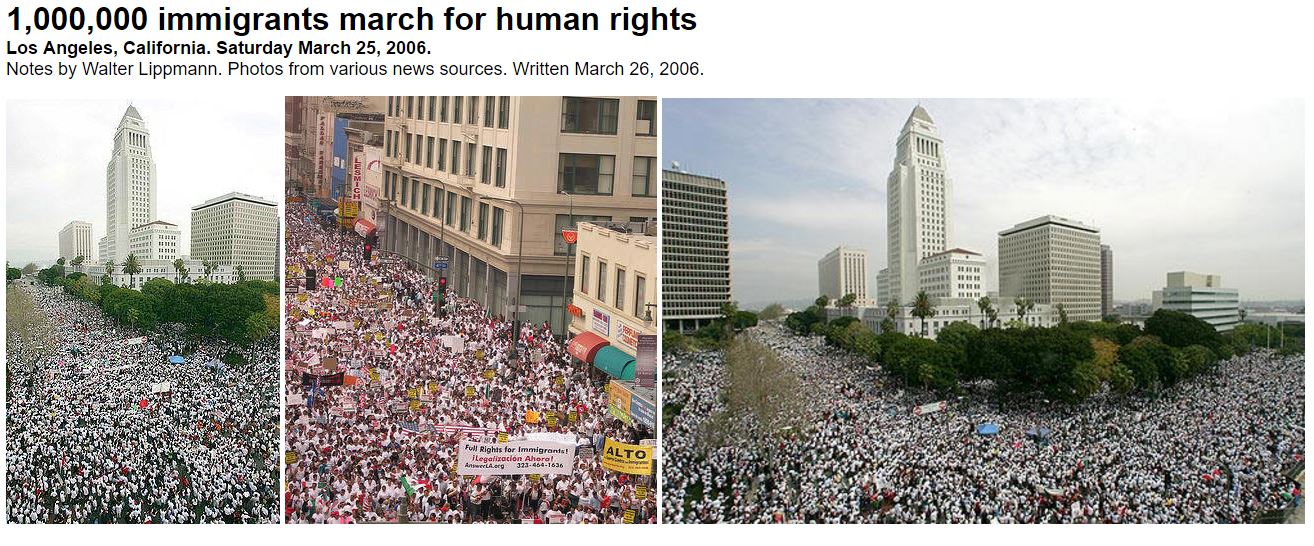
The article opens with the author in the midst of the historic pro-immigrant rights May 2006 marches, triggered by the Sensenbrener bill H.R. 4437: The Border Protection, Anti-terrorism, and Illegal Immigration Control Act of 2005. In his recounting of the events, he brings in the role of Spanish-language media within the scope of these marches, which was: support and community engagement. He also makes a note of the English-language media, which didn’t acknowledge the scale of the movement until after the fact. This particular movement is important to Costanza because it not only highlighted the Latino working class, it also showed the growing power of media in social movements, most notably in this case: commercial Spanish language media in the United States.
Costanza then takes a step back and talks about the widespread changes in our communications systems that have deeply altered the relationship between social movements and the media. The inclusion of media in movements, including the immigrant rights movement, have also engaged in participatory media. Although many activists remain weary of this, because there are large portions of the population who are excluded, they do recognize that these changes are occurring. Therefore, they think of ways to integrate participatory media into daily movement practices. On the other hand, others are not comfortable with this shift, they are uncomfortable with the loss of message control and resist to the opening to a greater diversity of voices.
The author goes on to detail how the book was born: at The BorderSocial Forum for immigrant rights organizers who were interested in integrating digital tools and skills into their work (it took place on the southern side of the line between Texas and Chihuahua). Costanza then describes his own background as “a white, male-bodied, queer scholar/media-maker/activist with U.S. Citizenship who grew up in Ithica, New York” and “[who] work[s] to leverage [his] race, class, gender, and educational privilege to amplify the voices of the communities that have been systemically excluded from the public sphere.
A shift in discourse occurs when he begins discussing how scholars and activists acknowledge that media and communications have started to become central to social movement and activity. He is critical and explains the shortcomings of scholarly analysis of media in relation to social movements: 1. Studies of social movements focus on mass media solely as an arena of public discourse 2. As social movements gained online visibility, the focus was on the latest communication technologies, overshadowing quotidian communication practices. Costanza coins the term transmedia organizing, which refers to social movement media-making trends as “cross-platform, participatory, and linked to action” 3. when theorizing about the internet as an important space in social movements, digital inequalities are overlooked: “understanding digital inequality means focusing on critical digital media literacy, in addition to basic questions of access to communication tools and connectivity”.
The author then addresses Malcolm Gladwell, author of a controversial article, who claims that “social media fail[s] to produce the strong ties and vertical organization forms that he considered crucial to the success of the civil rights movement”. For Galdwell, the main component behind social movements has always been the personal connections. Costanza points out that Gladwell, however, failes to recognize that social media is a platform that is often used to extend and maintain these physical face-to-face relationships over time and space. Costanza also adamantly rejects Gladwell’s idea of vertical organizational structure, which in turn demands a military-styled hierarchy. Costanza provides examples of movements that have adopted a horizontal, anti-authoritarian organizational style (feminists, queer organizers, indigenous activists, etc). He also argues that these forms of movements have been aided and enabled by ICTs. Furthermore, he also explores the narratives around “clicktivism” and “anti-clictivism” by examining movements that were able to maintain a presence in both “tweets” and the “street”. Social media is complimentary to the physical manifestations of their activist efforts.
In conclusion, Costanza once more focuses on Los Angeles and the immigrant rights movement, citing it as one that lies on juncture of cross-platform power. He emphasizes the immigrant workers who, after being antagonized by labor unions, are now engaging in them. He finds a paradox in the immigrant movement, which is one of the most powerful social movements that utilizes digital engagement yet many (like the immigrant laborers) are excluded from the digital sphere. He concludes his introduction by giving an overview of each chapter, which each describe key moments in the immigrant rights movement. Ultimately, his objective is to show the depth of how media-making is “actually part and parcel of movement building”.
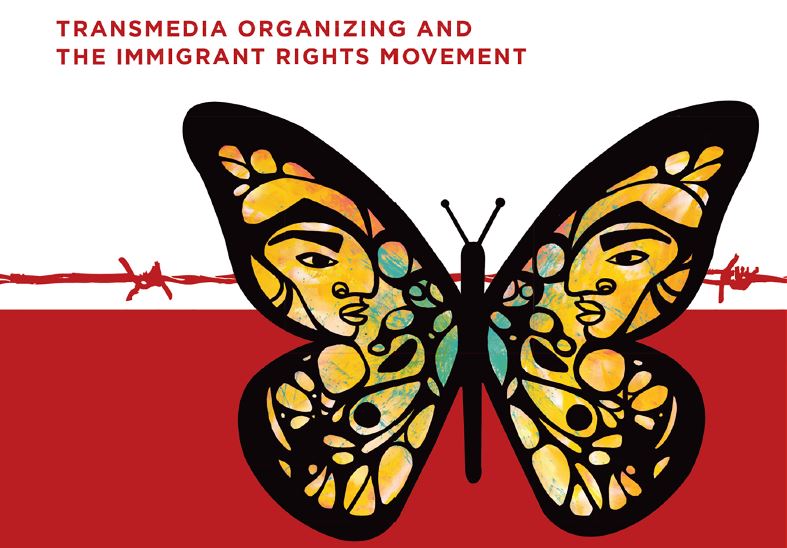
Costanza-Chock, Sasha. "Introduction." Out of the Shadows, into the Streets!: Transmedia Organizing and the Immigrant Rights Movement
Analysis:
The video and the article both represent two separate views regarding activism and the use of social media. While the Youtube video denounces online activism as fleeting and momentary, the book's chapter opens up to the exploration of how important digital media actually is to physical social movements. Since the text is only an introduction, it prefaces a more in-depth analysis of how media and digital technologies are actually changing social movements by complementing them. The video has a narrow focus with viral videos, but it makes a point that online social activism is a hot commodity based on trends that are in one day and out the next. Even though they make lasting impressions, on their own they do not lead to any long-term changes. Costanza argues that social activism is in fact an enhancement to social movements. On their own, the use of digital technologies don't make a movement. However, the use of social media does 1. broaden the scope of the movement by the people they reach, educate, and engage and 2. allows for more capabilities like the new relationships they form across time and space, the petitions they produce, the dialogue venues they open, etc. Something interesting that the Youtube video did provide was the concept of changing the context rather than the person. In a union between the video and the text, it seems plausible that online campaigns could, as an aiding supplement, be used to prompt contextual (i.e. structural) change. Costanza states: “Social movement media practices don’t take place on digital platforms alone; they are made up of myriad “small media” … that circulate online and off".
Discussion Questions:
1. Do you have any recollection of the 2006 marches? Why do you think we have not been able to organize ourselves in those types of mass numbers. May Day just passed, and even though important immigration legislations are on the table (Deferred Action for Parents of Americans/Deferred Action for Childhood Arrivals Expansion), protests were not anywhere near the size of the 2006 marches.
2. What are your thoughts on the paradox of the heavy use of digital technologies in the immigrants rights movement and the inaccessibility that a lot of its participants have to these technologies? Can you think of specific examples with older adults (40+ years) and their engagement with social media activism?
3. What are some effective online activist techniques you've seen? Can you think of any video, or campaign that really resonated with you and prompted for further action beyond the screen?