Thanks for your patience during our recent outage at scalar.usc.edu. While Scalar content is loading normally now, saving is still slow, and Scalar's 'additional metadata' features have been disabled, which may interfere with features like timelines and maps that depend on metadata. This also means that saving a page or media item will remove its additional metadata. If this occurs, you can use the 'All versions' link at the bottom of the page to restore the earlier version. We are continuing to troubleshoot, and will provide further updates as needed. Note that this only affects Scalar projects at scalar.usc.edu, and not those hosted elsewhere.
Colorado Fuel and Iron: Culture and Industry in Southern Colorado Main MenuCF&I TimelinePredecessor and Subsidiary CompaniesMiningHealth and SafetyEthnic Groups and DiversityImportant PeopleEmployee LifeLabor Relations in the Industrial WestLand and WaterCities and TownsSteel ProductionArtifactsCompany PublicationsAssorted Histories and Short StoriesQuips and blurbs relating to Southern Colorado's industrial historyThe Steelwsorks Center of the WestBooks and Other ResourcesCredits and AcknowledgementsChristopher J. Schrecka2fcfe32c1f76dc9d5ebe09475fa72e5633cc36dC.J. Schreck
The Nail Room
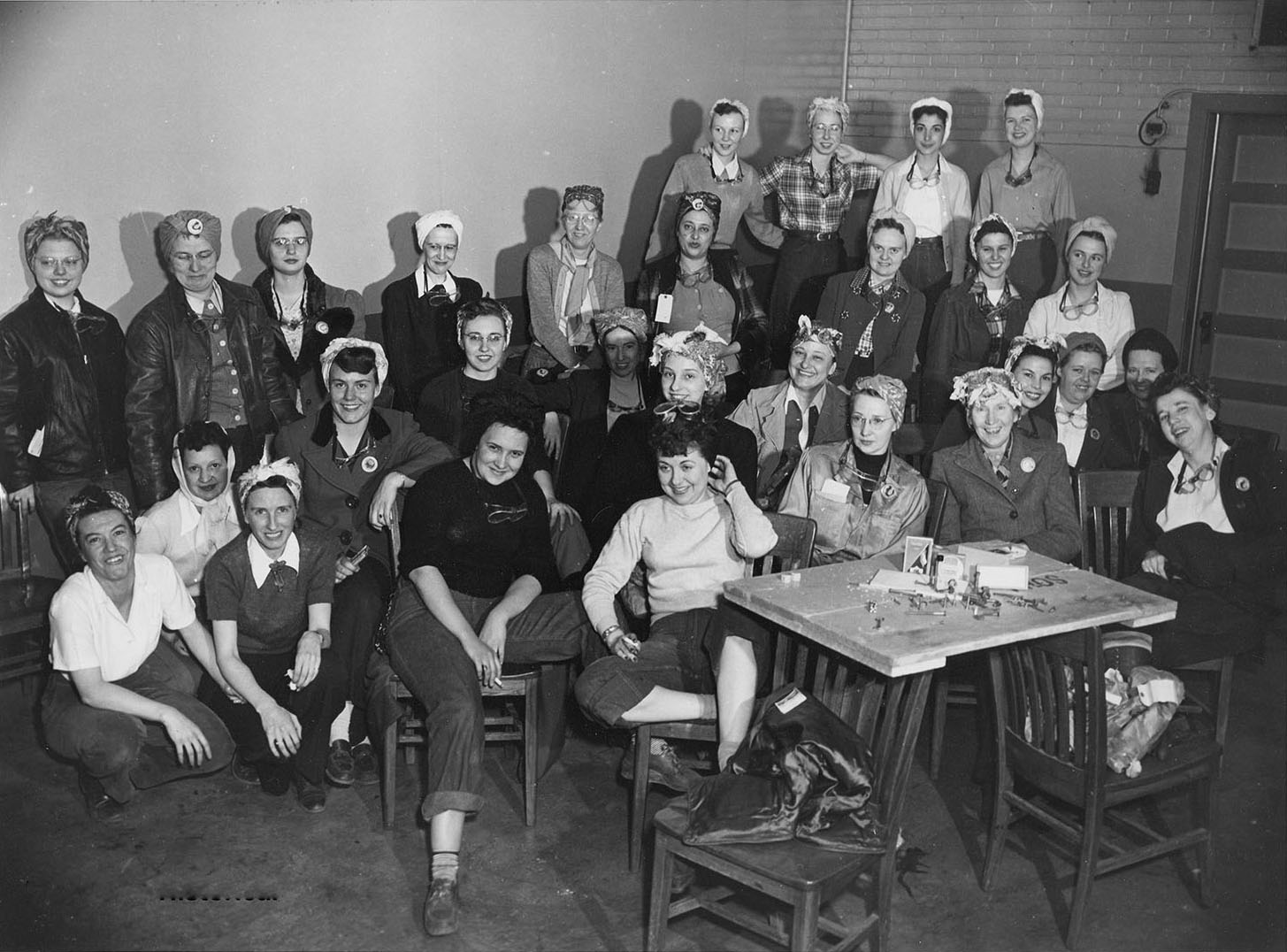
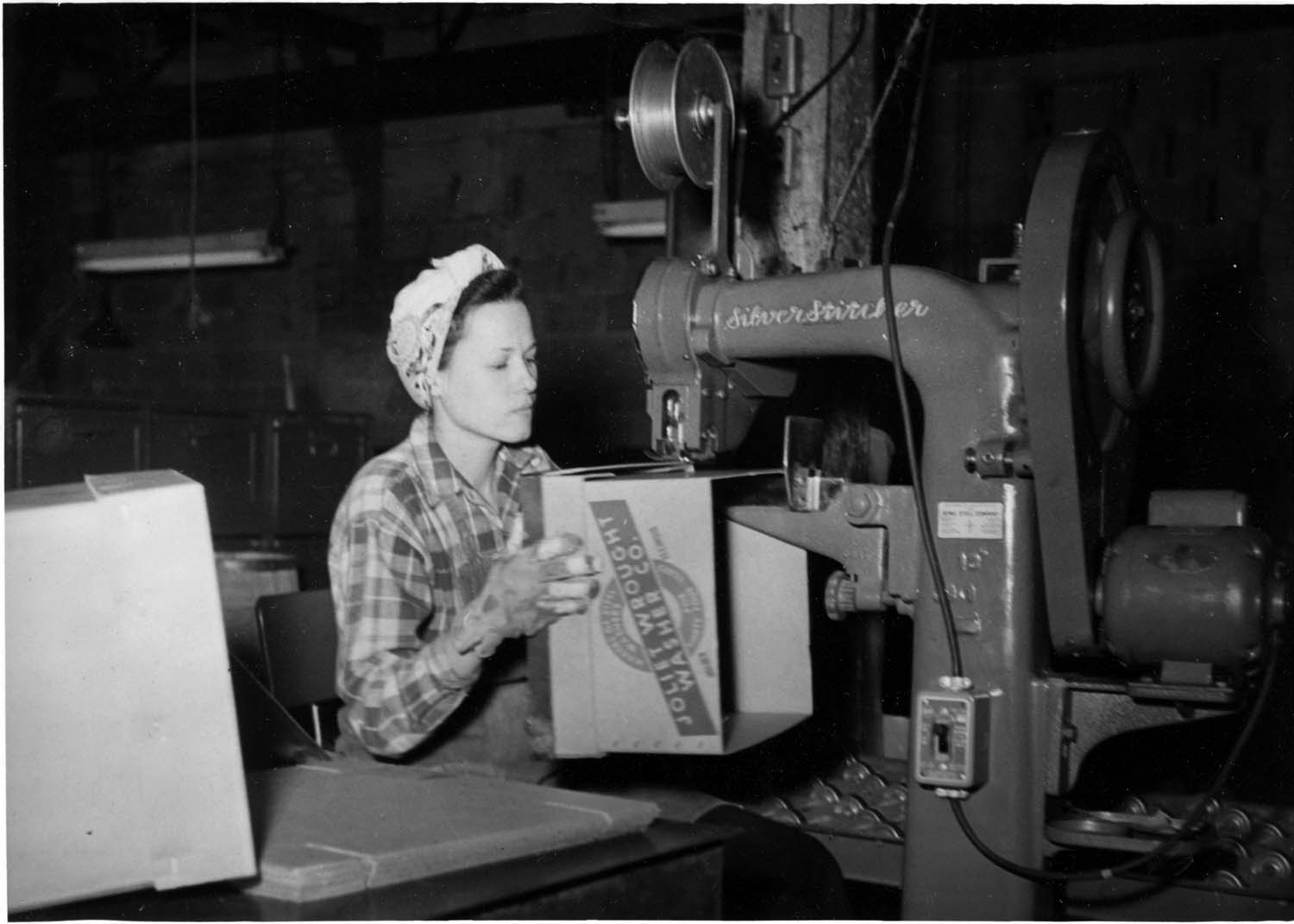
12016-04-25T07:51:00-07:00Christopher J. Schrecka2fcfe32c1f76dc9d5ebe09475fa72e5633cc36d72421plain2016-04-25T07:51:00-07:00Christopher J. Schrecka2fcfe32c1f76dc9d5ebe09475fa72e5633cc36d Based in small part on a real-life munitions worker, but primarily a fictitious character, the strong, bandanna-clad “Rosie the Riveter” became perhaps the most iconic image of working women during World War II. Here, a female employee works with a machine to create a nail box. A constant safety concern in industrial environments was how to keep women’s long hair out of the machinery. A bandana wrapped around the head solved the problem easily and inexpensively. A snood, a small bag attached to a band of cloth or hat and worn at the back of the head, turbans and crocheted hair nets were also popular head wear during the 1940s.
This page has paths:
12016-04-25T07:50:59-07:00Christopher J. Schrecka2fcfe32c1f76dc9d5ebe09475fa72e5633cc36dCF&I Women of WWIIChristopher J. Schreck1book_splash2016-04-25T07:50:59-07:00Christopher J. Schrecka2fcfe32c1f76dc9d5ebe09475fa72e5633cc36d