Thanks for your patience during our recent outage at scalar.usc.edu. While Scalar content is loading normally now, saving is still slow, and Scalar's 'additional metadata' features have been disabled, which may interfere with features like timelines and maps that depend on metadata. This also means that saving a page or media item will remove its additional metadata. If this occurs, you can use the 'All versions' link at the bottom of the page to restore the earlier version. We are continuing to troubleshoot, and will provide further updates as needed. Note that this only affects Scalar projects at scalar.usc.edu, and not those hosted elsewhere.
Colorado Fuel and Iron: Culture and Industry in Southern Colorado Main MenuCF&I TimelinePredecessor and Subsidiary CompaniesMiningHealth and SafetyEthnic Groups and DiversityImportant PeopleEmployee LifeLabor Relations in the Industrial WestLand and WaterCities and TownsSteel ProductionArtifactsCompany PublicationsAssorted Histories and Short StoriesQuips and blurbs relating to Southern Colorado's industrial historyThe Steelwsorks Center of the WestBooks and Other ResourcesCredits and AcknowledgementsChristopher J. Schrecka2fcfe32c1f76dc9d5ebe09475fa72e5633cc36dC.J. Schreck
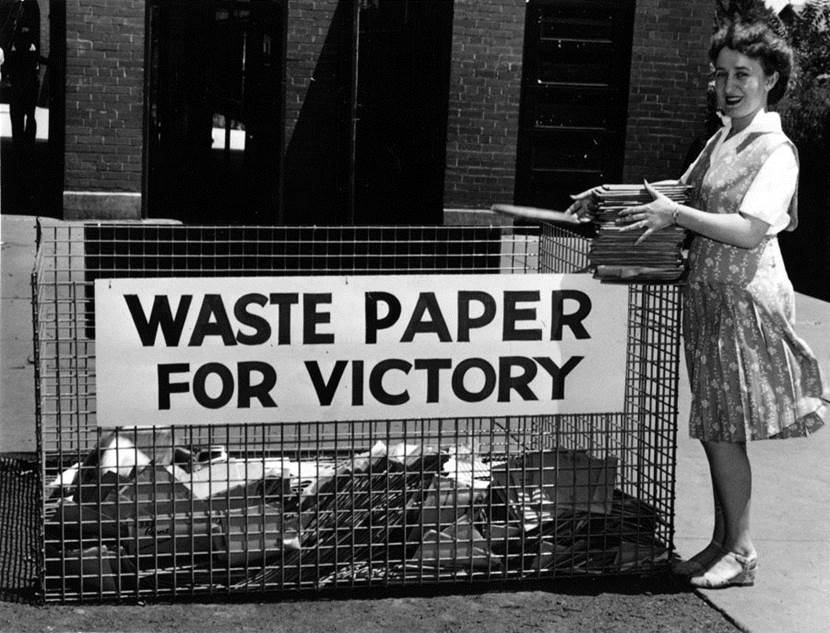
Scrap Paper Drive
12016-04-25T07:51:01-07:00Christopher J. Schrecka2fcfe32c1f76dc9d5ebe09475fa72e5633cc36d72421plain2016-04-25T07:51:01-07:00Christopher J. Schrecka2fcfe32c1f76dc9d5ebe09475fa72e5633cc36d
“Wanted For Victory” was a common slogan for community collection efforts throughout the War. Rubber, aluminum, rags, paper, and small metal objects such as keys were collected at various stations around Pueblo. After collection, the items were cleaned, repaired, or melted if needed and re-purposed for various military efforts. Thousands of pounds of paper were baled and sold to dealers to replenish diminishing supply in 1942 alone. In 1944, CF&I printed reminders that 1,000 pounds of waste paper could supply the military with 200 blood plasma containers, 1,470 boxes for emergency life boat rations, 204 cartons containing one life preserver, 17 protective bands for 500 pound bombs, and 50 cartons for Army K field food rations. Salvaging represented another way women on the home front could contribute to the war effort in concert with other wartime programs.
This page has paths:
12016-04-25T07:50:59-07:00Christopher J. Schrecka2fcfe32c1f76dc9d5ebe09475fa72e5633cc36dCF&I Women of WWIIChristopher J. Schreck1book_splash2016-04-25T07:50:59-07:00Christopher J. Schrecka2fcfe32c1f76dc9d5ebe09475fa72e5633cc36d
This page references:
12016-04-25T07:51:01-07:00Wanted for Victory1plain2016-04-25T07:51:01-07:00