Thanks for your patience during our recent outage at scalar.usc.edu. While Scalar content is loading normally now, saving is still slow, and Scalar's 'additional metadata' features have been disabled, which may interfere with features like timelines and maps that depend on metadata. This also means that saving a page or media item will remove its additional metadata. If this occurs, you can use the 'All versions' link at the bottom of the page to restore the earlier version. We are continuing to troubleshoot, and will provide further updates as needed. Note that this only affects Scalar projects at scalar.usc.edu, and not those hosted elsewhere.
Performing ArchiveMain MenuVisualizing the “Vanishing Race”: the photogravures of Edward S. CurtisFront Page for Visualizing the "Vanishing Race" pathCurtis' Image and Life: The Network of The North American Indian, Inc.An experiment with data visualization approach to understand and contextualize Curtis' images and his lifeMedia, Technology and MediationsCurtis's Technology, Relationships to Media and StyleContextualizing Curtis, The North American Indian, and Racethe collection of essays from the contributorsConsulting with Tribes as Part of Archive DevelopmentIntroduction to Consulting with Tribes by Ulia GosartContributing ArchivesInformation on how to participate in Performing ArchiveBrowsing the MediaA path of paths that allow users to cut through the collection in a variety of ways.Acknowledgements and Project InformationProject NetworkJacqueline Wernimontbce78f60db1628727fc0b905ad2512506798cac8David J. Kim18723eee6e5a79c8d8823c02b7b02cb2319ee0f1Stephan Schonberg23744229577bdc62e9a8c09d3492541be754e1efAmy Borsukc533a79d33d48cbf428e1160c2edc0b38c50db19Beatrice Schustera02047525b31e94c1336b01e99d7f4f758870500Heather Blackmored0a2bf9f2053b3c0505d20108092251fc75010bfUlia Gosart (Popova)67c984897e6357dbeeac6a13141c0defe5ef3403
12018-03-16T21:13:12-07:00Erik Loyerf862727c4b34febd6a0341bffd27f168a35aa637Volume Eight Illustrations and Portfolio ImagesErik Loyer1Media Galleriesstructured_gallery2018-03-16T21:13:12-07:00Erik Loyerf862727c4b34febd6a0341bffd27f168a35aa637
Contents of this path:
12018-03-16T21:11:51-07:00Erik Loyerf862727c4b34febd6a0341bffd27f168a35aa637Chief Joseph - Nez Perce1The name of Chief Joseph is better known than that of any other Northwestern Indian. To him popular opinion has given the credit of conducting a remarkable strategic movement from Idaho to northern Montana in the flight of the Nez Perces in 1877. To what extent this is a misconception has been demonstrated in the historical effort to retain what was rightly their own makes an unparalleled story in the annals of the Indian's resistance to the greed of the whites. That they made this final effort is not surprising. Indeed, it is remarkable that so few tribes rose in a last struggle against such dishonored and relentless objection.plain2018-03-16T21:11:51-07:00Erik Loyerf862727c4b34febd6a0341bffd27f168a35aa637
12018-03-16T21:11:51-07:00Erik Loyerf862727c4b34febd6a0341bffd27f168a35aa637Yellow Bull - Nez Perce1As a member of the family which more than once was responsible for precipitating the Nez Perce outbreak of 1877, Yellow Bull proved a source of much valuable information. His son Walaituts was one of the three men who murdered the first white settlers in this conflict. The war-bonnet of eagle-feathers, with pendant weasel-skins, as well as the otter-fur wrappings of his hair braids, indicates the extent to which the Nez Perces were influenced by the Indians of the prairies, whom they met in their annual pilgrimage to the buffalo country.plain2018-03-16T21:11:51-07:00Erik Loyerf862727c4b34febd6a0341bffd27f168a35aa637
12018-03-16T21:11:51-07:00Erik Loyerf862727c4b34febd6a0341bffd27f168a35aa637Typical Nez Perce1This portrait presents a splendid type of the Nez Perce man.plain2018-03-16T21:11:51-07:00Erik Loyerf862727c4b34febd6a0341bffd27f168a35aa637
12018-03-16T21:11:52-07:00Erik Loyerf862727c4b34febd6a0341bffd27f168a35aa637Watching for the signal - Nez Perce1plain2018-03-16T21:11:52-07:00Erik Loyerf862727c4b34febd6a0341bffd27f168a35aa637
12018-03-16T21:11:52-07:00Erik Loyerf862727c4b34febd6a0341bffd27f168a35aa637Lawyer - Nez Perce1The original of this portrait is a member of the family of that Lawyer who played a prominent part in the Nez Perce affairs in the years following the treaty of 1855.plain2018-03-16T21:11:52-07:00Erik Loyerf862727c4b34febd6a0341bffd27f168a35aa637
12018-03-16T21:11:52-07:00Erik Loyerf862727c4b34febd6a0341bffd27f168a35aa637Piopio-maksmaks - Wallawalla1Piopio-maksmaks, quoted in Volume VIII, pages 20-21, is the son of the Piopio-maksmaks who as principal chief of the Wallawalla negotiated a treaty with Governor Isaac I. Stevens in the Wallawalla valley in 1855. The father was killed while a captive of the Oregon volunteers, and the son thereafter lived permanently among the Nez Perces, having married a woman of that tribe. Piopio-maksmaks possesses as unusually strong face, and his remarkably piercing eye betokens a man possessing the courage characteristic of his family and tribe.plain2018-03-16T21:11:52-07:00Erik Loyerf862727c4b34febd6a0341bffd27f168a35aa637
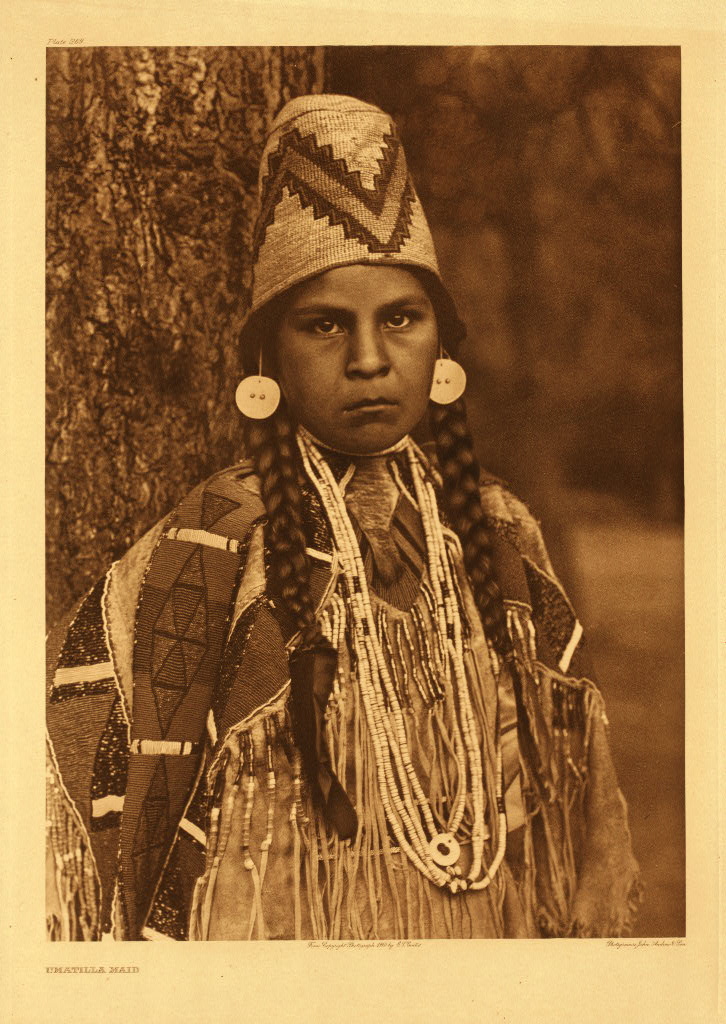
12018-03-16T21:11:53-07:00Erik Loyerf862727c4b34febd6a0341bffd27f168a35aa637Umatilla maid1Two distinct cultural areas are represented in the costume of this damsel. The familiar beadworked, deerskin dress is an acquisition from the plains culture, while the basketry hat and the shell-bead necklace hail from the pacific slope. Note the skin of the deer's tail fastened in front at the collar, as an aid in removing the garment.plain2018-03-16T21:11:53-07:00Erik Loyerf862727c4b34febd6a0341bffd27f168a35aa637
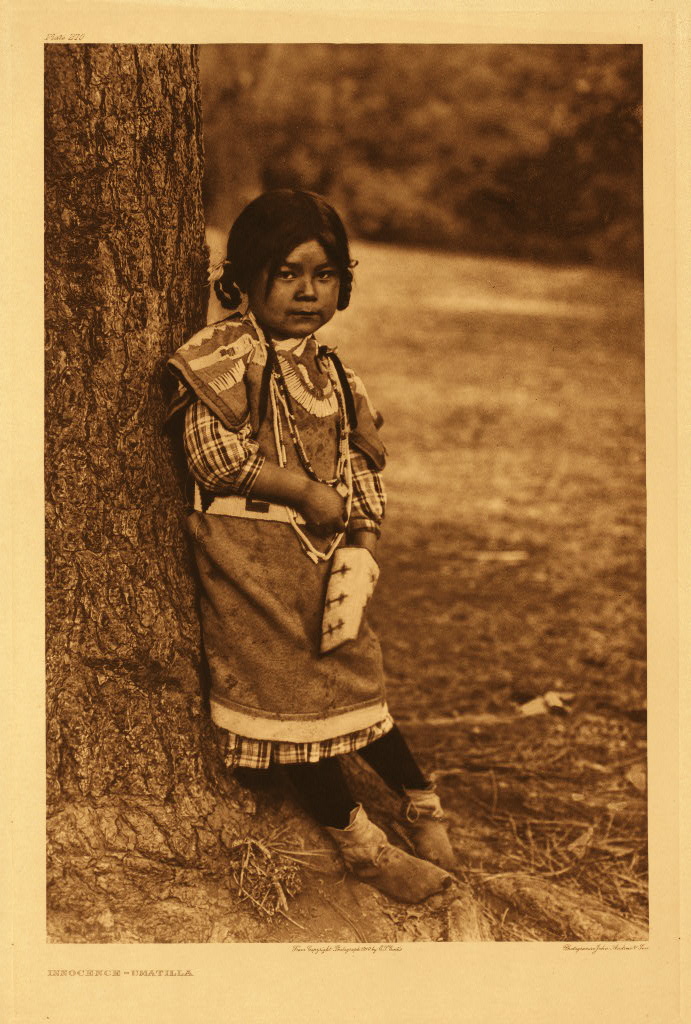
12018-03-16T21:11:53-07:00Erik Loyerf862727c4b34febd6a0341bffd27f168a35aa637Innocence - Umatilla1Few aspects of Indian life are more interesting to the casual visitor than the demeanor of the children, with the coy bashfulness, their mischievous, sparkling eyes, their doubtful hesitating just the other side of friendship.plain2018-03-16T21:11:53-07:00Erik Loyerf862727c4b34febd6a0341bffd27f168a35aa637
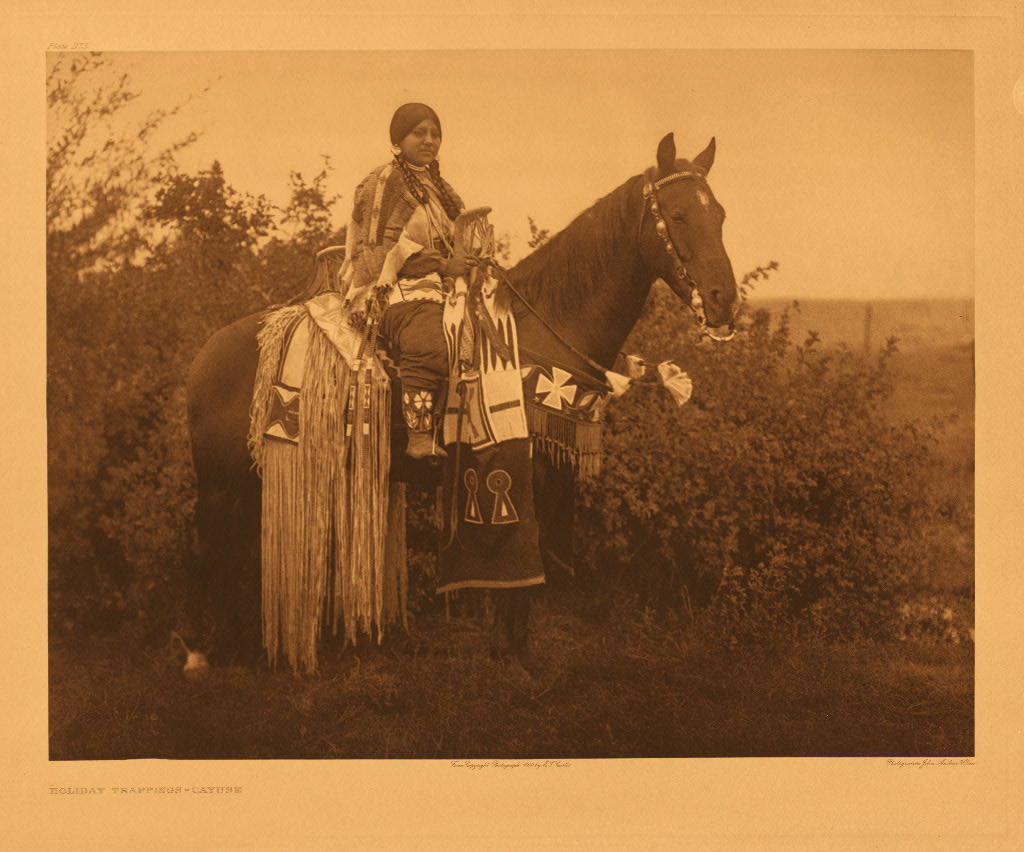
12018-03-16T21:11:04-07:00Erik Loyerf862727c4b34febd6a0341bffd27f168a35aa637Holiday trappings - Cayuse1Wealthy members of the tribes living on the Umatilla reservation in Oregon spare no expense in bedecking themselves and their mounts on gala occasions. The articles of adornment are usually of deerskin, or of commercial blankets on which designs are worked in beads.plain2018-03-16T21:11:04-07:00Erik Loyerf862727c4b34febd6a0341bffd27f168a35aa637
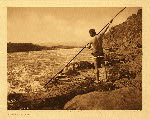
12018-03-16T21:11:53-07:00Erik Loyerf862727c4b34febd6a0341bffd27f168a35aa637Fisherman - Wishham1Among the middle course of the Columbia at places where the abruptness of the shore and the up-stream set of an eddy make such method possible, salmon were taken, and still are taken, by means of a long-hauled dip-net. At favorable seasons a man will, in a few hours, secure several hundred salmon - as many as the matrons and girls of his household can care for in a day.plain2018-03-16T21:11:53-07:00Erik Loyerf862727c4b34febd6a0341bffd27f168a35aa637
12018-03-16T21:11:53-07:00Erik Loyerf862727c4b34febd6a0341bffd27f168a35aa637Dip-netting in pools - Wishham1In the quiet pools along the rocky shore the salmon sometimes lie resting from their long journey up-stream. The experienced fisherman knows these spots, and by a deft movement of his net he takes toll from each one.plain2018-03-16T21:11:53-07:00Erik Loyerf862727c4b34febd6a0341bffd27f168a35aa637
12018-03-16T21:11:54-07:00Erik Loyerf862727c4b34febd6a0341bffd27f168a35aa637Spearing salmon - Wishham1The nature of the shore and the height of the water level sometimes combine to make dip-netting impossible. Recourse is then had to the double-pointed spear, the socketed barbs of which are connected to the shaft by strong cords, so that when a fish is struck and its struggles detach the barbs from the prongs it is held by a hook and line.plain2018-03-16T21:11:54-07:00Erik Loyerf862727c4b34febd6a0341bffd27f168a35aa637
12018-03-16T21:11:54-07:00Erik Loyerf862727c4b34febd6a0341bffd27f168a35aa637Fish carrier - Wishham1From the fishing station the salmon are carried to the house, distant perhaps a quarter of a mile or more, in an open-mesh bag ("ihlkabenih") borne on the back and supported by means of a tump-line passing across the forehead.plain2018-03-16T21:11:54-07:00Erik Loyerf862727c4b34febd6a0341bffd27f168a35aa637
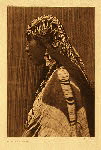
12018-03-16T21:11:54-07:00Erik Loyerf862727c4b34febd6a0341bffd27f168a35aa637Wishham girl1The subject is clothed in a heavily beaded deerskin dress of the plains type. The throat is encircled by strands of shell beads of native manufacture, heirlooms which were obtained by the original Wishham possessor from the Pacific slope. Pendant on the breast are strands of larger beads of the same kind, as well as of various kinds brought into the country by the traders of the Hudson's Bay Company. An indispensable ornament of the well-born person was the dentalium-shell thrust through a perforation in the nasal septum; occasionally, as in this case, two such shells were connected by means of a bit of wood pushed into the hollow bases. Tied to the hair at each side of the face (see the following plate) is another dentalium-shell ornament, which is in reality an ear pendant transferred from the lobe of the ear (where its weight would be inconvenient) to the hair. The head-dress consists of shells, shell beads, commercial beads, and Chinese coins. The coins made their appearance in the Columbia River region at a comparatively early date. This form of head-dress was worn on special occasions by girls between the age of puberty and their marriage.plain2018-03-16T21:11:54-07:00Erik Loyerf862727c4b34febd6a0341bffd27f168a35aa637
12018-03-16T21:11:11-07:00Erik Loyerf862727c4b34febd6a0341bffd27f168a35aa637Kashhila - Wishham1This sturdy young fellow has little of the appearance of the Chinookan. In feature and in costume he recalls the plains Indian.plain2018-03-16T21:11:11-07:00Erik Loyerf862727c4b34febd6a0341bffd27f168a35aa637
12018-03-16T21:11:54-07:00Erik Loyerf862727c4b34febd6a0341bffd27f168a35aa637Wishham maid1Clad in her deerskin dress of the plains and her basketry hat of the coast, the girl pauses on the grim lava rocks above the Dalles, looking out across the thundering rapids, perhaps observing the activities after friends in the village Wasko.plain2018-03-16T21:11:55-07:00Erik Loyerf862727c4b34febd6a0341bffd27f168a35aa637
12018-03-16T21:11:12-07:00Erik Loyerf862727c4b34febd6a0341bffd27f168a35aa637Columbia near Wind River1The Chinookan tribes of the Columbia obtained their canoes for the greater part from the coast tribes of Washington. The woman in the picture is the daughter of the former Cascade chief Tamahl, quoted in Volume VII, pages 26-28.plain2018-03-16T21:11:12-07:00Erik Loyerf862727c4b34febd6a0341bffd27f168a35aa637
12018-03-16T21:11:54-07:00Erik Loyerf862727c4b34febd6a0341bffd27f168a35aa637Lower Columbia1The Columbia near its mouth spreads in a broad estuary between shores now low and flat and again bold and wooded. The conflict between winds, tides, and current sometimes raises seas that threaten even power-driven craft, and the natives who formerly swarmed in this region were necessarily clever canoemen.plain2018-03-16T21:11:54-07:00Erik Loyerf862727c4b34febd6a0341bffd27f168a35aa637
12018-03-16T21:11:54-07:00Erik Loyerf862727c4b34febd6a0341bffd27f168a35aa637Evening on the Columbia1A spur of the Cascade mountains occupies the background.plain2018-03-16T21:11:54-07:00Erik Loyerf862727c4b34febd6a0341bffd27f168a35aa637
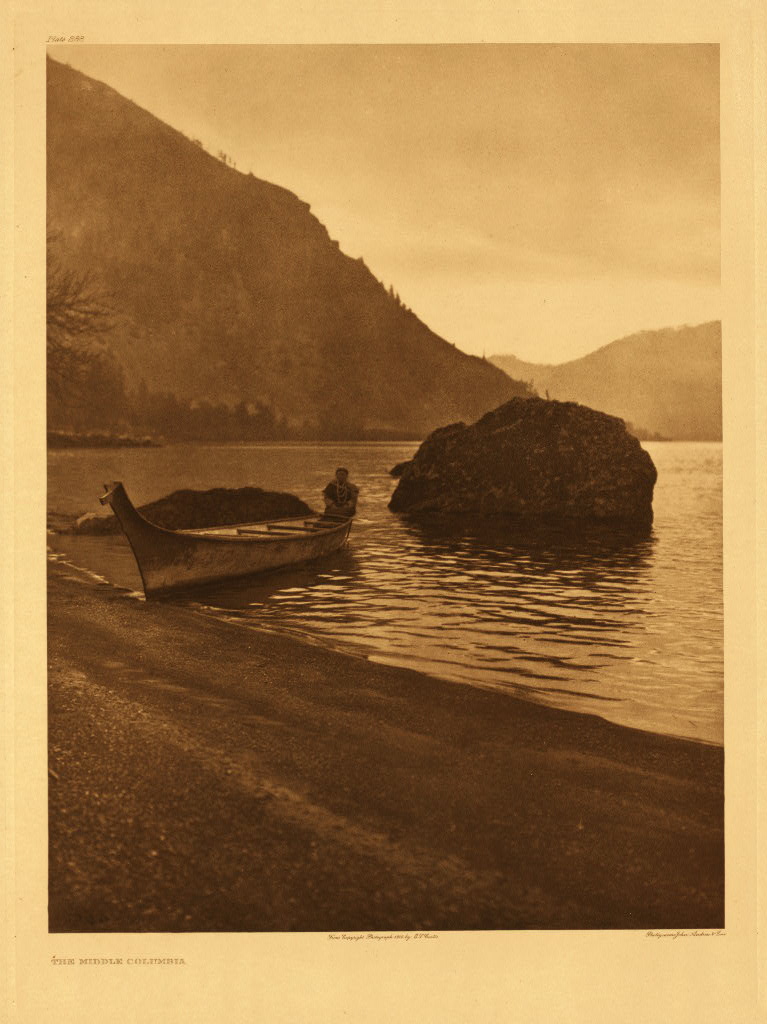
12018-03-16T21:11:54-07:00Erik Loyerf862727c4b34febd6a0341bffd27f168a35aa637Middle Columbia1This picture was made a few miles above the Cascades of the Columbia.plain2018-03-16T21:11:54-07:00Erik Loyerf862727c4b34febd6a0341bffd27f168a35aa637
12018-03-16T21:11:12-07:00Erik Loyerf862727c4b34febd6a0341bffd27f168a35aa637On Klickitat River - A1Klickitat river flows through what was the territory of the Klickitat, a bold, roving, gypsy-like group of Shahaptian bands. See Volume VII, page 37. The picture, which shows one of a succession of beautiful scenes near the mouth of this stream, accompanies Volume VII for the reason that the land at its junction with the Columbia was formerly Chinookan territory, and in fact it was never altogether given up to the Klickitat.plain2018-03-16T21:11:12-07:00Erik Loyerf862727c4b34febd6a0341bffd27f168a35aa637
12018-03-16T21:11:55-07:00Erik Loyerf862727c4b34febd6a0341bffd27f168a35aa637On Klickitat River - B1plain2018-03-16T21:11:55-07:00Erik Loyerf862727c4b34febd6a0341bffd27f168a35aa637
12018-03-16T21:11:55-07:00Erik Loyerf862727c4b34febd6a0341bffd27f168a35aa637On Klickitat River - C1plain2018-03-16T21:11:55-07:00Erik Loyerf862727c4b34febd6a0341bffd27f168a35aa637
12018-03-16T21:11:55-07:00Erik Loyerf862727c4b34febd6a0341bffd27f168a35aa637On the beach - Chinook1An old Chinook woman with staff and clam basket makes her way slowly over the mud flats of the southern end of Shoalwater bay, in Washington. Chiih (Burden-Basket, Catherine Hawks), is one of a very few survivors of the populous tribe that formerly occupied that part of the state of Washington lying between the middle of Shoalwater bay and the Columbia.plain2018-03-16T21:11:55-07:00Erik Loyerf862727c4b34febd6a0341bffd27f168a35aa637