Thanks for your patience during our recent outage at scalar.usc.edu. While Scalar content is loading normally now, saving is still slow, and Scalar's 'additional metadata' features have been disabled, which may interfere with features like timelines and maps that depend on metadata. This also means that saving a page or media item will remove its additional metadata. If this occurs, you can use the 'All versions' link at the bottom of the page to restore the earlier version. We are continuing to troubleshoot, and will provide further updates as needed. Note that this only affects Scalar projects at scalar.usc.edu, and not those hosted elsewhere.
James Lee Dickey: An Analysis of One African-American's Leadership in Jim Crow TexasMain MenuJames Lee Dickey: An Analysis of One African American's Leadership in Jim Crow TexasIntroductionSlave No MoreFreedman after Bondage 1865 - 1955African American LeadershipContenders for the TitleJames Lee DickeyThe Leadership of James Lee DickeyLocations in Dr. James Lee Dickey's StoryGoogle locations for Dr. Dickey's BiographyMaureen Grayab288c53aefb942d3e6102c32f4d6e3a10268d3b
A New Leader
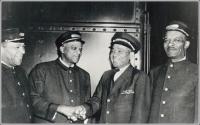
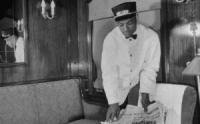
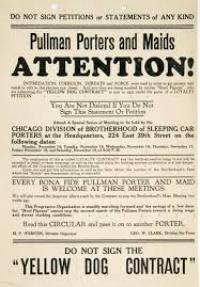
1media/APR BSCT graphic 1920s.jpg2018-03-14T17:50:30-07:00Maureen Grayab288c53aefb942d3e6102c32f4d6e3a10268d3b197018A. Phillip Randolph leads the largest black union in the United Statesimage_header2018-06-17T22:08:53-07:00Maureen Grayab288c53aefb942d3e6102c32f4d6e3a10268d3bThough the NAACP was diligently working for the reinstitution of civil rights for African Americans, the The Brotherhood of Sleeping Car Porters, a black labor union headed by A. Phillip Randolph, took a more direct means of assistance for African Americans. After a few missteps in the 1920’s, the union defeated its opponent, the Pullman Railcar Union, in 1935, thus winning access to the Railway Labor Act. Porters received a substantial wage increase and improved work schedule. The labor union's success was due to black solidarity rather than integration with whites, so the black community turned to a union leader instead of Walter White. Since unionization and communism in America seemed to march to the same drummer, A. Philip Randolph's success made him the obvious choice as president of the Communist-backed National Negro Congress (NNC). Randolph’s primary focus in pre-WWII America was for African Americans to share in the economic boom of munitions factories as war drew near, however, more than half the factories awarded government contracts in the early 40s declared they would hire whites only. Those that did hire blacks relegated black workers to mop and broom work. Even worse, as the economy rebounded from the Great Depression, New Deal Programs that had benefited African Americans were drawing to a close.Though the union represented only a small percentage of African Americans, its persistence pushed A. Philip Randolph into the national spotlight as a black leader.
This page has paths:
1media/Free image copy.jpg2018-03-07T02:02:47-08:00Maureen Grayab288c53aefb942d3e6102c32f4d6e3a10268d3bSlave No MoreMaureen Gray19Freedman after Bondage 1865 - 1955splash6891832018-06-17T22:06:14-07:00Maureen Grayab288c53aefb942d3e6102c32f4d6e3a10268d3b