Thanks for your patience during our recent outage at scalar.usc.edu. While Scalar content is loading normally now, saving is still slow, and Scalar's 'additional metadata' features have been disabled, which may interfere with features like timelines and maps that depend on metadata. This also means that saving a page or media item will remove its additional metadata. If this occurs, you can use the 'All versions' link at the bottom of the page to restore the earlier version. We are continuing to troubleshoot, and will provide further updates as needed. Note that this only affects Scalar projects at scalar.usc.edu, and not those hosted elsewhere.
James Lee Dickey: An Analysis of One African-American's Leadership in Jim Crow TexasMain MenuJames Lee Dickey: An Analysis of One African American's Leadership in Jim Crow TexasIntroductionSlave No MoreFreedman after Bondage 1865 - 1955African American LeadershipContenders for the TitleJames Lee DickeyThe Leadership of James Lee DickeyLocations in Dr. James Lee Dickey's StoryGoogle locations for Dr. Dickey's BiographyMaureen Grayab288c53aefb942d3e6102c32f4d6e3a10268d3b
Racial Equality
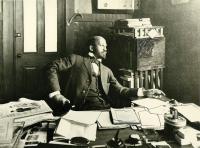
1media/Booker T. Washington Atlanta Compromise.jpeg2018-03-14T17:29:33-07:00Maureen Grayab288c53aefb942d3e6102c32f4d6e3a10268d3b1970118image_header2018-06-17T20:19:07-07:00Maureen Grayab288c53aefb942d3e6102c32f4d6e3a10268d3bBy 1895, many Northern blacks, along with several Southern blacks, grew impatient with the plodding, kowtowing nature of accommodationism. In 1895, Booker T. Washington gained national fame when he delivered his “Atlanta Compromise" speech at the Cotton States and International Exposition in Atlanta, Georgia. African Americans were honored that one of their own would address a predominantly white audience. With typical eloquence, Washington praised the accomplishments of his people yet conceded that Negroes had erred by seeking political office immediately after emancipation. He explained that African Americans should begin at the bottom and not the top of society, and that Negroes should earn white people's respect by gaining economic equity. Negroes, he explained, didn't want to mix with whites socially; instead they sought to provide industry and trade to improve the Southern economy. At first, black America cheered Washington's achievement, but soon well-educated Negroes like W.E.B Du Bois grew appalled that Washington had agreed segregation was acceptable. Washington's opponents accused him of selling out to whites by keeping his people subjugated so Washington could continue as their spokesman. Du Bois argued that Negroes should not be relegated to trade, instead they should study the Classics such as Latin and Greek in white colleges. He encouraged Negroes to pursue a liberal arts education and become doctors, lawyers, and professors at universities such as Harvard and Princeton. According to Du Bois, industrial education was an insult to his race. In 1909, he helped found the National Association for the Advancement of Colored People (NAACP), an organization that would challenge discrimination, segregation, and disfranchisement through the court system and is still in effect today. It strategically selected cases that would promote African American equality.
This page has paths:
1media/Free image copy.jpg2018-03-07T02:02:47-08:00Maureen Grayab288c53aefb942d3e6102c32f4d6e3a10268d3bSlave No MoreMaureen Gray19Freedman after Bondage 1865 - 1955splash6891832018-06-17T22:06:14-07:00Maureen Grayab288c53aefb942d3e6102c32f4d6e3a10268d3b
This page references:
12018-04-12T04:35:19-07:00WEB DuBois at Desk2Dr. Du Bois at his desk at Atlanta Universitymedia/DuBoisatDesk.jpgplain2018-06-11T23:58:04-07:00