Asteraceae Family Phylogeny
1 2022-05-26T22:55:46-07:00 Jessica Manriquez 7a01046c42e42f088710b11e860bb302d9a1bc26 40688 6 Phylogenic tree for the Asteraceae family, with subfamilies, tribes, and individual genus's. This figure was included in the paper "Two Chloroplasts DNA Inversions Originated Simultaneously During the Early Evolution of the Sunflower Family (Asteraceae) " (Kim et al., 2019), Source: Molecular Biology and Evolution; #yacón plain 2022-05-29T01:55:25-07:00 Jessica Manriquez 7a01046c42e42f088710b11e860bb302d9a1bc26This page has annotations:
- 1 2022-05-26T23:14:45-07:00 Jessica Manriquez 7a01046c42e42f088710b11e860bb302d9a1bc26 Asteraceae Family Jessica Manriquez 3 plain 2022-05-26T23:23:23-07:00 Jessica Manriquez 7a01046c42e42f088710b11e860bb302d9a1bc26
- 1 2022-05-26T23:01:01-07:00 Jessica Manriquez 7a01046c42e42f088710b11e860bb302d9a1bc26 Smallanthus sonchifolius Jessica Manriquez 3 plain 2022-05-26T23:23:23-07:00 Jessica Manriquez 7a01046c42e42f088710b11e860bb302d9a1bc26
- 1 2022-05-26T23:26:33-07:00 Jessica Manriquez 7a01046c42e42f088710b11e860bb302d9a1bc26 Subfamily, Subtribe, Genus Jessica Manriquez 2 plain 2022-05-26T23:51:58-07:00 Jessica Manriquez 7a01046c42e42f088710b11e860bb302d9a1bc26
- 1 2022-05-27T09:41:21-07:00 Jessica Manriquez 7a01046c42e42f088710b11e860bb302d9a1bc26 Smallanthus Genus Jessica Manriquez 2 plain 2022-05-27T09:41:53-07:00 Jessica Manriquez 7a01046c42e42f088710b11e860bb302d9a1bc26
This page has tags:
- 1 2022-05-11T11:25:19-07:00 Jessica Manriquez 7a01046c42e42f088710b11e860bb302d9a1bc26 Smallanthus sonchifolius: The Superfood of the Andes Amanda Lin 56 Smallanthus sonchifolius is a plant that in recent years has gained a lot of traction internationally. Its ability to store sugars in the form of carbohydrates has resulted in a very profitable market for yacón cultivators. People have begun looking at this food as a healthier alternative to sugars which has in turn led to its global expansion. A food that was once limited to exist within the Andes has now expanded to other continents. Yacón's human impact has been a part of South American culture for thousands of years, as it is believed to have originated before Incan times. During this time period yacón's consumption was limited to religious events; today however, it is a food that is consumed globally. Apart from its sweet tuberous roots, other parts of the plant that are edible are the leaves and the flowers. Together these attributes allow yacón to be known as one of the superfoods from the Andes. By Jessica Manriquez and Amanda Lin #yacón plain 2022-05-29T21:45:21-07:00 Amanda Lin 351a984f2f13af36387e431ad4c1bf4e2fe6442b
This page is referenced by:
-
1
2022-05-11T11:25:19-07:00
Smallanthus sonchifolius: The Superfood of the Andes
56
Smallanthus sonchifolius is a plant that in recent years has gained a lot of traction internationally. Its ability to store sugars in the form of carbohydrates has resulted in a very profitable market for yacón cultivators. People have begun looking at this food as a healthier alternative to sugars which has in turn led to its global expansion. A food that was once limited to exist within the Andes has now expanded to other continents. Yacón's human impact has been a part of South American culture for thousands of years, as it is believed to have originated before Incan times. During this time period yacón's consumption was limited to religious events; today however, it is a food that is consumed globally. Apart from its sweet tuberous roots, other parts of the plant that are edible are the leaves and the flowers. Together these attributes allow yacón to be known as one of the superfoods from the Andes. By Jessica Manriquez and Amanda Lin #yacón
plain
2022-05-29T21:45:21-07:00
Nomenclatural History
Smallanthus sonchifolius (Poepp. & Endl.) H. Robinson, also known as yacón, is a plant native to the Andean region of South America. The specific epithet of this plant is believed to be derived from the Latin word for leaf ,“folium”, as S. sonchifolius is known for having a distinct leaf shape. An isotype of the yacón specimen was first published by Poepp. and Endl. in 1842, giving the species the Linnaean binomial name Polymnia sonchifolia. The yacón was first placed under the Polymnia genus and remained in this genus until 1978 when American botanist Harold Robinson noticed morphological differences within specimen found in the Polymnia genus and decided to split the genus into two. These being Polymnia and Smallanthus (Smithsonian Institution, 1978).
Despite the fact that this species was only formally documented in the 1800s, it had already had an impact on indigenous peoples for thousands of years prior, as it was noted to be an important part of religious festivals. Yacón was depicted on textiles and ceramic materials which were used during ceremonies, and the first written record of yacón was published in 1615 (Hermann and Heller, 1997). The indigenous name for yacón is derived from the Quechua “yaku” which means “water”. This might be due to the fact that yacón has a high-water content. (Delgado et al., 2013). Other common names include yiquima, jiquimilla, or aricoma, names which are typically observed in other regions of South America. In English the plant is named yacón strawberry because of its sweet flavors (Delgado et al., 2013).Evolutionary History
Smallanthus sonchifolius is a plant that was officially categorized as belonging to the Asteraceae family in 1933, after many debates about its classification. The Asteraceae family is composed of 2500 species, with over 1600 genera (Rolnik and Olas, 2021). S. sonchifolius was originally classified into the Polymnia genus, which is a genus that also belongs to the Asteraceae family. In 1978, after many morphological differences were found, botanists decided to split up Polymnia into two making a Smallanthus and a Polymnia genus.
Smallanthus is typically made up of tall perennial herbs that can reach up to 5ft. Smallanthus is known for plants that have tuberous roots with flowers, that produce sterile seeds thus in order to reproduce, rhizomes must be planted (Vitali and Barreto, 2014). Most of the species found within Smallanthus are native to the Andes region however, a few Smallanthus species have successfully been transplanted to Europe, New Zealand, and North America.
In terms of the evolutionary origin of S. sonchifolius, no clear ancestors have been found for this plant (Hermann and Heller, 1997). However, it is hypothesized that yacón arose through the hybridization of two or more Smallanthus species that occupied the same area (Hermann and Heller, 1997). Still, much uncertainty surrounds this plant’s origin due to the fact that analysis of wild Smallanthus populations have historically been understudied. Therefore, this calls for future research into S. sonchifolius, to focus on the gathering genetic data that would lead to a clear evolutionary origin.Ecology and Life History
Yacón is a perennial plant that is categorized as belonging to the Asteraceae family. For much of its history the exact climate and ecology that are necessary for the successful cultivation of yacón has been unexplored. In recent years however, yacón has gained a lot of traction worldwide, thus more research on the ideal growing conditions have been observed. The wild species of yacón are believed to have evolved in the humid areas of the eastern Andes mountains. Most notably, the wild tubers are believed to have originated in the area between Bolivia and Peru, an area that has mild temperatures and high rainfall (Hermann and Heller, 1997).
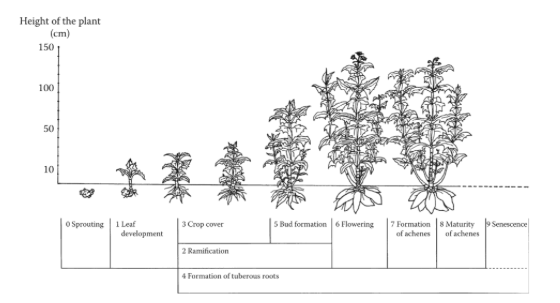
Shoots begin to emerge between 30-50 days after planting. Four months after planting occurs, the shoots grow very slowly. Between 6-10 months after planting, the plant enters its reproductive period as the flowers begin to bloom. The blooming of the flowers indicates that the content of carbohydrates in the tuber has reached a maximum, thus during this time frame farmers will begin harvesting the tubers (Silva et al. 2018). A typical harvest can produce between 5-20 tubers, each weighing between 200-500 grams giving an average yield of 5kg per plant (Delgado et al., 2013).
Present day yacón is known for taking advantage of vegetative gaps as well as having a strong preference for disturbed habitats, as it typically grows along riverbanks, landslides, and roadsides (Hermann and Heller, 1997). The typical elevation observed for yacón cultivation is between 1800-3000m (Delgado et al. 2013). The preferred growing season for yacón is during the rainy season which can extend from December to March. However, successful cultivation has been observed outside of this time frame with constant irrigation (Silva et al. 2018). Yacón possesses temperature plasticity, as it has shown to adapt to harsh Andean temperatures, but prolonged exposure can kill the crop. Despite its ability to adapt to different temperatures optimal growth is observed at a range between 18-25ºC. (Hermann and Heller, 1997). Additionally, yacón has shown to do well in areas of rich, well-drained, and light soils. Heavy soils are not ideal as tuber growth is significantly reduced (Hermann and Heller, 1997).Morphological Description of Vegetative Attributes
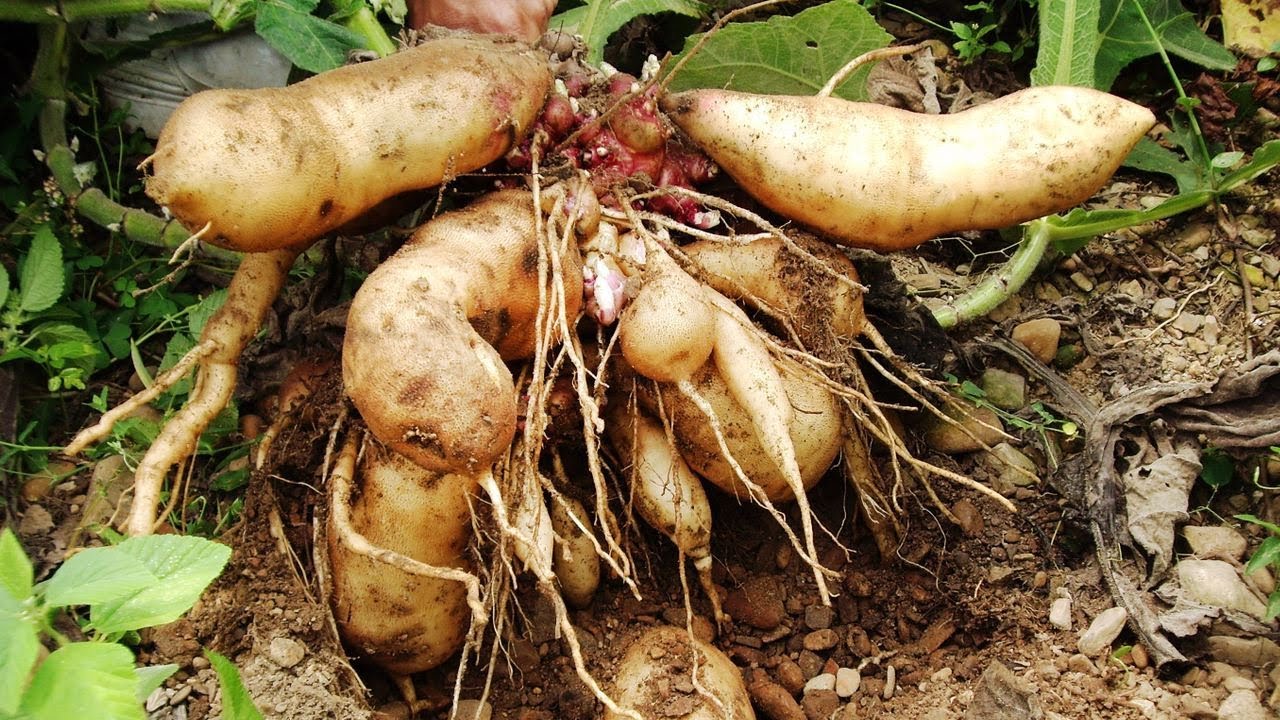
The root system of yacón consists of fibrous roots and edible tuberous storage roots. The storage roots can be up to 25 cm long and 10 cm wide (Grau & Rea, 1997). There can be up to 20 storage roots on a single plant, and they are adventitious, growing from rhizomes (Dostert, Roque, Cano, La Torre, & Weigend, 2009). The bark color of the tuberous roots may be cream, pink, purple, or most commonly brown while the storage tissue can be white, cream, yellow, pink, or purple (Grau & Rea, 1997).
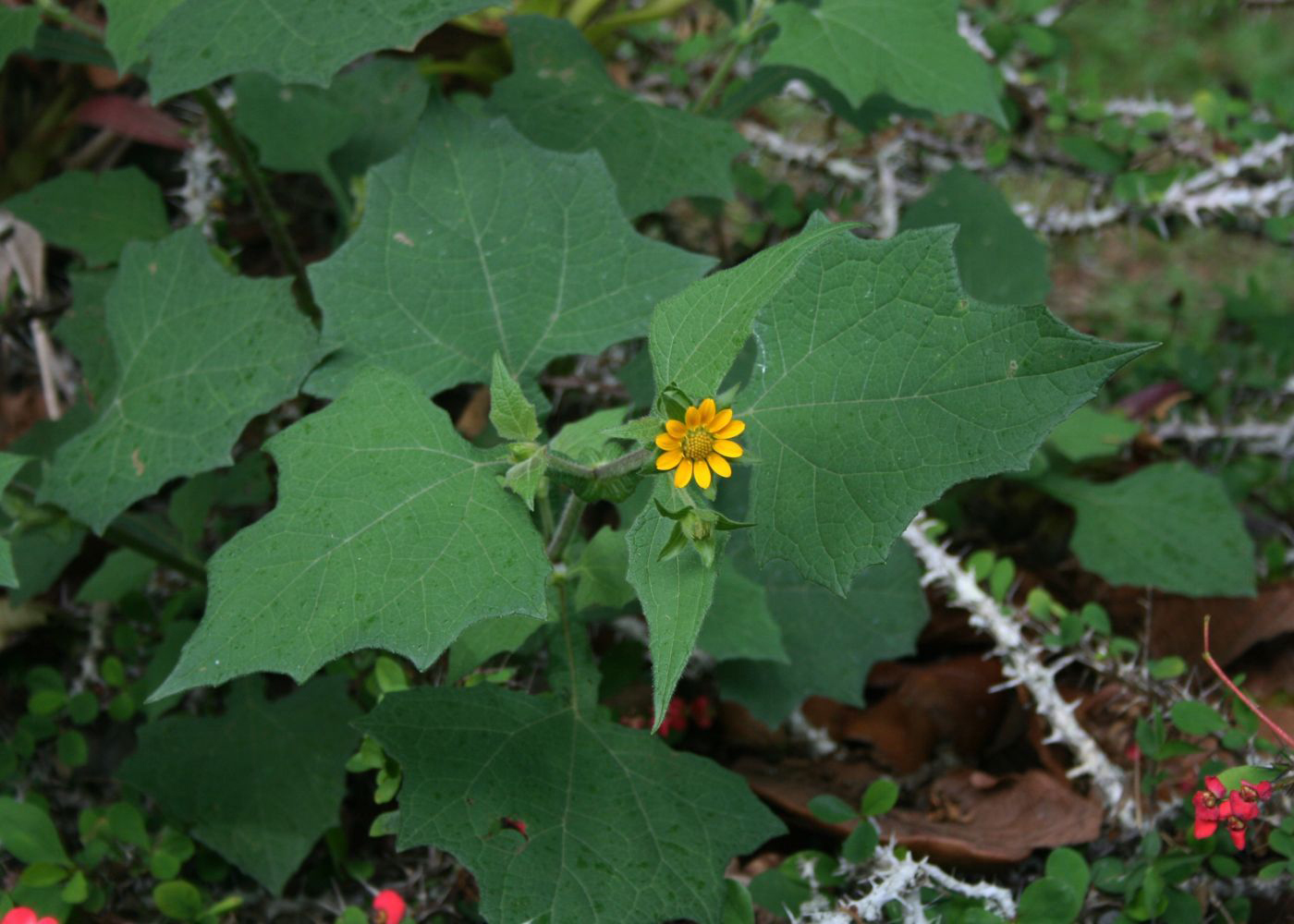
Yacón has a height of up to 3 meters and its stem, which becomes hollow when the plant matures, can be cylindrical or angular (Dostert, Roque, Cano, La Torre, & Weigend, 2009). The leaves of yacón are arranged oppositely on the stem. Its lower leaves are ovate and hastate and connate or auriculate at the base while its upper leaves are ovate-lanceolate. The upper and lower surfaces of the leaves have dense pubescence of glands and trichomes (Grau & Rea, 1997).Morphological Description of Reproductive Attributes
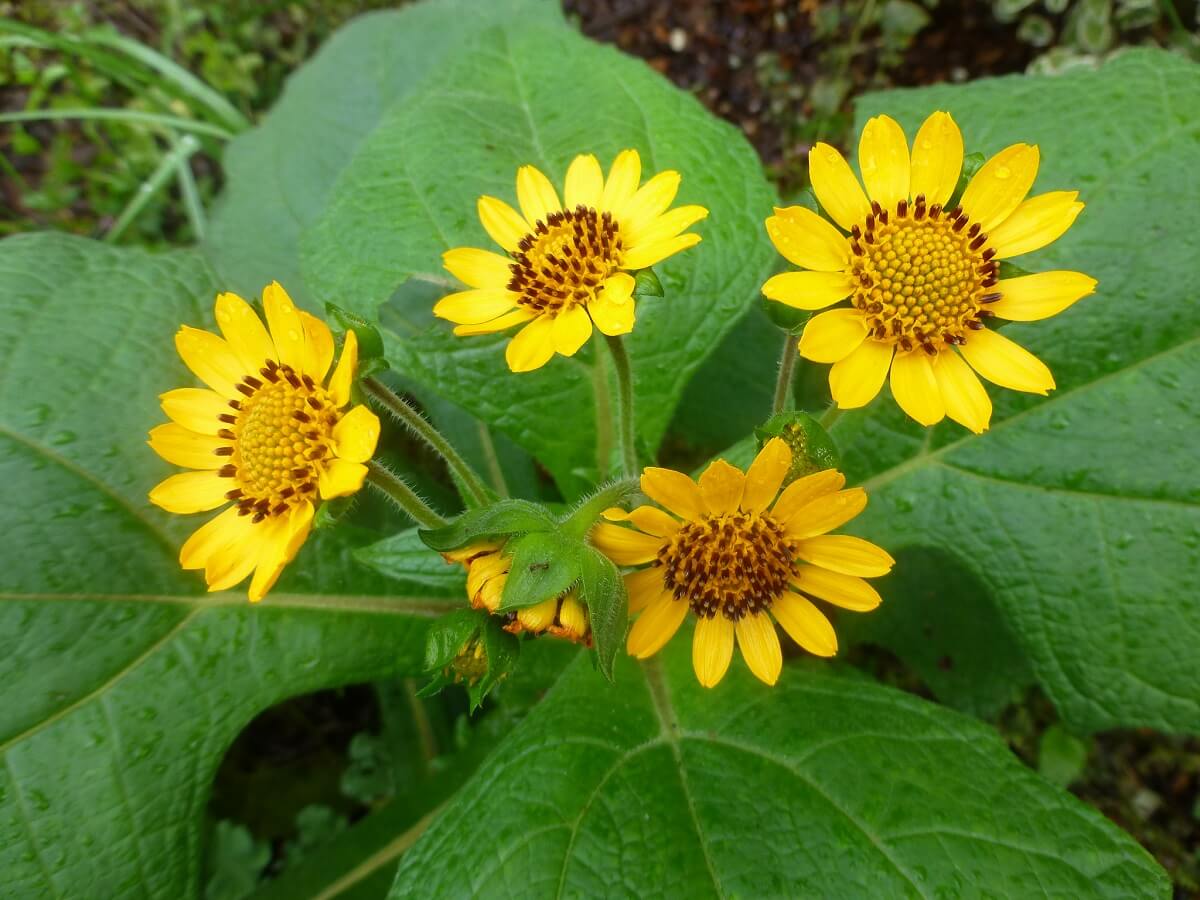
Yacón has terminal inflorescences with between one and five axes, each with three capitula (Dostert, Roque, Cano, La Torre, & Weigend, 2009). Their color ranges from yellow to orange. The ray florets are pistillate, or female, and are about 12 mm long and 7 mm wide. Each has two or three teeth. The disk flowers are staminate, or male, and are about 7 mm long (Grau & Rea, 1997). The achenes are dark brown, and their size ranges from 3.7 mm to 2.2 mm (Dostert, Roque, Cano, La Torre, & Weigend, 2009). Yacón has a low proportion of viable seeds, which may be due to pollen sterility and a long history of clonal propogation (Grau & Rea, 1997).
The rhizomes are used for asexual reproduction through vegetative propagation. They are a reddish color and are located at the base of the stem (Grau & Rea, 1997).Historical Accounts
Yacón has a long history of use in the Andean region. Root remains of yacón were found in northwestern Argentina, pointing to its use in Candelaria Culture from between 1 A.D. and 1000 A.D. (Zardini, 1991). Yacón was also depicted on pottery and in embroideries found in Nazca, Peru from between 500 A.D. and 1200 A.D. However, the first written account of yacón was made in 1615 in a list by Felipe Guaman Poma de Ayala about 55 native crops that were cultivated in the Andes (Grau & Rea, 1997). In 1653, Bernabé Cobo, a priest and writer, described the value of yacón as a fruit, especially in warm weather, and its ability to stay fresh for over twenty days of sea travel (Zardini, 1991). In 1857, Hugh Algernon Weddell collected a type specimen of yacón and gave it the scientific name Polymnia edulis (Grau & Rea, 1997). In 1956, Perez Arbeláez reported seeing yacón at the Paris exhibition, which was the first time it had been introduced in Europe (Zardini, 1991). In 1927, there was an attempt to cultivate the crop in San Remo, Italy, but this ended because of World War II. Throughout the 20th century, the cultivation of yacón decreased in the Andes, but starting in the 1980’s, interest in the crop expanded internationally (Grau & Rea, 1997).Domestication History
Researchers argue that yacón is a semi-domesticated plant since it is able to coexist with many other wild Smallanthus species (Aráoz et al. 2013). Yacón ability to coexist with other wild Smallanthus species is believed to have contributed to its evolutionary history. Domestication of yacón has shown to have increased its ability to store water and produce much larger and wider roots (Aráoz et al. 2013). Domestication has also shown to have an impact of the sweetness of the tubers, which in turn has led to an increase in caloric values sustainable for human consumption (Aráoz et al. 2013). The domestication of yacón is still widely debated, however it is believed to have originated during the Incan empire era (Singh, 2011).Cultivation Practices
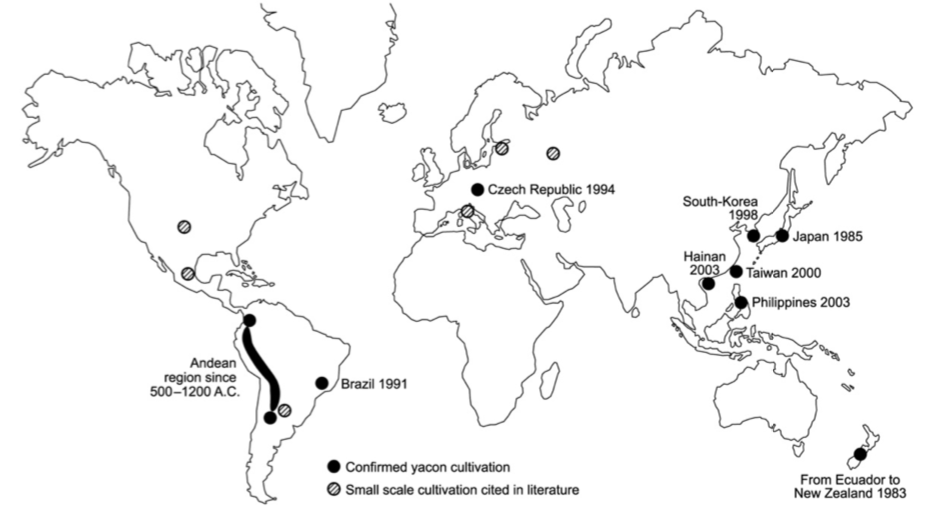
Historically the yacón plant is cultivated in the Andes region of South America, an area which stretches from Venezuela to Northern Argentina. The largest yacón diversity exists in Perú. The typical elevations for successful cultivation of yacón range between 1800-3000m above sea level, and in temperate and subtropical zones. Traditional ways of growing yacón are limited to the vegetative propagation of rhizomes, since yacón seeds are sterile. Since the 1980s yacón cultivation has been introduced to other regions of the world such as New Zealand and Japan. Czech Republic has also begun mass cultivating this plant in order to export to European countries such as Italy, France and Germany. Major cultivation of yacón for export is done by farmers of the Oxapampa area in Peru. These exports are most popularly sent to Japan which then sells yacón as dried products. Harvesting of yacón includes the process of carefully digging into the ground to create a hole surrounding the tubers, which are then pulled by the central stem. The tubers are pulled off of the central stem, In the Andes region yacón is typically sold in small markets and consumed at great volumes during religious festivals such as All Souls’ Day and the Corpus Christi festival. It is theorized that the yacón plant has been cultivated for thousands of years as records of yacón cultivation have been observed during the Incan empire.Nutritional Value and Parts of the Plant Consumed
The typical parts of yacón consumed are the tubers however, other parts of the plant have been observed to also consumed. One of the reasons why yacón has been popularized and promoted as a superfood is due to the naturally occurring sugars contained withing the storage tubers. The yacón tuber is typically composed of 70% water, 20% carbohydrates, 5% lipids, and proteins. Unlike other tuber-like plants, yacón roots store carbohydrates in the form of fructans rather than starches (Yan et al., 2019). The storage tubers have fructooligosaccharides (FOS), a type of sugar that is not metabolized by the human body thus has a very low caloric input into diets (Yan et al., 2019). This makes yacón a desirable superfood since it is able to be an alternative sweetener for people with diabetes. Continuous intake of FOS has also shown to increase immunity within the human body. In a study conducted in 2010 it was shown that intake of FOS over a 30-day period led to an improvement of anti-inflammatory phagocytic cells (Delgado et al., 2010). Additionally, intake of FOS through yacón flour led to regulation of intestinal microbiota in mice (Yan et al., 2019). Yacón is typically commercially consumed as jams and syrups but also raw, cooked, as flour, and chips (dried slices).
Furthermore, other parts of yacón that are typically consumed include the leaves as they have been found to contain many health promoting qualities. The leaves of yacón contain protocatechuic, chlorogenic, caffeic, and ferulic acids. Together these acids have been shown to have antioxidative properties thus many people that consume the leaves typically brew them to make teas (Yan et al., 2019). The flowers of the plant have also been found to have some antioxidative properties however, more research needs to be conducted in order to finalize this claim (Yan et al., 2019).
Human Experience
Throughout the Andes, yacón has mostly been cultivated at a relatively small scale. Farmers will grow a few yacón plants to feed their families, and they may also grow it as a cash crop to be sold locally. However, some yacón products are exported to Japan, the United States, and Europe (Ojansivu, Ferreira, & Salminen, 2011). Beyond being a food source, yacón has a few different uses, including its role during religious and cultural festivals. From Peru to Argentina, yacón is eaten during the Corpus Christi festival, which has taken the place of the Incan K’apac Raymi feast. In Ecuador, it is consumed during festivals on All Saints’ Day and Day of the Dead (Grau & Rea, 1997). These applications show that yacón has a long history of usage, which has evolved with the religion and culture in the region.
Beginning in the late 20th century, yacón cultivation expanded internationally to countries, such as the United States, New Zealand, Japan, South Korea, Taiwan, China, Russia, and Brazil (Dostert, Roque, Cano, La Torre, & Weigend, 2009; Ojansivu, Ferreira, & Salminen, 2011). Yacón is becoming a more popular food crop because of the variety of health benefits it offers. As people are growing more aware about the food they eat, yacón derived products may become incorporated into more diets. For example, in Brazil and Japan yacón syrup and yacón flour can be found in supermarkets (Ojansivu, Ferreira, & Salminen, 2011). However, as this crop becomes more commercialized, it is important that its cultivation practices are ethical and sustainable.References
Choque Delgado , G. T., Tamashiro, W. M. da S. C., Maróstica, M. R., & Pastore, G. M. (2013, September). Yacon (Smallanthus sonchifolius): A Functional Food. Plant foods for human nutrition (Dordrecht, Netherlands). Retrieved May 29, 2022, from https://pubmed.ncbi.nlm.nih.gov/23709016/
Dostert, N., Roque, J., Cano, A., La Torre, M. I., & Weigend, M. (2009). Factsheet – Botanical Data: Yacón – Smallanthus sonchifolius (Poepp.) H. Rob. https://repositorio.promperu.gob.pe/bitstream/handle/123456789/1343/Factsheet_botanical_data_yacon_2009_keyword_principal.pdf?sequence=1
Grau A., & Rea J. (1997). Yacon. Smallanthus sonchifolius (Poep. & Endl.) H. Robinson. In: Hermann M, Heller J, editors. Andean roots and tubers: Ahipa, arracacha, maca and yacon (pp. 199–242). Rome: IPGRI.
Hermann, M., & Heller, J. (1997). Andean roots and tubers. Google Books. Retrieved May 29, 2022, from https://www.google.com/books/edition/Andean_Roots_and_Tubers/O_QfhwpEajoC?hl=en&gbpv=0
Khajehei, F. (2019, September). Yacon (Smallanthus Sonchifolius Poepp. & endl) - the potential of a neglected crop as an alternative sweetener and source of phytochemicals for Functional Foods. OPUS. Retrieved May 29, 2022, from https://opus.uni-hohenheim.de/volltexte/2019/1663/
Ojansivu, I., Ferreira, C. L., & Salminen, S. (2011). Yacon, a new source of prebiotic oligosaccharides with a history of safe use. Trends in Food Science & Technology, 22(1), 40-46.
Robinson, H. (1978). STUDIES IN THE HELIANTHEAE (ASTERACEAE) . XII. RE-ESTABLISHMENT OF THE GENUS SMALLANTHUS. Directory listing for ia803209.us.archive.org. Retrieved May 29, 2022, from https://ia803209.us.archive.org/
Silva, D. M. N. da, Oliveira, F. L. de, Cavatte, P. C., Quaresma, M. A. L., & Christo, B. F. (2018, September 3). Growth and development of yacon in different periods of planting and growing regions. Acta Scientiarum. Agronomy. Retrieved May 29, 2022, from https://www.scielo.br/j/asagr/a/4rdrZhwpsZ7zy4LDCMC4BXk/?lang=en
Singh, R. J. (2011, September 15). Genetic Resources, chromosome engineering, and Crop Improvement. Google Books. Retrieved May 29, 2022, from https://www.google.com/books/edition/Genetic_Resources_Chromosome_Engineering/9QTLBQAAQBAJ?hl=en&gbpv=0
VITALI, M. A. I. R. A. S., SANCHO, G. I. S. E. L. A., & KATINAS, L. I. L. I. A. N. A. (2015, June 19). A revision of Smallanthus (Asteraceae, Millerieae), the “yacón” genus. Semantic Scholar. Retrieved May 29, 2022, from https://pdfs.semanticscholar.org/7411/035c2edbc763efd90e4b2f2c8e314c064ada.pdf?_ga=2.246210306.745155970.1653182503-2122997589.1653182503
Yan, M. R., Welch, R., Rush, E. C., Xiang, X., & Wang, X. (2019, November 3). A sustainable wholesome foodstuff; health effects and potential dietotherapy applications of Yacon. Nutrients. Retrieved May 29, 2022, from https://www.ncbi.nlm.nih.gov/pmc/articles/PMC6893727/
Zardini, E. (1991). Ethnobotanical notes on “Yacon,” polymnia sonchifolia (Asteraceae). Economic Botany, 45(1), 72-85.