Thanks for your patience during our recent outage at scalar.usc.edu. While Scalar content is loading normally now, saving is still slow, and Scalar's 'additional metadata' features have been disabled, which may interfere with features like timelines and maps that depend on metadata. This also means that saving a page or media item will remove its additional metadata. If this occurs, you can use the 'All versions' link at the bottom of the page to restore the earlier version. We are continuing to troubleshoot, and will provide further updates as needed. Note that this only affects Scalar projects at scalar.usc.edu, and not those hosted elsewhere.
Performing ArchiveMain MenuVisualizing the “Vanishing Race”: the photogravures of Edward S. CurtisFront Page for Visualizing the "Vanishing Race" pathCurtis' Image and Life: The Network of The North American Indian, Inc.An experiment with data visualization approach to understand and contextualize Curtis' images and his lifeMedia, Technology and MediationsCurtis's Technology, Relationships to Media and StyleContextualizing Curtis, The North American Indian, and Racethe collection of essays from the contributorsConsulting with Tribes as Part of Archive DevelopmentIntroduction to Consulting with Tribes by Ulia GosartContributing ArchivesInformation on how to participate in Performing ArchiveBrowsing the MediaA path of paths that allow users to cut through the collection in a variety of ways.Acknowledgements and Project InformationProject NetworkJacqueline Wernimontbce78f60db1628727fc0b905ad2512506798cac8David J. Kim18723eee6e5a79c8d8823c02b7b02cb2319ee0f1Stephan Schonberg23744229577bdc62e9a8c09d3492541be754e1efAmy Borsukc533a79d33d48cbf428e1160c2edc0b38c50db19Beatrice Schustera02047525b31e94c1336b01e99d7f4f758870500Heather Blackmored0a2bf9f2053b3c0505d20108092251fc75010bfUlia Gosart (Popova)67c984897e6357dbeeac6a13141c0defe5ef3403
12018-03-16T21:13:11-07:00Erik Loyerf862727c4b34febd6a0341bffd27f168a35aa637Volume Seven Illustrations and Portfolio ImagesErik Loyer1Media Galleriesstructured_gallery2018-03-16T21:13:11-07:00Erik Loyerf862727c4b34febd6a0341bffd27f168a35aa637
Contents of this path:
12018-03-16T21:11:41-07:00Erik Loyerf862727c4b34febd6a0341bffd27f168a35aa637Inashah - Yakima1Many of the elderly and middle-aged Yakima, especially those of what was formerly the ruling class, feel the same dislike and suspicion of the white man that moved their fathers, in the uprising of 1855, to attempt to expel the newcomers from their territory. The brooding expression of dissatisfaction on the face of this man seemingly represents inherent tribal antipathy to the white race, engendered by their aggression and greed.plain2018-03-16T21:11:41-07:00Erik Loyerf862727c4b34febd6a0341bffd27f168a35aa637
12018-03-16T21:11:42-07:00Erik Loyerf862727c4b34febd6a0341bffd27f168a35aa637Wife of Mnainak - Yakima1Mnainak, son of the former chief of the Columbia River village Skin at the north side of Celilo falls, is probably the man of greatest influence among the remnant of the cognate bands that constitute the Yakima.plain2018-03-16T21:11:42-07:00Erik Loyerf862727c4b34febd6a0341bffd27f168a35aa637
12018-03-16T21:11:43-07:00Erik Loyerf862727c4b34febd6a0341bffd27f168a35aa637Camp of the Yakima1plain2018-03-16T21:11:43-07:00Erik Loyerf862727c4b34febd6a0341bffd27f168a35aa637
12018-03-16T21:11:43-07:00Erik Loyerf862727c4b34febd6a0341bffd27f168a35aa637Mountain camp - Yakima1The reservation of the Yakima rises from the level of the valley of the Yakima river to the lower range of mountains between that stream and the Columbia. In the glades of the mountains small parties pitch their tipis in the spring-time, and the women and girls gather edible roots, notably bitterroot.plain2018-03-16T21:11:44-07:00Erik Loyerf862727c4b34febd6a0341bffd27f168a35aa637
12018-03-16T21:11:44-07:00Erik Loyerf862727c4b34febd6a0341bffd27f168a35aa637Flathead type1Probably the Indian does not live in whose veins does not flow the blood of more than one tribe. The Flatheads are unusually composite, and the original of the portrait here presented, while as good a type as can be found, no doubt is of a very different mould from that of a Flathead of three or four generations ago.plain2018-03-16T21:11:44-07:00Erik Loyerf862727c4b34febd6a0341bffd27f168a35aa637
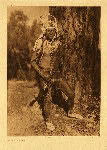
12018-03-16T21:11:45-07:00Erik Loyerf862727c4b34febd6a0341bffd27f168a35aa637Flathead chief1Through the medium of their annual incursions into the buffalo plains east of the Rocky mountains, the Flatheads adopted much of the plains culture. Not only their domicile (the tipi), their garments, weapons, and articles of adornment, came from this source, but many of their dances were in imitation of similar ceremonies practised by the prairie tribes. Prominent features of the accoutrement of this Flathead chief are his war-club of the plains type, and an eagle-bone whistle, such as was used in the Sun Dance. The Flatheads however never acquired the sun riteplain2018-03-16T21:11:45-07:00Erik Loyerf862727c4b34febd6a0341bffd27f168a35aa637
12018-03-16T21:11:45-07:00Erik Loyerf862727c4b34febd6a0341bffd27f168a35aa637Big Knife - Flathead1Big Knife's ancestry includes an Iroquois (perhaps a halfbreed), one of a number who came into the Northwest as employes of the Hudson's Bay Company. The head-dress of buffalo horns and scalp is not characteristic of the Salish tribes, but of the plains Indians.plain2018-03-16T21:11:45-07:00Erik Loyerf862727c4b34febd6a0341bffd27f168a35aa637
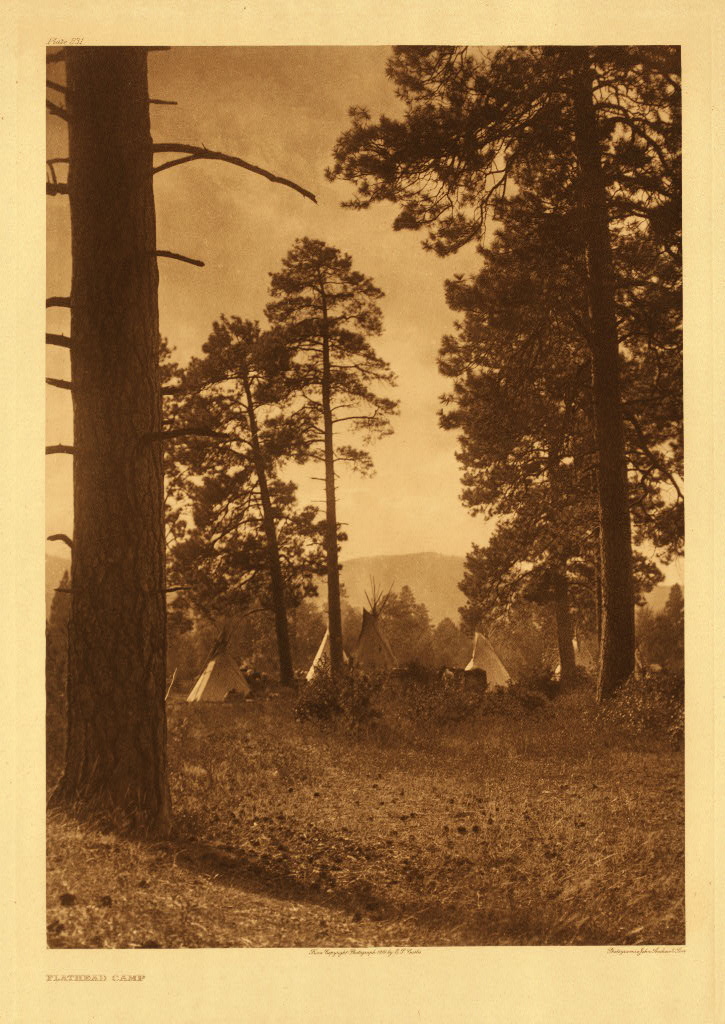
12018-03-16T21:11:45-07:00Erik Loyerf862727c4b34febd6a0341bffd27f168a35aa637Flathead camp on Jocko River1The scene depicts a small camp among the pines on the reservation of the Flatheads in western Montana, the majestic Rocky mountains rising abruptly in the background.plain2018-03-16T21:11:45-07:00Erik Loyerf862727c4b34febd6a0341bffd27f168a35aa637
12018-03-16T21:11:45-07:00Erik Loyerf862727c4b34febd6a0341bffd27f168a35aa637Stormy day - Flathead1The day was a succession of sudden squalls descending from the near-by mountains. Just a moment before sunset, when all hope of accomplishing anything with a camera was abandoned, the sun broke through the clouds for an instant, and this striking picture was obtained.plain2018-03-16T21:11:45-07:00Erik Loyerf862727c4b34febd6a0341bffd27f168a35aa637
12018-03-16T21:11:46-07:00Erik Loyerf862727c4b34febd6a0341bffd27f168a35aa637Flathead dance1Eliminating the environment, one would suppose that a party of plains Indians were performing. The costumes, the step, the gesture, the character of songs, all evidence of the Flathead war-dance.plain2018-03-16T21:11:46-07:00Erik Loyerf862727c4b34febd6a0341bffd27f168a35aa637
12018-03-16T21:11:46-07:00Erik Loyerf862727c4b34febd6a0341bffd27f168a35aa637By the river - Flathead1plain2018-03-16T21:11:46-07:00Erik Loyerf862727c4b34febd6a0341bffd27f168a35aa637
12018-03-16T21:11:47-07:00Erik Loyerf862727c4b34febd6a0341bffd27f168a35aa637Dusty dress - Kalispel1The Kalispel young woman, Skohlpba, is garbed in a dress ornamented with shells that imitate elk-tusks. The braids of hair are wound with strips of otter fur, and a weasel-skin dangles from each. The bands of white on the hair are effected with white clay.plain2018-03-16T21:11:47-07:00Erik Loyerf862727c4b34febd6a0341bffd27f168a35aa637
12018-03-16T21:11:47-07:00Erik Loyerf862727c4b34febd6a0341bffd27f168a35aa637Village of the Kalispel1The Kalispel, who now number about a hundred, are scattered along the eastern side of the Pend d'Oreille river in eastern Washington. In the summer they assemble in their picturesque village, consisting of a few wooden houses and a dozen or more canvas-covered tipis, at the edge of a camas meadow opposite the town of Cusick.plain2018-03-16T21:11:47-07:00Erik Loyerf862727c4b34febd6a0341bffd27f168a35aa637
12018-03-16T21:11:48-07:00Erik Loyerf862727c4b34febd6a0341bffd27f168a35aa637Kalispel scene1From time out of mind the Kalispel have been boatmen, and they are one of the few inland tribes that still possess and use craft of native manufacture. Their canoes are made of pine-bark on a framework of cedar strips, the seams and the imperfections of the bark being caulked with spruce gum.plain2018-03-16T21:11:48-07:00Erik Loyerf862727c4b34febd6a0341bffd27f168a35aa637
12018-03-16T21:11:48-07:00Erik Loyerf862727c4b34febd6a0341bffd27f168a35aa637On Spokane River1Spokane river, from a short distance below its head in Coeur d?Alene lake to its confluence with the Columbia, flows through the midst of what was the territory of the Spokan Indians. The character of the country through which the stream passes for some miles above its mouth is well shown in the picture. Northward from the stream lie the mountains among which the three Spokan tribes hunted deer and gathered their supplies of roots.plain2018-03-16T21:11:48-07:00Erik Loyerf862727c4b34febd6a0341bffd27f168a35aa637
12018-03-16T21:11:48-07:00Erik Loyerf862727c4b34febd6a0341bffd27f168a35aa637Spokan camp1The scene is the narrow bench some hundreds of feet above the level of Spokane river, on its northern bank and a few miles above its confluence with the Columbia.plain2018-03-16T21:11:48-07:00Erik Loyerf862727c4b34febd6a0341bffd27f168a35aa637
12018-03-16T21:11:49-07:00Erik Loyerf862727c4b34febd6a0341bffd27f168a35aa637Nespilim man1The Nespilim were a small Salishan band living north of the Columbia in the valley of Nespilim river. Few representatives of the tribe survive.plain2018-03-16T21:11:50-07:00Erik Loyerf862727c4b34febd6a0341bffd27f168a35aa637
12018-03-16T21:11:50-07:00Erik Loyerf862727c4b34febd6a0341bffd27f168a35aa637Nespilim girl1In the early years of the nineteenth century various explorers noted that the bands dwelling along the upper course of the Columbia, among which the Nespilim were included, wore practically no clothing. Excepting as the cold made some protection necessary. The hair of the women was arranged in two knots at the sides of the face ? a method of hairdressing still in vogue among the Salish on Fraser river. Prior to the middle of the century the use of deerskin garments had become common, and gradually other customs such as the style of hairdressing here illustrated, were borrowed from the tribes east of the Rocky mountainsplain2018-03-16T21:11:50-07:00Erik Loyerf862727c4b34febd6a0341bffd27f168a35aa637
12018-03-16T21:11:50-07:00Erik Loyerf862727c4b34febd6a0341bffd27f168a35aa637Luqaiot - Kittitas1The original of this portrait is a son Owhi (Ohai), who as chief of the Salishan band inhabiting Kittitas valley, Washington, at first appeared to favor the Stevens treaty of 1855, but a few months later was drawn into the Indian uprising by the act of another son, Qahlchun, in killing some prospectors. At the termination of hostilities Luqaiot made his permanent home among the Spokan, taking for his wife the daughter of a Spokan chief and widow of his executed brother Qahlchun. Luqaiot's recollections of the events of these times will be found scattered through the account of the Yakima war in Volume VII.plain2018-03-16T21:11:50-07:00Erik Loyerf862727c4b34febd6a0341bffd27f168a35aa637
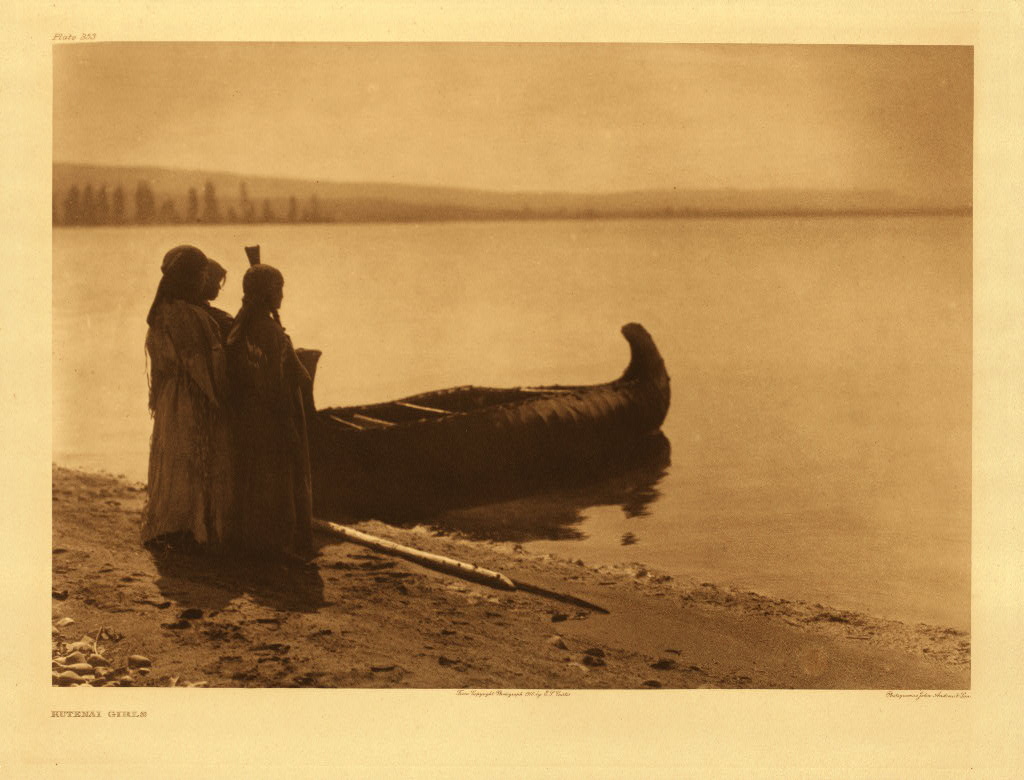
12018-03-16T21:11:50-07:00Erik Loyerf862727c4b34febd6a0341bffd27f168a35aa637Country of the Kutenai1The Kutenai occupied portions of southeastern British Columbia, northern Idaho, and northwestern Montana. In this region of blue, mountain-girt lakes and majestic rivers they very naturally made use of canoes. The commoner form was the pine-bark craft still to be observed among the Kalispel (see plates 239, 240), but occasionally they made canoes of the form here illustrated, by stretching fresh elk-hides over a framework of fir strips or tough saplings. The one seen in the picture is a canvas-covered specimen found on the shore of Flathead lake in 1909.plain2018-03-16T21:11:50-07:00Erik Loyerf862727c4b34febd6a0341bffd27f168a35aa637
12018-03-16T21:11:50-07:00Erik Loyerf862727c4b34febd6a0341bffd27f168a35aa637Kutenai duck hunter1In the gray dawn of a foggy morning the hunter crouches in his canoe among the rushes, waiting for the water-fowl to come within range.plain2018-03-16T21:11:50-07:00Erik Loyerf862727c4b34febd6a0341bffd27f168a35aa637
12018-03-16T21:11:50-07:00Erik Loyerf862727c4b34febd6a0341bffd27f168a35aa637Embarking - Kutenai1The picture was made near the southern end of Flathead lake, in northwestern Montana.plain2018-03-16T21:11:50-07:00Erik Loyerf862727c4b34febd6a0341bffd27f168a35aa637
12018-03-16T21:11:50-07:00Erik Loyerf862727c4b34febd6a0341bffd27f168a35aa637On the shore of the lake - Kutenai1The distant foothills of the Rocky mountains occupy the background.plain2018-03-16T21:11:50-07:00Erik Loyerf862727c4b34febd6a0341bffd27f168a35aa637
12018-03-16T21:11:50-07:00Erik Loyerf862727c4b34febd6a0341bffd27f168a35aa637Crossing the lake - Kutenai1plain2018-03-16T21:11:50-07:00Erik Loyerf862727c4b34febd6a0341bffd27f168a35aa637
12018-03-16T21:11:51-07:00Erik Loyerf862727c4b34febd6a0341bffd27f168a35aa637Kutenai camp1The scene is a thinly wooded, sandy peninsula at the southern end of Flathead lake. Here the author's camp was pitched in 1909 during some weeks of investigation into the primitive life of the Kutenai.plain2018-03-16T21:11:51-07:00Erik Loyerf862727c4b34febd6a0341bffd27f168a35aa637
12018-03-16T21:11:51-07:00Erik Loyerf862727c4b34febd6a0341bffd27f168a35aa637Rush gatherer - Kutenai1Rushes gathered in swamps and in the shallows of the lakes were dried and strung together into mats, which primitively were used for lodge-covers, mattresses, canoe cushions, and for a variety of domestic purposes.plain2018-03-16T21:11:51-07:00Erik Loyerf862727c4b34febd6a0341bffd27f168a35aa637