Watts Riots of 1965
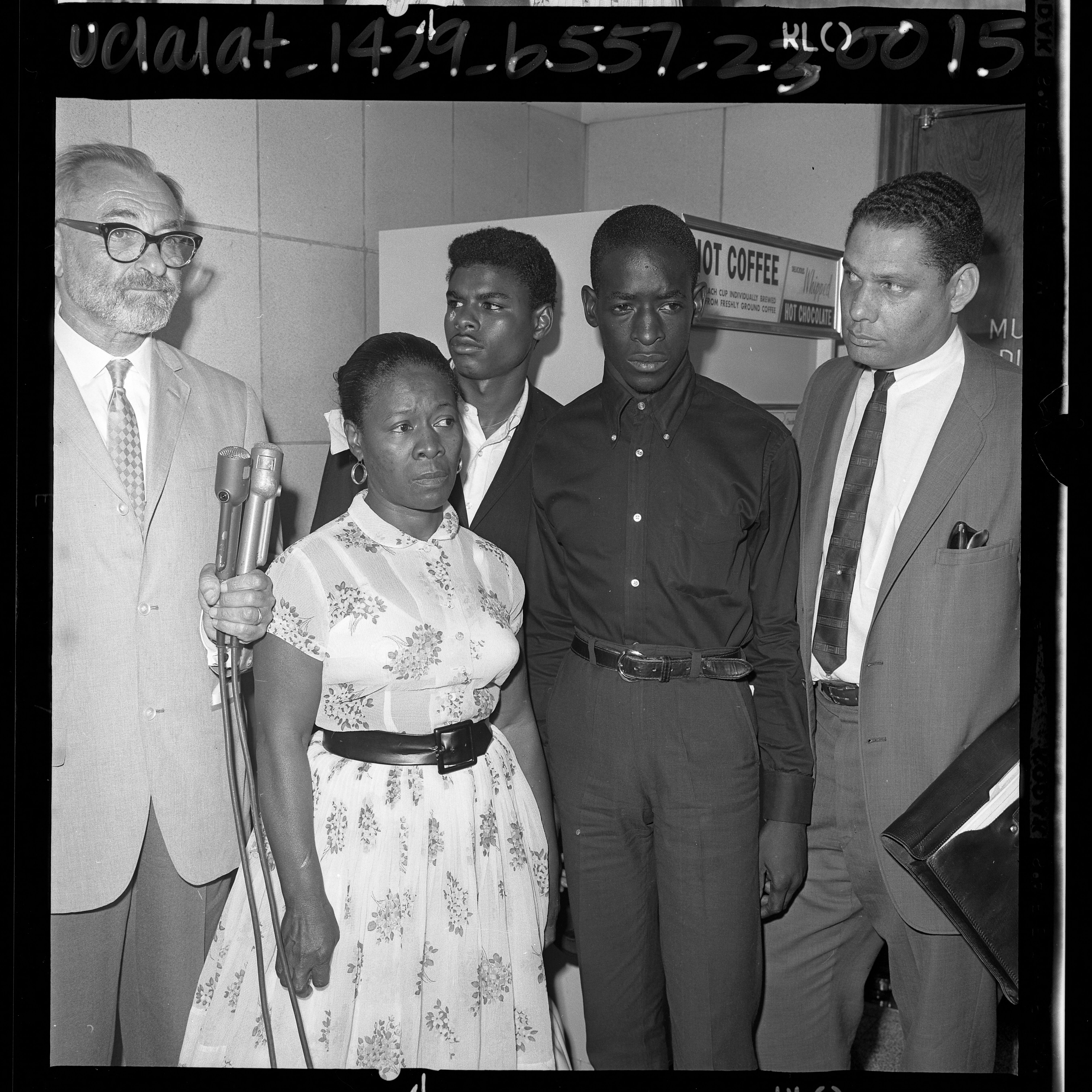
On August 11, 1965, Marquette Frye, a 21-year-old African-American man, was pulled over for drunk driving around 7pm. Marquette and his step-brother, Ronald Frye, were pulled over by a white California Highway Patrol officer while driving their mother’s car. Marquette failed a sobriety test and panicked as he was arrested, which led to a struggle between him and the officer. Ronald joined to protect his brother, which caused a crowd to form. Back-up police arrived, assuming the crowd was hostile, which resulted in another fight. Marquette was taken to the police car after being hit by a riot baton. The Frye brothers’ mother, Rena, showed up to the scene, causing another fight because she thought her children were being abused by the police. Rena and Ronald were also arrested. The crowd got angrier about what they had just witnessed, and more officers showed up, but with batons and shotguns to keep the crowd back. More people showed up to investigate what was going on. Another fight broke out when Joyce Ann Gaines, a woman who believed she was pregnant, was dragged out of the crowd for spitting at the officers. By 7:45 pm, only 45 minutes after the initial arrest, the riot was in full force, with rocks, bottles and other objects being thrown at the cars that had been stalled in traffic because of the incident.
The following day, Rena, Marquette, and Ronald had all been released on bail. Crowds attacked motorists with rocks and bricks, and pulled white drivers out of their cars and beat them. This prompted a community meeting with Watts leaders, including representatives from churches, local government, and police, designed to calm down the situation. During the meeting, a lot of complaints about the police and government treatment of Black citizens were made. Rioters also threatened to riot in the white sections of Los Angeles, which did not help and caused more panic. Local Watts leaders wanted more Black police in their cities, since that would make the community feel more comfortable and at ease, but, the Los Angeles Police Department Chief William H. Parker disagreed and wanted to call in the National Guard instead. This decision caused more anger, which led to more riots that night. Mobs clashed with police, set buildings and cars on fire, and looted local stores. Crowds attacked firefighters and obstructed them from putting out fires. By the end of the third day, rioting covered a 50 square-mile section of Los Angeles and 14,000 National Guard troops were dispatched to the city. Police were shot at, apartments were raided, and Molotov cocktails were thrown (a glass bottle containing a flammable substance, such as gasoline or alcohol, and a source of ignition, such as a burning cloth wick, which starts fires when it’s thrown at objects). Watts resembled a war zone, and the violence continued three more days.


Non sodales neque sodales ut. Vel facilisis volutpat est velit. Magna fermentum iaculis eu non diam phasellus vestibulum lorem. Arcu non odio euismod lacinia at quis risus sed vulputate. Vitae et leo duis ut diam quam nulla porttitor massa. Amet nisl suscipit adipiscing bibendum est ultricies integer quis. Dictum fusce ut placerat orci. Sit amet consectetur adipiscing elit ut aliquam. Facilisis leo vel fringilla est ullamcorper eget nulla facilisi. Elementum nibh tellus molestie nunc. Nisl vel pretium lectus quam id. Lorem dolor sed viverra ipsum nunc. Pulvinar sapien et ligula ullamcorper malesuada proin libero nunc. Amet porttitor eget dolor morbi non arcu risus quis. Feugiat pretium nibh ipsum consequat. Proin sagittis nisl rhoncus mattis rhoncus urna neque. Et malesuada fames ac turpis egestas sed tempus. Habitasse platea dictumst quisque sagittis purus sit amet volutpat consequat. Enim tortor at auctor urna nunc id cursus metus aliquam.
This page has paths:
- Walkouts and Protests in Los Angeles Sydney Schwinger

