Thanks for your patience during our recent outage at scalar.usc.edu. While Scalar content is loading normally now, saving is still slow, and Scalar's 'additional metadata' features have been disabled, which may interfere with features like timelines and maps that depend on metadata. This also means that saving a page or media item will remove its additional metadata. If this occurs, you can use the 'All versions' link at the bottom of the page to restore the earlier version. We are continuing to troubleshoot, and will provide further updates as needed. Note that this only affects Scalar projects at scalar.usc.edu, and not those hosted elsewhere.
Sailing the British Empire : The Voyages of The Clarence, 1858-73Main MenuSailing the British Empire: The Voyages of the Clarence, 1858-73IntroductionThe Crew / AcknowledgmentsThe Provenance of Watson's LogAdditional Sources: Logs, Crew Lists, DiariesInside Lloyd's Register"Green's Celebrated Service"Details on owner of the ship at the time of our voyage, Richard Green.The Master Builder: William PileThe Master: Joseph Watson's BiographyA Mate's ProgressThe Career of Henry Berridge, First Mate of the ClarenceThe Crew of the Clarence in 1864An annotated crew listThe 18th HussarsThe Clarence and the Cyclone of 1864Origins of Indian Emigrants Aboard The ClarenceThe Surgeon-SuperintendantWages of indentured labourers in Demerara (1870-1900)The Clarence Sails to AustraliaMutiny! Violence and Resistance Aboard "Coolie Ships"Cholera: The Killer from CalcuttaSTSC 077, Fall 2015 First Year Seminar, University of Pennsylvaniab33a025deaa7595ed0079bfc9b77ea3cb14b8d08STSC 077, The University of Pennsylvania, fall 2015
Post-Mutiny Changes
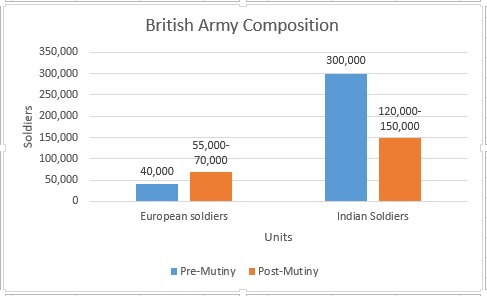
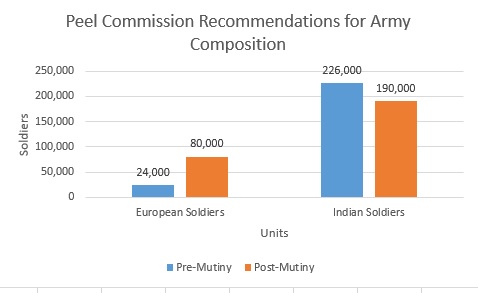
12016-02-16T14:25:22-08:00STSC 077, Fall 2015 First Year Seminar, University of Pennsylvaniab33a025deaa7595ed0079bfc9b77ea3cb14b8d0862651plain2016-02-16T14:25:22-08:00STSC 077, Fall 2015 First Year Seminar, University of Pennsylvaniab33a025deaa7595ed0079bfc9b77ea3cb14b8d08 The mutineers had come very close to holding out over the British. The British were shocked by the turn of events, and were afraid of the possibility of another mutiny. To insure against one, they made some changes. First, they dissolved the East India Company and brought the colonial administration of India under the government’s India Office. They subsequently enlisted the EIC’s soldiers into the British army. Some trouble was made there, as the soldiers claimed that their contracts were with the EIC, not the British government, which offered fewer privileges than the EIC. A possible mutiny of these European soldiers was avoided by granting them some of the privileges that they would have had under the EIC. Next, the ratio of European to Indian soldiers was altered, with a significant amount of additional European soldiers being brought in. A commission headed by the Secretary of State of War, Major-General Peel, made recommendations as to the composition of the British Army in post-Mutiny India. While these exact specifications were not followed, similar ones were implemented.
These additional European reinforcements included the 18th Hussars. In addition, most of the sepoys that had been in the British army before the Mutiny-even the ones that had stuck with the British-were removed. For example, only 8,000 of the the Bengal Army's original 120,000 sepoys were retained. To counter this, new Indian soldiers were raised into the British Army. The objectives of the army changed, as European soldiers were used to watch the Indian soldiers to guard against future rebellion. Many units were moved into the frontiers of the north-west and north-east to protect against tribal raiders and suspected Russian intrigue into India via Afghanistan (this worry had very little grounds, and never came close to fruition).
Sources: 1. Heathcote, T. A. The Military in British India: The Development of British Forces in South Asia, 1600-1947. Manchester: Manchester UP, 1995. Print. 2. Arnold, David. Colonizing the Body: State Medicine and Epidemic Disease in Nineteenth-century India. Berkeley: U of California, 1993. Print.
This page has paths:
1media/Screen Shot 2015-09-29 at 9.53.40 PM.pngmedia/Screen Shot 2015-09-29 at 9.53.40 PM.png2015-09-30T01:58:14-07:00STSC 077, Fall 2015 First Year Seminar, University of Pennsylvaniab33a025deaa7595ed0079bfc9b77ea3cb14b8d08Sailing the British Empire: The Voyages of the Clarence, 1858-73STSC 077, Fall 2015 First Year Seminar, University of Pennsylvania39book_splash2016-02-24T20:17:20-08:00STSC 077, Fall 2015 First Year Seminar, University of Pennsylvaniab33a025deaa7595ed0079bfc9b77ea3cb14b8d08
This page references:
12016-02-16T14:25:26-08:00Composition of the British Army After the Mutiny1This graph shows the population of European and Indian soldiers in the British Army in India before and after the Mutiny of 1857. The post-Mutiny numbers fluctuated between the given range; the bars show the maximum population of each unit after the Mutiny.plain2016-02-16T14:25:26-08:00
12016-02-16T14:25:28-08:00Peel Commission Recommendations for Composition of the British Army in India After the Mutiny1This graph shows the recommended composition of European and Indian soldiers in the British army after the Mutiny. The Peel Commission was comprised of high-ranking officers of the British and Indian armies and headed by the Secretary of State of War, Major-General Peel, with the purpose of policy creation in post-Mutiny India.plain2016-02-16T14:25:28-08:00