Thanks for your patience during our recent outage at scalar.usc.edu. While Scalar content is loading normally now, saving is still slow, and Scalar's 'additional metadata' features have been disabled, which may interfere with features like timelines and maps that depend on metadata. This also means that saving a page or media item will remove its additional metadata. If this occurs, you can use the 'All versions' link at the bottom of the page to restore the earlier version. We are continuing to troubleshoot, and will provide further updates as needed. Note that this only affects Scalar projects at scalar.usc.edu, and not those hosted elsewhere.
The Evolution of the Female Action Figure: A Journey from Doll to HeroMain MenuThe Evolution of the Female Action FigureBut First, A VideoOrigins: The History of DollsIndustrialization: Dolls to FiguresMiss Marvel1960s First Action Figure, (Super Masculine)Action figures: An Evolution of female characters.Disney Princess DollsVirtual DollsOnline doll and action figure websitesBarbie In A New EraAction Figures at The Museum of the Moving ImageResources and BibliographySophia Weiss3c76e92de54c7d0154f75aed19f8b4f70e4c4fe1Sophia, Paige, Maddie and Xiangyuan
Barbie Begins
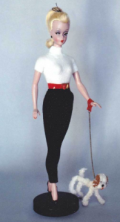
12016-04-17T20:07:12-07:00Paige Bennetta3bb0cc6dd38eef9fb9124e74ee5236cad76da0591292gallery2016-04-17T20:30:41-07:00Sophia Weiss3c76e92de54c7d0154f75aed19f8b4f70e4c4fe1The first Barbie doll debuted from Mattel on March 9, 1959. Based off of the German doll, Lilli, Barbie was a blonde bombshell with a slim figure and became a fashionable, cultural icon very fast.
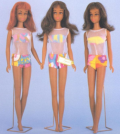
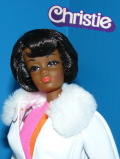
After speculation and raised awareness, Mattel released their first African American Barbie doll, "Colored Francie," in 1967. Using the same mold as the original Barbie, Francie was critiqued for not having characteristics of an African American woman leading to the release of Christie in 1968.
In comparing Barbie's body to that of a realistic woman, Barbie to scale would be 5'9, 120 pounds, have a waist of 18 inches with a chest of 36 inches, and be a mere 17% body fat, prohibiting her body to many normal functions of a menstruating woman.
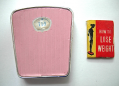
With these measurements in mind, there have been a lot of controversies with the image that Barbie portrays. Being a doll that very young girls are exposed to early on in their lives as a role model, Barbie gives an unrealistic portrayal of body expectations that are unachievable and unhealthy. Not only are the looks of Barbie degrading, but earlier dolls came with props that encouraged eating disorders like a scale that was set at 110 pounds as well as the guide "How To Lose Weight" which inside instructed girls to not eat. Along with this has come "Barbie Syndrome" which entails those who try to lead a life that Barbie would live while simultaneously trying to achieve the entire look of Barbie, a very distorted lifestyle.
12016-04-17T20:12:09-07:00Paige Bennetta3bb0cc6dd38eef9fb9124e74ee5236cad76da05Lilli v Barbie1media/Lilli v Barbie.pngplain2016-04-17T20:12:09-07:00Paige Bennetta3bb0cc6dd38eef9fb9124e74ee5236cad76da05