Thanks for your patience during our recent outage at scalar.usc.edu. While Scalar content is loading normally now, saving is still slow, and Scalar's 'additional metadata' features have been disabled, which may interfere with features like timelines and maps that depend on metadata. This also means that saving a page or media item will remove its additional metadata. If this occurs, you can use the 'All versions' link at the bottom of the page to restore the earlier version. We are continuing to troubleshoot, and will provide further updates as needed. Note that this only affects Scalar projects at scalar.usc.edu, and not those hosted elsewhere.
The Bestselling Novel: Currents in American History and CultureMain MenuIntroductionIntersectionality and Power Relations in BestsellerismAn intersectional analysis of the concepts of gender, race and power relationships, highlighting how the overlap between these concepts fueled the novels’ rise as bestsellers.Slavery Beyond ChainsThe Variation of the Forms of Slavery Inflicted on Charlotte in Susanna Rowson's _Charlotte Temple_ and Dana in Octavia Butler's _Kindred_.Perception of Women in SocietyInspecting the ways in which the woman’s default “doomed” status can be blamed on the society's narrow perception of women in Susanna Rowson's Charlotte Temple and Edith Wharton's House of Mirth.Gendered Violence and Racism: The Short End of the StickThe Struggle of the Black Woman Across the CenturiesBrief summaries of course textsStudents in ENG 410: American Novel, an upper-level undergraduate seminar8105943177cf94521fefbbebb901e86333202954
Introduction
1media/Screen_Shot_2017-06-07_at_11.50.33_AM_1024x1024.pngmedia/tumblr_macu21pn3t1rfj55wo1_1280.jpg2018-04-18T11:57:02-07:00Students in ENG 410: American Novel, an upper-level undergraduate seminar8105943177cf94521fefbbebb901e863332029542976144image_header2018-05-22T05:43:58-07:00Students in ENG 410: American Novel, an upper-level undergraduate seminar8105943177cf94521fefbbebb901e86333202954
Charlotte Temple and Lily Bart, two vastly different girls with fates so strangely similar. Who could blame them for their unfortunate ends?
The works Charlotte Temple and House of Mirth, two of America's most beloved bestsellers, are both set in different time periods, both with characters that have different upbringings and are overall, polar opposites of one another. Yet, these two protagonists have more in common that one might think.
This path will take a look at the two texts, examining the portrayal of the main female characters and ultimately their roles in their societies. Despite the fact that both novels have greatly contrasting elements, there are still parallels and conceptions about women that appear to be instilled in society no matter the period.
The basis of our argument is how the perception of women in society and their "default" status, no matter the time period they lived in, ages, personalities, experiences, and so on, will always be of a “doomed” victim. Ultimately, society’s expectations and narrow views set up women to place their fates in the hands of anyone and everyone but themselves.
Part one: Female Relationships - Split into two parts, this section inspects how Charlotte and Lily's relationships with other women in their lives could be a factor that lead them to their doom. Part two: Appearance and Reputation - This section then discusses how the societal perception of protagonists of the novels affects their reputation. Part three: Pity for the Doomed Girl - Examining the idea of pity and how it plays in to the perception of women in society, this section argues that the female protagonists take on value only when they are to be pitied.
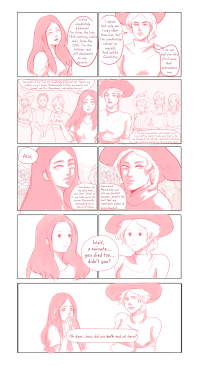
Charlotte Temple and Lily Bart: Different Girls, Similar Fates.
(to zoom: right click + open image in new tab)
This page has paths:
1media/charlotte lily.png2018-04-18T11:23:08-07:00Students in ENG 410: American Novel, an upper-level undergraduate seminar8105943177cf94521fefbbebb901e86333202954Perception of Women in SocietyStudents in ENG 410: American Novel, an upper-level undergraduate seminar22Inspecting the ways in which the woman’s default “doomed” status can be blamed on the society's narrow perception of women in Susanna Rowson's Charlotte Temple and Edith Wharton's House of Mirth.splash7181102018-05-22T07:12:07-07:00Students in ENG 410: American Novel, an upper-level undergraduate seminar8105943177cf94521fefbbebb901e86333202954
This page references:
12018-05-14T18:32:21-07:00women in society comic1Chapter outline in visual form.media/comic project final.pngplain2018-05-14T18:32:21-07:00