Thanks for your patience during our recent outage at scalar.usc.edu. While Scalar content is loading normally now, saving is still slow, and Scalar's 'additional metadata' features have been disabled, which may interfere with features like timelines and maps that depend on metadata. This also means that saving a page or media item will remove its additional metadata. If this occurs, you can use the 'All versions' link at the bottom of the page to restore the earlier version. We are continuing to troubleshoot, and will provide further updates as needed. Note that this only affects Scalar projects at scalar.usc.edu, and not those hosted elsewhere.
Exhibiting Historical Art: Out of the Vault: Stories of People and ThingsMain MenuWorld MapClick pins to learn more about the object that originated thereTimelinePre-Columbian Gold Headband800 A.D. - 1500 A.D.Gold Eagle PendantsSepik River Headrest20th centuryStatue of Saint Barbara17th century France, polychromed wood, artist unknownCabinet door from the Imperial Palace of Beijing with Imperial DragonChen Youzhang, 1755Bronze LampHead of John the BaptistLauren Linquest, '19Ida Rubenstein, 1909 Sculpture by Jo DavidsonCassone ChestWater-Carrier Vase with Bamboo Pattern and BambooLenore Vanderkooi, 1996Lotus Flowers in a Wood VaseRevolutions Per Minute: The Art RecordOpening page
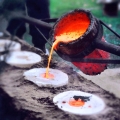
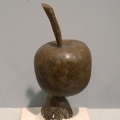
Jo Davidson is known for sculpting in bronze. Bronze sculptures can be created through multiple processes, including lost-wax casting, sand casting, and centrifugal casting. Due to the small size of Ida Rubenstein, she was probably created using the lost-wax method, in which a clay model of the sculpture would first be created. Then a mould of the clay would be made in plaster, which allows for more detail to be added to the piece. Next a wax is cast from the mould, creating a hallow shape to be filled with molten bronze. Once the bronze is poured in and has cooled, the mould is chipped away until only bronze remains. As the pictures above show, bronze rods are left from where the melted bronze was poured; these rods are sawed off and the exterior is polished.