Thanks for your patience during our recent outage at scalar.usc.edu. While Scalar content is loading normally now, saving is still slow, and Scalar's 'additional metadata' features have been disabled, which may interfere with features like timelines and maps that depend on metadata. This also means that saving a page or media item will remove its additional metadata. If this occurs, you can use the 'All versions' link at the bottom of the page to restore the earlier version. We are continuing to troubleshoot, and will provide further updates as needed. Note that this only affects Scalar projects at scalar.usc.edu, and not those hosted elsewhere.
Creative Practice as Research: Discourse on MethodologyMain MenuContentsIntroductionThe Practitioner Model of Creative Cognition: A Potential Model for Creative Practice-Based ResearchModel research methods relevant for creative practice-based research projectsApplication of the Practitioner Model of Creative CognitionCommunity Discourse: Your Practice Research ModelsResources for Conducting and Teaching Practice-Based ResearchAbout the AuthorLyle Skains8ec9a01530aed114a2d78c359a32a6560b8c2714The Disrupted Journal of Media Practice
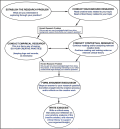
The method I propose (outlined in the Figure below), drawn from the combination of these observation and analysis approaches, is based upon the Practitioner Model of Creative Cognition presented in this project. The basic method is to engage in the creative practice in order to explore a research question: how does applying something unfamiliar/new/different to a familiar act/practice affect the practitioner’s process and the creative artifacts? In addition to the creative practice, significant contextual research is generally warranted in the scholarly domains pertinent to the creative project, including close readings of extant creative works as well as awareness and understanding of relevant critical theory. This research not only contributes toward contextualization and analysis of the creative work, it also has significant impact upon the creative process and artifacts. What follows in this section is a detailed overview of the entire method; used in combination with the Practitioner Model of Creative Cognition, it serves as a robust foundation from which to conduct practice-based research in the creative arts.
12016-01-14T12:06:02-08:00Lyle Skains8ec9a01530aed114a2d78c359a32a6560b8c2714Establish a Research Problem/Question7plain2016-06-27T06:22:23-07:00Lyle Skains8ec9a01530aed114a2d78c359a32a6560b8c2714
12016-01-14T12:09:38-08:00Lyle Skains8ec9a01530aed114a2d78c359a32a6560b8c2714Form Argument Leading to Exegesis4plain2016-06-27T06:34:01-07:00Lyle Skains8ec9a01530aed114a2d78c359a32a6560b8c2714
This page has replies:
12016-08-22T07:13:48-07:00AnonymousAt what point does the research question emerge?Sara Penrhyn Jones1plain2016-08-22T07:13:48-07:00This whole discussion is extremely useful and interesting (thanks). Speaking from personal experience, the interdisciplinary project that I have worked on that felt most coherent and grounded in 'the real world' was encountered through activist/digital media practice. This predated my employment as a research-active university lecturer, but grew into a funded AHRC project. I think that it is significant that the practice/encounter came first. It was a few years later that research questions were formulated (to secure funding for more filming etc). For the questions to be relevant and important to all participants (especially when working with individuals and partners in the community) I would really recommend 'practice first'. Encounter a situation or problem first (or whatever analogy is suitable for your own artistic medium. e.g.: through a lens, or as a writing experiment) experience this and 'listen', then let the questions follow, before upscaling your creative activity. To force research questions first, before any such experience or encounter means that they are not arising from the practice. In some ways, inventing research questions first can again be an overly defensive strategy to 'justify' creative research as valid. It also seems to close off potentially unexplored, more important or resonant areas of focus.Sara Penrhyn Jones
12016-08-22T07:39:13-07:00Lyle Skains8ec9a01530aed114a2d78c359a32a6560b8c2714Key difference between "practice-based" and "practice-led"Lyle Skains1plain2016-08-22T07:39:13-07:00I've mostly described projects here that are practice-based - research that is first and foremost research, but is conducted through exploration in creative practice.
I think what you're describing is more practice-led, where the practice raises questions that can be explored through further research. It's a distinction that I've always found difficult (after all, how do we come up with questions in practice-based research unless we've at least already done SOME practice???), but seems relevant here.
Since I focus mostly on practice-based research, that's what my model is founded on. I'd love to add another model to this resource that is practice-led! If you've developed a methodology on your project, and would want to post it or link to it, I think that would be really useful. There's definitely more than one way to skin the practice-research cat.Lyle Skains8ec9a01530aed114a2d78c359a32a6560b8c2714
This page references:
12016-01-14T12:00:23-08:00PBR Method1Overview of practice-based research method.media/PBR-Method-Simple.pngplain2016-01-14T12:00:23-08:00