Scalar's 'additional metadata' features have been disabled on this install. Learn more.
Race and the Digital: Racial Formation and 21st Century Technologies
Main Menu
"From Tweets to Streets?" A Research Project with Digital Supplement
"The Digital Divide" Research Projects
Race and the Digital Blog
Intersectionality and Tagging
Course Syllabus
Syllabus for Race and the Digital at UCLA
Statement of Values: Digital Ethnic Studies
Contributors' Portfolios
About "Race and the Digital"
Genevieve Carpio
cbaef6f4fe1847cc774ee8ef5c2d6efb0a58fda3
Kid Comet
b62a4423d252f961609f416b7188ffbc7d84a7d3
Yesenia Melgoza-Fernandez
a6a8d8933b14c7be3a522d5102f92c9dfe52e9b2
Michie Ortiz
25daabac1577ec1d12a68b2c0b0a15c4dba1374b
Eduardo D. Garcia
6e60d0784abf2b990f3510cceb60101259a8bdd3
Alan Evangelista
f3e41e7c002a037bb13d71a1e837eb5bf5bef12f
Ana Victoria H.
37ae5307effd9bccccea4f0fe7958d15cee30e07
Arturo Sotelo
38025c1bb15e36f2beff44b22df47fac513c339f
aa
de8e08161ecdfbe4206b74479dee1c1d007a58c4
Ashley Martinez-Munoz
a5a71a08c4c1c5dc7904ffcbc148c4f2edb1e723
Ebony Paramo
dca8ce0b7a38097adb1b511e4c75690f833171f0
revtweet2
1 2016-06-06T10:16:49-07:00 Alan Evangelista f3e41e7c002a037bb13d71a1e837eb5bf5bef12f 8877 1 plain 2016-06-06T10:16:49-07:00 Alan Evangelista f3e41e7c002a037bb13d71a1e837eb5bf5bef12fThis page is referenced by:
-
1
media/background.jpg
media/blm8.jpg
2016-06-05T22:02:17-07:00
The Empowering Movement
132
image_header
2016-06-08T03:53:02-07:00
"If you are trying to transform a brutalized society into one where people can live in dignity and hope, you begin with the empowering of the most powerless. You build from the ground up."
-Adrienne RichSocial Movements and Technology
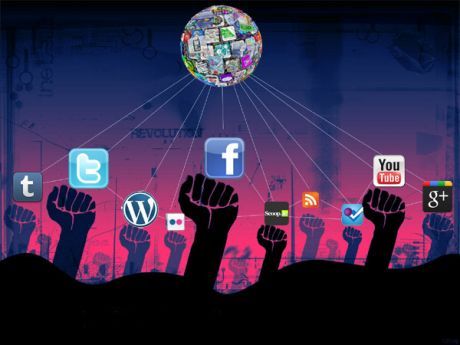
Social movements are a worldwide phenomenon and while they may vary greatly in ideology, size, demographics, organizational structure, and what overarching issue(s) they are fighting for, one thing they all have in common is what they hope to achieve: social change. Now historically, technology has played a pivotal and influential role in social movements. From the invention of the printing press, which at the time served as a catalyst for many movements as it allowed for information to spread more quickly, to radio and television, which brought the issues directly into the private homes of million of people. In a similar way, the various new forms of information and communication technologies or ICTs have assisted many of today’s social movements. With the most recent ICTs, specifically new media platforms such as blogs, wikis, and social media sites, social movements have been able to reach new levels in the ways they mobilize, build connections, inform, communicate, campaign, and most importantly generate real world change.
In the midst of all the social movements that are currently present around the world, #BlackLivesMatter has emerged as just one example of such a movement that has ignited social protest and activism online and offline. Using digital ethnography and drawing upon and extending the concepts of new media, transmedia organizing, media bridging, online activism, and race, which are presented by various academic scholars, I will look to answer how the #BlackLivesMatter Movement has engaged with new media while at the same time considering the ways race shapes digital participation and how these new technologies’ potential generate critical engagement among and within diverse communities.
As more of the world becomes connected online, ordinary people and social revolutionaries across the world are being empowered in ways never seen before. As I find, through various new media platforms, the #BlackLivesMatter Movement has been able to spread awareness, organize protests, and connect with diverse groups and communities across the nation. Most importantly, however, new media has given a historically disempowered group of ordinary African Americans a space where their voices and stories have been allowed to be heard and told.The #BlackLivesMatter Movement
On February 26, 2012, Trayvon Martin, a 17-year-old teen from Florida was shot and killed by neighborhood watch volunteer George Zimmerman (Biography.com). What unfolded next was a series of investigations, allegations, and public outrage. Another unarmed African American had lost his life and people were angered and frustrated. As if the social unrest was not enough, on July 13, 2013, a jury acquitted Zimmerman of the murder. After news broke out, people from all across the nation took to the streets and online to protest the injustices that once again plagued the African American Community. What emerged during this intense social upheaval was #BlackLivesMatter.
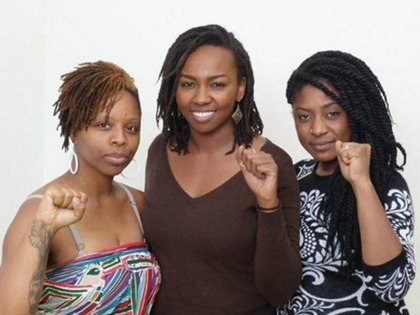
The #BlackLivesMatter organization and movement was founded by Patrisse Cullors, Opal Tometi, and Alicia Garza with the intention to "build connections between Black people and our allies to fight anti-Black racism, to spark dialogue among Black people, and to facilitate the types of connections necessary to encourage social action and engagement" (Blacklivesmatter.com). The movement affirms the lives of all Black individuals regardless of their sexual or gender identity, economic status, disability, religious beliefs, immigration status, or geography. Moreover, #BlackLivesMatter is guided by an array of comprehensive principles ranging from diversity, globalism, and empathy, to restorative justice, collective value, and loving engagement.
As mentioned above, #BlackLivesMatter has used various new media platforms to engage and expand its audience and goals. Specifically, the movement has engaged in what Costanza-Chock calls transmedia organizing. Transmedia organizing includes "the creation of a narrative of social transformation across multiple media platforms, involving the movement’s base in participatory media making, and linking attention directly to concrete opportunities for action. Effective transmedia organizing is also accountable to the needs of the movement’s base" (Costanza-Chock, 2014: 50).
Additionally, media bridging has also been used in the movement. Media bridging involves the transferring of media and information across media platforms and between movement networks. Costanza-Chock (2014) argues that transmedia organizers often engage in the daily practice of media bridging work by "taking information from one channel, reformatting it for another, and pushing it out into broader circulation across new networks" (63).
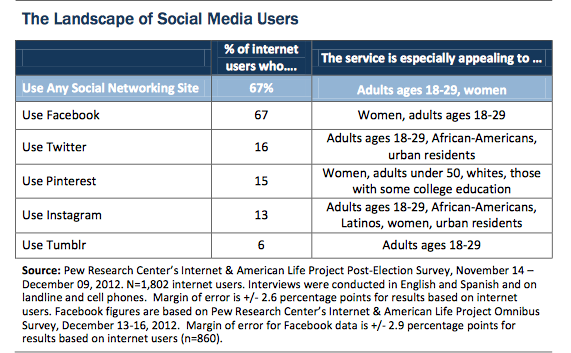
With the #BlackLivesMatter Movement's strong foundation in online activism, it has strategically planted itself into social media sites that have generally appealed to African American users. Data from The Demographics of Social Media Users (2012) on The Landscape of Social Media Users shows that overall 67 percent of individuals use Facebook, 16 percent use Twitter, 15 percent use Pinterest, 13 percent use Instagram, and 6 percent use Tumblr (Pew Research Center, 2013). Furthermore, the data reveals that African Americans have high interest in sites like Twitter, Instagram, and Facebook. While certainly #BlackLivesMatter has been rooted in Twitter, other social media sites and websites have been utilized to strengthen the movement.