Scalar's 'additional metadata' features have been disabled on this install. Learn more.
Plants & People: The Intersection of Botany and Human Experience
Main Menu
Project Pages
Lens: Project Pages
Catherine Nordstrom
eee5469f13f5b22449d345efe7a91438d420b603
Quinn Schwabauer
c956296b3a71313515a7b42080b7c21898a4e1b3
Jasmine White
5e6d9f39f5dca14a5efcc5b40c2233506f634d6e
Sarah Simpson
2cca5d1758ce821e43339c83d4af59d20561387f
Lysol Patino
fa4807587d439da7c652621d767462e8ddabe5bd
Ramses Cuellar
227d1101a6fc55c106a63da6f97fd9077c07d488
Giselle Correa
82a42a0fc272e6d9366f0c6a05623feb08490e90
Julianna Filice
de86fbc4c9fb4c37c7274aeb009eb12d157a6011
Amanda Lin
351a984f2f13af36387e431ad4c1bf4e2fe6442b
Jessica Manriquez
7a01046c42e42f088710b11e860bb302d9a1bc26
Amanda Bueno-Kling
6d5abc610c22a22e4d47af8113c6196fb76ced5c
Max Kwon
0e62f91ad2fccb5c1911b7cabfc2d67ad395c959
Tim Sisneros
a58829fb647d6ce7b9c40b457c686ddadf0f976f
Kyi Ther Min
bef3cb2bbf8d42cec3ceb3caaabd48943c6d0417
Edward Teng
f1c21e0ed6f73d48ad0b0ca737e4b208c441e39d
Mary Van Dyke
9e2c668c35f9c3e476eadfb42d2f33a996fe5cd3
Justin Haggard
d800073ab461eadee6e6715b98fe04a489d36a98
Holland James Smith
c6215e764616f18dc2ac54f79e800a56549a5a16
Jose Ismael Rodriguez
6d4715e7163f85d38025c4a74929b048c7f737eb
George Vetushko
28ffcc03954a96f0b0b9a57b40c5655eb929accc
Amanda Leyel
98935a5c087672934aee16f680afaf9132e76e30
Joshua Matsuda
2247a3d39cdfe957bbca6416ea46416c22545c46
Ian Morris
6ca94b2f17490b954dfe25231aee4c855ce98f06
Nikhitha Nair
923aa7cd2dc492bc285737def672e1e6cee8d689
Hojae Lee
d95326a339fcf3784c5d38537656c27fcd473cf6
Roberto Vindel
74869cdc6e4cbcab144ffdb6954169b7bacc0c5d
Shiva Nia
962b67344644b964eda3a1efd9dedb861983a57c
Pauline Le
90aae91f63664363b4dc493ff97073aaec561d82
Lauren Guevara
d3ab8c0eaac1066e5e591b0e15c4cfbc6d85e4ed
Ariela Navasartian
b706ff98a2718db176cb67e8d717a47ed8c4b6c0
Paria Maghsoudi
2fd8384def30ded736cc804c59ed30f65fb62a49
Jacqueline Duong
7ba49d8122d8595d23dae05feddc88d987a1bee5
Mellanie Gamero
145cdb416835ae5f2fd6057c64393ce87cb5016c
Karla Gonzalez
fd342cd724627c829347d847ef85f655430c8149
Phan Tran
91148bf3d7cb14e6d6590491bc9e3a572e4e737a
Kokonow Kinney
5aa005b7f097866e68b336839c60b92e3e3b90aa
Megan Chen
437c81235577cd34d86d461fc36d5c2cd1ba0d0a
Jin Zhu
524dd4acaf9b36b0629d5254b578a44a3e94b6c5
Natalie Nartz
c4f6efb33eae9bd143719d1b52bb9491171fc166
Matthew Nguyen
003d1825ac8b425d4322c4506166393d268a368c
Nicole Phelan
459bb3eb397625fc848ea954cd01858178296d64
Sarah Hoffman
9400350df5c9ca76e2405e77876e5f0e0edb5138
Skylar Yee
e2f87f03792b2a81afe11fe605107460a4f71f08
Chloe Fuson
ace0df69849f7f6ca276190dc0c1fd86c005df18
Brian Estarella-Murphy
831eaad1e3a4865984bec7368e88a589ef996e0a
Akshay Chellappa
76da17495df94c6c8bc0710f8fd207dfb8b5b6e1
Lester Squier
50c34f270c5c2e0ed0fafde1cc193434a4febd9c
Angelica Mae Rosete Soriano
e0e91b2960a04f4646d27c495705afaf132bce38
Julia Lindner
919433bcb6a91cbb9416833698e8012976f442c5
Joanne Kwak
035f00d5f05f3c560601b008cd0ae71d45b78461
Natalie Keung
bedcfd8b1a434b29988469c6e3224b2c3a94f2c8
Anthony Baniaga
3cc160e5607a280512d77ceff4259deb08abb3df
Ullucus tuberosus Flower
1 2022-05-11T21:32:31-07:00 Justin Haggard d800073ab461eadee6e6715b98fe04a489d36a98 40688 10 Close-up photo of Olluco flower, showing reproductive morphology #Ulluco plain 2022-05-24T17:05:02-07:00 Christopher Gilman 1985b99a2acd541caa12a10c3ebf6896565283abThis page has annotations:
- 1 2022-05-29T23:49:36-07:00 Justin Haggard d800073ab461eadee6e6715b98fe04a489d36a98 Flowers are small, yellow-green, and star shaped. Justin Haggard 1 plain 2022-05-29T23:49:36-07:00 Justin Haggard d800073ab461eadee6e6715b98fe04a489d36a98
- 1 2022-05-29T23:50:04-07:00 Justin Haggard d800073ab461eadee6e6715b98fe04a489d36a98 Petals are scentless and typically shed shortly after the bud opens. Justin Haggard 1 plain 2022-05-29T23:50:05-07:00 Justin Haggard d800073ab461eadee6e6715b98fe04a489d36a98
- 1 2022-05-29T23:50:41-07:00 Justin Haggard d800073ab461eadee6e6715b98fe04a489d36a98 Reproduction. Flowers rarely produce viable seeds since they have been grown from tubers. The only recorded instances of a flower producing viable seeds have been in controlled settings. Justin Haggard 1 plain 2022-05-29T23:50:41-07:00 Justin Haggard d800073ab461eadee6e6715b98fe04a489d36a98
- 1 2022-05-29T23:51:39-07:00 Justin Haggard d800073ab461eadee6e6715b98fe04a489d36a98 Sepals of ulluco are red and spherical. Justin Haggard 1 plain 2022-05-29T23:51:39-07:00 Justin Haggard d800073ab461eadee6e6715b98fe04a489d36a98
This page has tags:
- 1 2022-05-11T21:26:42-07:00 Justin Haggard d800073ab461eadee6e6715b98fe04a489d36a98 Ulluco: Resilience and Preservation Through Time Justin Haggard 14 Ullucus tuberosus (ulluco) is a crop grown throughout South America for its starchy tubers and spinach-like leaves. Grown alongside humans for thousands of years, the genetic diversity of ulluco along with indigenous knowledge of the crop has enabled it to survive amidst challenges of Spanish colonial rule. One challenge was competition from introduced European cultivars such as barley and carrots. Another challenge was that Indigenous groups who cultivativated ulluco faced hardships and challenges throughout colonization that echo into modern times. Despite these barriers, Indigenous Andean groups continued cultivating ulluco on smaller scales. This preserved Indigenous agricultural methods, and therefore ulluco biodiversity, still today. Now, ulluco has been proposed as a crop that could help solve diminishing food supplies amidst climate change. By Audrey Hernandez, Justin Haggard #Ulluco plain 2022-05-30T00:15:06-07:00 Justin Haggard d800073ab461eadee6e6715b98fe04a489d36a98
This page is referenced by:
-
1
2022-05-11T21:26:42-07:00
Ulluco: Resilience and Preservation Through Time
14
Ullucus tuberosus (ulluco) is a crop grown throughout South America for its starchy tubers and spinach-like leaves. Grown alongside humans for thousands of years, the genetic diversity of ulluco along with indigenous knowledge of the crop has enabled it to survive amidst challenges of Spanish colonial rule. One challenge was competition from introduced European cultivars such as barley and carrots. Another challenge was that Indigenous groups who cultivativated ulluco faced hardships and challenges throughout colonization that echo into modern times. Despite these barriers, Indigenous Andean groups continued cultivating ulluco on smaller scales. This preserved Indigenous agricultural methods, and therefore ulluco biodiversity, still today. Now, ulluco has been proposed as a crop that could help solve diminishing food supplies amidst climate change. By Audrey Hernandez, Justin Haggard #Ulluco
plain
2022-05-30T00:15:06-07:00
Nomenclature and Distribution
The Linnean binomial name is Ullucus tubersosus Caldas, which became official in 1809 in Nueva Granada (roughly encompasses present-day Colombia) (Royal Botanic Gardens Kew, n.d.). There are several common names for this plant. Historically, it was called the Quechua terms Ulluku or Ulluma, which means tuber (Slow Food Foundation for Biodiversity, n.d.). Today, in Peru and Argentina where it’s native, it’s largely referred to as ulluco (Kay, 1987). The Spanish name is papa lisa. In Ecuador and Colombia some common names are chigua, chuguas, melloco, and olloco. Today, ulluco is cultivated mostly in South America in Colombia, Ecuador, Chile, Venezuela, Bolivia, and Peru by families for sustenance or by farmers who sell their products in local markets (Specialty Produce, n.d.).
Morphology
There is significant morphological variation among specimens of Ullucus tuberosus across different growing regions (Parra-Quijano et al., 2012; Rousi et al., 1989). The simple leaves of ulluco can either be sagitate with acute apices, or reniform shaped with rounded apices (King, 1988). The leaves are smooth and succulent, and vary between lighter and darker shades of green or even reddish coloration (King, 1988). The leaves attach to the stem on a grooved petiole, and are arranged in an alternate pattern (King, 1988). The stems are ridged, and are either green, yellow, or reddish in coloration (King, 1988). Most domesticated ulluco has an upward and compact growth habit reaching 20 to 40 cm in height, but some varieties have trailing stems similar to the wild ancestor Ullucus aborigineus (Parra-Quijano et al., 2012; Rousi et al., 1989). Flowers are pedicellate, scentless, and typically shed shortly after the bud opens. Ovary is globose to somewhat pyriform and it’s slightly lobed (Royal Botanic Gardens Kew, n.d.). The stigma is weakly differentiated to obscurely 3-lobed and the plant has only 1 stamen (Royal Botanic Gardens Kew, n.d.).
When tubers are planted, inflorescences rise in nodes and open from base to apex of the plant (Pietila & Jokela, 1994). Often, ovule and embryo sac development begins but is slowed or stopped completely by the growth of the tuber. This is hypothesized to be the reason ulluco has several flowers but rarely produces seed and almost never produces viable seeds (Pietila & Jokela, 1994). Energy is used for tuber growth rather than flower development.
Evolutionary and Domestication History
For many years it was thought that there was no existing wild plant. Then in 1967, it was found and named Ullucus aborigineus. Its tubers are smaller, very bitter, and inedible. It has a thin, climbing, and long stem that can grow up to 2 meters (Parra-Quijano et al., 2012). This wild form is triploid, while cultivated forms are diploid (Parra-Quijano et al., 2012).
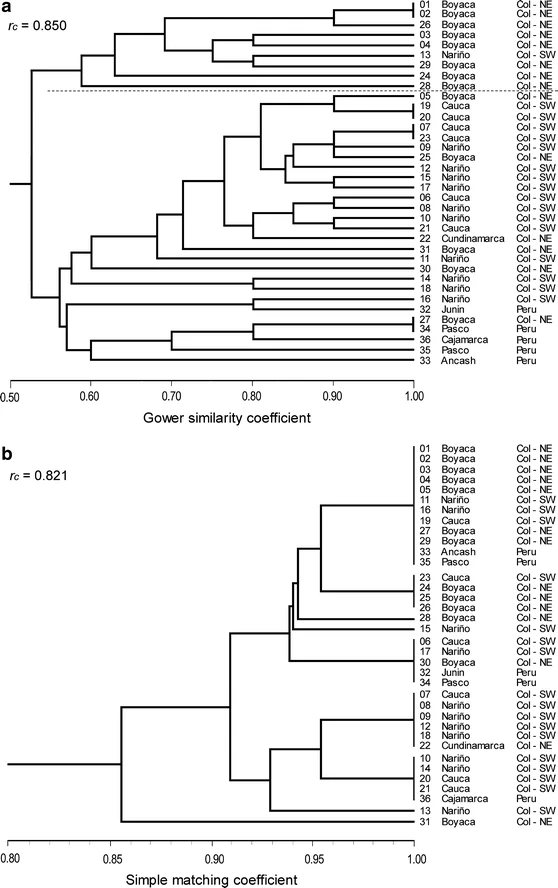
Ulluco coevolved alongside humans as they domesticated wild forms for cultivation. The growth forms of these domesticated crops vary widely between different growing sites (Parra-Quijano et al., 2012; Rousi et al., 1989). Different Columbian accessions, for example, showed large morphological variation between growing sites (Parra-Quijano et al., 2012). These variations included differences in tuber size, tuber color (including green, beige, magenta, and others), tuber shape, growth habit (erect or prostrate), stem color, and leaf shape (Parra-Quijano et al., 2012). Many similar morphological variations were also observed between different accessions in Peru (Rousi et al., 1989).
One interesting finding from the study of Columbian accessions is that the ulluco grown in the north-east Columbian Andes tended to have trailing stems and smaller tubers (Parra-Quijano et al., 2012). These traits make these accessions more similar to the wild ancestor, Ullucus aborigineus, and differentiate them from most other domesticated forms. Because of this, it seems that these specific accessions may be partially-domesticated, giving us insight into the transition between wild and domestic forms (Parra-Quijano et al., 2012).
Intersections with Human History
Ulluco is known for its high genetic diversity, which is largely due to traditional Indigenous cultivation practices that have been preserved for generations (Malice and Baudoin, 2009). This plant has not been introduced at a large scale in national markets partially due to its association with communities of low socio-economic status (Malice and Baudoin, 2009). From the Incan Empire through Spanish rule, ulluco has been cultivated by and sustained Indigenous Andean groups (Malice and Baudoin, 2009). Since it was domesticated and has been grown almost exclusively in the Andean highlands for thousands of years, it requires specific conditions and takes special knowledge to harvest. It must grow in cool, shady areas, and in rich soil over a long growing season (which spans from 5 to 9 months). Despite these restrictive conditions, recent successful attempts to grow ulluco outside of the Andes include New Zealand, some parts of Southern England, coastal areas of Europe, the Pacific Northwest, coastal areas of California, and the Appalachians in the United States (Specialty Produce, n.d.).
Human interaction with ulluco is largely confined to Indigenous groups in the high Andes. Botanical evidence of Ulluco has been dated as far back as 10,000 years ago (Spierling and King 1990). In coastal Peru, archaeologists found 5500 year old art depicting ulluco and containing traces of ulluco plant matter (Slow Food Foundation for Biodiversity, n.d.). Also, ulluco is depicted on ceremonial vessels from the Wari Empire and on qero ceremonial vessels from the post-Incan era (Arbizu and Tapia, 1994). Ulluco is one of the few crops that survived colonial rule (Slow Food Foundation for Biodiversity, n.d.).
Today, ulluco still has cultural importance for many people in South America. For example, in Bolivia, an important holiday is Semana Santa or Easter Holy Week. Many traditional dishes served during Semana Santa use ulluco (Specialty Produce, n.d.). In addition to feeding Andean communities, it is sometimes used medicinally. For example, native Ecuadoreans use it topically to treat skin conditions and consume it to treat digestive issues (Specialty Produce, n.d.).
Nutrition
Both the tubers and leaves of ulluco are consumed. The tubers are nutritionally similar to sweet potatoes or cassava (King 1988), and are a good source of carbohydrates (about 76 percent) and contain moderate amounts of protein (about 13 percent) but are low in calories (about 3.7 cal/g) (Nutritional analysis of three andean tubers). The tubers also contain pigments known as betalains, which are also found in beets and swiss chard, and have anti-inflammatory and antioxidant properties when ingested (Svenson et al., 2008).
Potential for Future
Recently, there has been an increase in scientific and agricultural interest in ulluco. As far as future applications, Ulluco has been identified as a possible resource for tackling diminishing food supplies in the face of climate change (Solá, 2021). To understand why, its ties to Indigenous communities should be highlighted. At the time of Spanish colonization in the 1500s, the Incan Empire had as many agricultural plant species as Europe and Asia combined, despite the lack of technologies such as iron, draft animals, and wheels that other civilizations had at the time (Solá, 2021). Thus, Andean civilizations were characterized as having incredibly high agrobiodiversity, largely due to polycultural practices and other traditional cultivation techniques. During Spanish rule, the plants of Andean communities were diminished as European crops replaced them (such as barley and carrots) (Solá, 2021). Despite this, traditional knowledge and practices have preserved ulluco agrobiodiversity, proving its resilience and strong ties to indigenous communities. Since agriculture relies heavily on a stable climate, and that stability is currently in jeopardy due to climate change, resilient crops like ulluco, as well as knowledge of ancient native cultivation practices, are important teachers (Solá, 2021).
Sources Cited
Arbizu, C., & Tapia, M. (1994). Andean tubers. Retrieved May 29, 2022, from https://hort.purdue.edu/newcrop/1492/tubers.html
Kay, D. E. (revised by Gooding, E. G. B.) (1987) Crop and Product Digest, No. 2- Root Crops, Second Edition. London: Tropical Development and Research Institute, xv & 380
King, S. R. (1988). Economic botany of the Andean tuber crop complex: Lepidium meyenii, Oxalis tuberosa, Tropaeolum tuberosum and Ullucus tuberosus (Order No. 8821097). Available from ProQuest Dissertations & Theses A&I; ProQuest Dissertations & Theses Global. (303662871). https://www.proquest.com/dissertations-theses/economi c-botany-andean-tuber-crop-complex/docview/303662871/se-2?accountid=14512
Malice, M. & Baudoin, J. (2009). Genetic diversity and germplasm conservation of three minor Andean tuber crop species. Biotechnologie, Agronomie, Société et Environnement. 13.
Parra-Quijano, M., Panda, S., Rodríguez, N. et al. Diversity of Ullucus tuberosus (Basellaceae) in the Colombian Andes and notes on ulluco domestication based on morphological and molecular data. Genet Resour Crop Evol 59, 49–66 (2012). https://doi.org/10.1007/s10722-011-9667-8
Pietilä, L., & Jokela, P. (1994). Developmental abnormalities in the ovule and embryo sac of Ulluco (Ullucus tuberosus) and their effect on seed set. Euphytica, 75(1-2), 31–39. https://doi.org/10.1007/bf00024529
Rousi, A., Jokela, P., Kalliola, R. et al. Morphological variation among clones of ulluco (Ullucus tuberosus, Basellaceae) collected in Southern Peru. Econ Bot 43, 58–72 (1989). https://doi.org/10.1007/BF02859325
Royal Botanic Gardens Kew. (n.d.). Ullucus tuberosus caldas. Plants of the World Online. Retrieved May 20, 2022, from https://powo.science.kew.org/taxon/urn:lsid:ipni.org:names:167633-1#other-data
Slow Food Foundation for Biodiversity. (n.d.). Nariño Ulloco - Ark of taste. Slow Food Foundation. Retrieved May 22, 2022, from https://www.fondazioneslowfood.com/en/ark-of-taste-slow-food/narino-olloco/
Solá , A. (2021, October 13). In Peruvian Andes, ancient crops hold promise for a climate-blighted future. Mongabay Environmental News. Retrieved May 25, 2022, from https://news.mongabay.com/2021/10/in-peruvian-andes-ancient-crops-hold-promise-for-a-climate-blighted-future/
Specialty Produce. (n.d.). Ulluco tubers. Specialty Produce. Retrieved May 20, 2022, from https://specialtyproduce.com/produce/Ulluco_Tubers_16986.php
Sperling, C.R. and S.R. King. 1990. Andean tuber crops: Worldwide potential. p. 428-435. In: J. Janick and J.E. Simon (eds.), Advances in new crops. Timber Press, Portland, OR.
Svenson, Johan et al. 2008. Betalains in Red and Yellow Varieties of the Andean Tuber Crop Ulluco (Ullucus tuberosus). 56, 17, 7730–7737. https://doi.org/10.1021/jf8012053