QuickStart: Adding media to a page
These steps will add a media link to a page; the placement and size of the resulting media player depends in part on the page's default view. To insert media at a specific position on the page, see Adding inline media to a page. Note that before adding media to a page you will need to have already imported the media into Scalar.
- Sign in to your Scalar account.
- Click
 in your Scalar header bar to create a new page, or navigate to an existing page and click
  to edit that page.
 - Select the text you want to link to the media.
- Click
 and select the media you want to link.
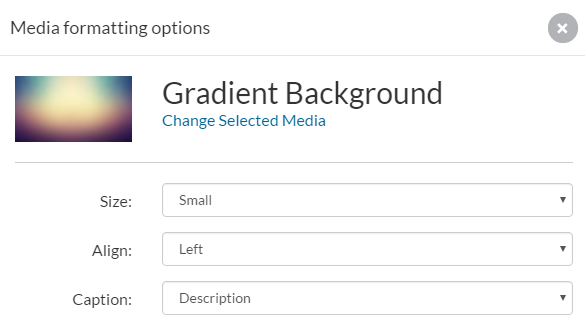
 - Using the media reference options select the following display preferences:
- Size. Choices include “Small” (206px wide), “Medium” (412px wide), “Large” (620px wide), “Full” (maximum wide of the page), and “Native” (the original size of the media up to the maximum width of the page).
- Alignment. Choices include "Left" (aligned left), "Center" (aligned center), and "Right" (aligned right).
- Caption. Choices include "Description" (the description for the media object will be displayed), "Title" (the title of the media object will be displayed), "Title and description" (the title and description for the media object will be displayed), and "None" (neither title nor description will be displayed).
- Next to "Default layout," select the layout you want for this page (only Basic, Image Header and Google Maps views support linked media).
- Click "Save."

For more details, see Adding Media and Links.
This page has paths:
- QuickStarts Curtis Fletcher