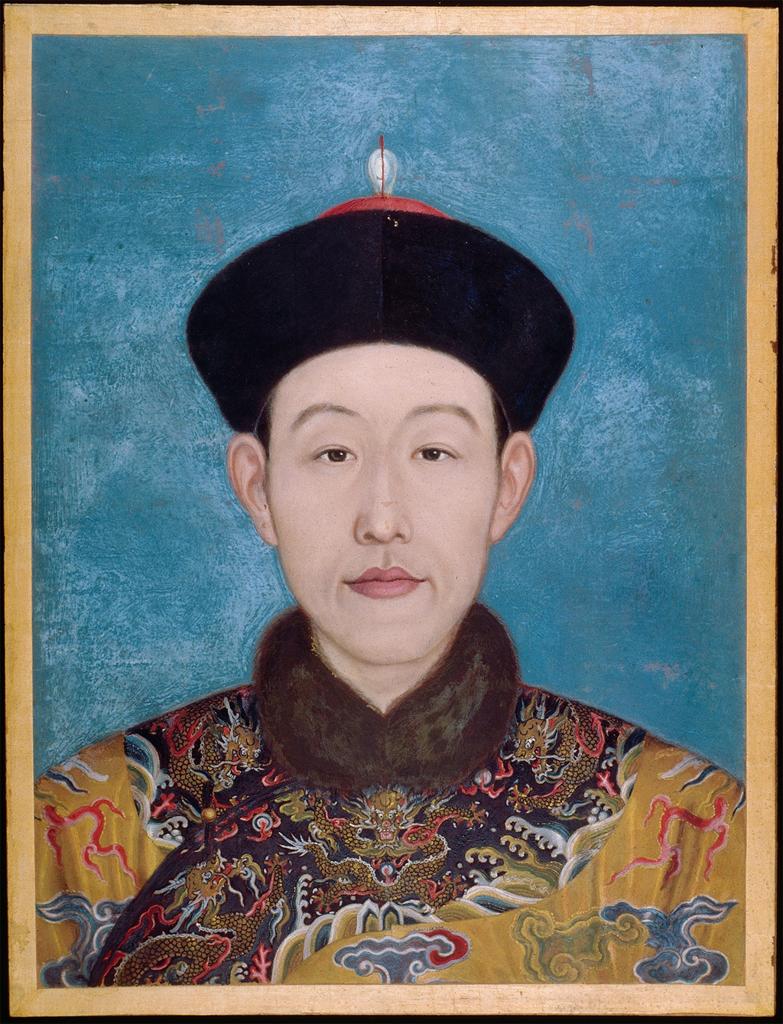
The Qianlong Emperor
The Qianlong Emperor held power for the longest amount of time in Chinese history. He ruled during the Qing dynasty, also referred to as Manchu, governing from 1735 until 1796. He officially abdicated after 60 years of power out of respect for the 61-year long reign of his grandfather Kangxi, but retained actual control of the empire until his death in 1799. He came to power at the young age of 24, and enlarged the empire by almost 600,000 square miles by mounting a military campaign against the Turks and the Mongols, and subsequently gaining the land that would become the New Province (present-day Uygur Autonomous Region of Xinjiang).
His most important cultural contribution to the historical record is his compilation of the Sikuquanshu, or the Complete Library of the Four Treasures. Over the course of 10 years, two of his scholars gathered the most eminent literature in the four traditional categories of classical works, historical works, philosophical works, and literature. However, during his reign the emperor also censored and destroyed any book that contained anti-Manchurian sentiments, and subsequently burned 2,600 works.
His most important cultural contribution to the historical record is his compilation of the Sikuquanshu, or the Complete Library of the Four Treasures. Over the course of 10 years, two of his scholars gathered the most eminent literature in the four traditional categories of classical works, historical works, philosophical works, and literature. However, during his reign the emperor also censored and destroyed any book that contained anti-Manchurian sentiments, and subsequently burned 2,600 works.