Thanks for your patience during our recent outage at scalar.usc.edu. While Scalar content is loading normally now, saving is still slow, and Scalar's 'additional metadata' features have been disabled, which may interfere with features like timelines and maps that depend on metadata. This also means that saving a page or media item will remove its additional metadata. If this occurs, you can use the 'All versions' link at the bottom of the page to restore the earlier version. We are continuing to troubleshoot, and will provide further updates as needed. Note that this only affects Scalar projects at scalar.usc.edu, and not those hosted elsewhere.
Colorado Fuel and Iron: Culture and Industry in Southern Colorado Main MenuCF&I TimelinePredecessor and Subsidiary CompaniesMiningHealth and SafetyEthnic Groups and DiversityImportant PeopleEmployee LifeLabor Relations in the Industrial WestLand and WaterCities and TownsSteel ProductionArtifactsCompany PublicationsAssorted Histories and Short StoriesQuips and blurbs relating to Southern Colorado's industrial historyThe Steelwsorks Center of the WestBooks and Other ResourcesCredits and AcknowledgementsChristopher J. Schrecka2fcfe32c1f76dc9d5ebe09475fa72e5633cc36dC.J. Schreck
Scatter Tags
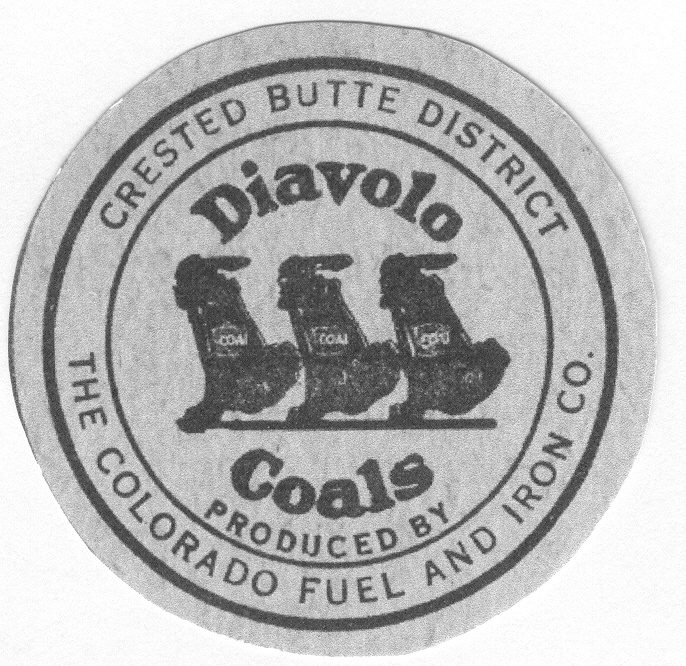
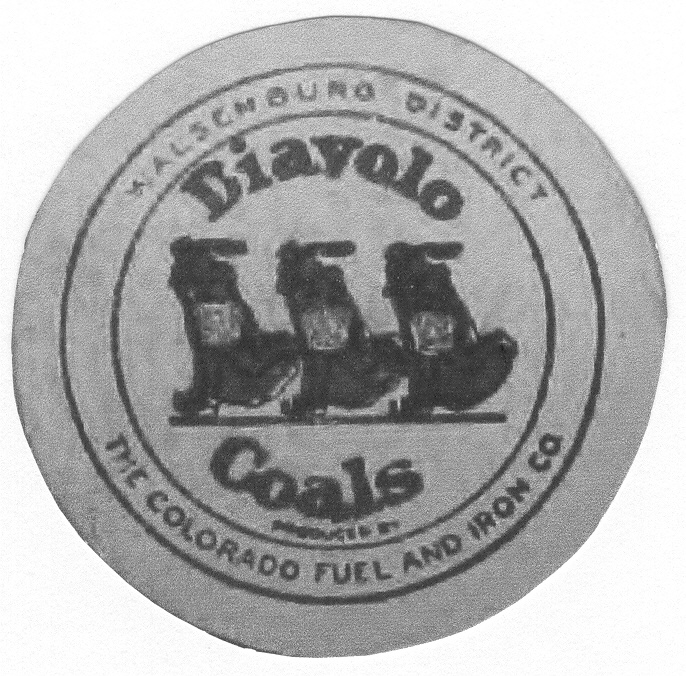
12015-12-14T09:54:26-08:00Christopher J. Schrecka2fcfe32c1f76dc9d5ebe09475fa72e5633cc36d72428gallery2015-12-14T11:24:48-08:00Christopher J. Schrecka2fcfe32c1f76dc9d5ebe09475fa72e5633cc36d One interesting advertising item used by the coal industry throughout the United States from the 1920s into the 1950s was the scatter tag. These cheap cardboard or foil covered cardboard tags were quite literally scattered in loads of stoker coal as an advertising gimmick. Most generally they were circular in shape, but they were also in triangular or rectangular shapes. Above are two examples of the ones used by the Colorado Fuel and Iron Company. They were made of thin cardboard and were approximately 1 ½ inch in diameter. Known examples were issued before 1936 as evidenced by the company name. The CF & I scatter tags were printed in two colors. The three devils carrying coal buckets and the words “Diavolo Coals” were in red and the remainder of the design was printed in black. Some variations have a red circle surrounding the outside of the scatter tag. At one time, the Fuel Department was organized into four different districts: Trinidad, Walsenburg, Canon, and Crested Butte. It is probable that each district had its own scatter tags.
This page has paths:
12015-12-14T09:55:27-08:00Christopher J. Schrecka2fcfe32c1f76dc9d5ebe09475fa72e5633cc36dItemsChristopher J. Schreck2plain2015-12-14T09:55:52-08:00Christopher J. Schrecka2fcfe32c1f76dc9d5ebe09475fa72e5633cc36d
This page has tags:
12015-12-14T11:18:48-08:00Christopher J. Schrecka2fcfe32c1f76dc9d5ebe09475fa72e5633cc36dWalsenberg ScattertagChristopher J. Schreck1plain2015-12-14T11:18:48-08:00Christopher J. Schrecka2fcfe32c1f76dc9d5ebe09475fa72e5633cc36d
12015-12-14T11:19:35-08:00Christopher J. Schrecka2fcfe32c1f76dc9d5ebe09475fa72e5633cc36dCrested Butte ScattertagChristopher J. Schreck1plain2015-12-14T11:19:35-08:00Christopher J. Schrecka2fcfe32c1f76dc9d5ebe09475fa72e5633cc36d