This page is referenced by:
-
1
2016-04-21T13:43:30-07:00
Description: What is Klout all about?
13
plain
2016-05-04T01:37:51-07:00
Getting to Know Klout
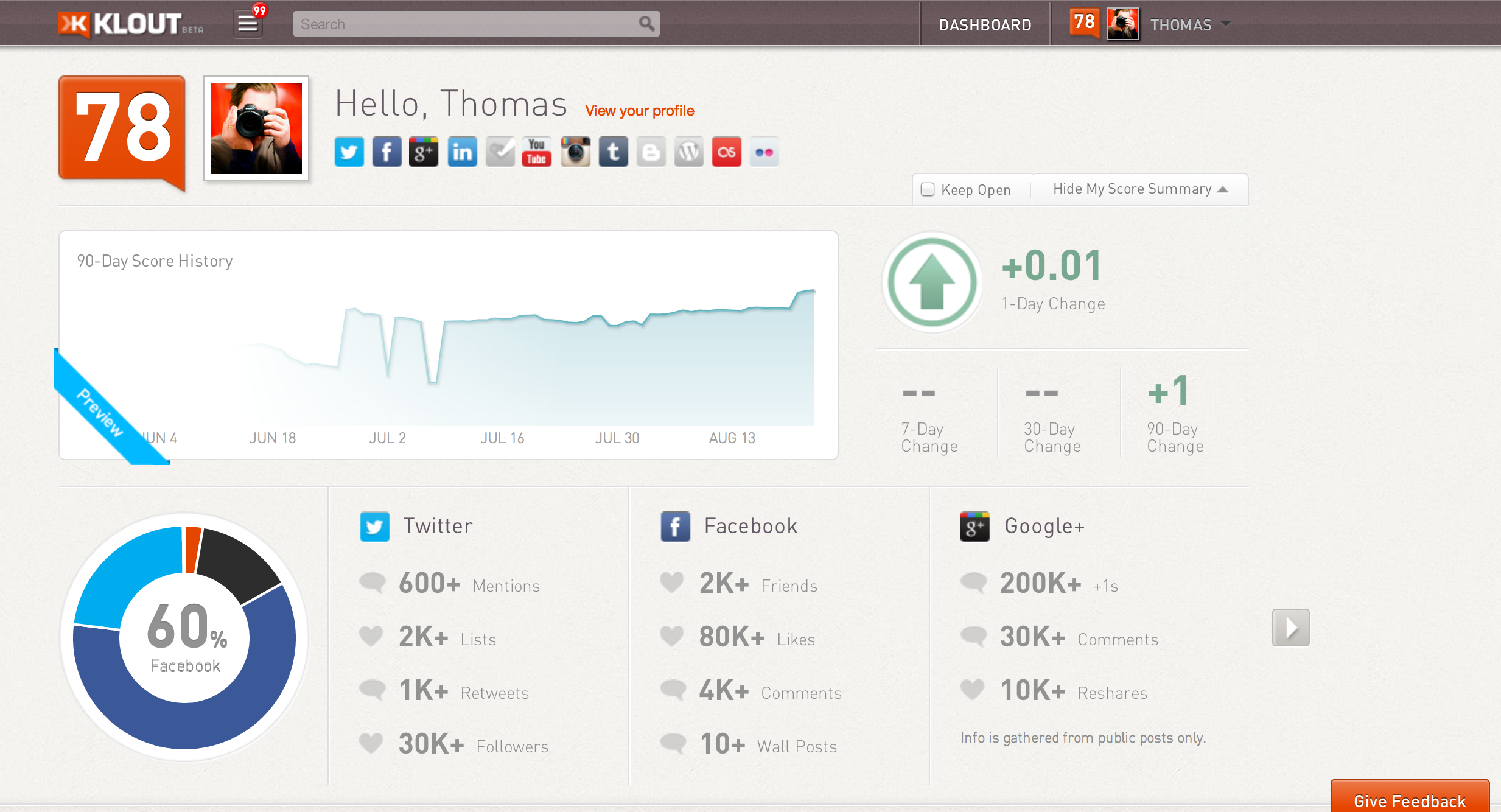
Klout is a website and mobile application that ranks a user based on social media analytics to rank how influential and known they are in the platforms they use. Their influence may increase due to the content they share with their friends/followers/and those who they follow; may increase by having others share their content and posts; and another way to do so is for them to be very active on the social media platforms they let Klout know that they use. The ranking is much like a grade, and the users are graded on a scale from one to one-hundred, one meaning that a person has little resonance with their online audience, and one-hundred indicating that the audience highly resonates with the user. In addition to ranking the user, Klout helps them create and share media content with them that will boost their score. It is like a guardian angel to those who seek protection from a low "social media credit score" and those who want to be well known in these platforms, respectively.
In theory, any and every person has the opportunity to be a part of the Klout community. Signing in with Facebook, Twitter, or providing an email address and password will give user access to their Klout profile. The Facebook and Twitter sign-in options represents their belief of supporting other social networks. I am not familiar with this platform; I do not want to create a Klout account at the moment, perhaps some point in the future I may want to if it is available. This measurer of online influence was created in 2008 with co-founders Joe Fernandez and Binh Tran.
Data Set 1
Data Set 2
Klout, Pew Research Center and the U.S. Census Bureau
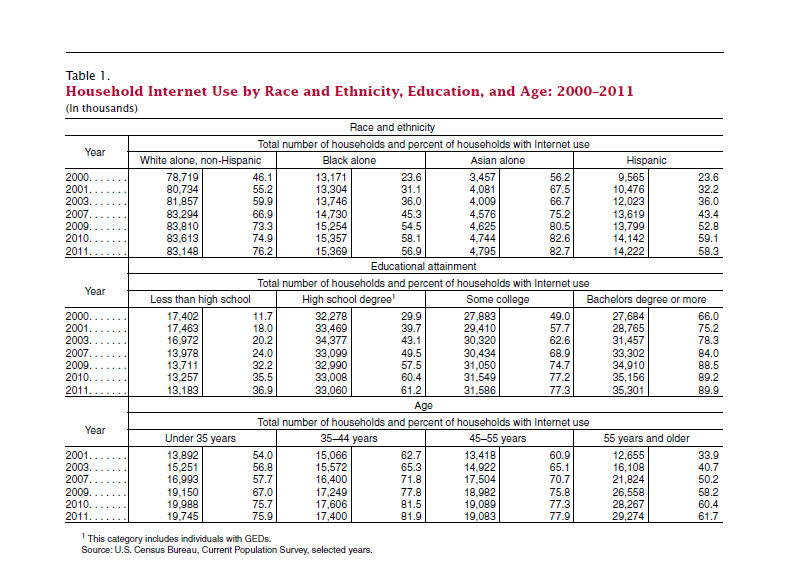
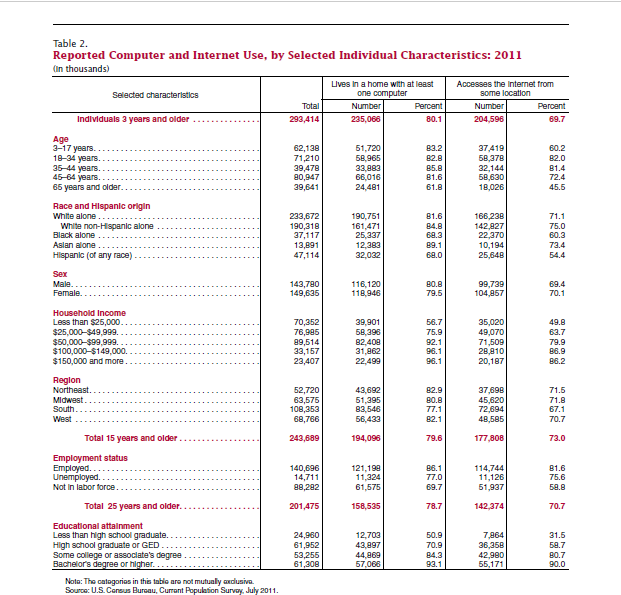
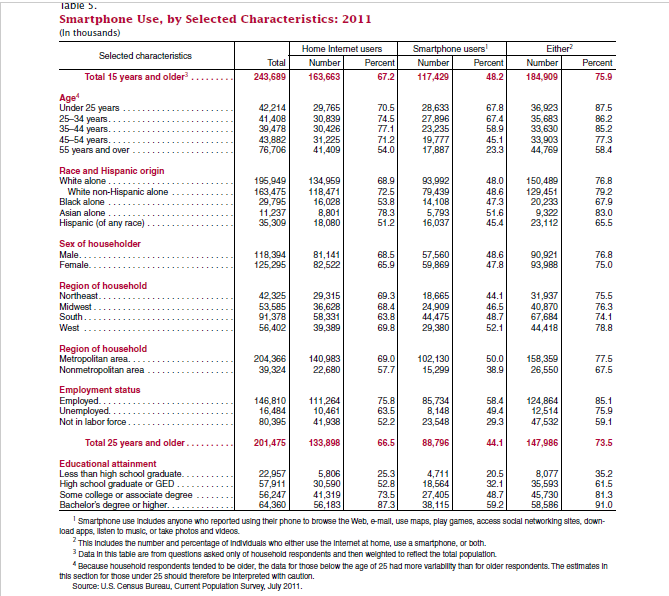
There is no data set that specifically caters to Klout, nor is there one that provides the public with information and statistics about their users. As an alternative, I used information about the social media sites that it supports such as that of Facebook and Twitter. "Computer and Internet Use in the United States: Population Characteristics", the data set by the U.S. Census Bureau, in this paper labeled as Data Set 1 includes the charts of "Household Internet Use by Race and Ethnicity, Education, and Age: 2000-2011", "Reported Computer and Internet Use, by Selected Individual Characteristics: 2011", and "Smartphone Use, by Selected Characteristics: 2011". It reflects a large boost of internet usage in the first decade of the twenty-first century; during this time Klout reached success from its inception as a start-up company in 2008. In the charts that make up this data set, the word "Hispanic" is used to describe people of Latin-American descent. I, however, do not coincide with the usage of "Hispanic" and will proceed to utilize the word "Latina/Latino/Latinas/os" at appropriate time.
"Computer and Internet Use in the United States: Population Characteristics" is a data set from the U.S. Census Bureau that demonstrates usage of computer and Internet usage based on households and individuals. This data set includes results from a respondent survey in 2011. I take special interest in this data set as Klout, the media the paper strives to analyze reached heightened success in 2011, which may be attributed that in that same year, "more Americans connected to the Internet than ever before" (U.S. Census Bureau 2013: 1). Table 1 "Household Internet Use by Race and Ethnicity, Education, and Age: 2000-2011", Table 2 "Reported Computer and Internet Use, by Selected Individual Characteristics: 2011" and Table 5 "Smartphone Use, by Selected Characteristics: 2011". These tables includes labeled categories of 'race and ethnicity', 'educational attainment', and 'age', 'selected characteristics' not mentioned previously like 'Race and Hispanic origin', 'Region of household', 'Employment status' to mark the number of Home Internet users, Smartphone users, either user, and individuals connected (from computer or any device) and those not connected. For this paper, we shift the focus to connection and non-connection. Latinas/Latinos and African American top the table when prompted about non-connection, and strings along the last when asked if they are connected. These groups also have a low percentage of home internet and smartphone usage compared to their White and Asian counterparts. People who identify under these groups would encounter difficulties and limited opportunities to partake in using Klout. In all, there is a definite intersectionality of different identity markers that, along with race, play into the failure of the color-blind theory.
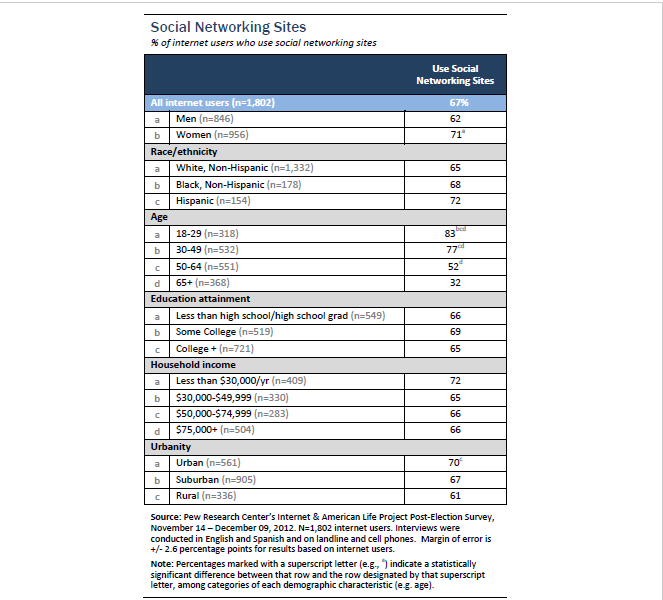
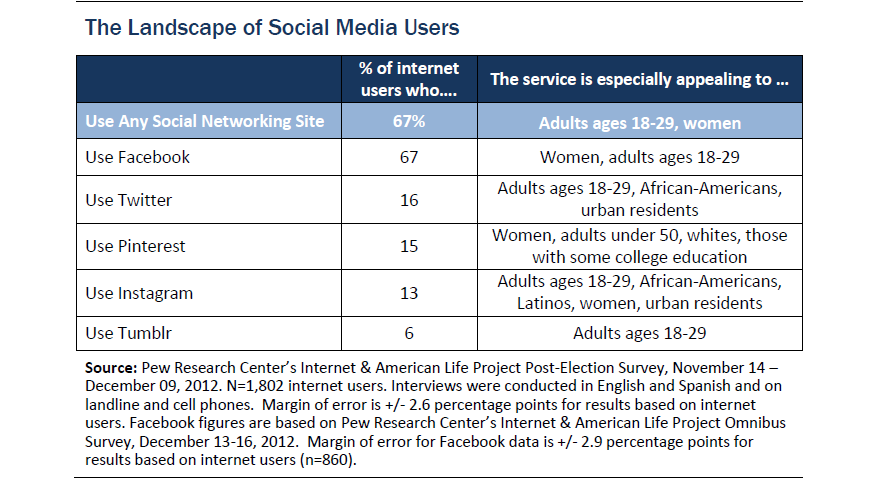
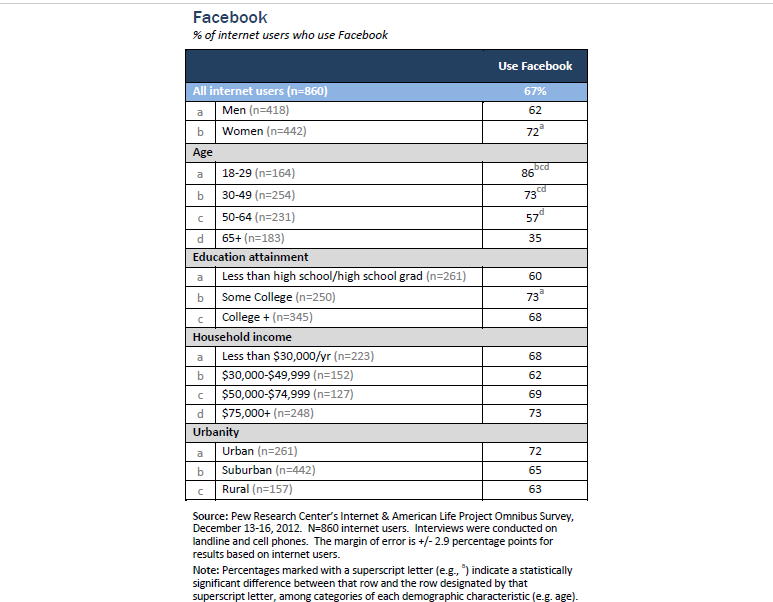
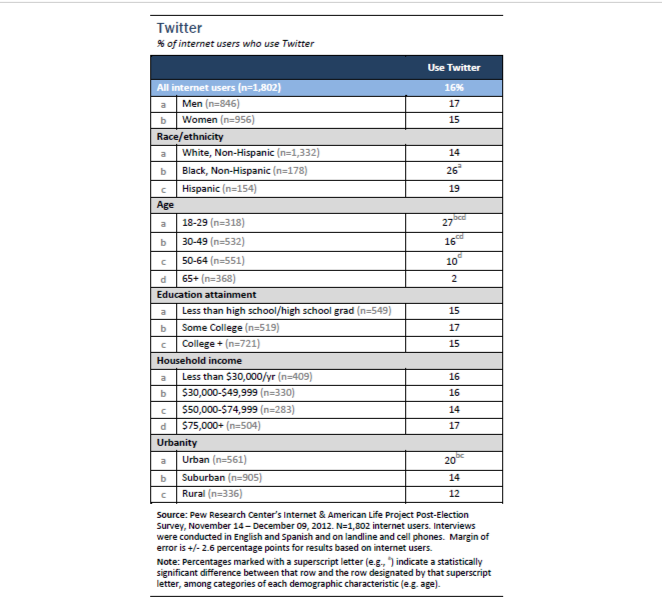
"The Demographics of Social Media Users-2012", as denoted by Data Set 2, graciously provides a vast array of demographic information about the users that engage in Facebook and Twitter. It is from the Pew Research Center, and categorizes the demographics of users and the social media platform they utilizes. The charts that I am specifically interested in including in my paper are titled "Social Networking Sites", "The Landscape of Social Media Users", "Facebook", and "Twitter", since specific "Klout" usage information is not utilized, but its users can connect to Facebook, Instagram and Foursquare, starting 2011. The charts are divided in subcategories, to further understand who uses the sites; the subcategories are: 'race/ethnicity', 'age', 'education attainment', 'household income', and 'urbanity', with the exceptions of the 'Facebook' chart which surprisingly does not include a 'race" category and of the first chart, which only shows the 'use of any social networking site', 'the percentage of internet users who use it', and 'who the service is especially appealing to'. Overall, according to the report, "67% of internet users who use Facebook are women, adults ages 18-29" (Pew Research Center, 2013: 2). Twitter on the other hand, "16% of internet users who" use it are "Adults ages 18-29, African Americans, [and] urban residents" (Pew Research Center, 2013: 2). What happens with all the individuals that do not fit in these categories? What does it mean when race is not even documented? In my opinion, Facebook may attempt to take this step to not take race into consideration as they may want to actually practice the color-blind theory. On the other hand, Latinas/os and Black, Non-Hispanic comprise 19% and 26% of Twitter users respectively. Once more, we are able to see the racial and socioeconomic inequalities in the digital world, and to an extent those in social media platforms (like Facebook, Twitter, and Klout). They only put the color-blind theory further away from actually being put to use. Less inequalities offline, means a greater chance for the color-blind theory to be effective.