Camu Camu Reproductive Morphology
1 2022-05-11T11:34:30-07:00 Nicole Phelan 459bb3eb397625fc848ea954cd01858178296d64 40688 6 #CamuCamu plain 2022-05-25T16:33:08-07:00 August 25, 2016 Nicole Phelan 459bb3eb397625fc848ea954cd01858178296d64This page has annotations:
- 1 2022-05-23T11:47:28-07:00 Nicole Phelan 459bb3eb397625fc848ea954cd01858178296d64 Fruit Pulp Nicole Phelan 3 #CamuCamu plain 2022-05-28T17:06:02-07:00 Nicole Phelan 459bb3eb397625fc848ea954cd01858178296d64
- 1 2022-05-28T17:06:54-07:00 Nicole Phelan 459bb3eb397625fc848ea954cd01858178296d64 Ripe Fruit Nicole Phelan 2 #CamuCamu plain 2022-05-28T17:07:11-07:00 Nicole Phelan 459bb3eb397625fc848ea954cd01858178296d64
- 1 2022-05-28T17:05:42-07:00 Nicole Phelan 459bb3eb397625fc848ea954cd01858178296d64 Seeds Nicole Phelan 2 #CamuCamu plain 2022-05-28T17:06:02-07:00 Nicole Phelan 459bb3eb397625fc848ea954cd01858178296d64
- 1 2022-05-28T17:06:19-07:00 Nicole Phelan 459bb3eb397625fc848ea954cd01858178296d64 Ripening Peel Nicole Phelan 2 #CamuCamu plain 2022-05-28T17:06:27-07:00 Nicole Phelan 459bb3eb397625fc848ea954cd01858178296d64
This page has tags:
- 1 2022-05-11T11:25:19-07:00 Nicole Phelan 459bb3eb397625fc848ea954cd01858178296d64 Camu Camu: The Super Fruit of the Amazon Basin Nicole Phelan 73 By Nicole Phelan and Holland Smith #CamuCamu plain 2022-05-29T10:32:52-07:00 Nicole Phelan 459bb3eb397625fc848ea954cd01858178296d64
This page is referenced by:
-
1
2022-05-11T11:25:19-07:00
Camu Camu: The Super Fruit of the Amazon Basin
73
By Nicole Phelan and Holland Smith #CamuCamu
plain
2022-05-29T10:32:52-07:00
Nomenclatural History
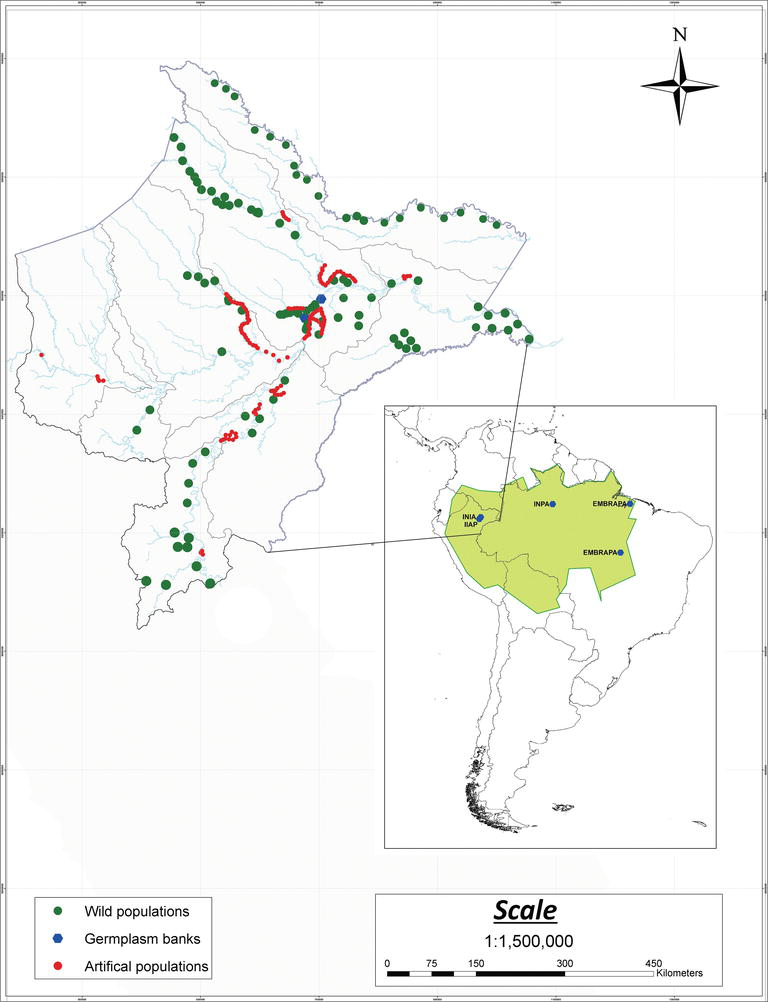
Myrciaria dubia (Kunth) McVaugh, commonly known as camu camu, is a shrub-like tree that is native to the Amazon Basin tropics, and it typically grows near watersheds in Peru, Venezuela, Brazil, Bolivia, Columbia (Engels & Brinckmann, 2012). In 1823, Alexander von Humboldt, Aimè Bonpland, and German botanist Karl S. Kunth collected the camu camu type specimen in Artures, Venezuela, giving it the Linnaean name Psidium dubium (Tropicos). Later, the plant was named Myrciaria dubia by American botanist Robert McVaugh in 1963 (Tropicos). However, the camu camu plant had already been an important part of indigenous cultures prior to European discovery and identification. In addition to "camu camu," the plant and its fruit have many other common and indigenous names: "camo camo" and "camu-camu negro" in Peru; "cacari," "azedinha," "miraúba," and "muraúba" in Brazil; "araza de agua" in Spain; "guapuro blanco" in Bolivia; "algracia," "guayabillo blanco," "guayabito," and "limoncillo" in Venezuela; and "rumberry" in English (Engels & Brinckmann, 2012).Evolutionary History
Myrciaria dubia is a eudicot in the Myrtaceae family, which includes approximately 121 genera and 5800 species of tropical perennial trees and shrubs that produce fleshy fruits (de Paulo Farias et al., 2020). Plants in the Myrtaceae family are particularly known for their nutrient-dense, antioxidant-rich berries, which typically have a glossy exterior and deep purple mesocarp (de Paulo Farias et al., 2020). Fruits in the Myrtaceae family are also high in carotenoids, phenolic compounds, and volatile compounds, which contribute to the fruits’ medicinal properties (de Paulo Farias et al., 2020). The Myrciaria genus in particular, includes approximately 99 species native to the South American Amazon Basin, Paraguay, Argentina, Central America, and South Florida (Borges et al., 2014). Myrciaria berries are generally deep-purple in color, and both the leaves and the fruits are consumed for their nutritional and medicinal value (Borges et al., 2014). In terms of systematics, the taxa within the Myrtaceae family have been historically understudied, and future research is necessary for forming distinct hypotheses of the Myrtaceae phylogeny and geographic origins of species (Lucas et al., 2005).Ecology and Life History
The phenology of the camu camu plant varies between natural and cultivated populations based on differences in rainfall and river behavior (Ferreira et al., 2021). In a study comparing wild phenology to cultivated phenology, wild populations exhibited the most synchronized flowering in November and December, whereas cultivated populations had the most synchronized flowering in October (Ferreira et al., 2021). In both populations, flowering occurred during periods with higher sun exposure, lower temperatures, and lower water levels in the river (Ferreira et al., 2021). This indicates that flooding patterns and light availability are critical to influencing the reproductive patterns of camu camu. It is also important to note that the camu camu flowers produced during this period are bisexual and self-compatible. However, because the pistil and stamens do not synchronize their growth, the flowering phenology promotes outcrossing (Castro et al., 2018).
The camu camu flowers transition into the fully ripened purple-red fruit over the course of 88–102 days (Neves et al., 2015). In the study comparing wild and cultivated phenology, both wild and cultivated populations began producing green fruits when river levels began to rise. This occurred between January and March for wild plants and between December and April for cultivated plants (Ferreira et al., 2021). The wild fruits mostly ripened between January and May, whereas the cultivated fruits ripened between January and April (Ferreira et al., 2021). The camu camu berries are a valuable food source for many of the fish and bird populations near the riverbanks, including the fish Colossoma macropomum, an important indigenous food source commonly known as "gamitana" (Penn JR, 2006). The fish, bird, and human populations that consume the berries are critical for aiding in the seed dispersal of the plant.
Camu camu is also incredibly vulnerable to disease, insect infestations, fungal infestations, and other pests within their natural habitats. The most prominent insect pests for camu camu, which are found in over 50% of cultivated camu camu crops, include Tuthillia cognata, Xylosandrus compactus, Conotrachelus dubiae, and Edessa sp. (Penn JR, 2006). The parasitic plant Moradendron spp. is much less common than insect pests, but farmers consider it a higher threat because it interferes with camu camu growth cycles (Penn JR, 2006). As a result, genetic diversity within camu camu populations is important for reducing the vulnerability of camu camu to these threats.Morphological Description of Vegetative Attributes
Myrciaria dubia is a woody shrub that can grow to be 4–8 meters in height, with many branching secondary stems (Castro et al., 2018). The trunk and branches are reddish-brown with a smooth texture, and they can grow up to 15 centimeters in diameter (Black, 2021). During drought periods, the outer bark layer of these branches naturally peels off (Castro et al., 2018). Camu camu produces simple, broad leaves that are approximately 3–10 centimeters long and 1.5–4.5 centimeters wide (Black, 2021). Depending on the individual plant, the leaves are generally elliptic or lanceolate in shape with one mid-vein and 18–20 reticulate secondary veins (Castro et al., 2018). The leaf phyllotaxy is opposite, which means that there are two opposite leaf nodes at a single point on the branch (Black, 2021). Despite being a perennial species, camu camu plants shed and grow new leaves based on seasonality. In periods of low rainfall, camu camu experiences the greatest amount of new leaf growth (Ferreira et al., 2021). However, during periods of peak flooding, the camu camu plant slows the production of new leaves and mostly consists of mature leaves (Ferreira et al., 2021).Morphological Description of Reproductive Attributes
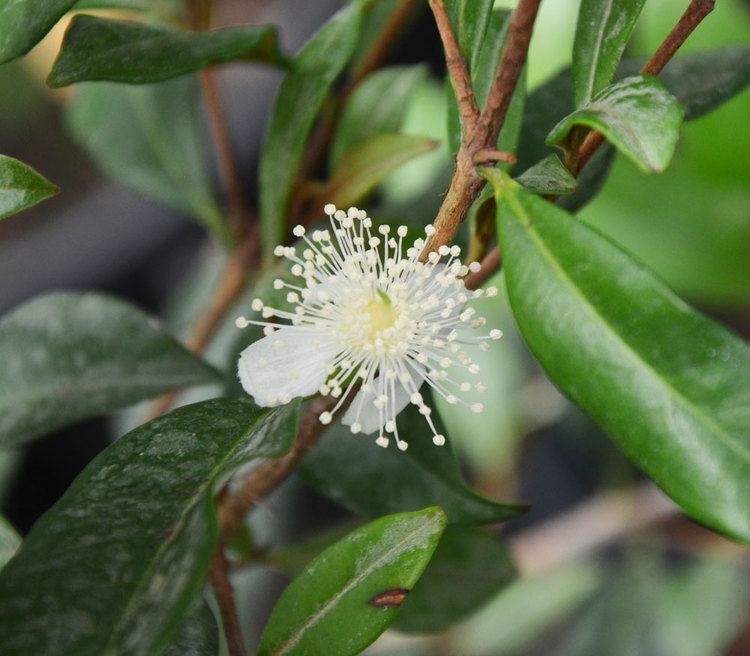
Myrciaria dubia is an angiosperm that produces small bisexual white flowers that have 4 rounded petals, each of which are approximately 3–4 millimeters long with a ciliated margin (Castro et al., 2018). The camu camu flowers have 4 sepals that are approximately 2 millimeters long, 125 stamens that are approximately 6–10 millimeters long, and 1 pistil that is approximately 10–11 millimeters long (Castro et al., 2018). All of the structures within the camu camu flower are free and unfused. Upon fertilization, the camu camu plants produce small fleshy fruits that are 1–5 millimeters in diameter (Castro et al., 2018). The camu camu peel is light yellow-green during the beginning of its growth, and it becomes redder as the fruit ripens. The fully mature berry has a deep reddish-purple peel, which has a high vitamin C content (Castro et al., 2018). Each individual camu camu berry has between 1–4 seeds that are rich in phenolic compounds including flavonoids, phenolic acids, tannins, stilbenes, and lignans (Langley et al., 2015). When consumed, the seeds offer increased anti-inflammatory compared to other tropical fruits (Langley et al., 2015). The pulp of the fruit is pink in color and highly acidic (Black, 2021).Nutritional Value and Part of the Plant Consumed
The berries of the camu camu plant can be consumed, although the high acidity makes them difficult to eat alone (except to the Indigenous people). In cities near the ‘agricultural’ sites, it is common to consume camu camu berries in sweet drinks or on ice cream. For non-indigenous people, the berries are also processed into a powder, which can be ingested with a liquid, or other foods. The camu camu berry is unique in its extremely high vitamin C content, with 100x more vitamin C compared to an equal quantity of oranges. The berries also contain small amounts of various essential amino acids, essential fatty acids, minerals, and vitamins. The tree bark of camu camu plants can also be made into a poultice and applied to wounds to prevent infection (Camu-Camu Berries: History, Gastronomical Uses and Nutrition, 2012). Additionally, the leaves can be used as an herbal remedy (Engels & Brinckmann, 2012).Cultivation Practices: Where, how and by whom are the plants grown?
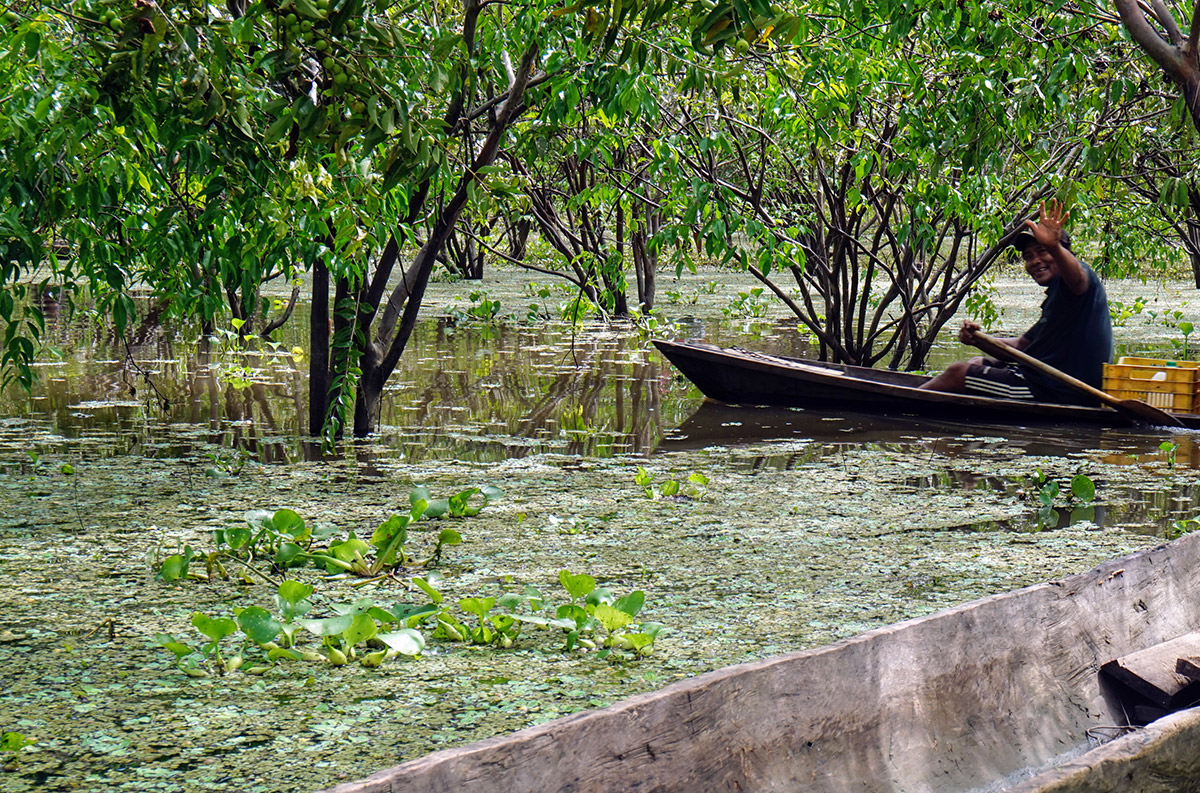
Camu camu plants are grown historically along the banks of rocky rivers and lakes of the Amazon Basin River system. The plant is harvested during the wet season, when the trunks are submerged several feet of water. The berries are harvested by guiding canoes through the branches, collecting the berries by hand. There is no mention of the historical Indigenous groups who cultivated the camu camu plant, but the Yanomami and Kayapo peoples have been living in these areas for thousands of years.Domestication History
While the domestication history of the plant is still largely unknown, there seems to be some wild and domesticated cultivars of camu camu plants. Genetic analysis has revealed that there are no major differences between wild and artificial/domesticated camu camu plants. It is worth noting that many of the wild patches of camu camu plants are upriver of the domesticated plants, possibly explaining the genetic similarity and allowing the wild population to remain genetically separated from the domesticated patches (Šmíd et al., 2017).Historical Accounts
The fruit of the camu camu plant has been harvested by Indigenous peoples of the area prior to European colonization, but there have been mixed reports on the use and timeline of domestication. It is unknown how long the Indigenous people have been harvesting camu camu berries, although some accounts say hundreds of years. Globally, After the 1970’s the fruit became significantly more popular internationally, due to the research conducted on the plant's medicinal benefits. Since then, the fruit has become a staple export product in the countries it natively grows and still used by locals for medicinal and culinary purposes (Engels & Brinckmann, 2012).References
Black, J. (2021). What is Camu Camu (Myrciaria dubia). Herbs America Inc. https://herbs-america.com/what-is-camu-camu/#fn2-13598
Borges, L. L., Conceição, E. C., & Silveira, D. (2014). Active compounds and medicinal properties of Myrciaria genus. Food Chemistry, 153, 224–233. https://doi.org/https://doi.org/10.1016/j.foodchem.2013.12.064
Castro, J. C., Maddox, J. D., & Imán, S. A. (2018). Camu-camu—Myrciaria dubia (Kunth) McVaugh. In S. Rodrigues, E. de Oliveira Silva, & E. S. de Brito (Eds.), Exotic Fruits (pp. 97–105). Academic Press. https://doi.org/https://doi.org/10.1016/B978-0-12-803138-4.00014-9
de Paulo Farias, D., Neri-Numa, I. A. de Araújo, F. F., & Pastore, G. M. (2020). A critical review of some fruit trees from the Myrtaceae family as promising sources for food applications with functional claims. Food Chemistry, 306, 125630. https://doi.org/https://doi.org/10.1016/j.foodchem.2019.125630
Engels, G., & Brinckmann, J. (2012). Camu-camu Myrciaria dubia Family: Myrtaceae. The Journal of the American Botanical Council, (94), 1–4.
Ferreira, G. A. C., Barnett, A. P. A., & Krug, C. (2021). Phenology and fruit set comparison of camu-camu (Myrciaria dubia) in a natural population and a plantation in the Central Amazon, brazil. Acta Amazonica, 51(2), 91–101. https://doi.org/10.1590/1809-4392202000581
Langley, P. C., Pergolizzi, J. V, Taylor, R., & Ridgway, C. (2015). Antioxidant and Associated Capacities of Camu Camu (Myrciaria dubia): A Systematic Review. The Journal of Alternative and Complementary Medicine, 21(1), 8–14. https://doi.org/10.1089/acm.2014.0130
Lucas, E. J., Belsham, S. R., Lughadha, E. M. N., Orlovich, D. A., Sakuragui, C. M., Chase, M. W., & Wilson, P. G. (2005). Phylogenetic patterns in the fleshy-fruited Myrtaceae – preliminary molecular evidence. Plant Systematics and Evolution, 251(1), 35–51. https://doi.org/10.1007/s00606-004-0164-9
Neves, L. C., da Silva, V. X., Chagas, E. A., Lima, C. G. B., & Roberto, S. R. (2015). Determining the harvest time of camu-camu [Myrciaria dubia (H.B.K.) McVaugh] using measured pre-harvest attributes. Scientia Horticulturae, 186, 15–23. https://doi.org/https://doi.org/10.1016/j.scienta.2015.02.006
Penn JR, J. W. (2006). THE CULTIVATION OF CAMU CAMU (MYRCIARIA DUBIA): A TREE PLANTING PROGRAMME IN THE PERUVIAN AMAZON. Forests, Trees and Livelihoods, 16(1), 85–101. https://doi.org/10.1080/14728028.2006.9752547
Tropicos. (n.d.). www.tropicos.org/Specimen/101149789