Scalar's 'additional metadata' features have been disabled on this install. Learn more.
Plants & People: The Intersection of Botany and Human Experience
Main Menu
Project Pages
Lens: Project Pages
Catherine Nordstrom
eee5469f13f5b22449d345efe7a91438d420b603
Quinn Schwabauer
c956296b3a71313515a7b42080b7c21898a4e1b3
Jasmine White
5e6d9f39f5dca14a5efcc5b40c2233506f634d6e
Sarah Simpson
2cca5d1758ce821e43339c83d4af59d20561387f
Lysol Patino
fa4807587d439da7c652621d767462e8ddabe5bd
Ramses Cuellar
227d1101a6fc55c106a63da6f97fd9077c07d488
Giselle Correa
82a42a0fc272e6d9366f0c6a05623feb08490e90
Julianna Filice
de86fbc4c9fb4c37c7274aeb009eb12d157a6011
Amanda Lin
351a984f2f13af36387e431ad4c1bf4e2fe6442b
Jessica Manriquez
7a01046c42e42f088710b11e860bb302d9a1bc26
Amanda Bueno-Kling
6d5abc610c22a22e4d47af8113c6196fb76ced5c
Max Kwon
0e62f91ad2fccb5c1911b7cabfc2d67ad395c959
Tim Sisneros
a58829fb647d6ce7b9c40b457c686ddadf0f976f
Kyi Ther Min
bef3cb2bbf8d42cec3ceb3caaabd48943c6d0417
Edward Teng
f1c21e0ed6f73d48ad0b0ca737e4b208c441e39d
Mary Van Dyke
9e2c668c35f9c3e476eadfb42d2f33a996fe5cd3
Justin Haggard
d800073ab461eadee6e6715b98fe04a489d36a98
Holland James Smith
c6215e764616f18dc2ac54f79e800a56549a5a16
Jose Ismael Rodriguez
6d4715e7163f85d38025c4a74929b048c7f737eb
George Vetushko
28ffcc03954a96f0b0b9a57b40c5655eb929accc
Amanda Leyel
98935a5c087672934aee16f680afaf9132e76e30
Joshua Matsuda
2247a3d39cdfe957bbca6416ea46416c22545c46
Ian Morris
6ca94b2f17490b954dfe25231aee4c855ce98f06
Nikhitha Nair
923aa7cd2dc492bc285737def672e1e6cee8d689
Hojae Lee
d95326a339fcf3784c5d38537656c27fcd473cf6
Roberto Vindel
74869cdc6e4cbcab144ffdb6954169b7bacc0c5d
Shiva Nia
962b67344644b964eda3a1efd9dedb861983a57c
Pauline Le
90aae91f63664363b4dc493ff97073aaec561d82
Lauren Guevara
d3ab8c0eaac1066e5e591b0e15c4cfbc6d85e4ed
Ariela Navasartian
b706ff98a2718db176cb67e8d717a47ed8c4b6c0
Paria Maghsoudi
2fd8384def30ded736cc804c59ed30f65fb62a49
Jacqueline Duong
7ba49d8122d8595d23dae05feddc88d987a1bee5
Mellanie Gamero
145cdb416835ae5f2fd6057c64393ce87cb5016c
Karla Gonzalez
fd342cd724627c829347d847ef85f655430c8149
Phan Tran
91148bf3d7cb14e6d6590491bc9e3a572e4e737a
Kokonow Kinney
5aa005b7f097866e68b336839c60b92e3e3b90aa
Megan Chen
437c81235577cd34d86d461fc36d5c2cd1ba0d0a
Jin Zhu
524dd4acaf9b36b0629d5254b578a44a3e94b6c5
Natalie Nartz
c4f6efb33eae9bd143719d1b52bb9491171fc166
Matthew Nguyen
003d1825ac8b425d4322c4506166393d268a368c
Nicole Phelan
459bb3eb397625fc848ea954cd01858178296d64
Sarah Hoffman
9400350df5c9ca76e2405e77876e5f0e0edb5138
Skylar Yee
e2f87f03792b2a81afe11fe605107460a4f71f08
Chloe Fuson
ace0df69849f7f6ca276190dc0c1fd86c005df18
Brian Estarella-Murphy
831eaad1e3a4865984bec7368e88a589ef996e0a
Akshay Chellappa
76da17495df94c6c8bc0710f8fd207dfb8b5b6e1
Lester Squier
50c34f270c5c2e0ed0fafde1cc193434a4febd9c
Angelica Mae Rosete Soriano
e0e91b2960a04f4646d27c495705afaf132bce38
Julia Lindner
919433bcb6a91cbb9416833698e8012976f442c5
Joanne Kwak
035f00d5f05f3c560601b008cd0ae71d45b78461
Natalie Keung
bedcfd8b1a434b29988469c6e3224b2c3a94f2c8
Anthony Baniaga
3cc160e5607a280512d77ceff4259deb08abb3df
Avocado Production Around the World
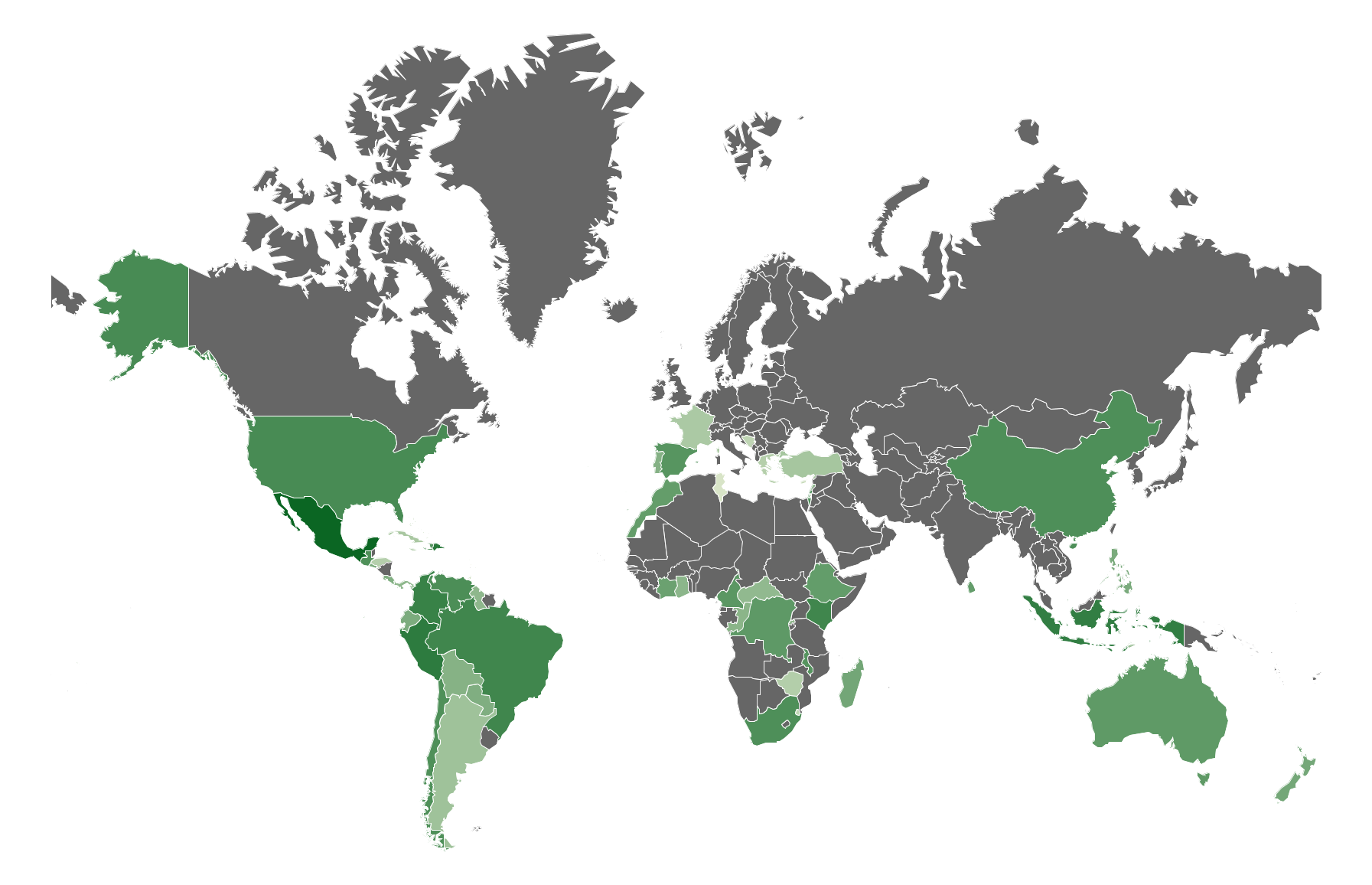
1 2022-05-27T15:35:28-07:00 Amanda Leyel 98935a5c087672934aee16f680afaf9132e76e30 40688 15 Map of countries where avocados are produced #Avocado plain 2022-05-27T19:10:35-07:00 Amanda Leyel 98935a5c087672934aee16f680afaf9132e76e30This page has annotations:
- 1 2022-05-27T16:05:04-07:00 Amanda Leyel 98935a5c087672934aee16f680afaf9132e76e30 Native Range: Amanda Leyel 3 plain 2022-05-27T16:05:41-07:00 Amanda Leyel 98935a5c087672934aee16f680afaf9132e76e30
This page has tags:
- 1 2022-05-11T11:25:18-07:00 Amanda Leyel 98935a5c087672934aee16f680afaf9132e76e30 Avocado: New World Nutient Pack Amanda Leyel 71 The avocado has extensive cultural and anthropogenic ties to human society, with three main cultivars representing the three different domestication and cultivation practices for the crop. The Mexican, Guatemalan and West Indian races (P. americana var. drymifolia, P. americana var. guatemalensis, and P. americana var. americana) are ancestors to more than 30 types of modern avocado cultivars, and have linguistic and historical ties to Mesoamerican cultures that domesticated them at different geographical locations and time periods. Not surprisingly, the different domestication and cultivation practices of the three ancestor cultivars have led to different optimal abiotic conditions for different types of avocados, with Latin America and Africa being the main suppliers for the majority of cultivars that enter the global market. Moreover, all parts of the plants can be used, although the most common part of the plant consumed is the fruit. The leaves and seeds are sometimes used as medicine, and the oil extracted from the fruit can also be used in medicine and cooking. Additionally, the avocado’s high concentration in fiber, folate, antioxidants, potassium, vitamin E, and magnesium per ounce makes this crop a superfood, and is most commonly used as an ingredient for guacamole. Modern society recognizes the importance of avocados, especially considering that we are entering an age where high-caloric foods are readily accessible and easier to purchase than healthy foods. As such, cultivation practices are also shifting from large-scale industrial productions that use heavy pesticides to smallholder farmers who can implement traditional cultivation practices that are more sustainable for the farmers and the ecosystems around these farms. By Amanda Leyel and Hojae Lee #Avocado plain 2022-06-03T10:56:04-07:00 Amanda Leyel 98935a5c087672934aee16f680afaf9132e76e30
This page is referenced by:
-
1
2022-05-11T11:25:18-07:00
Avocado: New World Nutient Pack
71
The avocado has extensive cultural and anthropogenic ties to human society, with three main cultivars representing the three different domestication and cultivation practices for the crop. The Mexican, Guatemalan and West Indian races (P. americana var. drymifolia, P. americana var. guatemalensis, and P. americana var. americana) are ancestors to more than 30 types of modern avocado cultivars, and have linguistic and historical ties to Mesoamerican cultures that domesticated them at different geographical locations and time periods. Not surprisingly, the different domestication and cultivation practices of the three ancestor cultivars have led to different optimal abiotic conditions for different types of avocados, with Latin America and Africa being the main suppliers for the majority of cultivars that enter the global market. Moreover, all parts of the plants can be used, although the most common part of the plant consumed is the fruit. The leaves and seeds are sometimes used as medicine, and the oil extracted from the fruit can also be used in medicine and cooking. Additionally, the avocado’s high concentration in fiber, folate, antioxidants, potassium, vitamin E, and magnesium per ounce makes this crop a superfood, and is most commonly used as an ingredient for guacamole. Modern society recognizes the importance of avocados, especially considering that we are entering an age where high-caloric foods are readily accessible and easier to purchase than healthy foods. As such, cultivation practices are also shifting from large-scale industrial productions that use heavy pesticides to smallholder farmers who can implement traditional cultivation practices that are more sustainable for the farmers and the ecosystems around these farms. By Amanda Leyel and Hojae Lee #Avocado
plain
2022-06-03T10:56:04-07:00
Ahuácatl
The avocado, sometimes referred to as the alligator pear, gets its name from the Aztec, or Nahuatl, word for the fruit, ahuácatl. It is believed that the name comes from the Aztec word for testicle, referring to the shape of the fruit and its association with fertility (Avocado Races and Varieties, n.d.). The name avocado in English comes from the name aguacate in Spanish, originally coined by Spanish Conquistadors in the 16th century. As the fruit was traded around through the Americas and Europe, it acquired several different colloquial names. Its other common name, alligator pear, got its start in the West Indies. This name also describes the appearance of the fruit, but its use was discouraged by horticulturalists as the fruit was commercialized as it is misleading (History: What’s in a name?). The Linnaean binomial name for the avocado is Persea americana Mill. The Genus name Persea refers to a group of about 150 evergreen trees in the Laurel family, Lauraceae. The species name americana refers to the plant’s region of origin in the Americas. The plant was first described and named by Mill sometime before the mid 19th century.
The avocado originated in Mesoamerica, likely getting its start in South-Central Mexico. It belongs to the Persea group of the family Lauraceae, a large pantropical family of trees and shrubs; it may be the best known and most economically important member of the laurel family. Its closest relatives include other laurels like cinnamon, sassafras, the California laurel, and other basal angiosperms. Geographical isolation of the species resulted in the evolution of three separate races, Mexican, Guatemalan and West Indian (P. americana var. drymifolia, P. americana var. guatemalensis, and P. americana var. americana respectively) (Ge, Y. et al. 2019). The ancestors of the avocado evolved alongside the megafauna of the Americas. The fruit of the avocado plant was often eaten whole by massive herbivores like the giant sloth and then the large pit would be spread when the animal was done digesting (Spilde, I. 2020).Three Main Races
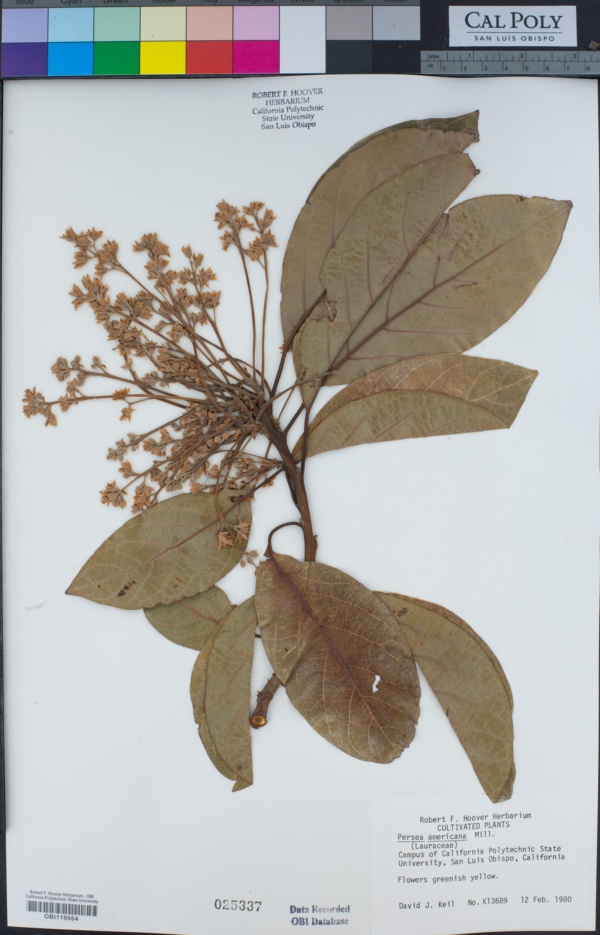
The trees of the avocado plant are tall or spreading. Their branches exhibit alternating leaf placement and the leaves and fruit vary greatly in shape among the many different cultivars. The avocado has three different races from which all of its various cultivars are derived and each race has its own morphological characteristics. The Mexican race, most influential among the cultivars grown commercially in North America, is known for being hardier and able to withstand colder climates. The leaves are the smallest of the three races and have a sharper apex. The fruit typically weighs between 3 and 12 ounces and has very thin, glossy, skin. The flowers of the Mexican varieties tend to appear in winter or early spring and the fruits usually ripen in the summer and fall. Many of the common cultivars of this race have fruits that are obovoid, but they do vary widely. Mexican varieties can often be identified by a strong anise-scent produced by the leaves. The West Indian and Guatemalan races lack this scent in the leaves.
The West Indian Race is often visually similar to the Guatemalan race. The young leaves are often lighter in color and the fruits are produced on shorter stems. The fruits vary extremely in size from 4 ounces to 3 pounds and have a smooth surface with thin and pliable skin ranging in color from yellow-green to maroon. The flowers open between late winter and spring and the fruits mature from summer to fall.
The foliage of the Guatemalan race tends to be deeper in color and the new growth is usually deep bronze-red in color. The fruits are produced on long stems, usually weigh between 12 and 20 ounces, and range in color from light green to dark purple. The skin on the surface of the fruits is not smooth, instead it is often rough and bumpy, increasingly so toward the stem. This skin also tends to be thicker than the other races (Avocado Races and Varieties, n.d.).
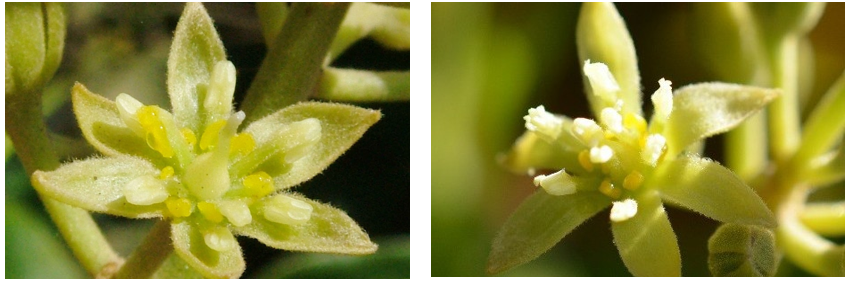
The flowers of the avocado tree can be categorized into two reproductive groups. The groups are differentiated by when the female and male flowers open. Cultivars in group A have flowers that first open in the morning as functionally female, and then reopen the afternoon of the next day as functionally male. Those in group B have flowers that open first in the afternoon as functionally female and then open the following morning functionally male (Growing Avocados, n.d.). This staggered opening of the different sexes of the flowers makes Group B trees good pollinators for Group A trees but it does not make Group A trees good pollinators for Group B trees. All the flowers have both male and female parts, including 1 pistol and 6 stamen, but only the female parts or the male parts are ever active at a given time (Reproduction, n.d.).Domestication
Avocado was domesticated in Mesoamerica, specifically in Coxcatlán, the region of Tehuacán, Puebla State, Mexico (Chen et al., 2009). First evidence of human consumption can be linked to this place, and is dated to be approximately 8000-7000 BC (Chen et al., 2009). The Mokayas were the first Mesoamerican culture to cultivate and domesticate the fruit, and later transmitted the practice to the Mayas and Olmecs.
The wild progenitor of cultivated avocado was a polymorphic tree species with a geographic range that spanned from the eastern and central highlands of Mexico through Guatemala to the Pacific coast of Central America (Chen et al., 2009).
The Neolithic people began domesticating this wild form, and replaced the wild Persea americana ancestors with 3 well-demarcated ecotypes of avocados known as the Guatemalan (Persea americana var. guatemalensis Williams), Mexican (Persea americana var. drymifolia Blake), and West Indian (Persea americana var. americana Mill).
The Guatemalan avocados (P.americana var. guatemalensis Williams) are from southern Mexico/ Guatemala, and are more adapted to medium elevations in the tropics (Maestri, 2020). This cultivar is similar in shape and size to the Mexican variety, but usually has a more ovoid and lighter-colored seed, with a thick, tough skin (Maestri, 2020).
The Mexican avocados (P. americana var. drymifolia), also called the aoacatl in the Aztec Language, originated in central Mexico and are adapted to the tropical highlands (Maestri, 2020). This cultivar has relatively good cold tolerance and is characterized by small fruits with a thin, purple-black skin (Maestri, 2020).
The West Indian avocados (P. americana var. americana Mill) is a misnomer, as this cultivar is not from the West indies, but instead domesticated in the Maya lowlands of central America (Maestri, 2020). This variety is the largest of the three, with a round to pear shape and smooth, easy-to-peel light green skin (Maestri, 2020). Additionally, this cultivar is adapted to lowland humid tropics and can tolerate high levels of salt and chlorosis (Maestri, 2020). Interestingly, ethnobotanical data and genetic marker studies reveal that the 3 cultivars underwent separate domestication histories and were not in contact until the 16th century when European contact began (Chen et al., 2009).
Although the 3 cultivars were not in contact until the 16th century, modern varieties encompass more than 30 main cultivars, which are products of hybridization of the 3 ancient cultivars, as well as crossbreeding between modern varieties to get the desired shape and fruit (Maestri, 2020). Of the modern cultivars, Anaheim and Bacon (derived from Guatemalan avocados), Fuerte (derived from Mexican avocados), and Hass and Zutano (hybrids of Mexican and Guatemalan) are the most common varieties found in supermarkets.Cultivation
Typically, due to the different abiotic conditions needed for the 3 main cultivars, different varieties of avocados are cultivated under different climatic and soil requirements for proper harvest. The West Indian cultivars prefer continuous hot, humid conditions with a higher summer rainfall, whereas the Mexican cultivars can tolerate temperatures as low as - 4 to -5 °C, with a humidity range of 45 to 60% (National Department of Agriculture, 2000).
The most popular cultivar in South Africa, the Fuerte cultivar, has a wider climatic tolerance than the pure Guatemalan or Mexican varieties because the Fuerte cultivar is a natural hybrid between the Mexican and Guatemalan types (National Department of Agriculture, 2000). In terms of soil, the avocado trees prefer loose soil in which their root systems can penetrate the soil to a depth of 1m (National Department of Agriculture, 2000). Additionally, root rots can often develop among avocado trees in poorly-drained soils, and thus soil percolation is a necessary measurement prior to planting the trees (National Department of Agriculture, 2000). Also, avocados grow best in soils with 20 to 40% of clay, and if the soil’s clay content is below 20%, it is common practice to irrigate the plants more often to avoid temporary droughts (National Department of Agriculture, 2000). If the soil contains high clay content, high rainfall or over-irrigation can lead to over-saturation of the soil, which promotes the aforementioned root rot (National Department of Agriculture, 2000).
Harvesting the fruit is also dependent on the regions, and harvest periods can be dramatically different based on the cultivar. For instance, the Hass variety is usually harvested between June and October in warm regions, or during August to December in cool regions (National Department of Agriculture, 2000). The Fuerte variety, on the other hand, is harvested during March to August in warm regions, and in May to November in cold regions (National Department of Agriculture, 2000).
Moreover, due to the global demand for avocados, many countries are increasing their avocado exports. For instance, Mexico, Chile, Peru, and New Zealand are primary exporters of avocados to China, whose demands for the fruit increased from 32,127 tons in 2017 to 43,859 tons in 2018 (36.5% increase) (Siekman, 2019). Additionally, African countries like Kenya, South Africa, Mozambique, Tanzania, and Zimbabwe are also exporting avocados, and are important suppliers to the European market (Siekman, 2019).A Fatty Fruit
While the leaves and seeds of the avocado are sometimes used in medicine, it is most common to consume the fruit of the plant. The oil from the fruit can also be used in cooking and as a medicine.(Avocado, n.d.). The fruit from the avocado tree is very dense in nutrients and contains a large amount of healthy fats. They are among the fruits with the most fiber, folate, antioxidants, potassium, vitamin E, and magnesium per ounce (Superfoods - an Overview of the Avocado, 2017). There are many rumored health benefits from consuming the avocado fruit including healing wounds, easing toothache, helping hair growth, aiding memory, and reducing obesity etc. However, there is a lack of sufficient evidence to support most of these claims. Some evidence has suggested that it may be effective for helping to reduce high cholesterol (Avocado, n.d.).
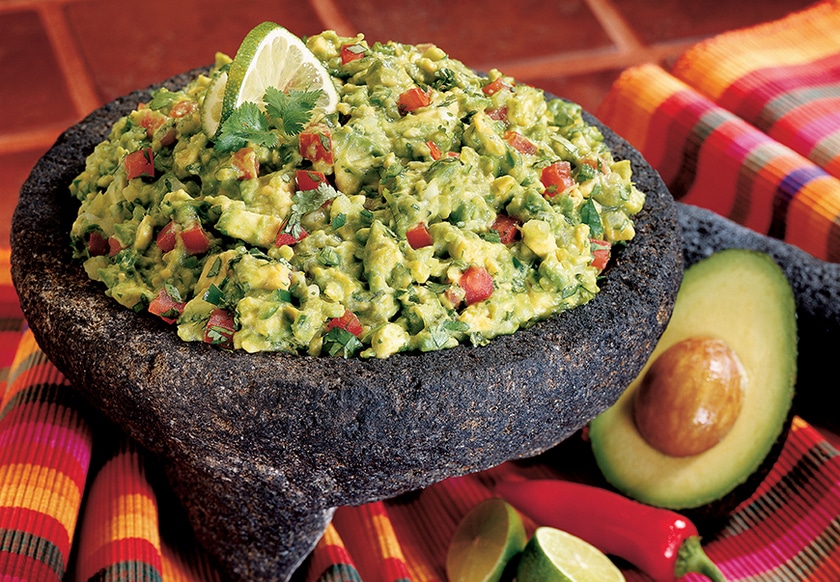
Avocados are used in many dishes but they are most known for their role in guacamole. Early guacamole was made by the Aztecs out of pure avocado; the modern name of the dish comes from the Nahuatl word āhuacamolli, which translates to “avocado sauce.” The dish provided the Aztecs with vital healthy fats and proteins. Today, guacamole is made with the inclusion of tomato, onion, garlic, cumin, and chilies (Guacamole · Food Origins, n.d.). Avocados are now also often included in dishes like salads, pasta, smoothies, and sandwiches or served on toast or baked into deserts.Avocado Expansion
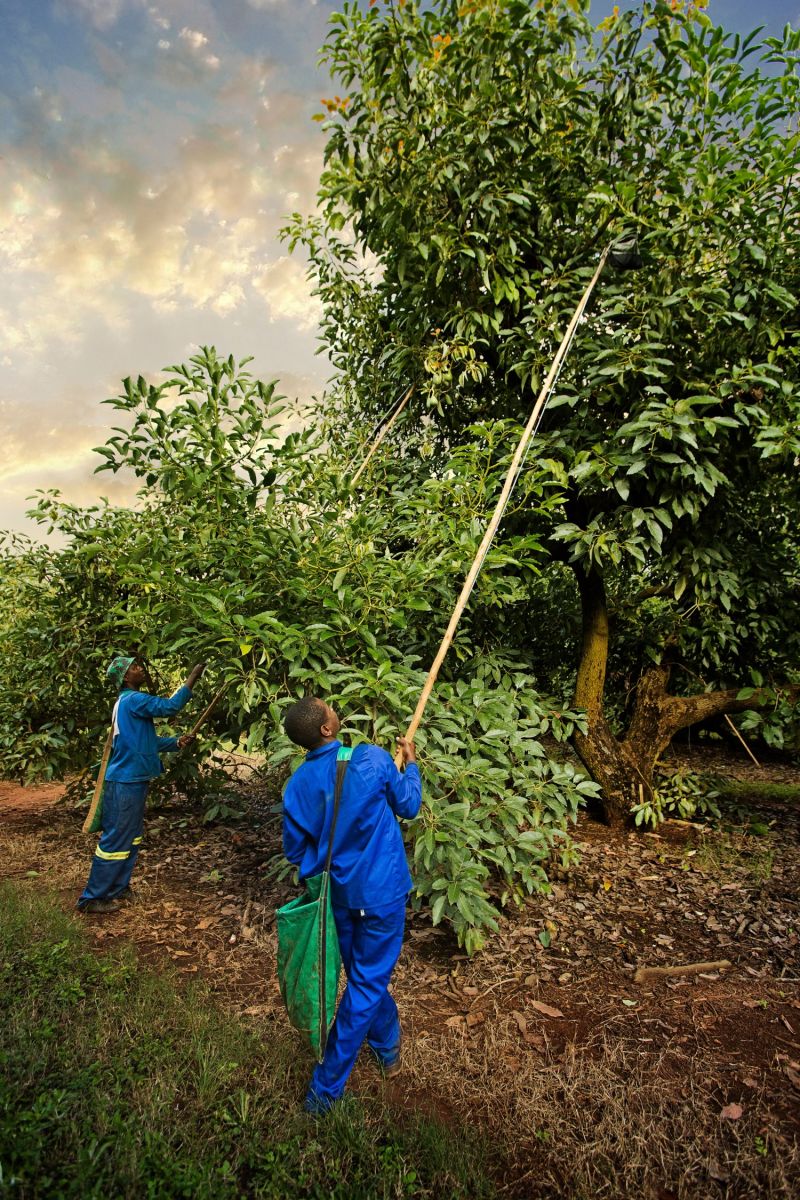
Due to avocado’s utility as a superfood and medicine, avocados have become a lucrative export product for many countries that can support the appropriate abiotic conditions for avocado growth. East African and Nigerian avocado farmers are potential suppliers to the growing demand, as previous harvest and collection methods caused major soil degradation and other environmental issues (Wells, 2021). However, unlike large-scale commercial avocado farms in Latin America, East Africa and Nigeria are using a more sustainable farming method by implementing smallholder farmers (Wells, 2021). In these settings, the avocados are often complemented with other crops such as maize and beans, which can help restore some of the soil nutrients that are used by the avocado trees (Wells, 2021). Additionally, because these productions are done on a smaller scale, large quantities of pesticides are not needed as it would in a large-scale, corporate production. In particular, farmers in Kenya are already using the smallholders system, with individual farmers owning roughly 2 hectares of land (Wells, 2021) However, despite the focus on increasing avocado suppliers, the crop itself is not immune to climate change. Currently, the precipitation patterns around the world support high avocado yields in Latin America and Africa, but the increasing global temperatures and fluctuation in rain patterns can lead to significantly smaller yields, which can cause the price of avocados to increase dramatically (Wells, 2021). This would not only disrupt the livelihoods of farmers who harvest the crop, but also the consumers who would forgo buying the fruit due to the increased price and lower accessibility.
References
Avocado: Overview, uses, side effects, precautions, interactions, dosing and reviews. (n.d.). Retrieved May 30, 2022, from https://www.webmd.com/vitamins/ai/ingredientmono-890/avocadoAvocado races and varieties. (n.d.). Retrieved May 30, 2022, from https://www.growables.org/information/TropicalFruit/AvocadoRaces.htmChen, H., Morrell, P. L., Ashworth, V. E. T. M., de la Cruz, M., & Clegg, M. T. (2009). Tracing the Geographic Origins of Major Avocado Cultivars. Journal of Heredity, 100(1), 56–65. https://doi.org/10.1093/jhered/esn068Ge, Y., Dong, X., Wu, B., Wang, N., Chen, D., Chen, H., Zou, M., Xu, Z., Tan, L., & Zhan, R. (2019). Evolutionary analysis of six chloroplast genomes from three Persea americana ecological races: Insights into sequence divergences and phylogenetic relationships. PLOS ONE, 14(9), e0221827. https://doi.org/10.1371/journal.pone.0221827Growing avocados: Flowering, pollination and fruit set. (n.d.). [Text]. Retrieved May 30, 2022, from https://www.agric.wa.gov.au/spring/growing-avocados-flowering-pollination-and-fruit-setGuacamole · Food origins. (n.d.). Retrieved May 30, 2022, from https://tenochtitlan.omeka.net/exhibits/show/guacamoleMaestri, Nicoletta. (2020, August 25). Avocado History - Domestication and Spread of Avocado Fruit. Retrieved from https://www.thoughtco.com/domestication-and-spread-of-avocado-fruit-169911National Department of Agriculture. (2020). Cultivation of Avocados. Retrieved from http://www.avocadosource.com/international/south_africa_papers/cultivation_of_avocados.pdfReproduction. (n.d.). Retrieved May 30, 2022, from http://bioweb.uwlax.edu/bio203/s2012/lindert_ava/reproduction.htmSiekman, D. (2019, March 28). What Scientists Have Learned about the History of the Avocado. ThoughtCo. https://www.thoughtco.com/domestication-and-spread-of-avocado-fruit-169911Spilde, I. (2020, November 20). Why does the avocado have such huge seeds?Meet the plants that have lost their enormous partners. https://sciencenorway.no/botany-evolution-plants/why-does-the-avocado-have-such-huge-seedsmeet-the-plants-that-have-lost-their-enormous-partners/1772701Superfoods—An overview of the avocado. (2017, March 29). Crispers Restaurant. https://www.crispers.com/blog/superfoods-an-overview-of-the-avocado/Welle, D. (2021, January 5). Green gold: Avocado farming on the rise in Africa | DW | 01.05.2021. DW.COM. Retrieved May 29, 2022, from https://www.dw.com/en/green-gold-avocado-farming-on-the-rise-in-africa/a-57390367