Dedication Invitation
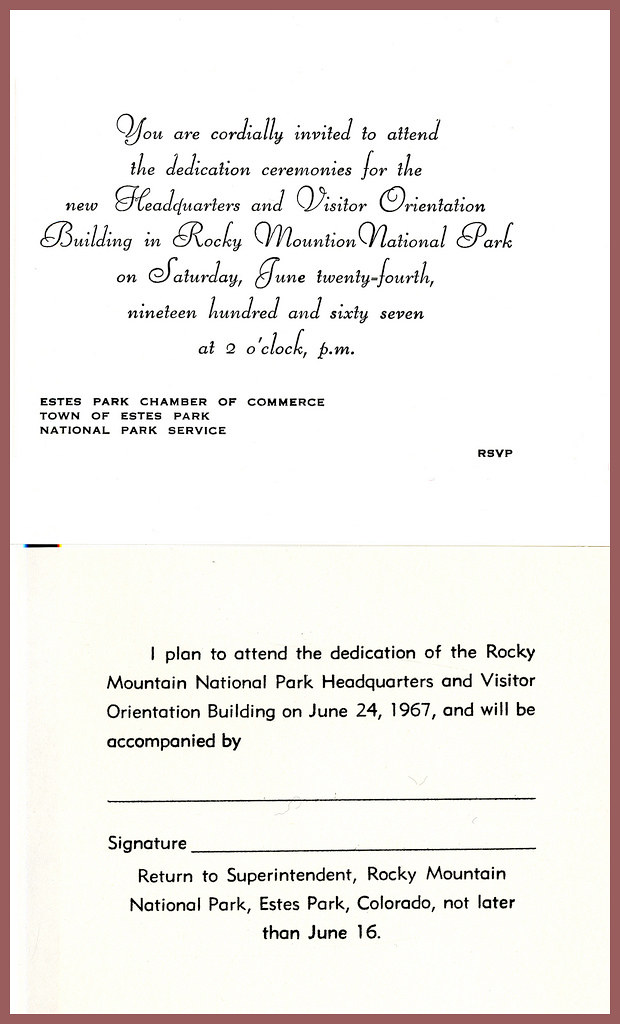
1 2017-12-06T14:11:28-08:00 Hannah Ashley fe905ff748bf2a40d8239ab06d16e6efb537f1cf 24015 2 The invitation to the Beaver Meadows dedication ceremony. Photo courtesy of ROMO Archives. plain 2017-12-07T10:31:46-08:00 Jordan EK 5ee5cb1f8ac73cc6263a0885cedd14b212f95885This page is referenced by:
-
1
2017-11-05T11:51:28-08:00
Dedication Ceremony at Beaver Meadows Visitor Center
25
plain
2017-12-18T12:52:30-08:00
Date
June 24, 1967
Context
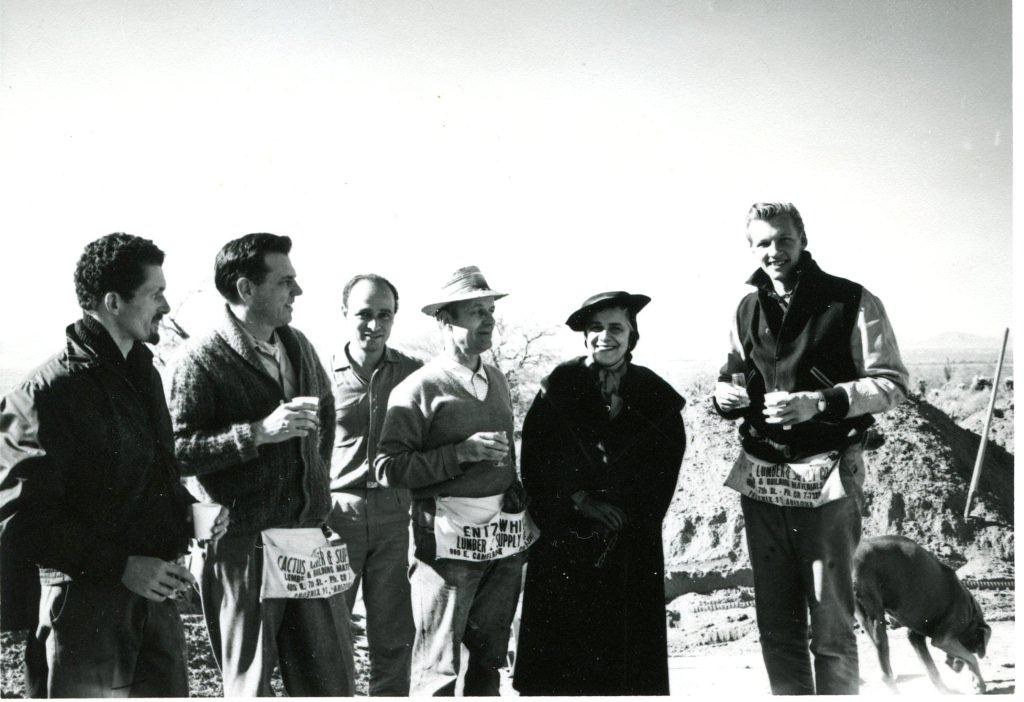
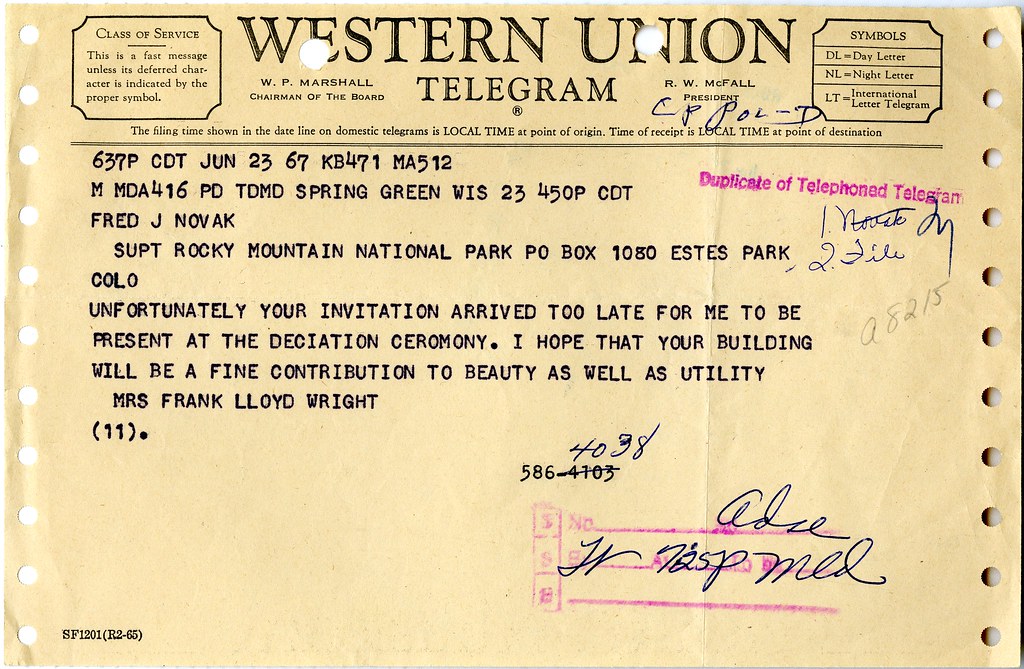
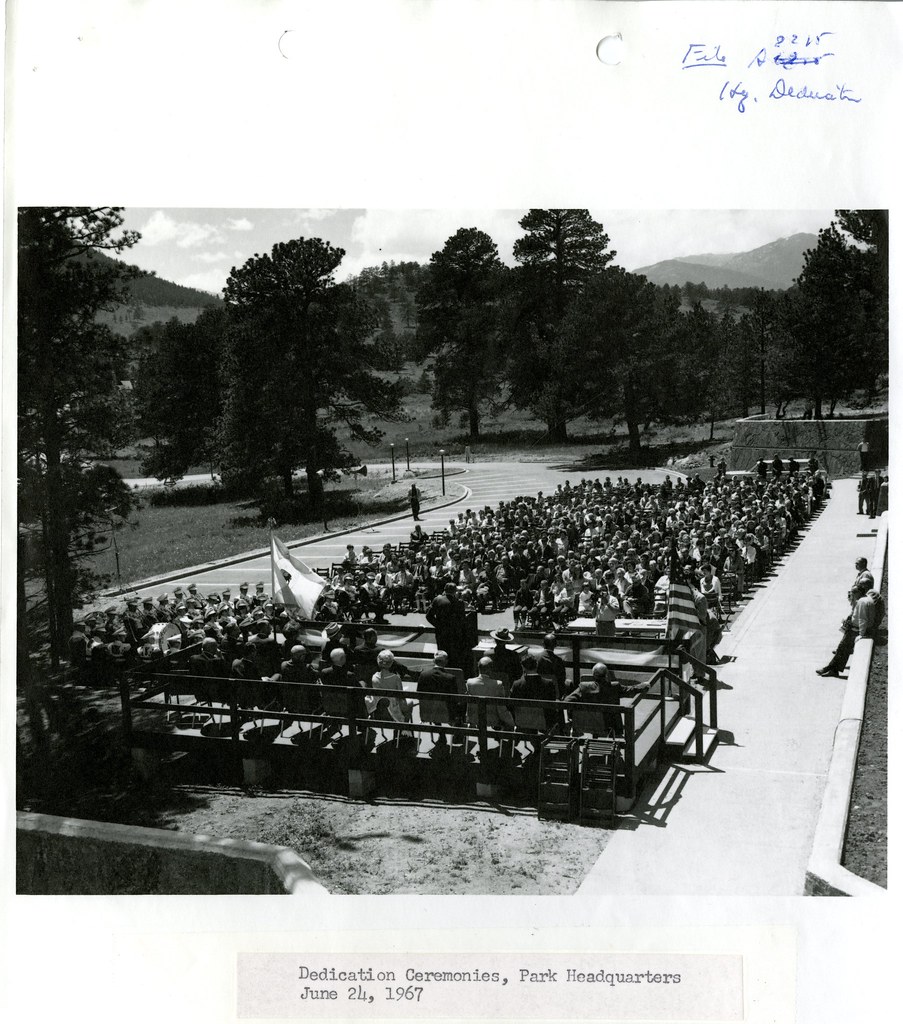
The Beaver Meadows Visitor Center was unveiled to the public on June 24, 1967. The building was a part of the Mission 66 initiative to make the national parks more accessible to the public. The construction of Beaver Meadows was the embodiment of Mission 66 goals coupled with the unique design of Frank Lloyd Wright's successor architectural firm, Taliesin Associated Architects. The exterior was designed by Taliesin architect, Thomas Casey and the interior furniture and colors were chosen by Olgivanna Lloyd Wright, who carried on Frank Lloyd Wright’s architectural legacy after his death (National Historic Landmark Nomination, 2001). Both of these contributors to Beaver Meadows can be seen at Taliesin West in the photo below.Unfortunately, Olgivanna Lloyd Wright was not able to attend the opening ceremony and sent her regards via this telegram to park superintendent Fred Novak (ROMO Archives, 1967).
Congressman Wayne Aspinall gave the dedication speech at the ceremony in which he recommended the entire building be named after Enos Mills, the “Father of Rocky Mountain National Park.” His speech can be read in the attached link. This recommendation caused a stir amongst park officials who instead elected to name the visitor center auditorium in Mills’ memory (ROMO Archives, 1967).
Both the invitation and program from the dedication ceremony can be viewed in the links below.
Related Primary Sources to Explore
Wayne Aspinall's Speech at the Dedication Ceremony (Collection 1192 Series 002.1 folder 406)
Dedication Program (ROMO 21599 HQ Dedication)
Related Objects to Explore
Drape; Krueger Stackable Folding Metal Chair; Oak Bench; Oak Arm Chair;