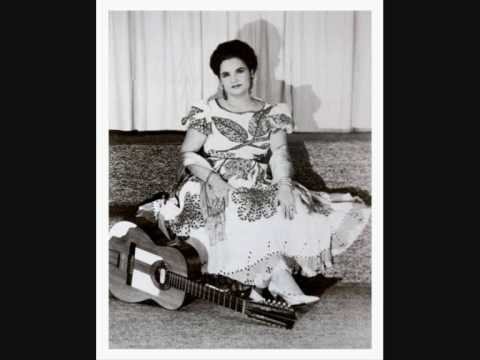
"Boda Negra" (1919)
"Boda Negra" is a macabre song that is suggestive of necrophilia. Unlike other boleros, it features several verses, since the poem itself was much longer than the usual song of the time. This variance makes it an outlier at the periphery of bolero, but it is significant in that it is Villalón's most enduring and recognizable composition.
First Recording
The first documented recording was made in New York on Victor records in 1919, with Villalón on guitar, and the vocal duo, Floro y Miguel (Miguel Zaballa, baritone and Floro Zorilla, tenor). Villalón is listed as the lyricist. The Villalón recording is available below, through the Biblioteca Nacional de España's digital archive. To listen: scroll and click "Cara B..".
While the Biblioteca Nacional archive lists the date tentatively as "1926?" it is likely that this is is the 1919 recording referenced in the UCSB archive since it lists the same performers and Victor as the record label. This is the earliest available recording of the song with Villalón himself on guitar.
Lyrics and Translation
| Oye la historia que contóme[1] un día El viejo enterrador de la comarca[2], Era un amante que por suerte impía Su dulce bien le arrebató la parca. | Listen to a story that was told to me one day The old gravedigger of the region He had a lover, that by morbid luck Was violently taken by death |
| Todas las noches iba al cementerio A visitar la tumba de su hermosa La gente murmuraba con misterio: Es un muerto ecapado de la fosa | Every night he would go to the cemetery To visit the tomb of his beauty The people murmured with mysterious curiosity It’s a dead person escaped from the grave |
| En una horrenda noche hizo pedazos El mármol de la tumba abandonada, Cavó la tierra y se llevó en los brazos El rigido esqueleto de su amada | In one horrible night he broke into pieces The marble of the abandoned tomb He dug out the dirt and took in his arms The rigid skeleton of his lover |
| Y allá en la triste habitación sombría De un cirio fúnebre a la llama incierta Sentó a su lado la osamenta fría Y celebró sus bodas con la muerta. | And there in the sad, somber bedroom With a funeral candle and an unstable flame He sat the cold skeleton next to him And celebrated his marriage with the departed |
| Ató con Cintas los desnudos huesos, El yerto cráneo coronó de flores, La horrible boca la cubrió de besos Y le contó sonriendo sus amores. | With ropes he tied the naked bones The cranium he coronated with flowers The horrible mouth, he covered with kisses And smiling, he recounted his love |
| Llevó a la novia al tálamo mullido, Se acostó junto a ella enamorado Y para siempre se quedó dormido Al esqueleto rígido abarazado | He took his bride to the fluffy marriage bed And laid next to her, in love And remained sleeping forever Hugging the rigid skeleton |
| Source: Orovio, 300 Boleros de Oro. 1991. |
Later Recordings
In Cuba, the song was recorded by Maria Teresa Vera during the 1920s.
In the United States in 1928, it was recorded by the Tejana singer-songwriter, Lydia Mendoza.
In 1995, the Mexican pop singer, Ana Gabriel released her own cover of the song on an album titled Joyas de Dos Siglos (treasures of two centuries). This mid-90s period in Mexico was a time when several artists like Luis Miguel were reviving classic boleros.
In Cuba, the song was recorded by Maria Teresa Vera during the 1920s.
In the United States in 1928, it was recorded by the Tejana singer-songwriter, Lydia Mendoza.
In 1995, the Mexican pop singer, Ana Gabriel released her own cover of the song on an album titled Joyas de Dos Siglos (treasures of two centuries). This mid-90s period in Mexico was a time when several artists like Luis Miguel were reviving classic boleros.
[1] Archaic conjugation of the verb “contar”
[2] Archaic. Name for a Spanish or Portuguese large administrative region/district.
[1] Dueñas, Pablo. Historia Documental del Bolero Mexicano. Associación Mexicana de Estudios Fonograficos. 1993. Mexico, D.F.
"Guerrillapop. Bodas Negras Y Otros Boleros Macabros . ". 2016. Guerrillapop.Com. http://guerrillapop.com/blog/musica/bodas-negras-y-otros-boleros-macabros.
Recording source: " Como Me Matas Mueras [Sic] : Bolero ; Boda Negra : Bolero Capricho Villalón - Villalón Morales, Alberto 1882-1955 - Registro Sonoro Musical - 1926?". 2016. Bdh.Bne.Es. http://bdh.bne.es/bnesearch/detalle/bdh0000165691.
"Guerrillapop. Bodas Negras Y Otros Boleros Macabros . ". 2016. Guerrillapop.Com. http://guerrillapop.com/blog/musica/bodas-negras-y-otros-boleros-macabros.
Recording source: " Como Me Matas Mueras [Sic] : Bolero ; Boda Negra : Bolero Capricho Villalón - Villalón Morales, Alberto 1882-1955 - Registro Sonoro Musical - 1926?". 2016. Bdh.Bne.Es. http://bdh.bne.es/bnesearch/detalle/bdh0000165691.