Pouteria lucuma, Nasca pottery
1 2022-05-20T08:28:58-07:00 Quinn Schwabauer c956296b3a71313515a7b42080b7c21898a4e1b3 40688 4 #lucuma plain 2022-05-23T11:20:26-07:00 Quinn Schwabauer c956296b3a71313515a7b42080b7c21898a4e1b3This page has annotations:
- 1 2022-05-23T11:43:36-07:00 Quinn Schwabauer c956296b3a71313515a7b42080b7c21898a4e1b3 Lucuma Pottery Quinn Schwabauer 2 plain 2022-05-23T11:48:05-07:00 Quinn Schwabauer c956296b3a71313515a7b42080b7c21898a4e1b3
This page has tags:
- 1 2022-05-11T11:25:26-07:00 Jasmine White 5e6d9f39f5dca14a5efcc5b40c2233506f634d6e Pouteria lucuma: An exploration of historical and modern medical uses of the Andean lucuma fruit Quinn Schwabauer 57 By Jasmine White, Quinn Schwabauer, Jin Zhu #lucuma plain 2022-05-28T10:52:01-07:00 Quinn Schwabauer c956296b3a71313515a7b42080b7c21898a4e1b3
This page is referenced by:
-
1
2022-05-11T11:25:26-07:00
Pouteria lucuma: An exploration of historical and modern medical uses of the Andean lucuma fruit
57
By Jasmine White, Quinn Schwabauer, Jin Zhu #lucuma
plain
2022-05-28T10:52:01-07:00
Nomenclatural History
Pouteria lucuma is a fruit with an ever-changing nomenclatural history. Though commonly known as lucuma, there are many regional names for this fruit. It is known as logma in the Bolívar region of Ecuador, lohma or louma in the Cotopaxi region of Ecuador, lucma or lucmo throughout Ecuador, lucumo in the Lima region of Peru, maco or rucma in Colombia, and mamón in Costa Rica (Pennington, 1990, pp. 381-385; Thulin et al., 2021). The current common name, lucuma, is a derivative of these indigenous names. First appearing in scientific literature as a genus, Lucuma fell within Icosandria Digynia according to the Linnean sexual system, as described by Juan Ignacio Molina’s “Saggio”. Since then, Lucuma has been used by multiple authors to describe a genus of Sapotaceae beyond the Andean region, including Asia, Australia, and Africa. This genus is currently synonymous with Pouteria, based on work published by T.D. Pennington (Thulin et al., 2021). The lucuma fruit, now known as Pouteria lucuma (Ruiz and Pavón) Kuntze was initially known as Lucuma bifera Molina, with other historic binomial names including Achras lucuma Ruiz and Pavón, Lucuma obovata Kunth, and Pouteria insignis Baehni (Pennington, 1990, pp. 381-385; Thulin et al., 2021).Evolutionary History
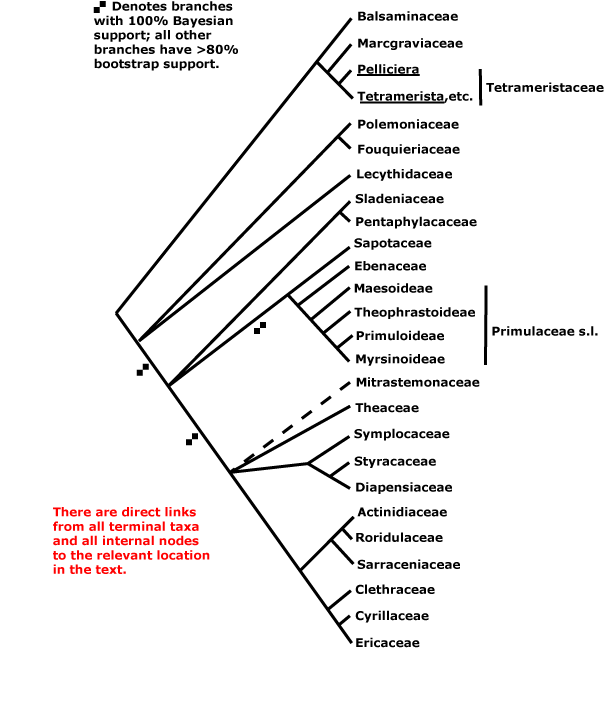
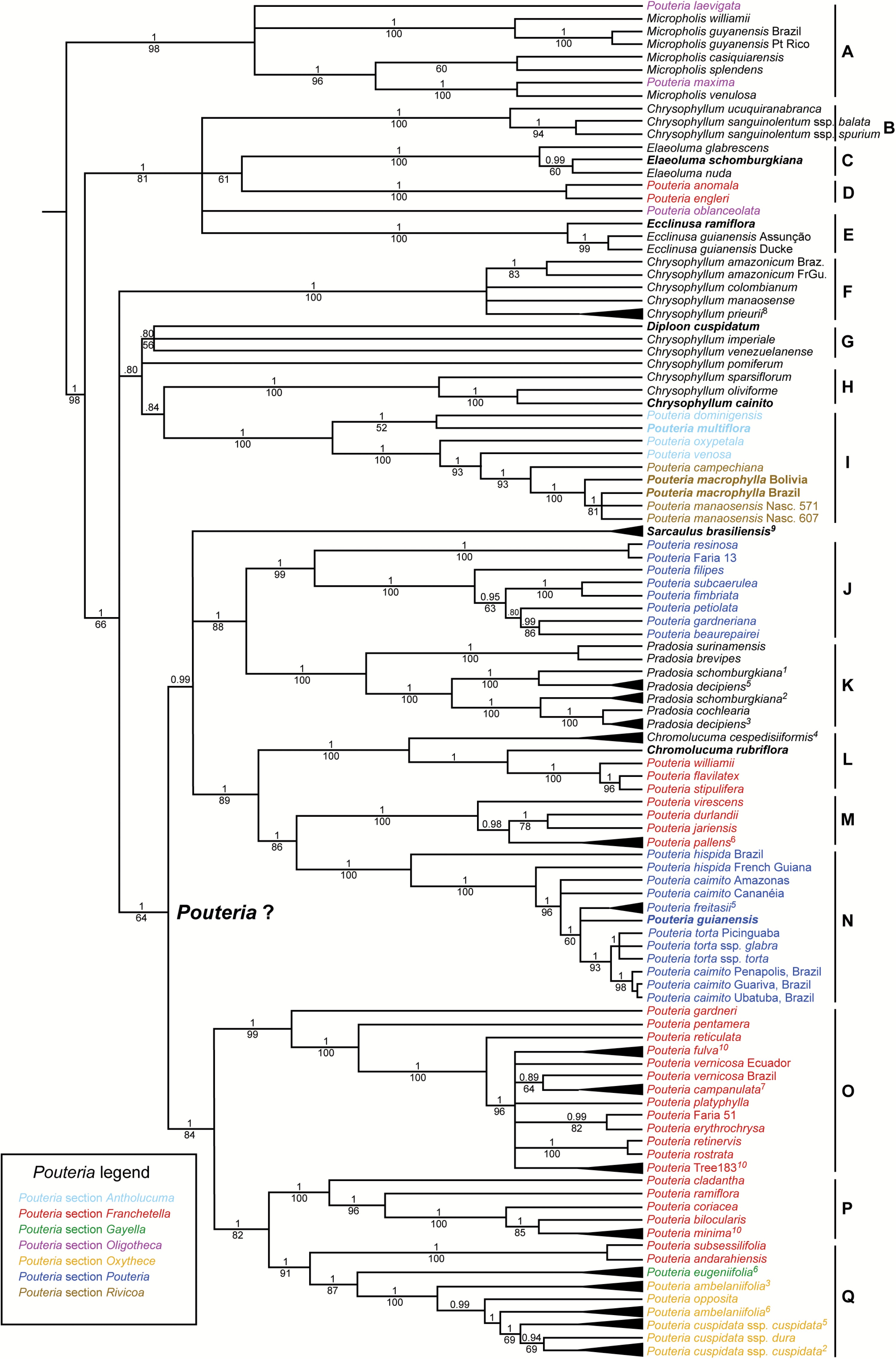
Pouteria lucuma belongs to the family Sapotaceae within the order Ericales (Ericales, n.d.). The number of genera in the Sapotaceae family has fluctuated, from Aubréville’s historic 122 to Pennington’s current 53, all based on morphological characteristics (de Faria et al., 2017; Swenson & Anderberg, 2005). Because of Pennington's wide generic concepts, the genus Pouteria includes 304 species with pantropical distributions (Swenson & Anderberg, 2005). Phylogenetic reconstructions have demonstrated that Pouteria is polyphyletic, meaning that the type species from the New World should be placed in their own clade separate from other tropical Pouteria species (de Faria et al., 2017; Swenson & Anderberg, 2005; Thulin et al., 2021). This large genus shows homoplasy instead of synapomorphies, because of the previous reliance on morphological classifications instead of genetic analysis (de Faria et al., 2017; Swenson & Anderberg, 2005). New molecular evidence suggests that there is a strongly supported clade that includes P. lucuma that should be separated from Pouteria and reinstated under the genus Lucuma (Thulin et al., 2021).
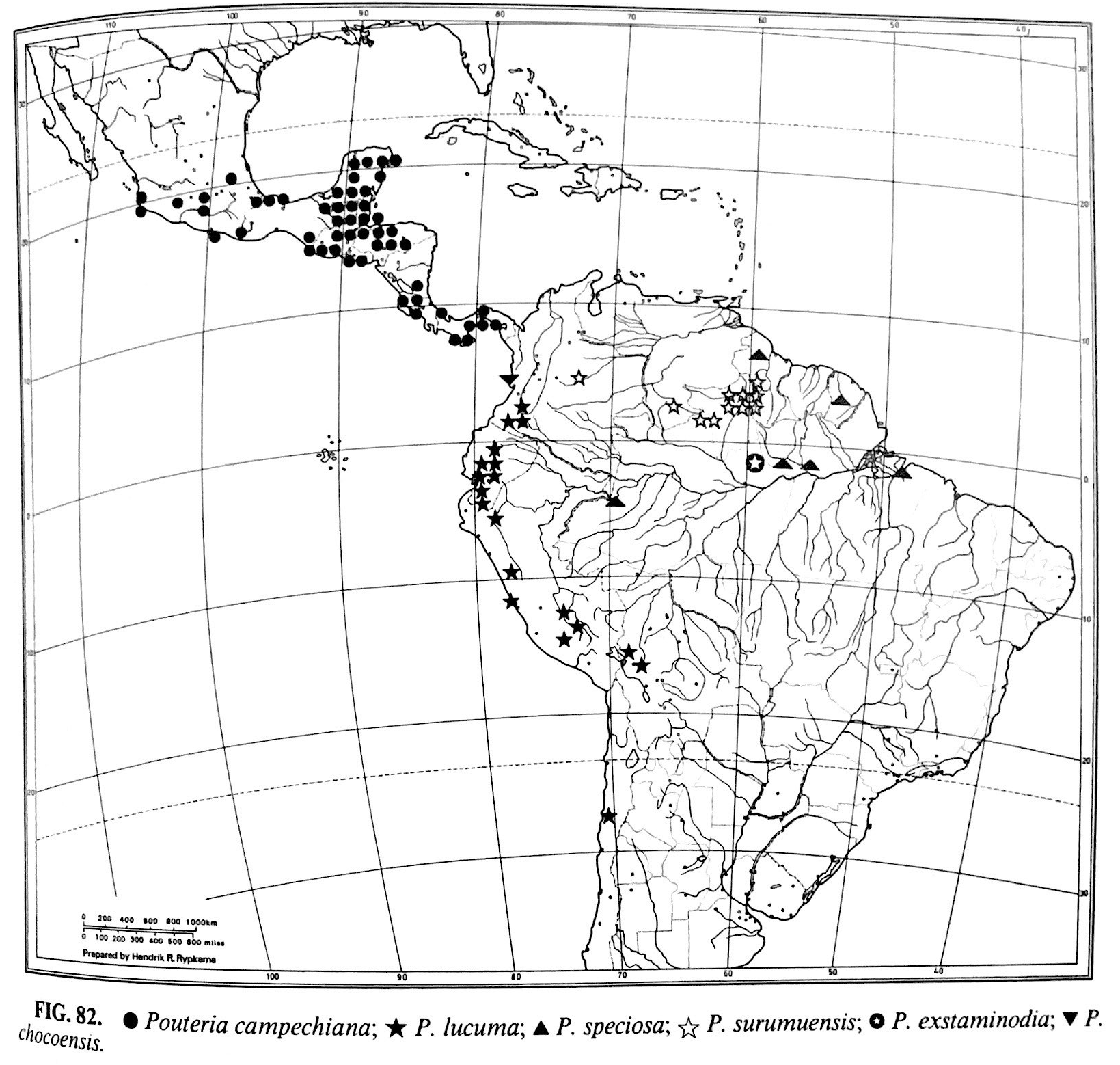
Although the molecular phylogeny of P. lucuma specifically has not been published yet, there is morphological evidence of relation to Pouteria campechiana, a member of the former Lucuma genus, supported by geographical evidence (Pennington, 1990, pp. 381-385; Thulin et al., 2021). By looking at the molecular phylogeny of the Pouteria genus and focusing on P. campechiana, we can gain insight into P. lucuma’s evolutionary history (de Faria et al., 2017).
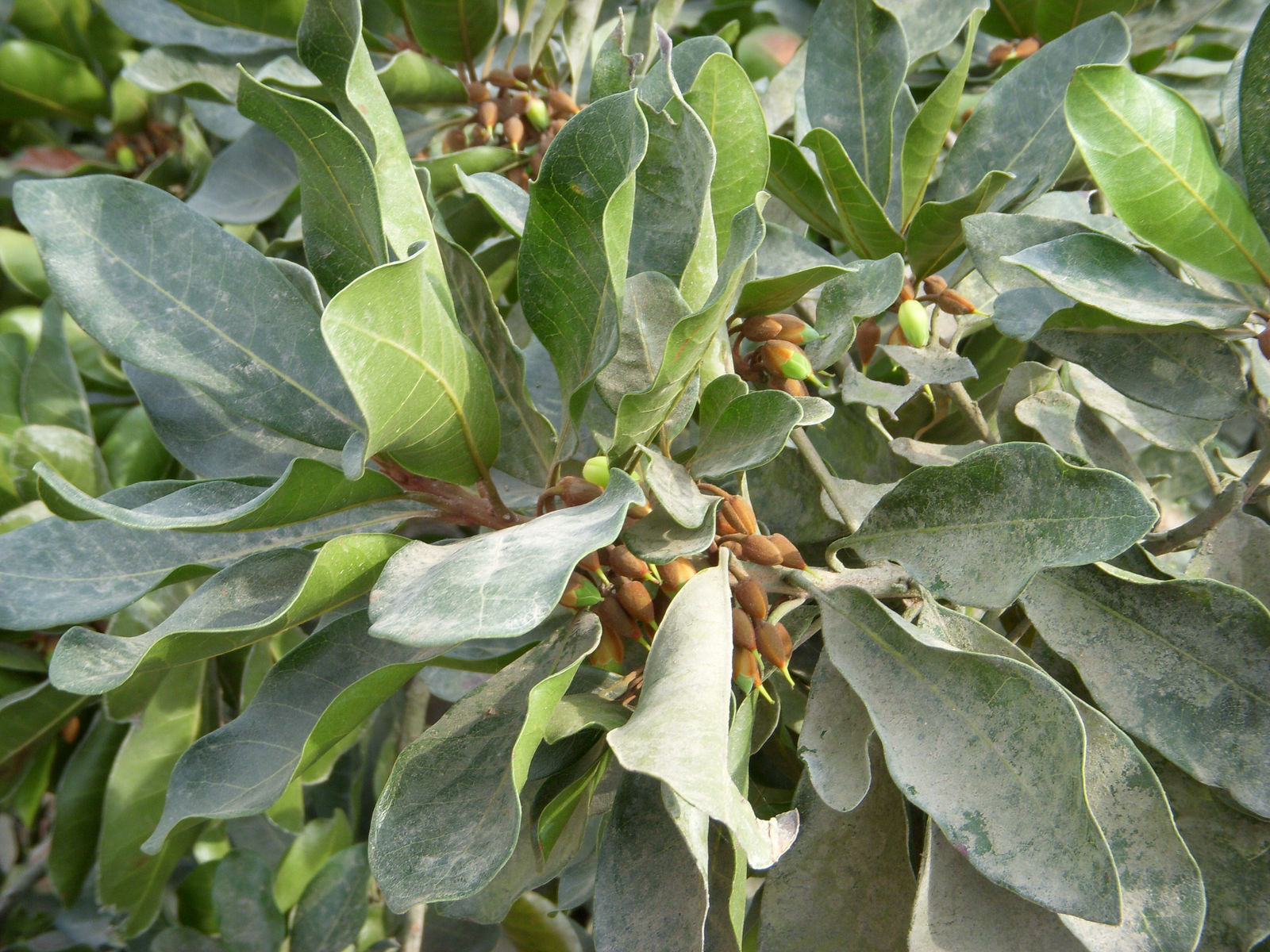
Lucuma grows on a subtropical fruit tree that originated in the Ecuadorian and Peruvian Andes mountains (Duarte & Paull, 2015, pp. 117–123). Its current distribution is from Andean Colombia heading southward to Northern Chile, growing in wet montane and cloud forest, usually between a 1500 and 3000 m altitude, but can rarely be seen as low as 700 m (Pennington, 1990, pp. 381-385). The lucuma tree is most suited to sandy or sandy loam soils with high contents of organic matter and good drainage. It is able to moderately tolerate salinity and alkalinity, but the ideal pH is around 6.5-7.5. The tree is adapted to fairly dry conditions, but needs rainfall of about 800-1,000 mm per year to give higher yields. The ideal temperature for fruit production is between 18 °C and 24 °C, and the tree is killed by temperatures lower than -5 °C. It is able to grow in full sunlight and flowers and fruits year-round in ideal conditions (Duarte & Paull, 2015, pp. 117–123).
The first written report of Lucuma occurred in 1531 in the Chinchasuyu region of Ecuador (Morton, 1987). A myth recorded in the Huarochiri manuscript in the late 1600s includes lucuma as part of a creation myth (Columbus,1998). However, there is a clear legacy of the fruit’s importance to the native Peruvian and Ecuadorian people long before that. Plant remains in native settlements in Chile dating back to 2500 AD. The quantity of remains suggests lucuma was once a staple in local diets (Cohen, 1978). Lucuma served as more than just food to these groups. Lucuma pottery was often buried with the ancient indigenous people of coastal Peru, the Nazca (600-200 BC) and Moche (100-700 AD) (Morton, 1987). These double spouted bottles made from four lucuma fruits represented fertility, both human and agricultural. The lucuma forms were tied to lactation, and the linked structure of four fruits is likely a reference to the different seasons (Elder, 2015).Cultivation Practices
Cultivation of lucuma is concentrated in Andean highland, but it is still cultivated in many places, such as Arizona in the US and Auckland in New Zealand. Lucuma requires higher elevation in tropical climates with medium rainfall and lower elevation in subtropics. It does not do well in hot tropical lowland areas. Since some non-native cultivated places lack water, such as Arizona, irrigation is required if the trees well grow. rhoncus aenean. Lucuma's success rate of seed germination is low and slow, it can take about 25-40 days. Seedlings' juvenile period can take 7-15 years. Fruit takes 8-9 months to mature from pollination. Lucuma tree start producing fruit after 4 or 5 years, and tree flowers and fruits throughout the whole year. It can produce 200-300 fruit per year in ten-year-old trees (Prolucuma, 2010). After mature fruit fall from the tree, they need several days to ripen before they are consumed. The useful maturity indice for lucuma is the change in color from green to yellow (Lizana, 1980). In Chile, the harvesting season for lucuma is from June through November. After harvesting, lucuma fruit can be stored at 7 °C without being affected (Sandoval, 1997).Nutritional Value
Lucuma fruit is a good source of iron, zinc, and calcium. Fruits have significant high protein content and high insoluble dietary fiber, but the amount of vitamin C is not as much as other fruits. Although the amount of vitamin C is not high, but it has high levels of anti-inflammatory polyphenols, which is the highest concentration of phenolic among other Peruvian fruits (Silva et al., 2009). Because of high insoluble dietary fiber, lucuma fruit can prevent gut diseases such as Colorectal polyp and regulate the digestive tract. They can act as antioxidants that can help prevent cancer and cardiovascular diseases, as well as diabetes (Silva et al., 2009). Lucuma fruit extraction contains a compound that behave as α-glucosidase inhibitors, which have a hypoglycemic effect and attenuate blood glucose level. Due to lucuma's high bioactive compound content and antioxidant and antihyperglycemic properties, lucuma will be able to become a functional food (Fuentealba et al., 2016). Lucuma nut oil promotes skin regeneration and accelerates wound healing. As a result, it may be used in medicine and skin care (Rojo et al., 2010).Human Experience
Lucuma fruit is a natural sweetener. Est placerat Before Europeans cultivated sugarcane, sugar was a luxurious good, so people chose natural sweetener as substitutions of sugar (Mintz, 1985). Lucuma fruit has a distinctive flavour that resembling caramel, butterscotch, or maple and can be used to flavour ice cream, yogurt, and other desserts (Ma et al., 2004). In Southern America, lucuma fruit have been used as traditional for many years. In the future, humans are more likely to use lucuma as a natural alternative sweetener to sucrose and artificial sweeteners because of the low glycemic index of lucuma (Mérillon & Ramawat, 2018). Lucuma is dehydrated and milled into a flour but do not undergo refining processes, so high content of beneficial nutrients and bioactives are kept (Belščak-Cvitanović et al., 2015). Lucuma powder is popularly sold in the world because it is easy to be stored.Reference
Belščak-Cvitanović, A., Komes, D., Dujmović, M., Karlović, S., Biškić, M., Brnčić, M. and Ježek, D. (2015) 'Physical, bioactive and sensory quality parameters of reduced sugar chocolates formulated with natural sweeteners as sucrose alternatives', Food Chemistry, 167, pp. 61-70. doi: 10.1016/j.foodchem.2014.06.064.
Cohen, M.N. (1978). Archaeological remains from the central coast of Peru, Ñawpa Pacha, 16:1, 23-50, DOI: 10.1179/naw.1978.16.1.003
Columbus, C.K. (1998), Human Discourse about Nature; Nature's Processes as Discourse: The Pre-Columbian Peruvian Myth of Cavillaca. Anthropology of Consciousness, 9: 17-33. https://doi.org/10.1525/ac.1998.9.2-3.17
de Faria, A. D., Pirani, J. R., Ribeiro, J. E. L. D. S., Nylinder, S., Terra-Araujo, M. H., Vieira, P. P., & Swenson, U. (2017). Towards a natural classification of Sapotaceae subfamily Chrysophylloideae in the Neotropics. Botanical Journal of the Linnean Society, 185(1), 27–55. https://doi.org/10.1093/botlinnean/box042
Duarte, O., & Paull, R. E. (2015). Exotic fruits and nuts of the New World (C. Hammond, E. McCann, & T. Head, Eds.). CABI. https://doi.org/10.1079/9781780645056.0000
Elder, C. (2015). Conjoined Lucuma fruit vessels: evolution and context in Nasca art. Master thesis. Virginia Commonwealth University. Richmond, Virginia.
Fuentealba, C., Gálvez, L., Cobos A., Olaeta, J. A., Defilippi, B.G., Chirinos, R., Campos, D., Pedreschi, R. (2016). Characterization of main primary and secondary metabolites and in vitro antioxidant and antihyperglycemic properties in the mesocarp of three biotypes of Pouteria lucuma, Food Chemistry, Volume 190, Pages 403-411, ISSN 0308-8146, https://doi.org/10.1016/j.foodchem.2015.05.111.
(https://www.sciencedirect.com/science/article/pii/S0308814615008559)
Yahia, Elhadi & Guttierrez-Orozco, Fabiola. (2011). Lucuma (Pouteria lúcuma (Ruiz & Pav.) Kuntze). 10.1533/9780857092885.443.
Ericales. (n.d.). Missouri Botanical Garden. Retrieved May 14, 2022, from http://www.mobot.org/mobot/research/apweb/orders/ericalesweb.htm
Ma, J., Yang, H., Basile, M.J. and Kennelly, E.J. (2004) 'Analysis of polyphenolic antioxidants from the fruits of three pouteria species by selected ion monitoring liquid chromatography-mass spectrometry', Journal of Agricultural and Food Chemistry, 52(19), pp. 5873-5878. doi: 10.1021/jf049950k.
Mintz, Sidney Wilfred.(1985). Sweetness and Power: The Place of Sugar in Modern History. New York: Penguin Group. Print.
Morton, J. 1987. Lucmo. p. 405–406. In: Fruits of warm climates. Julia F. Morton, Miami, FL.
Pennington, T. D. (1990). Sapotaceae. In Sapotaceae. Published for Organization for Flora Neotropica by the New York Botanical Garden.
Quilter, J. (1991). Late Preceramic Peru. Journal of World Prehistory, 5(4), 387–438. http://www.jstor.org/stable/25800604
Rojo, Leonel & Villano, Caren & Joseph, Gili & Schmidt, Barbara & Shulaev, Vladimir & Shuman, Joel & Lila, Mary & Raskin, Ilya. (2010). Original Contribution: Wound‐healing properties of nut oil from Pouteria lucuma. Journal of cosmetic dermatology. 9. 185-95. 10.1111/j.1473-2165.2010.00509.x.
Swenson, U., & Anderberg, A. A. (2005). Phylogeny, character evolution, and classification of Sapotaceae (Ericales). Cladistics, 21(2), 101–130. https://doi.org/10.1111/j.1096-0031.2005.00056.x
Thulin, M., Marticorena, A., & Swenson, U. (2021). Molina’s species of Lucuma: Neotypifications and nomenclatural implications. Gayana. Botanica, 78(2), 162–171. https://doi.org/gayanabotanica.cl/index.php/gb/article/view/411