Thanks for your patience during our recent outage at scalar.usc.edu. While Scalar content is loading normally now, saving is still slow, and Scalar's 'additional metadata' features have been disabled, which may interfere with features like timelines and maps that depend on metadata. This also means that saving a page or media item will remove its additional metadata. If this occurs, you can use the 'All versions' link at the bottom of the page to restore the earlier version. We are continuing to troubleshoot, and will provide further updates as needed. Note that this only affects Scalar projects at scalar.usc.edu, and not those hosted elsewhere.
Introduction to Digital HumanitiesMain MenuWhat is Digital Humanities?Module I: A Theoretical IntroductionExploring The Tool BoxModule I: An Experiential IntroductionCreating Digital IdentitiesModule I: A Personal IntroductionConstructing DataModule II: DH MethodsData VisualizationModule II: DH MethodsMappingModule II: DH MethodsDistant ReadingModule II: DH MethodsNetwork AnalysisModule II: DH MethodsCritical Platform StudiesModule III: Critical PerspectivesPostcolonial and Intersectional Digital HumanitiesModule III: Critical PerspectivesDH ProjectModule IV: Creative ExpressionsAndrea Davise50475e163fb87bc8bd10c6c0244468fd91e8da5Digital Humanities Certificate
Cleaning Data
1media/votd_07_19_18_snip.jpg2019-04-30T19:25:12-07:00Andrea Davise50475e163fb87bc8bd10c6c0244468fd91e8da53086224Module II: DH Methodsplain2019-05-26T20:59:04-07:00Andrea Davise50475e163fb87bc8bd10c6c0244468fd91e8da5In addition to constructing data, digital humanists regularly work with "large or dense cultural datasets, which call for new processing and interpretation methods" (Kaplan, 2015). Because 'Big Data' is frequently messy, our first task is to learn how to clean data.
This week we will discuss some of the promises and pitfalls of working with 'Big Data,' and you will learn how to clean data using OpenRefine.
Annotation #5
1. Guldi, Jo, and David Armitage. “Big Questions, Big Data.” In The History Manifesto, Cambridge: Cambridge University Press, 2014. Hypothesis link.
2. Wueste, Elizabeth. “Big Data, Big Problems.” Eidolon, December 18, 2017. Hypothesis link.
3. Schöch, Christof. “Big? Smart? Clean? Messy? Data in the Humanities.” Journal of Digital Humanities, November 22, 2013. http://journalofdigitalhumanities.org/2-3/big-smart-clean-messy-data-in-the-humanities/. Hypothesis link.
1media/nypl.digitalcollections.510d47df-9e13-a3d9-e040-e00a18064a99.001.w.jpgmedia/nypl.digitalcollections.510d47df-9e13-a3d9-e040-e00a18064a99.001.w.jpg2018-07-13T14:35:23-07:00Andrea Davise50475e163fb87bc8bd10c6c0244468fd91e8da5AssignmentsAndrea Davis158Requirements, Prompts, Due Datesimage_header2019-05-26T21:30:16-07:00Andrea Davise50475e163fb87bc8bd10c6c0244468fd91e8da5
This page references:
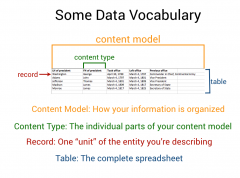
12019-05-26T20:55:43-07:00Parts of your Data2Vocabulary to help you understand the parts of your dataset.media/Screen-Shot-2017-10-23-at-12.38.17-PM.pngplain2019-05-26T20:57:05-07:00