Thanks for your patience during our recent outage at scalar.usc.edu. While Scalar content is loading normally now, saving is still slow, and Scalar's 'additional metadata' features have been disabled, which may interfere with features like timelines and maps that depend on metadata. This also means that saving a page or media item will remove its additional metadata. If this occurs, you can use the 'All versions' link at the bottom of the page to restore the earlier version. We are continuing to troubleshoot, and will provide further updates as needed. Note that this only affects Scalar projects at scalar.usc.edu, and not those hosted elsewhere.
Introduction to Digital HumanitiesMain MenuWhat is Digital Humanities?Module I: A Theoretical IntroductionExploring The Tool BoxModule I: An Experiential IntroductionCreating Digital IdentitiesModule I: A Personal IntroductionConstructing DataModule II: DH MethodsWorking with Big DataModule II: DH MethodsData VisualizationModule II: DH MethodsMappingModule II: DH MethodsDistant ReadingModule II: DH MethodsNetwork AnalysisModule II: DH MethodsPostcolonial and Intersectional Digital HumanitiesModule III: Critical PerspectivesDH ProjectModule IV: Creative ExpressionsAndrea Davise50475e163fb87bc8bd10c6c0244468fd91e8da5Digital Humanities Certificate
Critical Platform Studies
1media/code2.png2019-04-30T19:26:27-07:00Andrea Davise50475e163fb87bc8bd10c6c0244468fd91e8da53086249Module III: Critical Perspectivesplain2019-10-21T06:08:23-07:00Andrea Davise50475e163fb87bc8bd10c6c0244468fd91e8da5Digital platforms such as Google, Facebook, and Twitter mediate our access to information on the web. This week's topic on Critical Platform Studies examines how platforms —and the corporate interests behind them— can shape social behaviors, erase histories, and reinforce oppression.
Watch
Annotation #10
Herder, Janosik. “The Power of Platforms.” Public Seminar. (January 25, 2019). http://www.publicseminar.org/2019/01/the-power-of-platforms/. Hypothesis link.
Tiffert, Glenn D. “Peering down the Memory Hole: Censorship, Digitization, and the Fragility of Our Knowledge Base.” The American Historical Review 124, no. 2 (April 1, 2019): 550–68. Hypothesis link.
Assignment #10
Draw on the assigned readings and videos, and some outside research, to write a critical essay about a digital platform of your choosing. Your essay can be written in the form of a policy proposal, op-ed, interactive blog post, or creative work. When you present your essay to the class, be prepared to discuss your selected platform and form. How did your form help you communicate your ideas about the platform and engage your intended audience?
This page has paths:
1media/nypl.digitalcollections.510d47df-9e13-a3d9-e040-e00a18064a99.001.w.jpgmedia/nypl.digitalcollections.510d47df-9e13-a3d9-e040-e00a18064a99.001.w.jpg2018-07-13T14:35:23-07:00Andrea Davise50475e163fb87bc8bd10c6c0244468fd91e8da5AssignmentsAndrea Davis168Requirements, Prompts, Due Datesimage_header2019-10-25T14:26:03-07:00Andrea Davise50475e163fb87bc8bd10c6c0244468fd91e8da5
This page references:
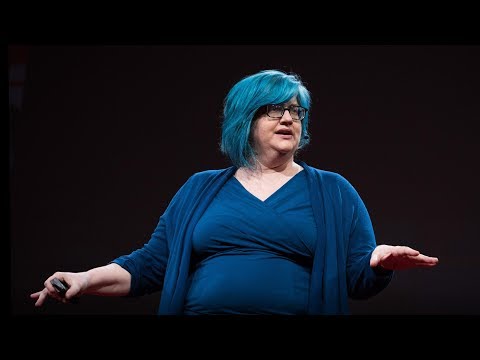
12019-10-21T06:04:07-07:00How biased are our algorithms? | Safiya Umoja Noble | TEDxUIUC1What do our algorithms say about our society? In this talk, social scientist Safiya Umoja Noble investigates the bias revealed in search engine results and argues ...plain2019-10-21T06:04:07-07:00
12019-10-21T06:05:03-07:00The era of blind faith in big data must end | Cathy O'Neil1Algorithms decide who gets a loan, who gets a job interview, who gets insurance and much more -- but they don't automatically make things fair. Mathematician ...plain2019-10-21T06:05:03-07:00