Thanks for your patience during our recent outage at scalar.usc.edu. While Scalar content is loading normally now, saving is still slow, and Scalar's 'additional metadata' features have been disabled, which may interfere with features like timelines and maps that depend on metadata. This also means that saving a page or media item will remove its additional metadata. If this occurs, you can use the 'All versions' link at the bottom of the page to restore the earlier version. We are continuing to troubleshoot, and will provide further updates as needed. Note that this only affects Scalar projects at scalar.usc.edu, and not those hosted elsewhere.
Scalar 2 User's GuideMain MenuGetting StartedExplains account and book creation, and some interface basics.QuickStartsA path of all QuickStart content in this user's guide.Working with MediaHow to get the most out of your use of media in Scalar.Working with ContentCreating and editing content in Scalar.Working with WidgetsWorking with StructureHow to use Scalar's many options for structuring publications.Editorial WorkflowHow to use features for performing editorial review of content.VisualizationsExploring the contents of a book visually.LensesAn introduction to lenses, a tool for searching and visualizing Scalar content.Advanced TopicsDescribing Scalar's more advanced features.Third Party Plugins and Platforms
Additional Page Layout Options
12015-08-07T21:09:46-07:00Curtis Fletcher3225f3b99ebb95ebd811595627293f68f680673e329615Scalar 2.0: What's Newplain2015-08-08T23:46:32-07:00Curtis Fletcher3225f3b99ebb95ebd811595627293f68f680673eIn an effort to create a more stylish user experience, to expand navigation options, and, in general, to build upon current scholarly uses of the platform, we’ve added a number of new layout options.
We’ve also removed layout options that were central to the functionality of Scalar 1.0. In Scalar 1.0 authors had a choice between pages containing text only (the “Single column” layout), various “Media views” ("Text emphasis," "Split emphasis," "Media emphasis," and "Media per paragraph"), layouts that incorporated visualizations and history and metadata layouts. While visualization layouts remain, "media views” have been eliminated. In their place we now offer the “Basic layout,” and within it, give authors more granular options for adding media to a page (see the prior section, Focus on Media).
Some of the new layout options include:
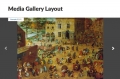
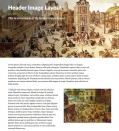
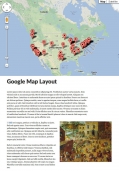
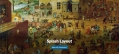
Image Header In the Image Header view, the page's "key" image is shown as a header, with the title and description of the page overlaid. The rest of the page follows the Basic layout, with text and media interspersed. Splash In the Splash view, the page's "key" image is shown full screen, with the page's title at the bottom. If the page is part of a path or is itself a path, a navigation button is shown as well. Media Gallery In the Media Gallery view, media contained or tagged by the page are embedded at full width into a vertically scrolling gallery. Structured Media Gallery In the Structured Media Gallery view, media contained, tagged, orlinked up to two levels deep are grouped into titled galleries of thumbnails which reveal the media in a larger view when clicked. Google Map The Google Map view plots the current page plus any content it contains or tags on a Google Map embedded at the top of the page. Every piece of content to be plotted must include dcterms:spatial metadata (added using the 'Metadata' section below) in the format decimal latitude,decimal longitude. Each pin shown on the map will reveal the title, description, and link for its content when clicked. The rest of the page follows the Basic layout, with text and media interspersed.