Thanks for your patience during our recent outage at scalar.usc.edu. While Scalar content is loading normally now, saving is still slow, and Scalar's 'additional metadata' features have been disabled, which may interfere with features like timelines and maps that depend on metadata. This also means that saving a page or media item will remove its additional metadata. If this occurs, you can use the 'All versions' link at the bottom of the page to restore the earlier version. We are continuing to troubleshoot, and will provide further updates as needed. Note that this only affects Scalar projects at scalar.usc.edu, and not those hosted elsewhere.
Feeding a CrowdMain MenuWelcome to our exploration of youth and elders civil rights work in the food movementThis page is our starting place for figuring out how to share food in the formal settings of a course or community event2018 Draft Recipes PageHere is where we're collecting draft recipes for ESTD 3330 spring 2018ReadingsCalendar of spring 2017 readings beyond The Color of Food:Comfort & Action FoodsWays we think about stress or grief eating, contrasted with action-supportive eatingCalendar home pageVideo Highlights from the Art of Food in Frogtown and Rondo collectionAs presented at Hamline in March 2017Hewitt Avenue HU Garden ProjectOur raised bed school garden at Hamline U CampusNeighbor Plants ProjectRecipes and foraging tips for edible weedsContributor BiographiesFood and Society Workshop0826c60623ca5f5c8c1eb72fc2e97084d0c44cf8
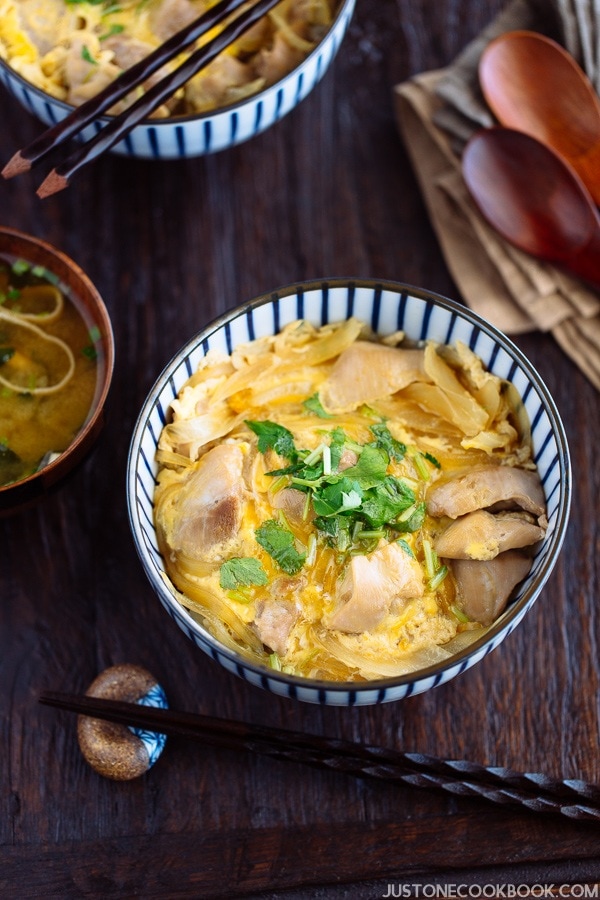
Oyakodon
12018-04-02T23:32:40-07:00Kate Carithers30b3d02a6294f9ae33044adf22d43b0bc62f63c5153466plain2018-05-11T16:36:46-07:00Kate Carithers30b3d02a6294f9ae33044adf22d43b0bc62f63c5This is a dish that I ate while growing up and learned how to make from my mother, who immigrated from Japan. Oyakodon is a common dish in Japan, using staple foods and flavors to make something simple and delicious. It translates literally to "Parent-Child Bowl", representing the use of chicken and egg as the main ingredients. I've always found this name entertaining- but it's also something I've come to associate with living with a single mother, a parent and her child alone in America. Similarly, I've also joked that to make it without the chicken is the "college student bowl", the child without the parent, as I, the college student without my parent, can't afford to buy chicken all the time. Recipe: Ingredients: 1/2 pack of chicken thighs 2 eggs 1 yellow onion Soy sauce Mirin Sugar Dashi powder 3 cups cooked white rice (or however much rice you want to eat)
Instructions: 1. Slice onion thinly and saute in a pan over medium-high heat until approaching soft. 2. Cut chicken into smaller pieces (according to preference) and place into the pan. Saute until cooked thoroughly. 3. Make dashi sauce by mixing soy sauce, mirin, sugar, dashi powder, and a little bit of water. I've always been told to mix these according to preference (rather, my mother refuses to tell me how she makes it, mostly because I don't think even she knows, and made me do my own trial and error), but as a rule of thumb the soy sauce and mirin are a 1:1 ratio, while the sugar and dashi powder are sprinkled in (again according to preference). Add in water to control the strength of the taste. You'll want about half a cup of dashi sauce (enough to coat the onions and chicken). 4. Beat the eggs and pour over everything. Lower the heat and cook until the egg is lightly cooked (I think softer/runnier egg is best, but cooked is often safer in the States- something we lament often). 5. Serve over rice and enjoy! Add some chopped green onions for a little color.
This page has paths:
12018-05-15T22:40:45-07:00Kate Carithers30b3d02a6294f9ae33044adf22d43b0bc62f63c5Campus Collection: Comfort and CultureKate Carithers1plain2018-05-15T22:40:45-07:00Kate Carithers30b3d02a6294f9ae33044adf22d43b0bc62f63c5
12018-03-09T20:14:52-08:00Kate Carithers30b3d02a6294f9ae33044adf22d43b0bc62f63c5Culture and ComfortKate Carithers9plain2018-05-11T03:01:59-07:00Kate Carithers30b3d02a6294f9ae33044adf22d43b0bc62f63c5