Scalar's 'additional metadata' features have been disabled on this install. Learn more.
Exploding Tongues: Language, Art, and the Russian Avant-gardeMain MenuBack to Futurism: Russian Artist BooksIntroductory Page by Chris GilmanBookENDS: A Working Theory of Textuality as Cultural Dominant, 1912-An Introduction and Conclusion to a Semester's Investigation into the Book Arts as an Avant-garde PracticeBook Case StudiesCollaborative Research by Case StudiesBig Bang: Timeline of Russian Avant-Garde Book Arts and Their Cultural ImpactsA Timeline of Russian Avant-Garde Book Arts and Their Cultural ImpactsCoaRse CaLIBrationARTS 227 "Introduction to Letterpress Printing" (Pedersen) and CSLC134/RUSN334 "Exploding Tongues" (Gilman)NthOlogyA limited edition collaborative book arts project by students of ARTS 227 (Pedersen) and CSLC 134/RUSN 334 (Gilman), Spring, '17MANIFESTERS (AB & Kelly): A portfolio of process and productsAppendix: A Path Through Russian Avant-Garde BooksChristopher Gilman1985b99a2acd541caa12a10c3ebf6896565283abDexter Blackwell92e005ca94195f836c6089cf147faff4c74fa79eZoe Foster-La Duc1c8954189fb3ee4ab6e36bfb90fae86777eab97Stephen Heim7069d17c035042745c96bc6c7619096cd7b33da4Kelly Kirklande1805e502570d093d70f00df18f145c99290d0a3Ian Lehineb028c384a69e4b92166e7791b002fa3f2cee5818Timothy Lewis13880d3d99b4b71ce85be63e69a6d44e38853d68Jmedina29ac3fc10003fb639ac412984b59b01a5b826e161Taylor Robinsonaa08dd3939f1f1c6162c5518ae531385e51659afEvan Sarafian042e10782d9a6d3f0001a4b35abb02f58ad84684Craig Dietrich2d66800a3e5a1eaee3a9ca2f91f391c8a6893490ILiADS (Institute for Liberal Arts Digital Scholarship)
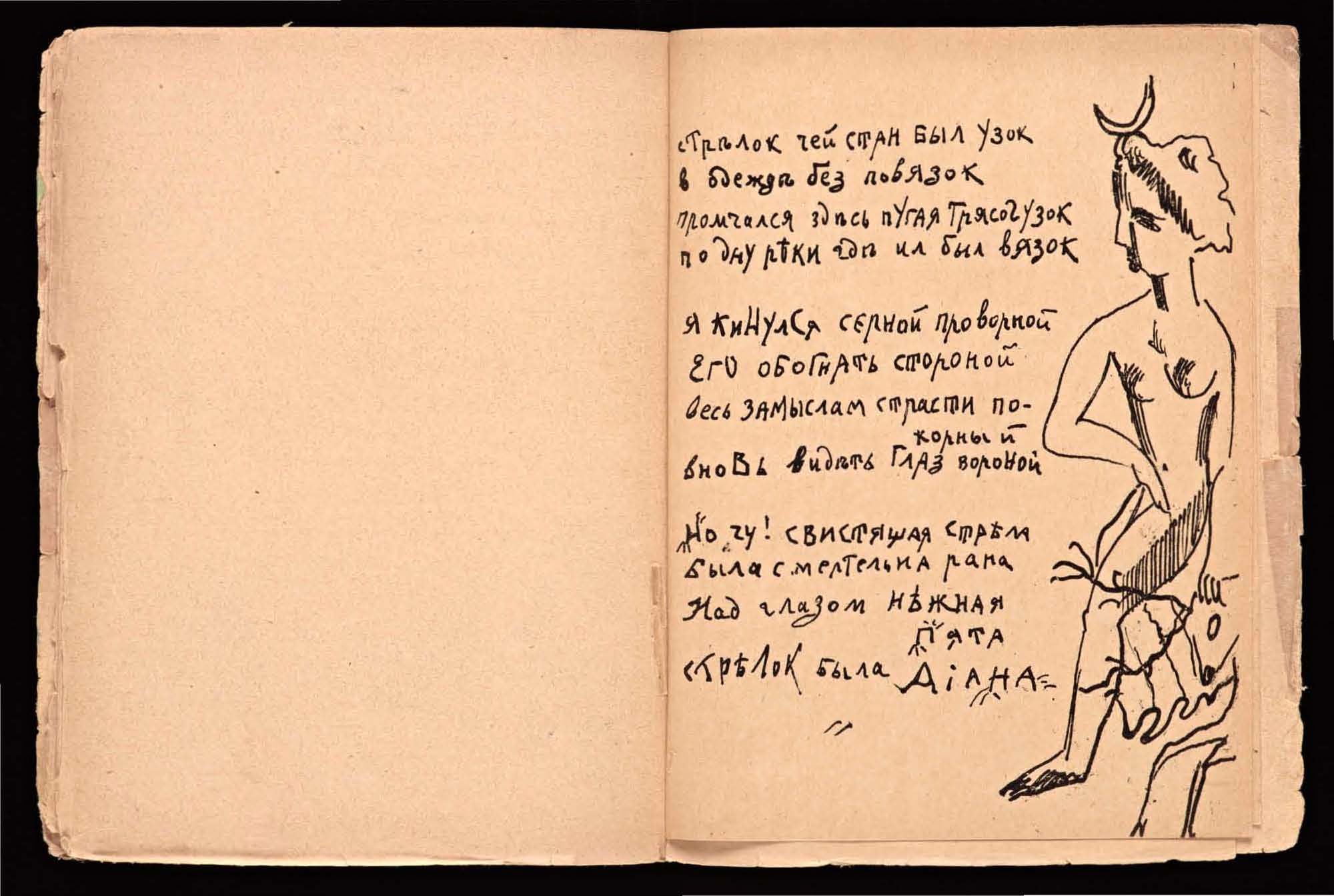
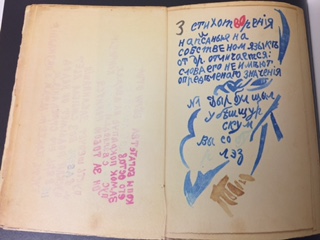
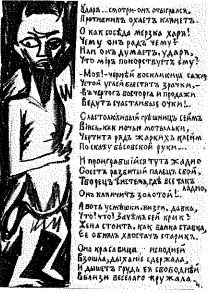
Mirskontsa - Diana (page 36)
12017-02-27T13:08:12-08:00Timothy Lewis13880d3d99b4b71ce85be63e69a6d44e38853d681204131912 - Poets: Khelibnikov and Kruchenykh ; Painters: Goncharova and Larionovplain2017-03-27T14:58:52-07:00Timothy Lewis13880d3d99b4b71ce85be63e69a6d44e38853d68
12016-10-19T12:15:50-07:00Christopher Gilman1985b99a2acd541caa12a10c3ebf6896565283abKruchenykh, A, and Khlebnikov, V. MirsKONtsa (WorldBACKwards), 1912Christopher Gilman8PDF from Getty Digital Collectionsplain2017-04-29T17:06:41-07:00Christopher Gilman1985b99a2acd541caa12a10c3ebf6896565283ab
12017-04-29T17:11:34-07:00Christopher Gilman1985b99a2acd541caa12a10c3ebf6896565283abKruchenykh, A, and Khlebnikov, V. MirsKONtsa (WorldBACKwards), 1912Christopher Gilman2Gallery Pagestructured_gallery2017-04-29T17:13:21-07:00Christopher Gilman1985b99a2acd541caa12a10c3ebf6896565283ab
This page is referenced by:
12017-02-23T11:33:24-08:00The 'Deliberate Woman/Nude' in MirsKONtsa (1912) and Pomada (1913)33Utopians Prospectus - Lewisplain2017-05-02T05:38:25-07:00In their groundbreaking 1912 text, MirsKONtsa [WorldBACKwards], poets Aleksei Kruchenykh and Velimir Khlebnikov collaborated with painters Natalia Goncharova and Mikhail Larionov to produce a text towards the heart of linguistic 'meaning' through opening-up new possibilities within a literary-artistic item. These texts were unique for several reasons; primarily, though, their handmade quality and collaborative stylistic produced an entirely alternative model for the representation of language.
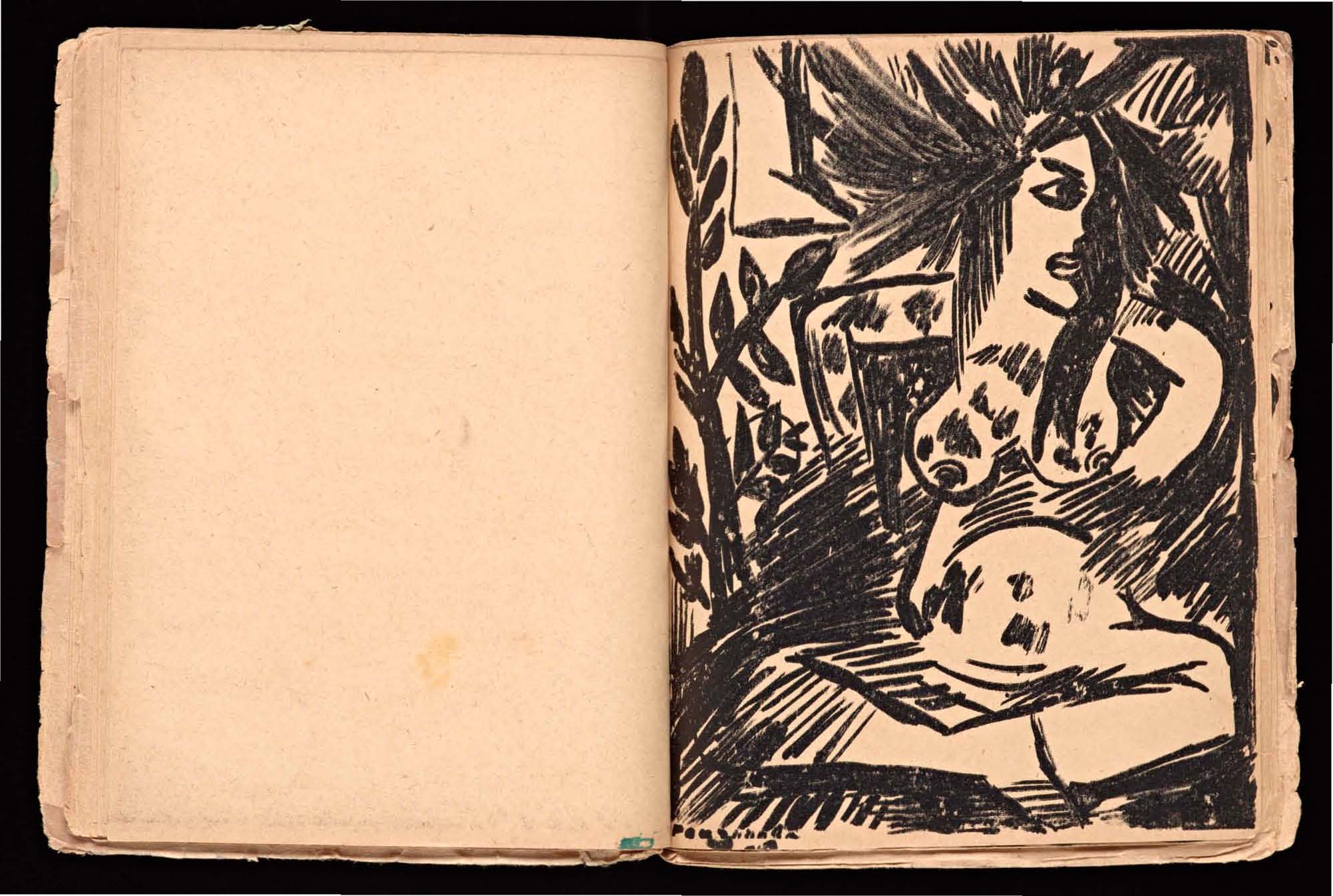
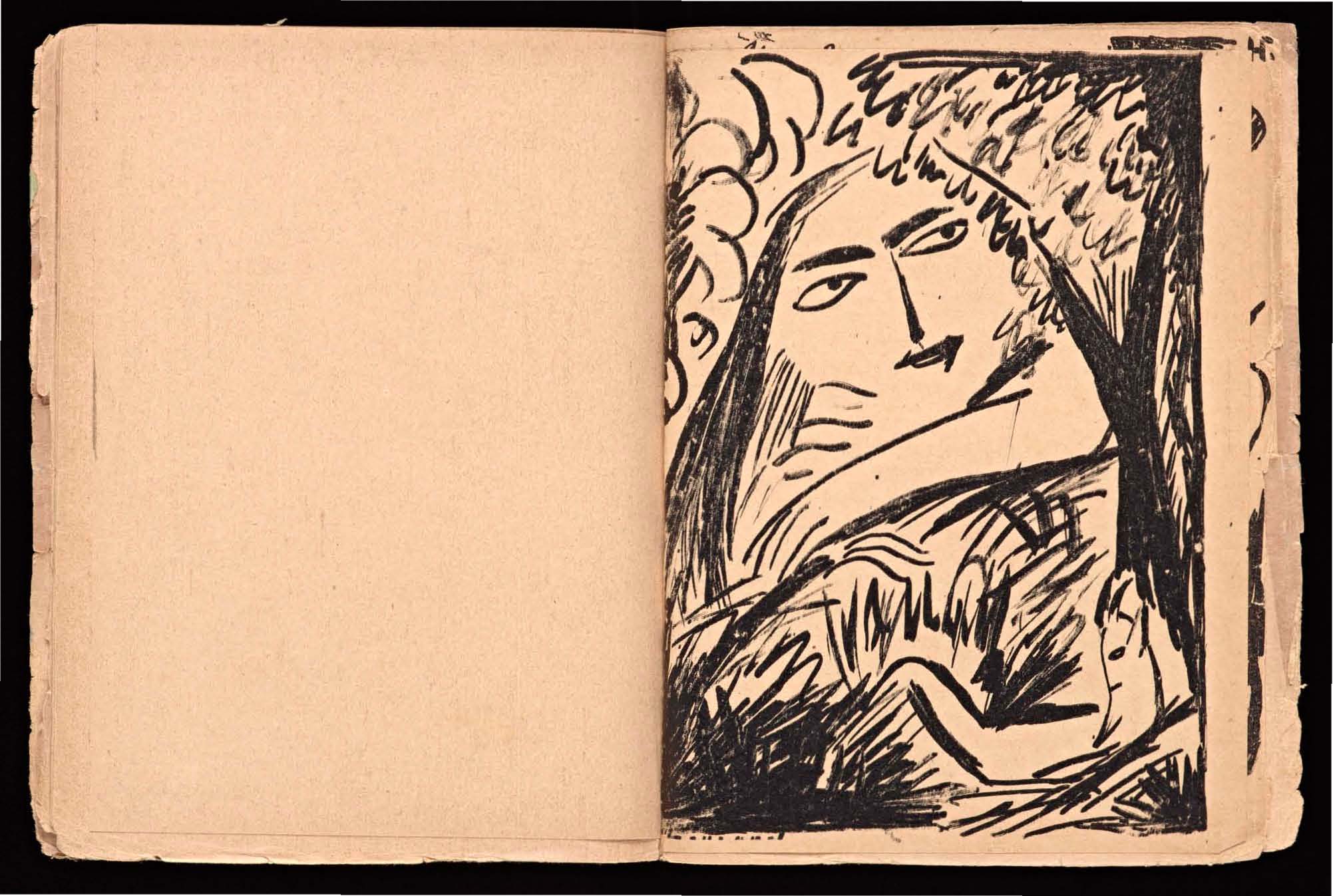
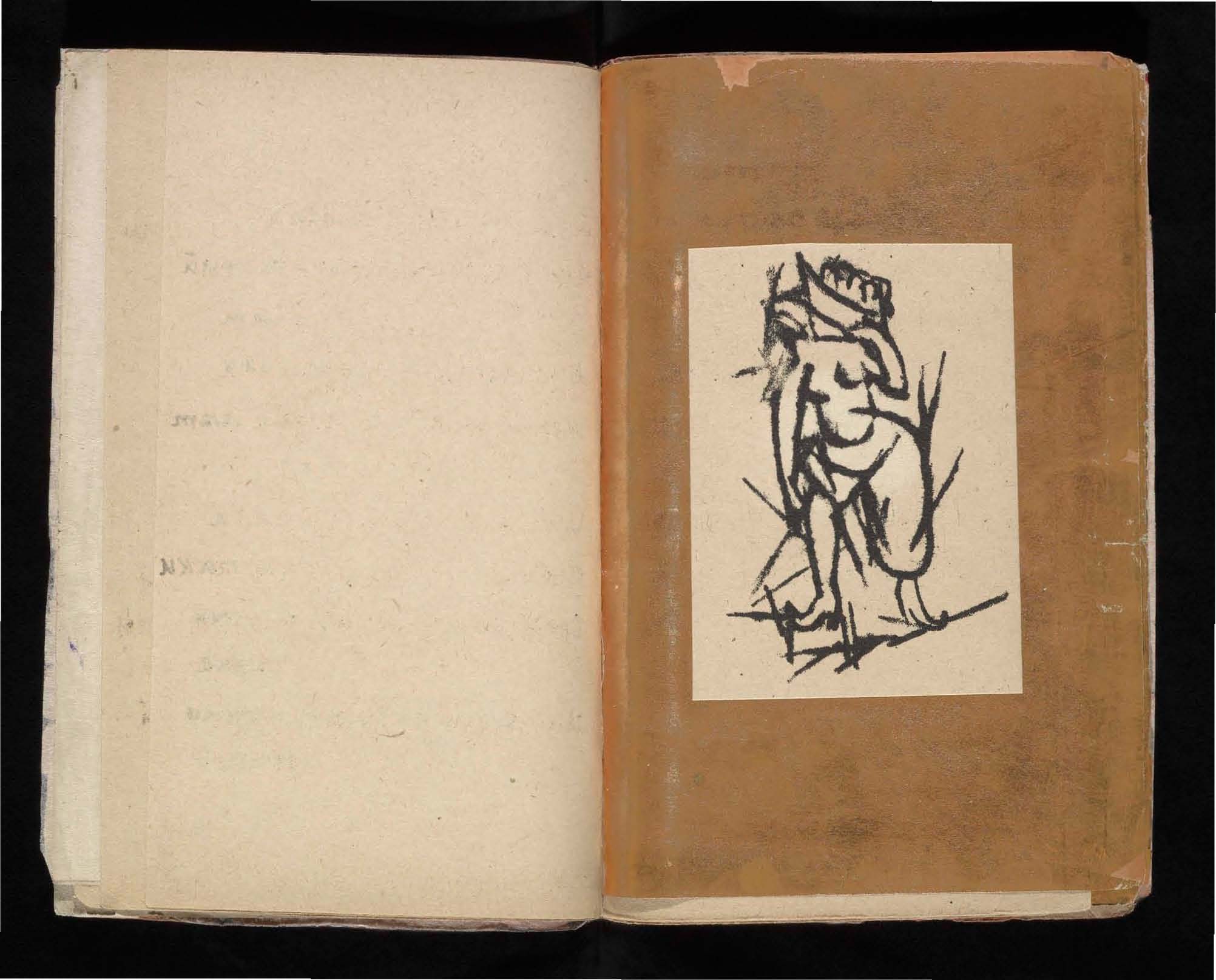
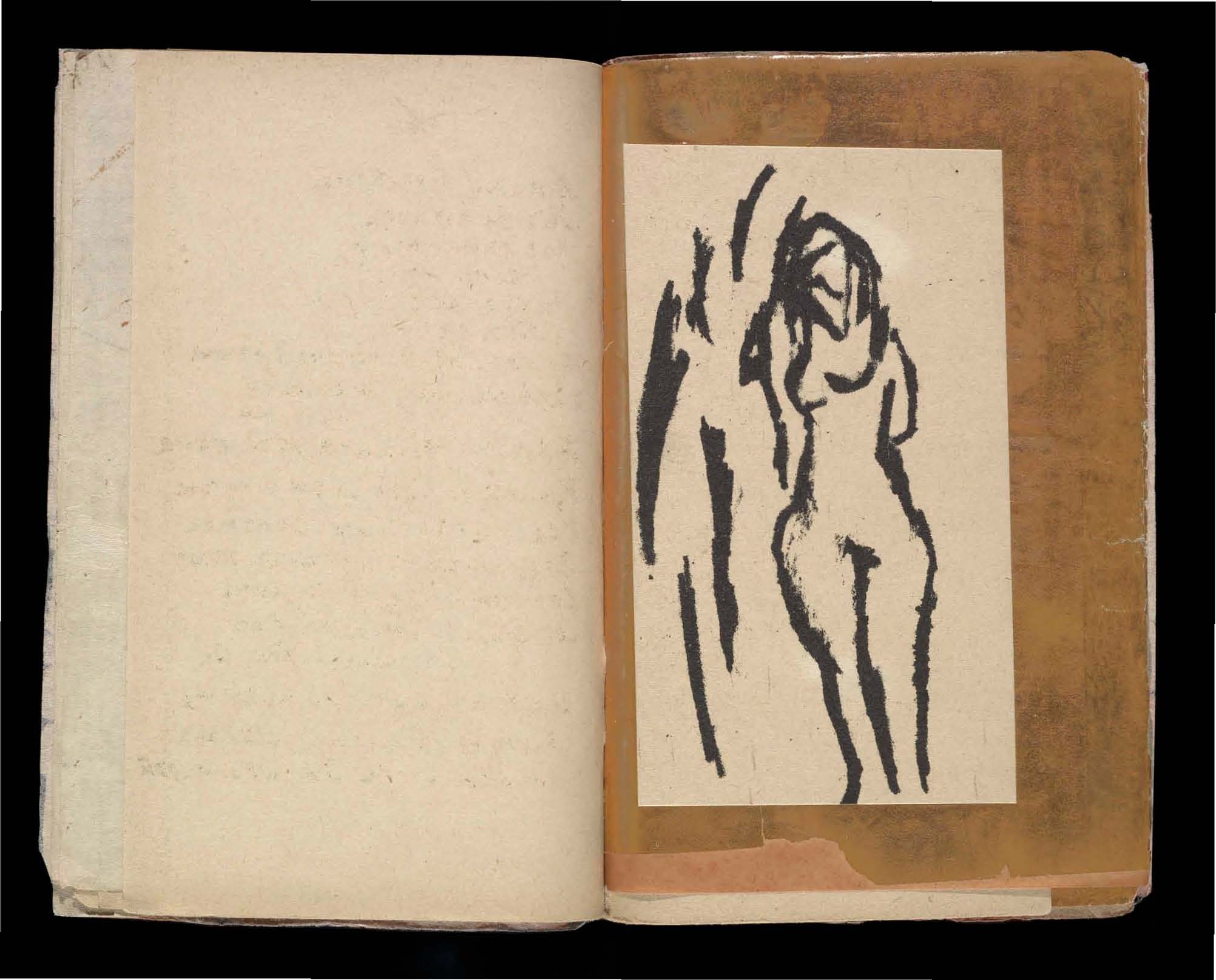
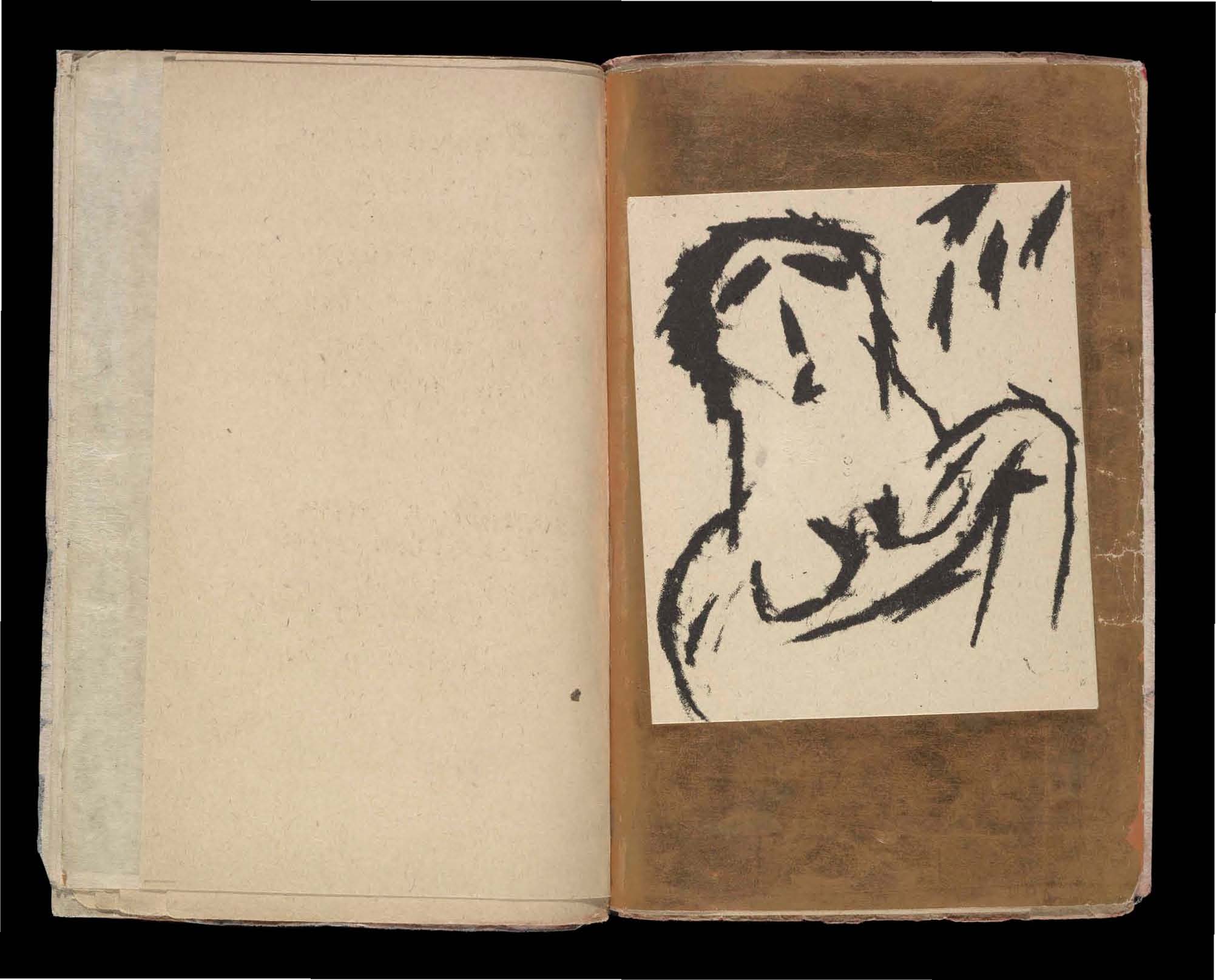
MirsKONtsa is noted for its odd drawings, multiple and diverse copies, and its use of zaum [transrational] poetry. However, MirsKONtsa, is also marked by a prevalence of oftentimes-nude female forms. Perhaps in keeping with the Neo-Primitivist tradition (Perloff 2) that existed within Russian Futurism, MirsKONsa is littered with images of the nakedwoman. The figures in MirsKONtsa are notable in three thematics: Firstly, the female figures across the images do not look directly out at the reader-- their glances are slanted or attending some other image; Secondly, there is a repeated presentation of the 'woman' with the 'natural' and the 'woman' and the 'supernatural/angelic'; and Thirdly, there are no figures with openly observable genitals, the only deliberate nudity is in the presentation of bare breasts.
What is interesting is the occasion for what I will call the 'deliberate nude/woman' in MirsKONtsa. This 'deliberate nude/woman' is noted as such because the existence of such a figure in a work that seeks to come to the limit/rule of sound-images necessarily must fit in the system. Initial insights about a 'worldbackwards' represented through a tetrad of artists center on the linkage between a naive eroticism--one that barely even attempts to call the reader into seduction, let alone sexual fervor--and sound. Following this linkage, the consideration of the sound of the sensual-- especially as it relates to the natural and the supernatural-- becomes ground for analysis. Further questions on these images lead into the deeper intentions of the artists. One of the first obvious questions is simply, who painted these women-figures? Was it Natalia Goncharova or her late-in-life husband Mikhail Larionov? Was the Dryad painted in collaboration with the poetic text, or does the figure exist in complete distinctness from language?
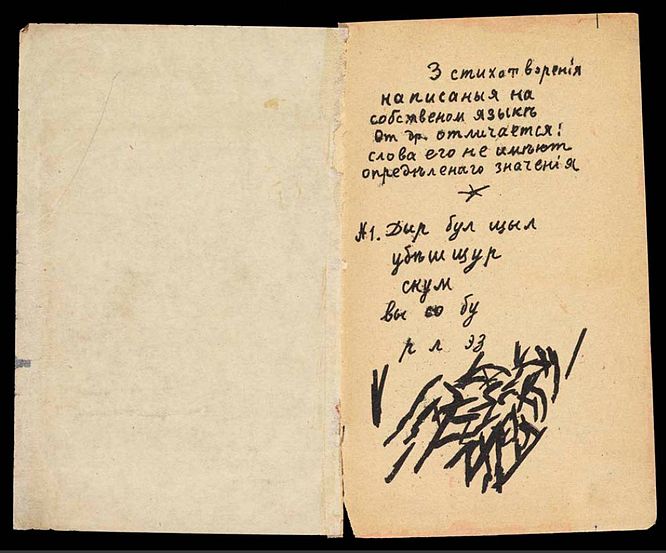
MirsKONtsa is not the only book of zaum poetry to feature nude women. In Kruchenykh and Larionov's 1913 Pomada [Pomade], the nude woman is again a unique figured occasion in the text. However, the women of Pomada are not as deliberately visible as they are in MirsKONtsa. In the famous poem-painting 'dyr bul shchyl,' there is a nude woman hidden in what simply appears to be scratch marks and scribblings on the page. This nude is the only figure in either MirsKONtsa and Pomada to seemingly expose their genitals. It is notable that in alternative versions of 'dyr bul shchyl,' Kruchenykh's soon-to-be wife Olga Rozanova altered the image of the nude woman to produce an image seemingly more in line with female representations in MirsKONtsa. Later on in the Pomada and in contrast to the "urban prostitutes" (Perloff 75) 'dyr bul shchyl,' a peasant woman with her breasts exposed carries a basket or some other burden. As Pomada lengthens the image of the woman-as-figure becomes more oblique and it begins to discern the sex of the figure at all. In the final image of what appears to be a woman figure, the defining motif of these female nude becomes itself obscured. Is this figure-in-horror exposing their breasts, or do they raise their arm to their chest in quiet exclamation?
Citations:
Perloff, N. (2016). Explodity: Sound, Image, and Word in Russian Futurist Book Art. Los Angeles, CA: The Getty Research Institute, Los Angeles. 2, 74-75.
12017-04-30T20:40:03-07:00Sound-Image Shape: Nudes, Demons, and Zaum Poetry12Tim Lewis - Final Course Scalar Projectplain2017-05-12T15:29:00-07:00Mirskontsa is noted for its arresting drawings, multiple and diverse copies, and its use of zaum "transrational" poetry. However, Mirskontsa, is also marked by a prevalence of oftentimes-nude female forms. In direct accordance with the Neo-Primitivist tradition that existed within Russian Futurism, Mirskontsa is littered with images of naked women. The figures in Mirskontsa are notable in three thematics: Firstly, the female figures across the images do not look directly out at the reader-- their glances are slanted or attending some other image; Secondly, there is a repeated presentation of the 'woman' with the 'natural' and the 'woman' and the 'supernatural/angelic'; and Thirdly, there are no figures with openly observable genitals, the only deliberate nudity is in the presentation of bare breasts.
I will call this eccentric occasion the signification of the 'deliberate nude/woman.' This 'deliberate nude/woman' in Mirskontsa is noted as such because the existence of such a figure in a work that seeks to come to the limit/rule of sound-images necessarily must fit in the system. Initial insights about a 'worldbackwards' represented through a tetrad of artists center on the linkage between a naive eroticism--one that barely even attempts to call the reader into seduction, let alone sexual fervor--and sound. Following this linkage, the consideration of the sound of the sensual-- especially as it relates to the natural and the supernatural-- becomes ground for analysis. Notably, Natalia Goncharova (who late in life would marry the Rayonist Mikhail Larionov) was the artist for each of these images. Further, the drawing of the goddess Diana is painted in collaboration with the poetic text, so that the figure does not exist in complete distinctness from language. The presence of spirits as seen in Mirskontsa and demons in other handmade texts deeply underscores the seriousness involved in the meaning-making endeavor of handmade books in the collective consciousness of the Russian Avant Garde--suggesting an uncharacteristic turn towards infinitude within a movement that appears to greatly privilege the finite. As a result, it is easier to understand the importance of handmade books as artifacts for the transformative reproduction of poetry/power.
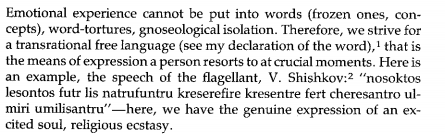
These incidents of form (signified) meeting sound (poetry) recall a poetic style that was being developed simultaneously to the production of these texts: zaum poetry. Zaum, epitomized by Aleksei Kruchenykh, constitutes poetry at the margins. Written in defiance of any rationality, this poetry focused heavily on the "beyonsense" play of syllabic meaning-making. Zaum can be understood to function as the nudity of language-- an erotic system of sounding preterdetermined to communicate Nothing and Universality as fused and bound. This is notable in later representations of the feminine-as-nude, as most visible in the paintings of Kazimir Malevich in the late 1920's.
Upon examining the manifestos of those painters, poets, and writers from the time--specifically, Kruchenykh--a greater understanding of the almost sovereign female figure emerges. Kruchenykh's manifesto for Explodity, particularly expresses a need for a form of communication that exists both past and amongst traditional linguistic topographies. Echoing Nietzsche without deliberate reference, Kruchenykh suggests language-ing in a space past the death of the Old God, but still in its corpse. Otherwise said, in affect there is the the specter of Nietzsche's famous question: 'Supposing truth was a woman, what then?'
Regardless of the philosophical ends, explanations for the dominance of female figures in Mirskontsa might perhaps be well served with a more nuanced articulation of Neo-Primitivism in order to extrapolate these figures' sovereignty across handmade texts in the Russian Avant Garde.