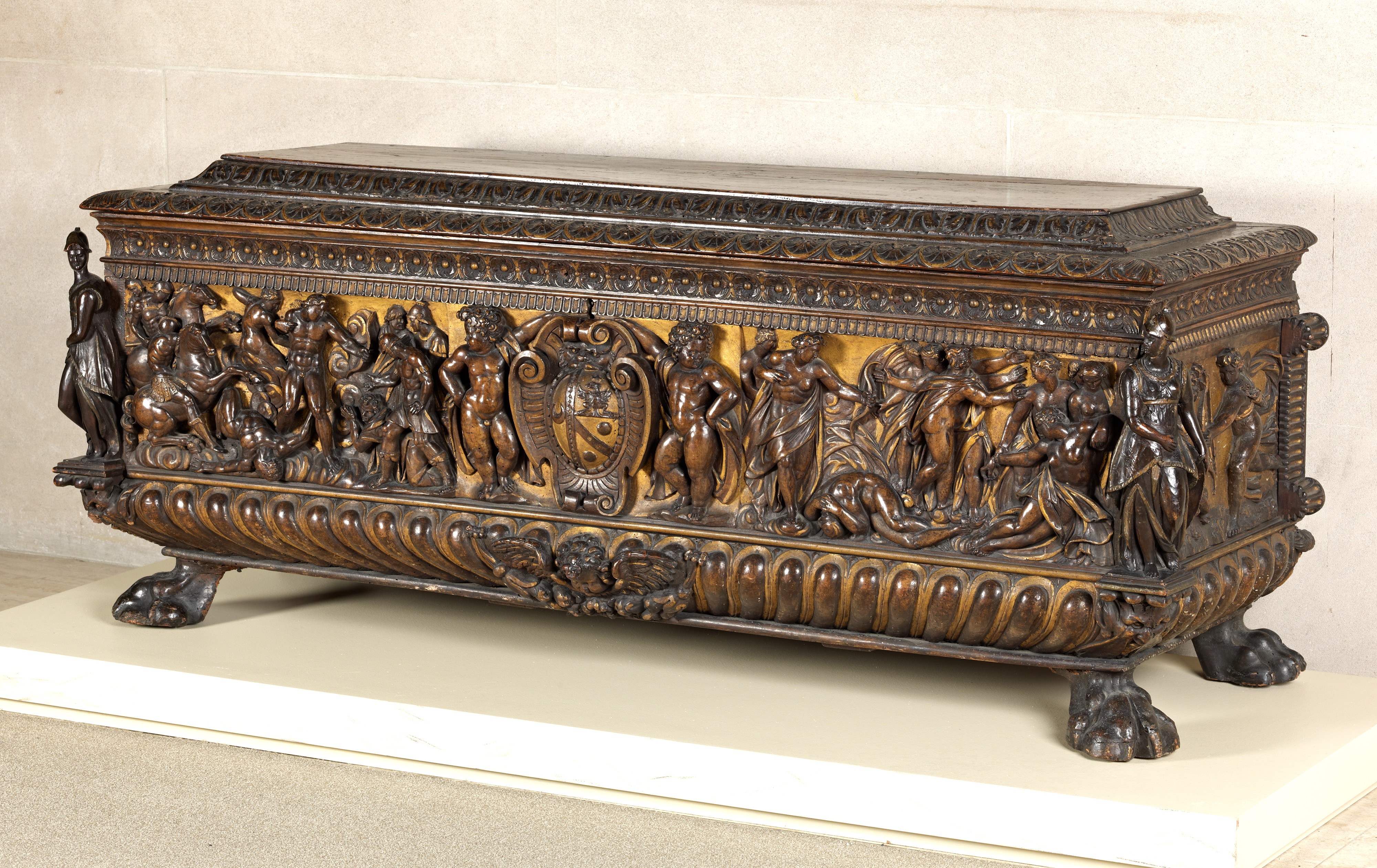
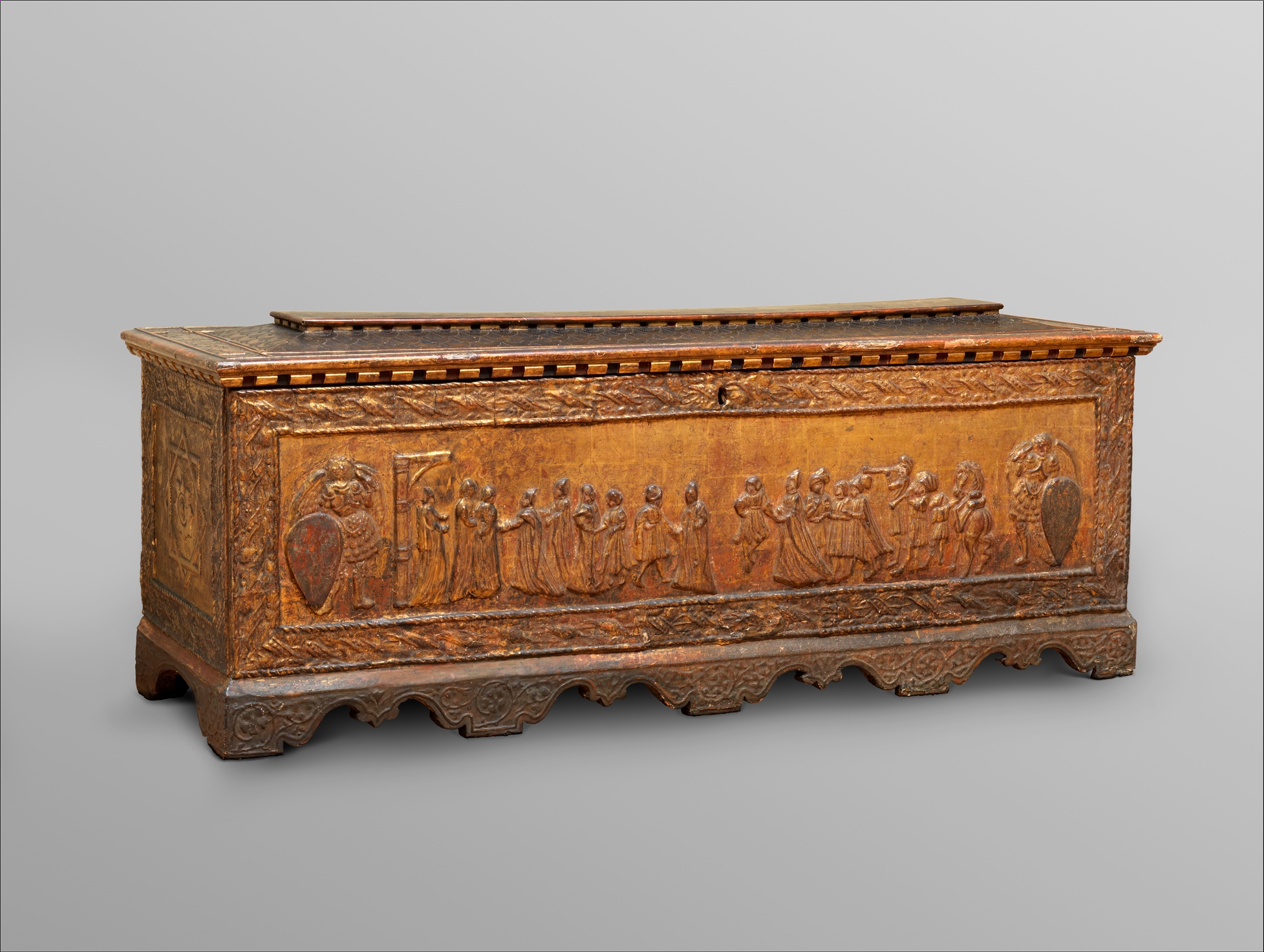
Gilded Cassone
1 2016-04-14T13:41:56-07:00 Haley Bowse dd64944ebfec6d3bfe1af110a6ff29c1b8efbc98 8532 1 This entirely gilded cassone, belonging to the Metropolitan Museum of Art, is an example of one of the more lavishly decorated chests from the time, indicating its owners had significant wealth. plain 2016-04-14T13:41:57-07:00 Haley Bowse dd64944ebfec6d3bfe1af110a6ff29c1b8efbc98This page is referenced by:
-
1
2016-04-07T13:13:52-07:00
The Public Role of Cassoni
13
plain
2016-04-22T13:11:35-07:00
In Renaissance Italy, marriage was more than a simple tie between individuals; it was a financial and political merger between families. Affluent Italians used strategically planned marriages as political tools to increase their social influence. Over the course of several years, the social elite arranged marriages for their children, and these bonds were celebrated with extravagant weddings. The wedding procession, in which the bride was paraded through town from her father’s house to her husband’s home, announced the marriage to the community and was intended to garner support. This event symbolized the transition from the bride’s former life with her family to her new one with her husband.
Italian wedding chests, called cassoni, played an integral role in the wedding procession. Prior to the wedding, the groom ordered a pair of cassoni, which would be elaborately decorated with paintings and carvings according to the family’s wealth. As the wedding participants carried the cassoni alongside the bride, the intricacy of their decoration flaunted the merging families’ social and economic statuses. The chests also carried part of the bride’s dowry, which consisted of her family’s valuable possessions, thus further advertising the family’s wealth. The scenes painted on the sides of cassoni reflected their owners’ values. For example, a cassone from the Mount Holyoke College Art Museum portrays a story about Lucretia, a woman who exemplified the virtues of honor and marital chastity. Cassoni were thus important forms of communication between families and their communities during the wedding march.