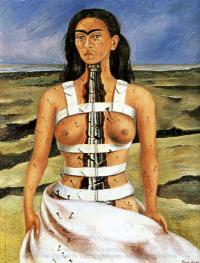
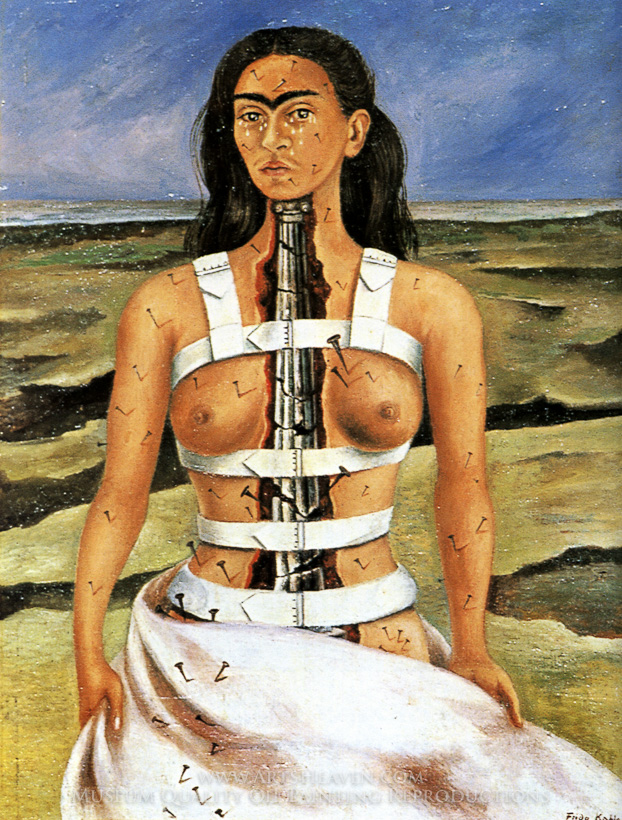
1media/2ad4b2c438ce05176266b4a4e3545768.jpgmedia/TheBrokenColumn1944.JPG2016-09-15T03:46:49-07:00Angelia Mullered5cb113d48ec91158427c2bf225a8cba4decfe0113164image_header2016-12-04T17:41:53-08:00Angelia Mullered5cb113d48ec91158427c2bf225a8cba4decfe0Painted in 1944, The Broken Column could be one of the most affective pieces depicting pain and trauma. During this period, Kahlo had to wear a steel corset because of her constant back pain. In the painting, the corset seems to be the only thing holding her together and upright since the broken column – in place of her damaged spine – is fractured and broken in several places. The background portrays a vast land which symbolises loneliness and the nails embedded in her skin, on her face and body increase the affective appeal of pain.
12016-09-15T05:03:02-07:00Angelia Mullered5cb113d48ec91158427c2bf225a8cba4decfe0The Broken ColumnAngelia Muller1Frida Kahlo, The Broken Column, 1944.
Oil on Masonite, 39.8 x 30.6 cm.
Museo Dolores Olmedo,Xochimilco, Mexico City, Mexico.plain2016-09-15T05:03:02-07:00Angelia Mullered5cb113d48ec91158427c2bf225a8cba4decfe0