Thanks for your patience during our recent outage at scalar.usc.edu. While Scalar content is loading normally now, saving is still slow, and Scalar's 'additional metadata' features have been disabled, which may interfere with features like timelines and maps that depend on metadata. This also means that saving a page or media item will remove its additional metadata. If this occurs, you can use the 'All versions' link at the bottom of the page to restore the earlier version. We are continuing to troubleshoot, and will provide further updates as needed. Note that this only affects Scalar projects at scalar.usc.edu, and not those hosted elsewhere.
The Story of the Stuff: Issues in Temporary Memorial Preservation Main MenuWhat Are Temporary Memorials?A DefinitionThe Problem of Temporary MemorialsEssential Questions to BeginCase StudiesCase Studies IntroductionTexas A&M & the Bonfire Memorabilia CollectionCase StudyVirginia Tech & the April 16th Condolence ArchiveCase StudySandy Hook Elementary & the Story of the StuffCase StudyFurther StudyQuestions & Recommended ReadingsAshley Maynor5adce0171052a8cc24f02b7c0a0c96951154dfb5Self-Reliant Film
The Artist
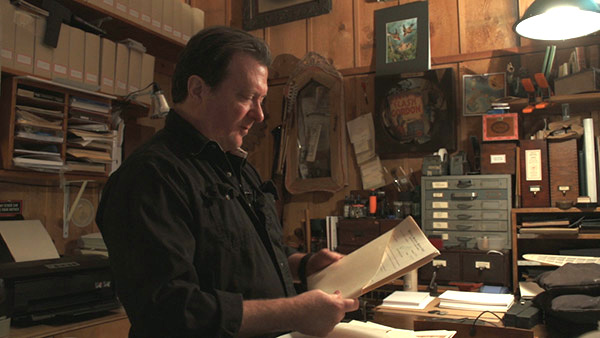
12015-09-16T17:17:22-07:00Charlene Kirkpatrickaaff0b465fe57dd3461d61c03aca4d2b6297884460701Ross MacDonaldtext2015-09-16T17:17:22-07:00Ashley Maynor5adce0171052a8cc24f02b7c0a0c96951154dfb5 Ross MacDonald, professional illustrator and propmaker, worked to preserve the letters that were pouring into Newtown. He began taking pictures with his cellphone and posting them onto the blog "Letters to Newtown." The fear was a possible plan for the letters to be burn into "sacred soil"--an ash to be incorporated into a permanent memorial at a later date.
He reached out to the New York Times and Mother Jones magazine and as a result, both news outlets covered the story. Mother Jones also created an activist video as well as sponsored his Tumblr blog in effort to save the letters.
"I mean, digital archives are something that I use every week in my work for researching period props. And if it weren't for somebody recording and archiving and scanning letters, forms, really, really mundane stuff, I wouldn't be able to do what I do.
I just feel like now is probably not the time to make that decision about what to do with this stuff. If we decide in a year, if the town says, 'Yeah. We're done with it. Let's get rid of it,' then fine. But to do it now, when emotions are still very raw is a mistake.
A lot of people have said, 'Well, you know, there's newspaper accounts. There's media accounts. Everybody knows what happened here. '
But if you do any historic research, you know that what what you find out in the newspapers is only a tiny part of the story. If you want to research something that happened 40, 50, 100 years ago, you get a much broader picture looking at all the other documentation."
This page has paths:
12015-09-16T17:17:22-07:00Charlene Kirkpatrickaaff0b465fe57dd3461d61c03aca4d2b62978844Sandy Hook Elementary & the Story of the StuffAshley Maynor1Case Studyplain1621112015-09-16T17:17:22-07:00Ashley Maynor5adce0171052a8cc24f02b7c0a0c96951154dfb5
This page references:
12015-09-16T17:17:22-07:00Letters to Newtown1Since the massacre at Sandy Hook Elementary School, more than a half million cards, letters, and drawings have been sent to the people of Newtown, ...plain2015-09-16T17:17:22-07:00
12015-09-16T17:17:22-07:00Ross MacDonald1Film still of Ross MacDonald in his art studio in Newtown.plain2015-09-16T17:17:22-07:00