Monocot
1 2022-05-29T20:43:39-07:00 Brian Estarella-Murphy 831eaad1e3a4865984bec7368e88a589ef996e0a 40688 4 #Mankai plain 2022-05-31T15:39:25-07:00 Michael J. Farabee 6 June, 2007 Christopher Gilman 1985b99a2acd541caa12a10c3ebf6896565283abThis page has annotations:
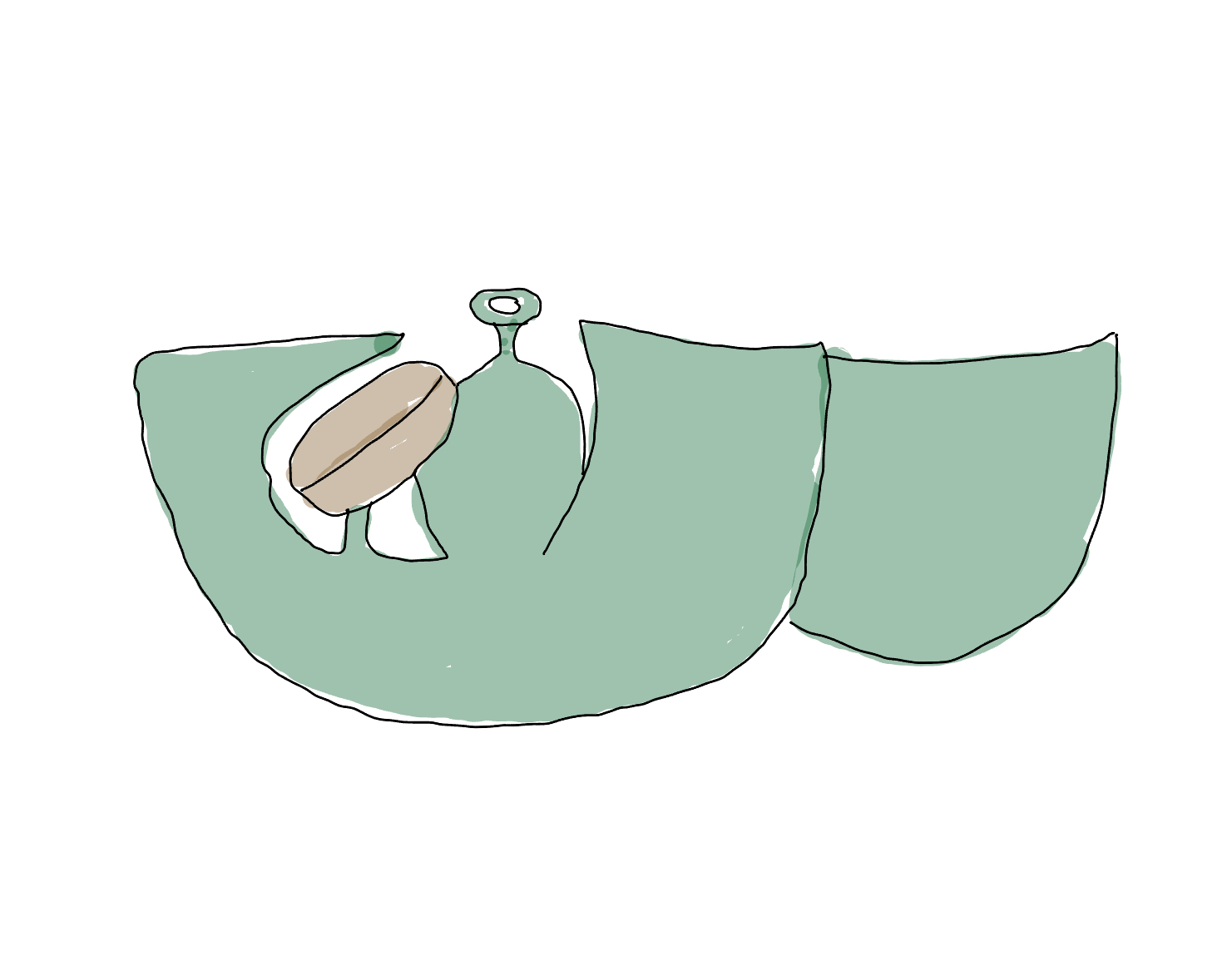
- 1 2022-05-29T21:03:36-07:00 Brian Estarella-Murphy 831eaad1e3a4865984bec7368e88a589ef996e0a Singular Cotyledon Brian Estarella-Murphy 1 plain 2022-05-29T21:03:36-07:00 Brian Estarella-Murphy 831eaad1e3a4865984bec7368e88a589ef996e0a
This page has tags:
- 1 2022-05-11T11:25:35-07:00 Akshay Chellappa 76da17495df94c6c8bc0710f8fd207dfb8b5b6e1 Wolffia Globosa: The Super Small Superfood Brian Estarella-Murphy 95 Wolffia globosa, which is commonly known as mankai, Asian watermeal, and duckweed, is a species of flowering plant that is currently considered to be the smallest known flowering plant! Wolffia globosa is a genus from the lemnaceae family native to Asia as well as pacific coasting countries. Wolffia grows in groups on the surface of lakes and large bodies of calm water, ponds, and even marshes together with other aquatic plants and life. Due to its rapid growth rate and the relative ease at which it grows on calm bodies of water, Wolffia globosa was traditionally only harvested, and not cultivated by indigenous peoples. Wolffia was initially discovered by William Roxburg, a Scottish botanist and surgeon practicing in parts of India in the late 1780s to early 1800s, in 1832. In 1984, Wayne P. Armstrong, nicknamed “Mr. Wolffia”, became the first individual to discover Wolffia Globosa in California while he was studying duckweeds from a lake nearby his lab near the San Dieguito river (Armstrong, 2021). Wolffia globosa is an extremely versatile plant. Initially, it was used by indigenous peoples as a protein packed vegetable, and it is still being used in traditional Thai cuisine. Due to the extremely fast growth rate of Wolffia globosa, indigenous peoples were also able to repurpose mankai, using it as feed for their livestock. Currently, Wolffia globosa has found itself at the center of superfood trends due to its phenomenal nutritional benefits. Outside of the culinary world, Wolffia globosa can be found at the center of research regarding new biofuels and potential bioremediation strategies to combat pollution. By Akshay Chellappa, Brian Estarella-Murphy, #Mankai plain 2022-05-29T21:27:03-07:00 Brian Estarella-Murphy 831eaad1e3a4865984bec7368e88a589ef996e0a
This page is referenced by:
-
1
2022-05-11T11:25:35-07:00
Wolffia Globosa: The Super Small Superfood
95
Wolffia globosa, which is commonly known as mankai, Asian watermeal, and duckweed, is a species of flowering plant that is currently considered to be the smallest known flowering plant! Wolffia globosa is a genus from the lemnaceae family native to Asia as well as pacific coasting countries. Wolffia grows in groups on the surface of lakes and large bodies of calm water, ponds, and even marshes together with other aquatic plants and life. Due to its rapid growth rate and the relative ease at which it grows on calm bodies of water, Wolffia globosa was traditionally only harvested, and not cultivated by indigenous peoples. Wolffia was initially discovered by William Roxburg, a Scottish botanist and surgeon practicing in parts of India in the late 1780s to early 1800s, in 1832. In 1984, Wayne P. Armstrong, nicknamed “Mr. Wolffia”, became the first individual to discover Wolffia Globosa in California while he was studying duckweeds from a lake nearby his lab near the San Dieguito river (Armstrong, 2021). Wolffia globosa is an extremely versatile plant. Initially, it was used by indigenous peoples as a protein packed vegetable, and it is still being used in traditional Thai cuisine. Due to the extremely fast growth rate of Wolffia globosa, indigenous peoples were also able to repurpose mankai, using it as feed for their livestock. Currently, Wolffia globosa has found itself at the center of superfood trends due to its phenomenal nutritional benefits. Outside of the culinary world, Wolffia globosa can be found at the center of research regarding new biofuels and potential bioremediation strategies to combat pollution. By Akshay Chellappa, Brian Estarella-Murphy, #Mankai
plain
2022-05-29T21:27:03-07:00
Nomenclatural History
Wolffia globosa (Roxburgh) Hartog & Plas, commonly known as mankai, Asian watermeal, and duckweed, is an aquatic flowering plant. William Roxburgh originally named the specimen Lemna globosa in 1832. However, den Hartog and van der Plas transferred it to the genus Wolffia in 1970. Long before it was assigned a binomial name, mankai was referred to as “Khai nam” by the indigenous people of Thailand (Armstrong, 2021). According to Elias Landholt, the original type specimen seen by Roxburgh could not be found in any of the five herbaria where specimens discovered by Roxburgh are predominantly located (Landholt, 2022). Samples of Wolffia globosa were subsequently collected in West Bengal, where it is believed that Roxburgh collected the original specimen, and studied as a neotype for this reason (Landholt, 2022).Evolutionary History and Ecology and Life History
The closest known genus ancestors to wolffia are lemna, landolita and spirodela. These are all a part of the araceae family called lemnaceae, which are a family of monocotyledonous flowering plants also known as arums family. Monocotyledons also known as monocots are herbaceous angiosperm plants that are grass/grass like flowering plants which have an embryo with a single cotyledon, they have parallel veins and arrangement of floral organs in multiples of threes. The family lemnaceae are known for being easily distributed by birds in short distances and only live if conditions are suitable and viable for them. Generally these species have expanded due to warming of our climate as well as the eutrophication of the ocean and most waters.Morphological Description of Vegetative Attributes
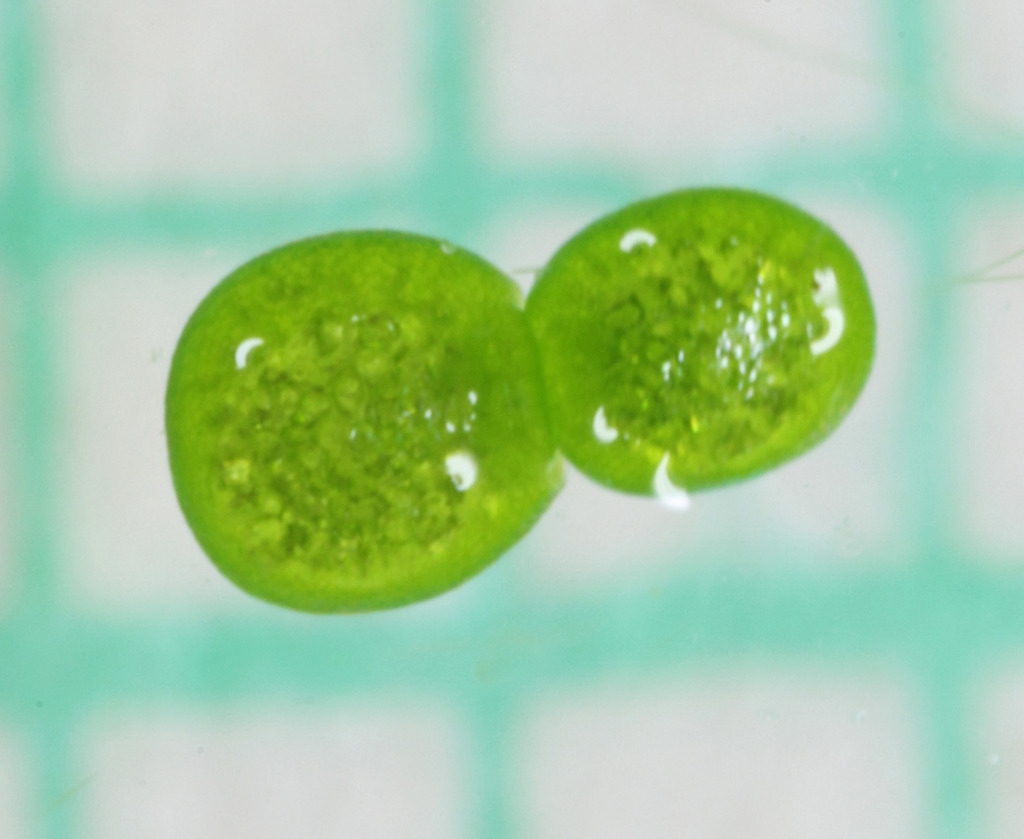
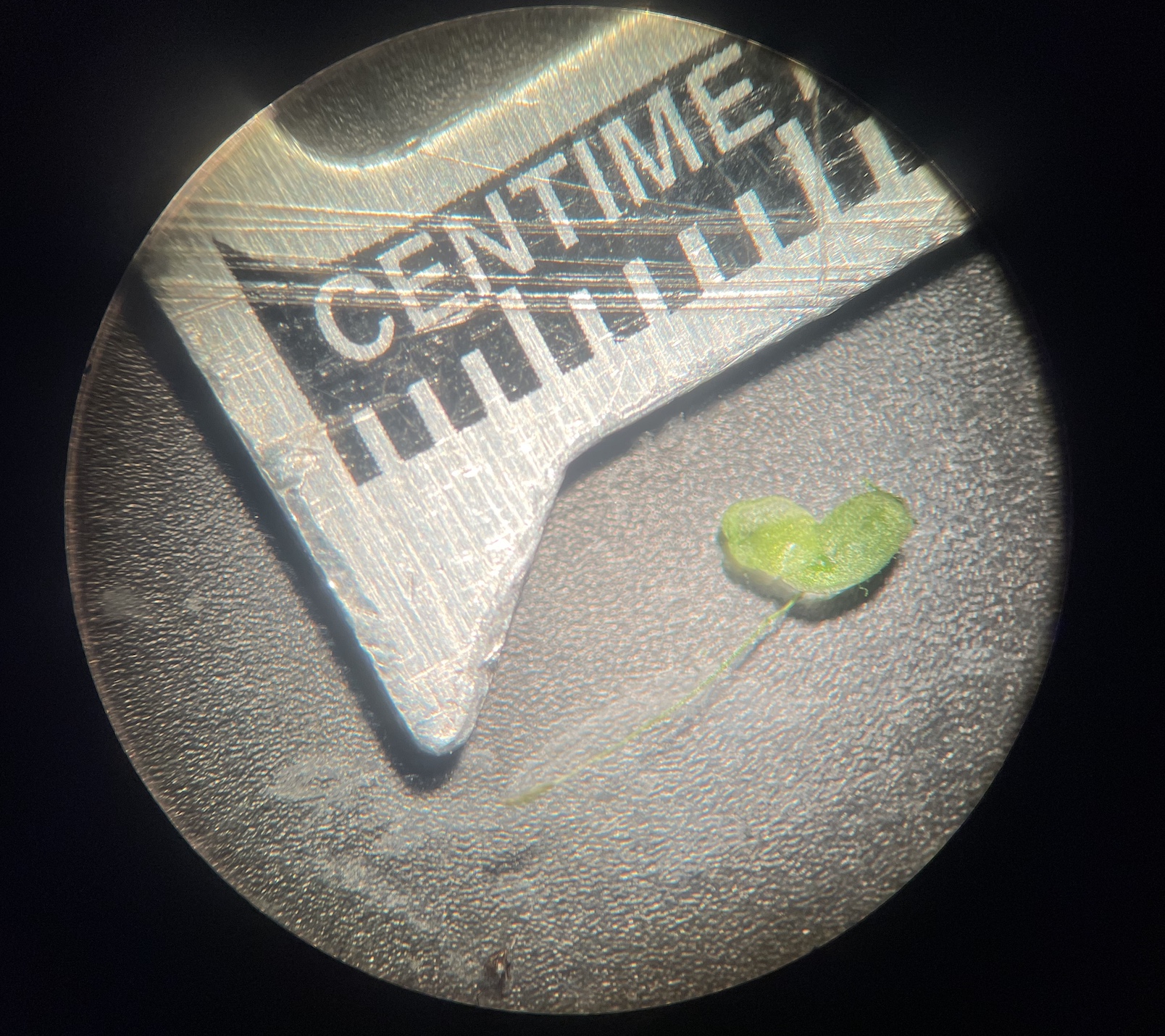
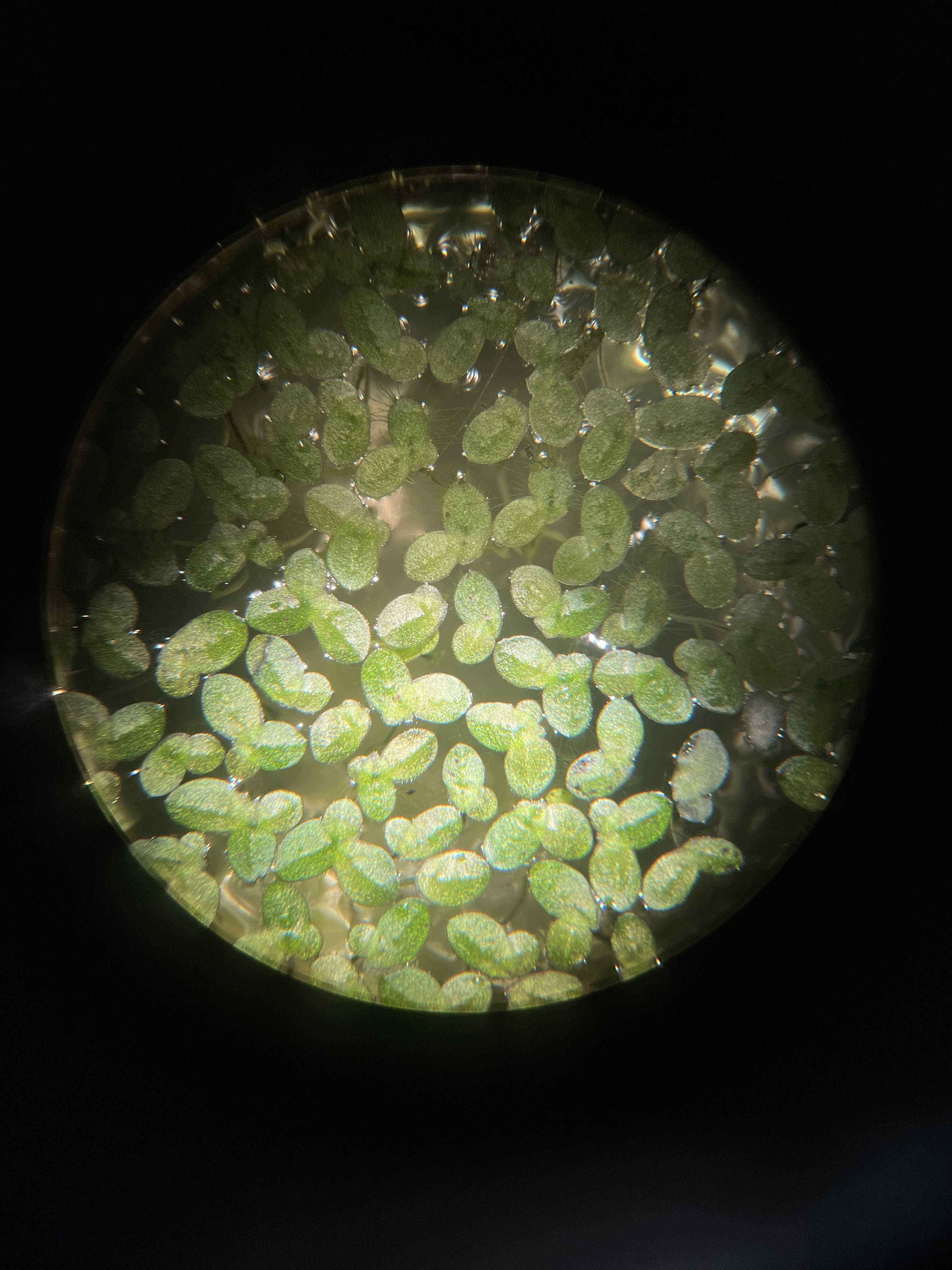
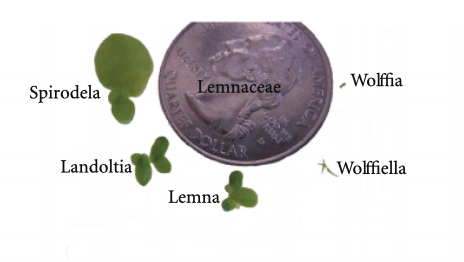
Wolffia Globosa has a lineage of many familiar ancestors in which the morphological features are most prominent. Upon visualization of a clade with wolffias closest ancestors, we deduce that size of the vegetative structure is larger in other genus ancestors. Wolffias vegetative structure can range from 0.5 to 1 millimeter in length in large grouped bunches, the next closest ancestors being landolita and lemna which average at 2 mm. The furthest of our focus spirodela then ranges around 5 mm which is 10 times bigger than wolffia. To figuratively represent the actual size to scale of these various structures we can compare it to this image next to a quarter. Another prominent morphological feature of Wolffia that differs with that of its closest genus would be the lack of root on the wolffia, versus that of spirodela, landolita and lemna.Morphological Description of Reproductive Attributes
While Mankai have undergone a simplification of their vegetative attributes from Spirodela to Wolffia, their reproductive attributes have stayed relatively the same, only changing in size to accommodate the smaller plant. Mankai propagate through vegetative reproduction, which is a type of asexual reproduction. As mankai are autogamous, the parent plant contains both a stigma and a stamen. The parent also contains a basal reproductive pouch where daughter fronds will grow upon fertilization (Armstrong, 2021). Parent plants reproduce exponentially through budding, and, under optimal conditions, are able to double their mass in roughly 48 hours (Yang et al., 2021). As mankai reproduce from November to July, their rapid growth rate and overall hardiness suggest that they could potentially be a sustainable form of plant-based protein that could be used to combat food insecurity (European Food Safety Authority, 2021).Domestication History
Wolffia has a domestication history that is widely used for a broad spectrum of uses such as production of feed, food, biofuel and biogas (Frontiers in Sustainable Food Systems). This plant being highly domesticated for broad uses is due to its high and fast reproductive rate leading to a high biomass yield. One example of the domestication variables in delineating favorable morphological features was based on differences in chemical composition of flavonoids and isoforms of allozymes. (Frontiers in Sustainable Food Systems). The original use of wolffia stemmed from the use as a farmfeed for livestock and other animals, whereas it was then selectively domesticated for modern day use in vast variable fields as shown above. One more so modern day domesticated use has been the creation of a superfood powder in which many individuals use as a superfood additive for consumption, in which the wolffias pack a high protein content therefore selected for high protein content.Cultivation Practices
Mankai grows on the surface of calm freshwater bodies of water such as ponds, lakes, and marshes. It is native many countries throughout Asia, including Thailand, Laos, India, China, Indonesia, and Myanmar. It can also be found growing natively in Hawaii and California, where it was discovered by W.P. Armstrong in 1984. Due to its rapid growth rate, Mankai is only harvested, not cultivated, by indigenous peoples living in the aforementioned Asian countries. The yearly harvest takes place twice a week from November to July (European Food Safety Authority, 2021). Nets are typically used to collect the mankai from the surface of the water. The recent commercialization of mankai has led to the utilization of aquatic farms and vertical farming, both of which utilize fertilizer, to cultivate mankai on a larger scale. According to the European Food Safety Authority (EFSA), the composition of mankai grown through vertical farming actually does differ from the composition of mankai in natural ponds. However, the EFSA concluded that these slight differences in nutritional value do not raise safety concerns regarding human consumption of mankai that is cultivated through vertical farming (European Food Safety Authority, 2021).Nutritional Value
Mankai has recently become popular in the western world due to its nutritional benefits. The entire plant is consumed. Although it can be eaten raw, it is traditionally cooked before consumption. According to a study on the protein bioavailability of mankai conducted by Kaplan et al. in 2019, Mankai contains all nine essential amino acids, namely histidine, isoleucine, leucine, lysine, methionine, phenylalanine, threonine, tryptophan, and valine, dietary fibers, polyphenols, which help to manage blood pressure levels, iron, zinc, and vitamin B12, which is important for keeping blood and nerve cells healthy (Kaplan et al., 2019). Furthermore, as mankai is more than 45% protein, when measuring by dry weight, it is currently emerging as a new substitute to animal-based protein sources (Kaplan et al., 2019).Historical Accounts and Human Experience
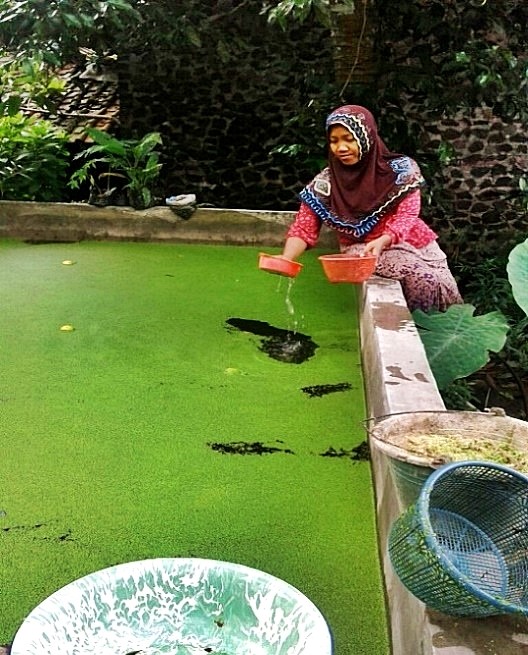
Traditionally, mankai has been treated by indigenous peoples in the aforementioned Asian countries as another vegetable that is simply incorporated into their diet. In Thailand, for example, mankai is a key ingredient used across many dishes in Isan, a type of Thai cuisine. In addition to its culinary uses, mankai has also traditionally been used as animal feed. Bu Sayemi, who is pictured cultivating mankai on the right, is a 35-year-old farmer from Indonesia. Bu Sayemi harvests nearly five kilograms, or eleven pounds, of mankai a day to feed her two cows and 20 ducks (Bu Sayemi’s Story). Aside from its culinary and agricultural uses, mankai has the potential to be a key tool in battling water pollution. Mankai has the ability to uptake “carbon, nitrogen, phosphorus, pathogens, and toxins,” which allows it to effectively act as a natural water filter (Hill, 2018). These attributes suggest that mankai could potentially be used in developing countries to address problems with poor sanitation. However, as mankai is a very invasive species, the potential ramifications of its implementation would need to first be evaluated.
References
Appenroth, K. J., Borisjuk, N., & Lam, E. (2013). Telling Duckweed Apart: Genotyping Technologies for the Lemnaceae. Chinese Journal of Appplied Environmental Biology, 19(1), 1–10. https://doi.org/10.3724/sp.j.1145.2013.00001
Armstrong, W. P. (2021, July 4). Wayne Armstrong’s Treatment of the Lemnaceae. Palomar College. Retrieved May 26, 2022, from https://www2.palomar.edu/users/warmstrong/1wayindx.htm
Bog, M., Appenroth, K. J., & Sree, K. S. (2019). Duckweed (Lemnaceae): Its Molecular
Taxonomy. Frontiers in Sustainable Food Systems, 3. https://doi.org/10.3389/fsufs.2019.00117
Bu Sayemi’s Story: Duckweed and Duck Egg Business. (2007, June 6). Biogas Rumah. Retrieved May 29, 2022, from https://www.biru.or.id/en/2017/06/06/5097/bu-sayemis-story-duckweed-and-duck-egg-business.html
Harvesting. Inland Aquatics. Retrieved May 28, 2022, from http://inlandaquatics.ca/?page_id=8
Hill, P. (2018, May 8). Duckweed Control In Wastewater Lagoons. Triplepoint Environmental. Retreived May 27, 2022, from https://lagoons.com/blog/aeration/duckweed-control/
Farabee, M. J. (2007, June 6). Plants and Their Structure II: Monocots and Dicots. Online Biology Book. Retrieved May 22, 2022, from https://www2.estrellamountain.edu/faculty/farabee/biobk/BioBookPLANTANATII.html
Klaus, J. A., Nikolai, B., & Eric, L. (2013). Telling Duckweed Apart: Genotyping Technologies for the Lemnaceae. Chinese Journal of Applied Environmental Biology, 19(1), 1–10. https://doi.org/10.3724/sp.j.1145.2013.00001
Landolt, E., Duckweed Family. Flora of North America. Retrieved May 27, 2022, from http://www.efloras.org/florataxon.aspx?flora_id=1&taxon_id=10488
Landolt E. (1994) Taxonomy and Ecology of the Section Wolffia of the Genus Wolffia (Lemnaceae). Berichte des Geobotanischen Institutes der Eidg. Techn. Hochschule, Stiftung Rübel 60: 137-151. http://doi.org/10.5169/seals-377790
Pagliuso, D. (2018, July 20). Correlation of Apiose Levels and Growth Rates in Duckweeds. Frontiers. Retrieved May 25, 2022, from https://www.frontiersin.org/articles/10.3389/fchem.2018.00291/full
Technical Report on the notification of fresh plants of Wolffia arrhiza and Wolffia globosa as a traditional food from a third country pursuant to Article 14 of Regulation (EU) 2015/2283. (2021). EFSA Supporting Publications, 18(6). https://doi.org/10.2903/sp.efsa.2021.en-6658
Wang, W., Kerstetter, R. A., & Michael, T. P. (2011). Evolution of Genome Size in Duckweeds (Lemnaceae). Journal of Botany, 2011, 1–9. https://doi.org/10.1155/2011/570319
Yang, J., Hu, S., Li, G., Khan, S., Kumar, S., Yao, L., Duan, P., & Hou, H. (2020). Transformation Development in Duckweeds. The Duckweed Genomes, 143–155. https://doi.org/10.1007/978-3-030- 11045-1_15
Yang, J., Zhao, X., Li, G., Hu, S., & Hou, H. (2021). Frond architecture of the rootless duckweed Wolffia globosa. BMC Plant Biology, 21(1). https://doi.org/10.1186/s12870-021-03165-5