Darmstadt Haggadah
Darmstadt, Universitäts- und Landesbibliothek Darmstadt, Cod. Or. 8
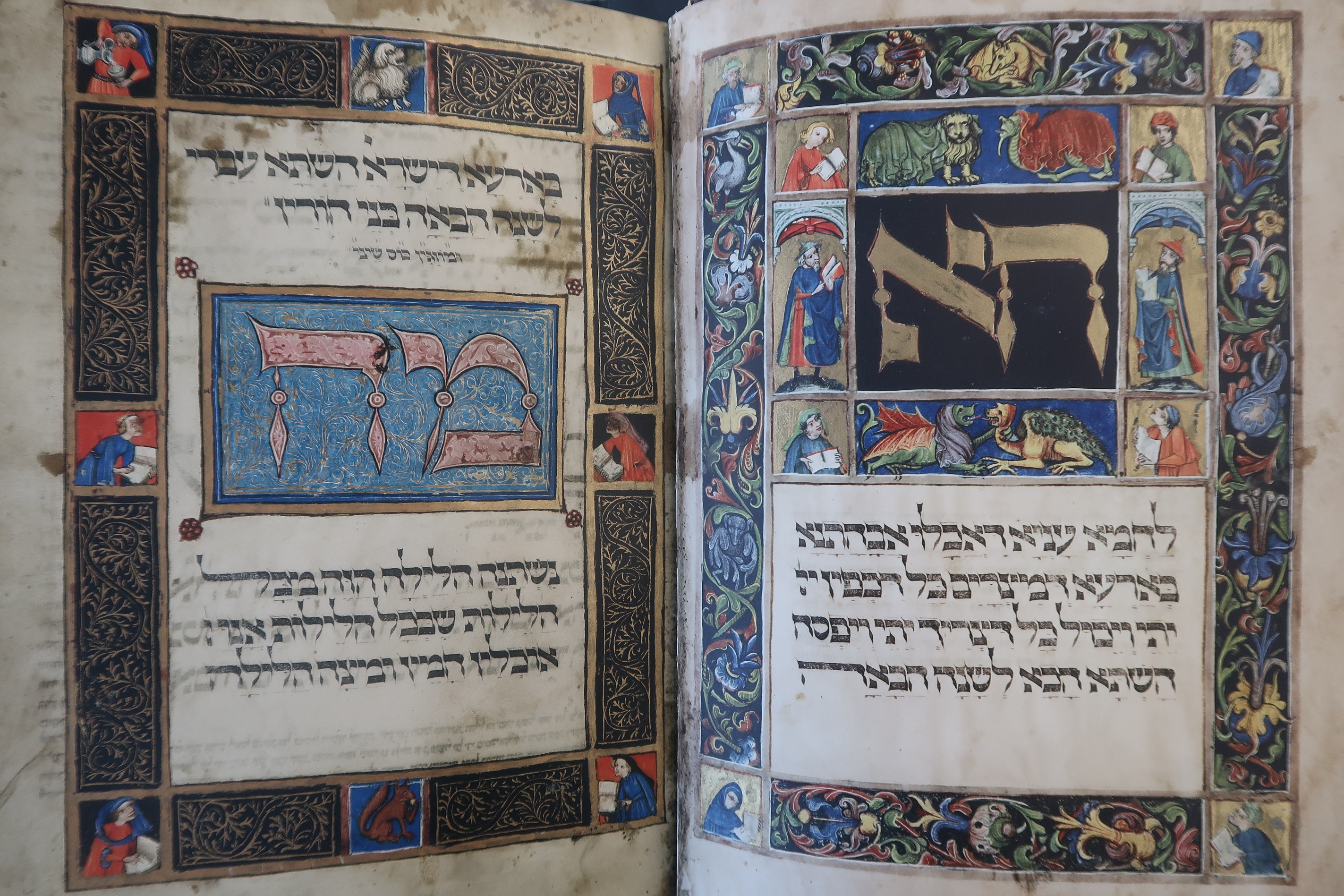
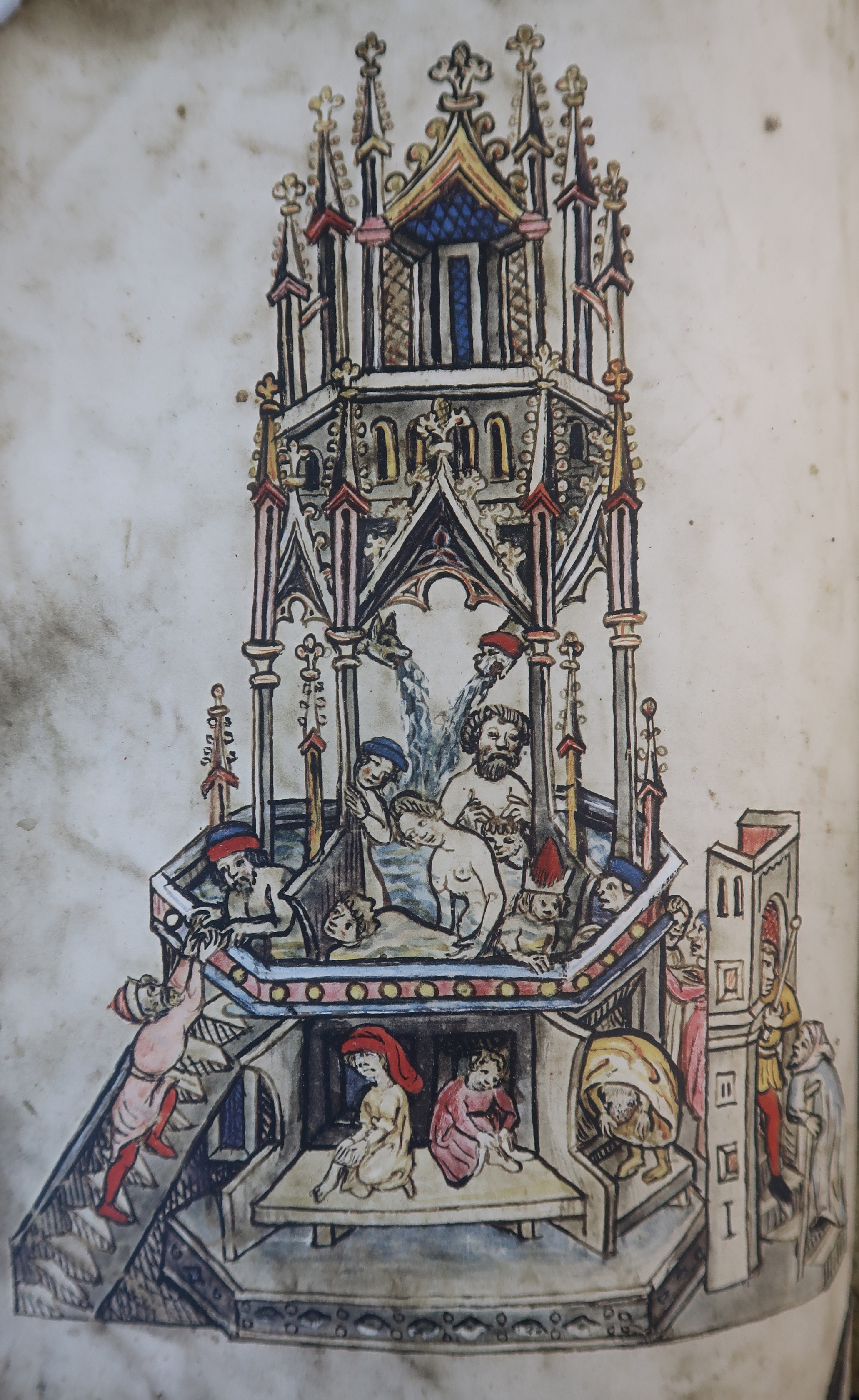
Unlike the other examples shown in this exhibition, this Haggadah manuscript does not depict narrative imagery from Exodus and preparations for the Passover Seder. Instead its most lavish pages show remarkable scenes of women and men passing open books back and forth, reading together in great towers that are not unlike Pitt’s own Cathedral of Learning.This emphasis on the communal sharing of knowledge may relate to the use of the book during the Seder, when it was read aloud in the home; perhaps the inclusion of a lady in a vivid blue dress alongside the Four Questions reflects the active role played by women in this annual ritual. The representation of women and men together becomes even more daring in the book’s final page, which shows members of both genders swimming together harmoniously in an exuberant depiction of the Fountain of Youth. Despite the lasting enigmas of its illustrations, or perhaps because of them, the book was used for many years in a wealthy Jewish household, as its many visible spots and stains make clear.
Numbered 48 of 350, Pitt’s facsimile was published in Leipzig, Germany in the 1920s and reflects a deep enthusiasm for Jewish art among scholarly and religious communities that would be brutally suppressed only a decade later. Preserved in its original gold-tooled binding and slipcase, the facsimile offers a poignant witness of this modern context as well as the time of the Haggadah’s medieval owners.
This manuscript has been fully digitized and is available at the website of the Universitäts- und Landesbibliothek, Darmstadt.