Thanks for your patience during our recent outage at scalar.usc.edu. While Scalar content is loading normally now, saving is still slow, and Scalar's 'additional metadata' features have been disabled, which may interfere with features like timelines and maps that depend on metadata. This also means that saving a page or media item will remove its additional metadata. If this occurs, you can use the 'All versions' link at the bottom of the page to restore the earlier version. We are continuing to troubleshoot, and will provide further updates as needed. Note that this only affects Scalar projects at scalar.usc.edu, and not those hosted elsewhere.
Woman Life Freedom Uprising Main MenuWoman, Life, FreedomIran, Islam & the InevitableContextualizing the Islamization of IranThe Making of the Modern WomanIcons & Personas of Woman Life FreedomOrigins of the UprisingFreedom through the FemaleThe Writing in the MarginsNasleh Zed's Youthful UprisingSoundtracking Woman Life FreedomUrban Canvases of the UprisingFeminist Placemaking of a Digital UprisingAfterlives of Woman, Life, FreedomWLF ResourcesHere you will find our sources all compiled in one placeNahid Siamdoust - UT Austin Iran Collab Networka897e5b6082169b816946b1032f8b3c01e62c1ee
Royal Missteps
1media/Screen Shot 2024-10-27 at 4.51.03 PM.png2024-10-27T12:50:15-07:00Asal Khers 8fe2adde84e1fbd5622a773ff45de6e34c901d404587118The Rise of Ayatollah Khomeiniimage_header2024-12-08T17:14:11-08:00Asal Khers 8fe2adde84e1fbd5622a773ff45de6e34c901d40The Iranian Revolution of 1979 was the result of complex and interconnected issues that built up over many years, ultimately leading to the fall of the Pahlavi monarchy (Abrahamian, 2008). This revolution didn’t happen suddenly but was shaped by a long history of economic, political, and social tensions. While international forces played a role, the upheaval within Iran was largely inevitable due to the growing dissatisfaction among the population.
A key factor driving the revolution was socio-economic inequality. Although the Shah pursued modernization and ambitious economic reforms, wealth stayed concentrated within the elite. Many in the middle class, especially the landed middle classes and bazaari merchants, became increasingly frustrated with the regime. Instead of reducing social divides, modernization deepened them, leaving much of the middle class excluded from its benefits.
The rise of Ayatollah Khomeini, a prominent Shia cleric, further inspired the people of Iran and made the idea of revolution seem possible. His opposition to the Shah’s policies and his advocacy for velayat-e faqih resonated with those disillusioned with the government. Khomeini's ability to unite various opposition groups under his religious vision played a crucial role in building momentum.
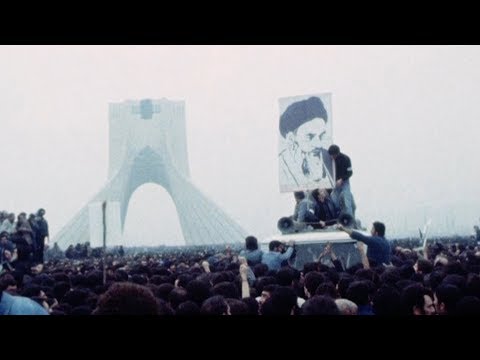
The revolution gained strength through large public protests, like the Ashura rally in December 1978, where millions marched through Tehran, showing how weak the Shah's control had become and how much influence Khomeini was gaining (Page 161). The Shah’s authoritarian rule, focus on modernization over addressing basic social needs, and reliance on support from the U.S. and Europe angered many Iranians. By establishing a one-party state and suppressing political dissent, he created even more resentment. European countries, though less directly involved, amplified the opposition's voice, with French media playing a key role in spreading Khomeini’s messages abroad. The Shah had “alienated almost every sector of society,” leading many to believe that change was the only option (Page 155).
In the end, the Shah’s failure to address the Iranian people’s grievances, combined with his reliance on foreign allies and neglect of domestic needs, created conditions that made revolution unavoidable.
1media/Iran Rev.webp2024-12-03T13:32:31-08:00Nahid Siamdoust - UT Austin Iran Collab Networka897e5b6082169b816946b1032f8b3c01e62c1eeIran, Islam & the InevitableKimia 17Contextualizing the Islamization of Iranvisual_path2024-12-09T09:13:39-08:00Kimia d55386f409648da8bd9eaf9c44c827027fe3ed43
Contents of this tag:
1media/Pahlavi Family Portrait.jpeg2024-10-23T10:52:00-07:00Hatcher Stanfordf03c763a99bfcb6c17d2215a2cf35f70ee661993The Emperor's New Clothes32Inevitability of the 1979 Revolutionimage_header2024-12-09T09:16:04-08:00Kimia d55386f409648da8bd9eaf9c44c827027fe3ed43
1media/56b77c83-c1a3-4a69-9d57-e585004eb55d.jpg2024-10-30T05:12:51-07:00Nekhat Sadeq7f57034f8fbf8b9c394f1a58a30951c2d763b0ffIslamic Revolutionary Guard Corps16An In-depth Overview of IRGC Structure & Role in Iranian Politicsimage_header2024-12-17T19:07:04-08:00Nekhat Sadeq7f57034f8fbf8b9c394f1a58a30951c2d763b0ff
12024-12-02T01:56:27-08:00The 1979 Iran Revolution: How It Happened1Forty years ago, Ayatollah Ruhollah Khomeini spearheaded a revolution that deposed a monarchy in Iran. A repressive theocracy ...plain2024-12-02T01:56:30-08:00
1media/Screen Shot 2024-12-01 at 6.19.30 PM_thumb.png2024-12-01T16:24:45-08:00Citizens rioting against the Shah1"Forty years ago, Iranians swelled with pride, hope and the expectation of a better future. " - From "The Iran Revolution at 40: From Theocracy to ‘Normality’"media/Screen Shot 2024-12-01 at 6.19.30 PM.pngplain2024-12-01T16:24:45-08:00