The Emperor's New Clothes
The 1979 revolution that overthrew the Pahlavi Dynasty was influenced by multiple issues, which culminated into what Abrahamian refers to as “overwhelming pressures”. This refers to the slow decline of popular support that began in the seventies. His strict control over the country, paired with his allyship with the US and other western powers created a revolutionary stance that was staunchly traditional in view.
However, the beginning of this downslide into revolution is usually identified by the coup of Mohammad Mossadeq by CIA and MI6, which overthrew the democratically elected Prime Minister who was hailed as a hero for Iranian nationalism after his nationalization of the oil industry. The coup put the Shah in a position of unquestionable power, which was poorly received by most of the general population. He would also continue to make more poorly received decisions, especially reforms he put in place as part of his White Revolution.
The White Revolution was an aggressive set of reforms that forcibly modernized the nation. However, these reforms would result in the loss of the key support of the rural upper class for the Shah. Poverty-stricken rural peoples, affected by the reforms, fled to the cities in droves, creating shanty towns.
Additionally, the founding of the “Resurgence Party” by the Shah further pushed away his religious supporters, and into the arms of Khomeini, who was vocally anti-regime. At this point, what kept the Shah in power was his authoritarian control. However, word of the Shah’s human rights violations and the suppression of the Iranian people began to spread, and in the face of International scrutiny, the Shah would make some key concessions in police control, which would prove fatal.
In the 70s, a thus alienated working and middle class, with newly bolstered numbers due to the rural dwellers seeking employment in urban areas, began to protest peacefully, denouncing the regimes move towards anti-republicanism, westernization, and many other trends political activists deemed a betrayal of the Iranian people. They were met with a violent response at the orders of the autocratic Shah. This did not dissuade the protestors however, and the protests increased in size and intensity, all while the Shah continued to arrogantly dismiss any idea of large-scale dissent among his subjects.


The pattern of protest and violence would crest after a devastating fire killed many in Abadan, , an event many distrustful Iranian people blamed on a police chief previously involved in the “Qom Incident” as well as after “Black Friday” in which a violent response to a protest in Tehran rendered the conflict unresolvable except through revolution. These dual tragedies marked a point of no return for the revolutionaries.
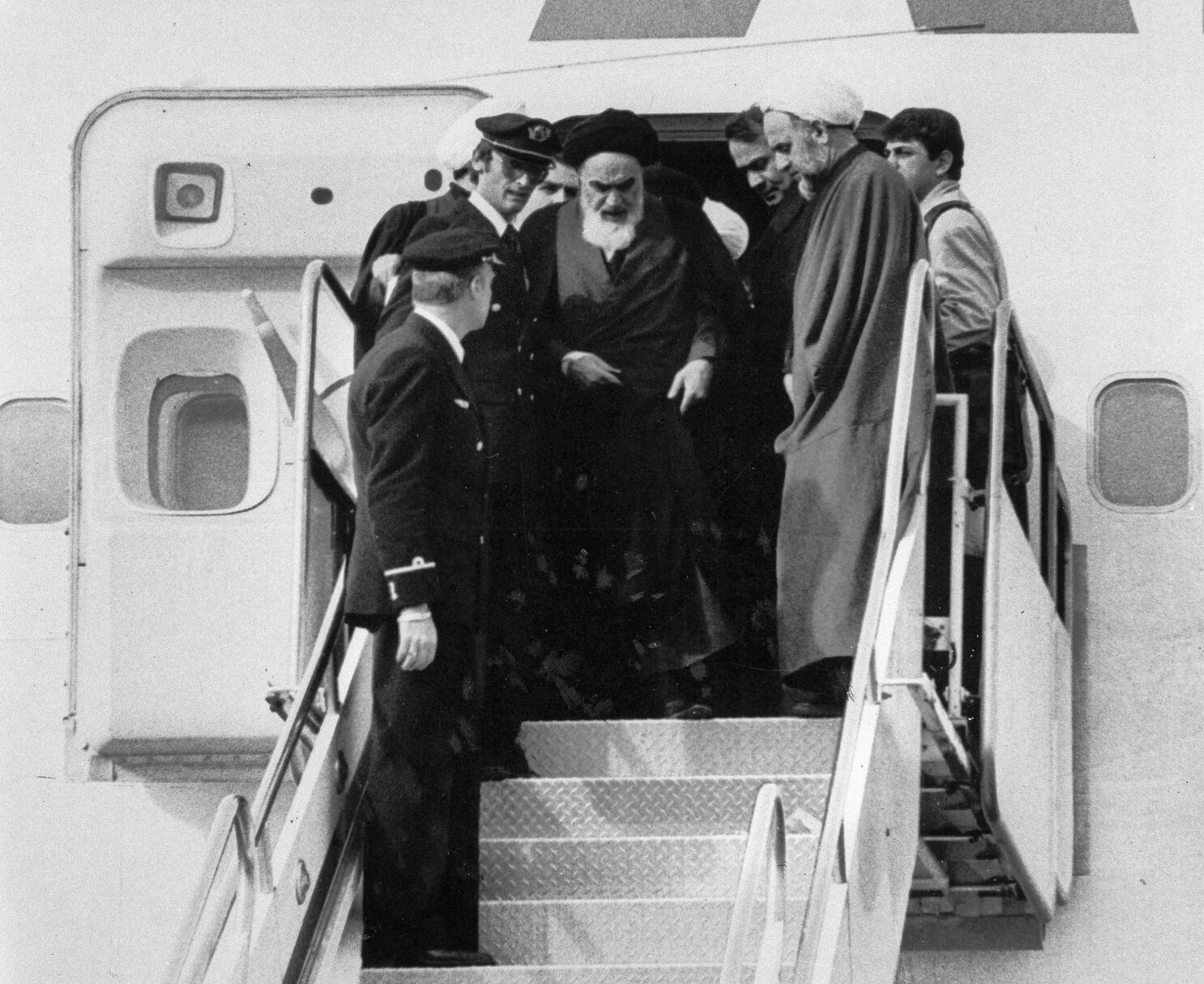
The Shah would feebly continue to reestablish law and order in the country, responding with violence and anti-Khomeini media. He made one attempt to find an agreement with the protesters with a suggestion of a tamer exchange of protest and violence, but nothing could be done. Martial law was called, and the Shah would flee Iran just as Khomeini would return from exile. . All in all, it took only two days of street fighting to topple Mohammad Reza Shah Pahlavi’s regime. In February of 1979, the country would be seized in the name of revolution and begin its transition into Islamic rule.
This revolution, like all revolutions, was not inevitable, and could have been prevented through just ruling. However, in the modern perspective, the rule of a monarchy was always going to be tenuous. Monarchy requires strict control, which a modern, educated middle class tends to find chafing. Within the context of the Shah’s inability to recognize his declining hegemony over Iran, and harsh attempts at modernization, the death of monarchy was put on a fast track.
Of course, the United States and several other European countries certainly played a role in this. The spreading “American model” of culture was taking hold in Iran, as well as other parts of the middle east, which frustrated more traditional Iranians who preferred an indigenous lifestyle and cultural foundation. This falls in line with the Islamic rule set in place by the revolution, which signaled a shift towards traditional foundations. Moreover, the US’ decision to harbor the Shah for his cancer treatment would influence a small group of protestors to seize control of the US embassy in Iran, beginning the hostage crisis.

- Hatcher Stanford and KC
References
Abrahamian, Ervand. “The Islamic Republic.” Chapter. In A History of Modern Iran, 155–95. Cambridge: Cambridge University Press, 2008.
This page has paths:
- Hatcher Stanford Hatcher Stanford
- KC Kimia
- Iran, Islam & the Inevitable Kimia