Charlotte Web choir 2020
1 media/Charlotte Web Choir 2020 copy Medium_thumb.jpeg 2023-07-04T12:04:55-07:00 Alisa Clapp-Itnyre d22bb56f3c8ebb3d7e0537bc1b85da2502038efe 43370 1 plain 2023-07-04T12:04:56-07:00 Alisa Clapp-Itnyre d22bb56f3c8ebb3d7e0537bc1b85da2502038efeThis page is referenced by:
-
1
2023-07-04T11:43:55-07:00
The Helpless Lamb (pig)
9
gallery
2024-06-22T11:18:36-07:00
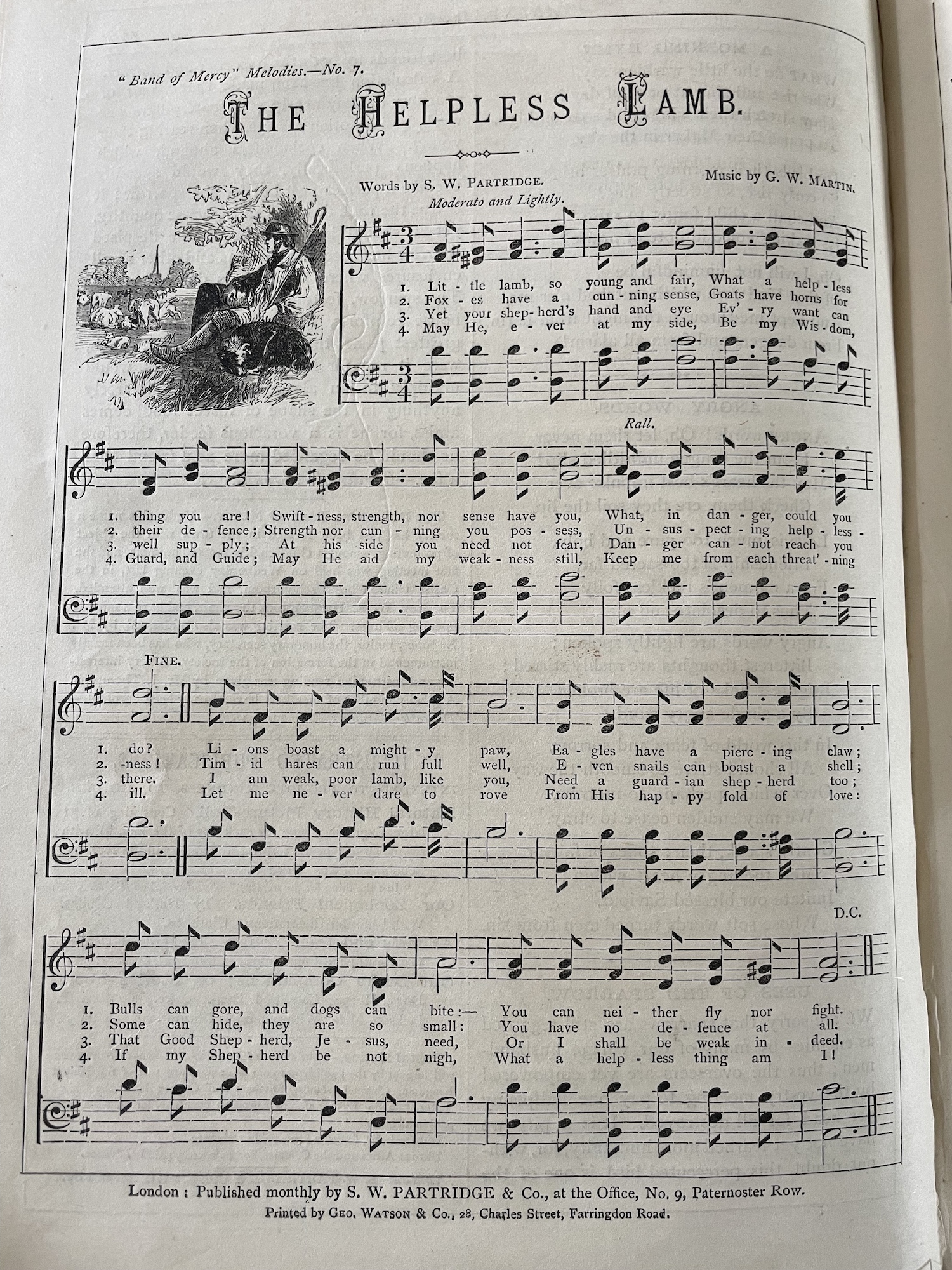
This audio recording was made by a 2020 Bands of Mercy choir I assembled to sing pre-show music for the Richmond Civic Theatre's production of Charlotte's Web that I directed, March 2020 (the pandemic unfortunately shut us down the weekend we were to open). Here is a version of "The Helpless Lamb" which we adapted to "The Helpless Pig"! (also with parental and singers' permissions).
The original song, "The Helpless Lamb," invokes the pastoral life that most Victorian children would not have known, in both nostalgic and spiritual ways, such as “The Helpless Lamb,” from The Band of Mercy Advocate, No. 7, August 1879. The engraving insert establishes the pastoral tone by showcasing a Victorian-dressed shepherd with his shepherd’s crook and faithful dog surveying a flock of sheep, a church steeple in the distance registering the Christian parallels with Christ the Good Shepherd. The song itself, with words by S. W. Partridge and music be G. W. Martin, is an interesting mix of amusement and didacticism. The tune begins “moderato and lightly” in the major key of D, then moderates to the minor for the Chorus, making its message more dramatic. Focused on the helplessness of the “little lamb,” it spends several verses, often in the more intense-sounding Chorus and with close tetrameter couplets, contrasting other animals’ more auspicious ferocity (which also paints them as less sympathetic, more “scary”): “Lions boast a mighty paw, / Eagles have a piercing claw; / Bulls can gore, and dogs can bite; / You can neither fly nor fight” (v. 1). The lighter melody of the verses undergirds the thematic material: first, of the lamb’s deficiencies, “swiftness, strength, nor sense have you” (v. 1) and “Strength nor cunning you possess” (v. 2). The third verse brings the shepherd’s protection into view: “At his side you need not fear, / Danger cannot reach you there” with its Chorus finally connecting the message to a child-singer: “I am weak, poor lamb, like you, / Need a guardian shepherd too; / That Good Shepherd, Jesus, need, / Or I shall be weak indeed.” The final verse becomes a hymn-like appeal to the Divine: “Keep me from each threat’ning ill. / Let me never dare to rove / From His happy fold of love” (v. 4).
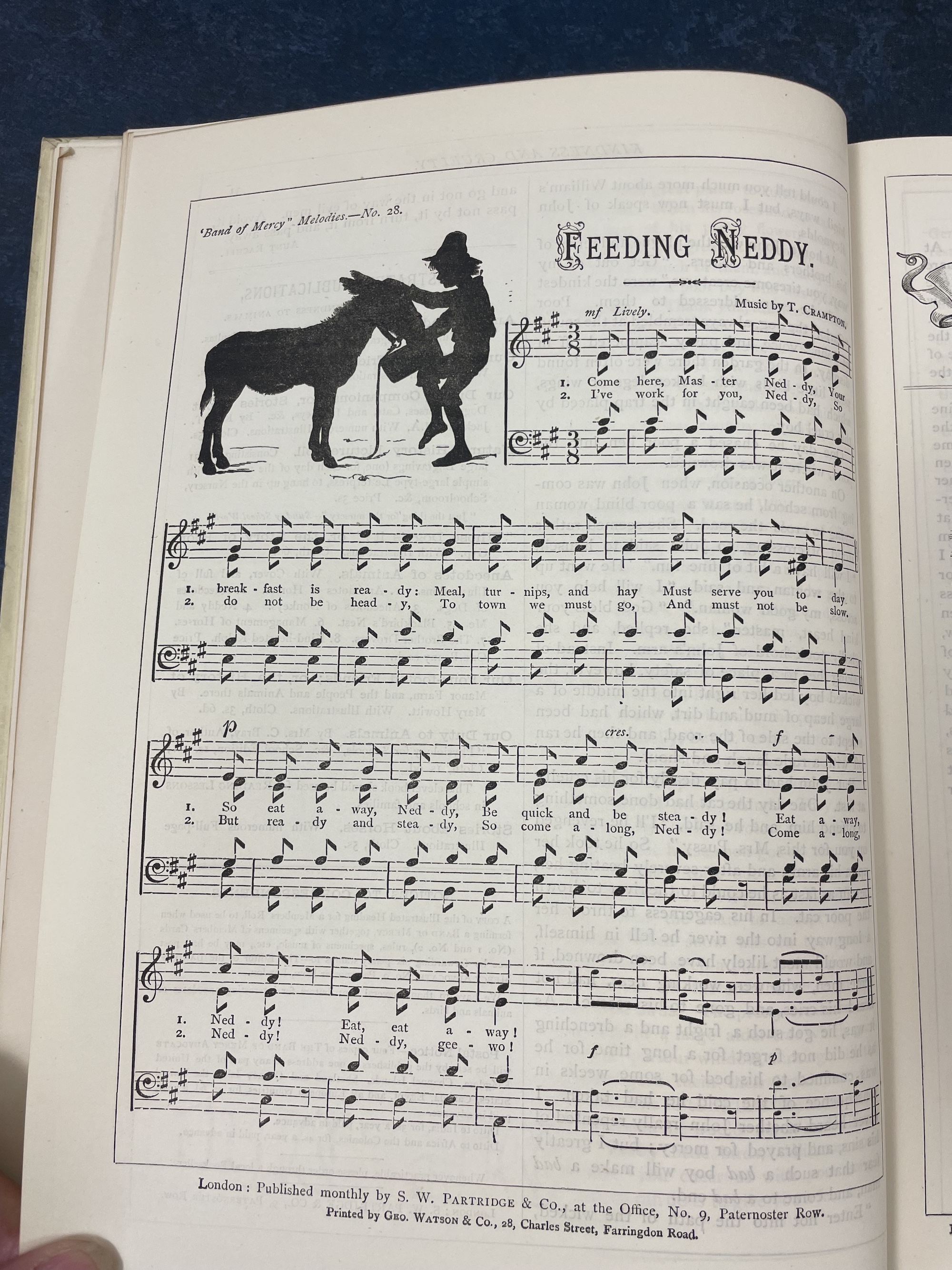
- 1 2024-06-22T10:53:03-07:00 Feeding Neddy 5 gallery 2024-06-22T11:20:29-07:00 This song was also re-titled and recorded for our production of Charlotte's Web Stage One, Richmond, IN in 2020, with our Bands of Mercy singing "Feeding Master Templeton" in place of "Feeding Neddy" as we honored the hungry rat in the production!But the original song, from The Band of Mercy Advocate, Vol 3, 1882, reminds children that work animals truly need humans to remember to feed them: "eat away, Neddy, Be quick and be steady!" with a bouncy eighth-note tune! With music by T. Crampton, and an illustration of a young boy feeding need, this song gives vital messages about animal welfare in an engaging format for