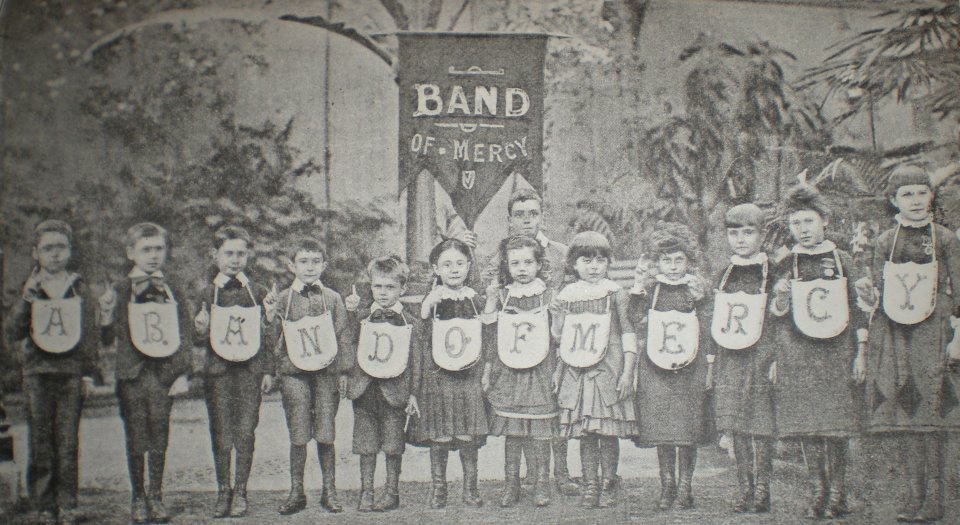
1890 Bands of Mercy
1 media/nmas_band-of-mercy-c1890_thumb.jpg 2023-06-20T07:58:17-07:00 Beth South 9cba9d75a82488a4e4c1af1d58b23357ce6b4889 43370 1 Photo from Be Kind: A Visual History of Humane Education https://bekindexhibit.org/exhibition/bands-of-mercy/ plain 2023-06-20T07:58:18-07:00 Beth South 9cba9d75a82488a4e4c1af1d58b23357ce6b4889This page is referenced by:
-
1
media/DSCN3925.JPG
2023-06-12T10:30:35-07:00
Part 3: Animal Welfare (Bands of Mercy) Songs
64
image_header
1408994
2024-06-22T11:11:14-07:00
Bands of Mercy: An Introduction
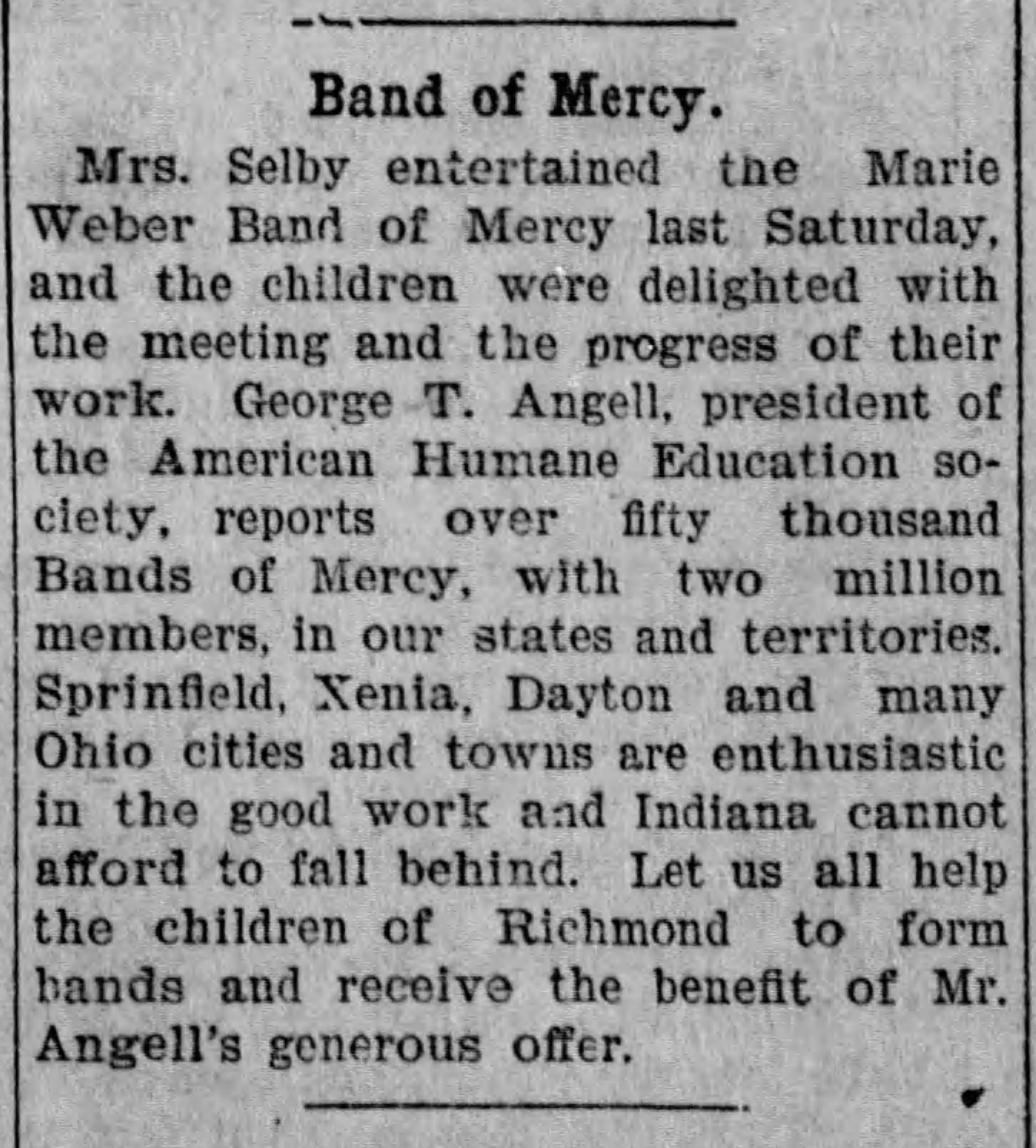
The Animal-Welfare Movement of the 19th century was powerful and pervasive. Animals had been used for food and work for centuries but it seems that only when part of the population moved to the cities and away from agrarian lifestyles reliant upon animals were they more sensitive TO the often abusive uses of those animals. The Royal Society for the Prevention of Cruelty to Animals (RSPCA) was established in England in 1824; its concerns led to the first important legislation on behalf of animals: Martin's Act of 1835 which made cattle abuse, bull-baiting, and dog carts illegal. In 1866 the American version--the American Society for the Prevention of Cruelty to Animals (ASPCA)--was established. Realizing that children needed to be brought into the movement, Catherine Smithies established the first Band of Mercy in 1875 in Earlham Grove, England. In 1882, George T. Angell and Rev. Thomas Timmins brought the Bands of Mercy to America. If England had 800 Bands by the end of the century, America far outpaced them with 27,000 across the country (Clapp-Itnyre, British Hymns 213). Bands met weekly or monthly to learn humane treatment of animals, sing songs in their defense, and learn facts and political actions. Taking the pledge was paramount to these commitments: "We agree to do all in our power to protect animals from cruel usage, and to promote as far as we can their humane treatment." The Band of Mercy Advocate was a journal established in 1879 by Mrs. Smithies' son Thomas Smithies to spread awareness to a young audience: complete with beautiful engravings of animals, stories of humane treatment of animals, poems by children, and a song in every issue, it must have been a treat to read! Richmond, Indiana, has been the site of at least three Bands of Mercy. The first was established during the original movement by Earlham College Quakers, in 1888.
In 2019, Jessica Raposo and I re-activated the Band for a two-week Band of Mercy Camp to learn the traditions and songs of the organization. Many of those songs were recorded and are found at the bottom of this page. We then took our songs on the road to sing at a concert for conference goers at the 2019 Children's Literature Association's Annual Conference I co-hosted, in Indianapolis: the two images on this page are from that hotel venue.
Primary Sources:
Sarah J. Eddy, comp. Songs of Happy Life: For Schools, Homes and Bands of Mercy. Providence, R. I. and London: 1897.
Volume 1, Bands of Mercy Advocate (London, 1879-1881). Owned by the British Library and a few other libraries globally.
For Further Reading:
Clapp-Itnyre, Alisa. “Advocating for the Least of These: Empowering Children and Animals in The Band of Mercy Advocate." Chapter 5 in Animals and Their Children in Victorian Culture. Ed. Brenda Ayers and Sarah E. Maier. NY and London: Routledge, 2020. Pg. 87-105.
Clapp-Itnyre, Alisa. Chapter 5, "Reforming Society: Missionary, Bands of Hope and Bands of Mercy Hymns." British Hymn Books for Children: Re-Tuning the History of Childhood. Ashgate Studies in Childhood Series: 1700-present series Claudia Nelson, series editor. Surrey, UK: Ashgate (now Routledge), 2016.
(all children’s voices and images used with parental permission)
2019 Band of Mercy Song-Camp Singers :
Caleigh Koechlein, Grace Stewart**, Melody Stewart, Mikayla Petersheim*, Caleigh Collins*, Molly Fuller, Matilda Fuller, Cecelia Hargrove, Topanga Stingley, Lea Ramsey, Hailey Day, Taytem Rivera, Harleigh Raduenz, Karaline Byers*, Alice Couch, Lucy Couch (*member of the 2015 and/or 2017 Victorian camps!)Co-Directors: Alisa Clapp-Itnyre, Jessica Raposo
Pianist: Madeleine Demetriades
Sound Engineer: Chris Robinson
Costumer: Sharon Walker
Location: Central United Methodist Church, Richmond, IN
Recordings are also archived in IU's Media Collections Online.
All song scores featured on this site are from Songs of Happy Life: for Schools, Homes, and Bands of Mercy by Sarah J Eddy (1898), from the open-access website Internet Archive.