Pets Collage 2
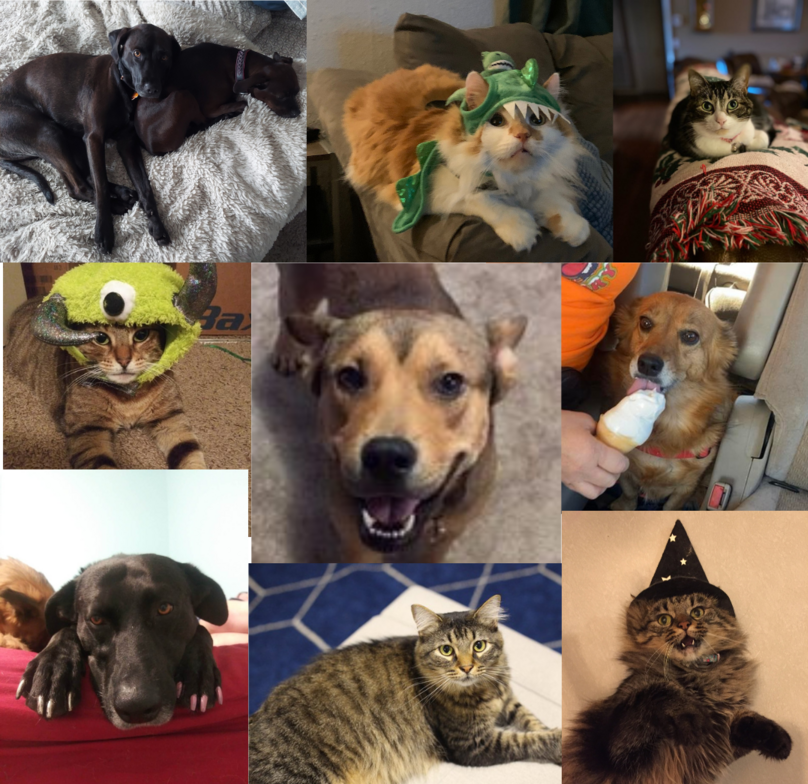
1 media/Housing_Inequality_2_75_thumb.png 2022-12-06T17:45:37-08:00 Katie Cline 512add1943f75cbd770d4788dcdea90b706922c4 41237 1 A collage of pets. Top row from L to R: two black labrador retrievers laying together on a gray blanket, a long-haired orange and white cat waering an alligator hat, and a gray and white tabby cat lating on the back of a couch; middle row L to R: a brown tabby cat wearing a monster costume; a brown dog looking up at the camera, a brownish-red dog licking a vanilla ice cream cone; bottom row: a balck dog with painted nails, a medium-hair brown tabby lays on a blue bedspread, and a long-haired brown tabby wearing a wizard's hat with starts lays on its back, looking at the camera with its mouth open plain 2022-12-06T17:45:37-08:00 Katie Cline 512add1943f75cbd770d4788dcdea90b706922c4This page is referenced by:
-
1
2022-11-29T09:04:37-08:00
Pets & Housing: It's "Ruff" - Conclusion
7
Animals are a heavily integrated into human’s lives as companions, service animals (like guide dogs and medical assistance dogs), and more general assistance animals regardless of gender, race, socioeconomic class, or housing situation. What many people do not realize, unless they experience it firsthand, is the ways in which our relationship to pets can affect our access to housing opportunities.
plain
2022-12-12T12:31:43-08:00
Animals are a heavily integrated into human’s lives as companions, service animals (like guide dogs and medical assistance dogs), and more general assistance animals regardless of gender, race, socioeconomic class, or housing situation. What many people do not realize, unless they experience it firsthand, is the ways in which our relationship to pets can affect our access to housing opportunities.
The short essays presented in this project begin to describe the multitude of ways that pet ownership engages with and sometimes exacerbates issues of housing inequality and discrimination. In general, studies have found that a person’s race plays a significant factor in their ability to find affordable, quality, pet-friendly housing. Younger tenants, especially the large pet-owning demographic of millennials, may face difficulty finding pet-friendly housing that aligns with their lifestyle, and because of economic circumstances, this group will likely be living in rental properties for longer before purchasing a home.
One way around navigating rental properties’ pet policies, be it a no-pet policy or breed and size restrictions, is to have a pet certified as an emotional support animal (ESA); because these animals are protected through the U.S Department of Housing and Urban Development (HUD), a person with an emotional support animal cannot be denied housing because of their animal. However, the sheer number of ESAs being registered have led critics to be skeptical of whether these numbers represent an actual need or if people are taking advantage of the protection offered by HUD. This oversaturation of ESAs can harm those who suffer from mental illness, as it delegitimizes mental health concerns for which pets can provide genuine mental and emotional comfort.
Finally, this project addresses how pets play a role in the lives of people experiencing homelessness. While pets provide unhoused people with the same mental and emotional comfort that ESAs provide their owners, studies show that having a pet can be a barrier to a person experiencing homelessness in finding stable housing, as few homeless shelters allow pets, and the owner may be reluctant to leave the pet for the day while they go to work—or, as we’ve seen—pet-friendly housing may be too difficult or expensive to come by.
Scholars developing new work from this project may choose to look more deeply at correlations between pet ownership and housing discrimination, the ways in which to improve access to temporary pet sheltering for people experiencing homelessness, the intersections of socioeconomic class, race, and pet ownership, the effects of ESAs in college housing environments, and more. Further research into these issues may contribute to the growing awareness of issues affecting housing availability for millions of people.