This page was created by Andre John Adams. The last update was by William Armacost.
The Coachman
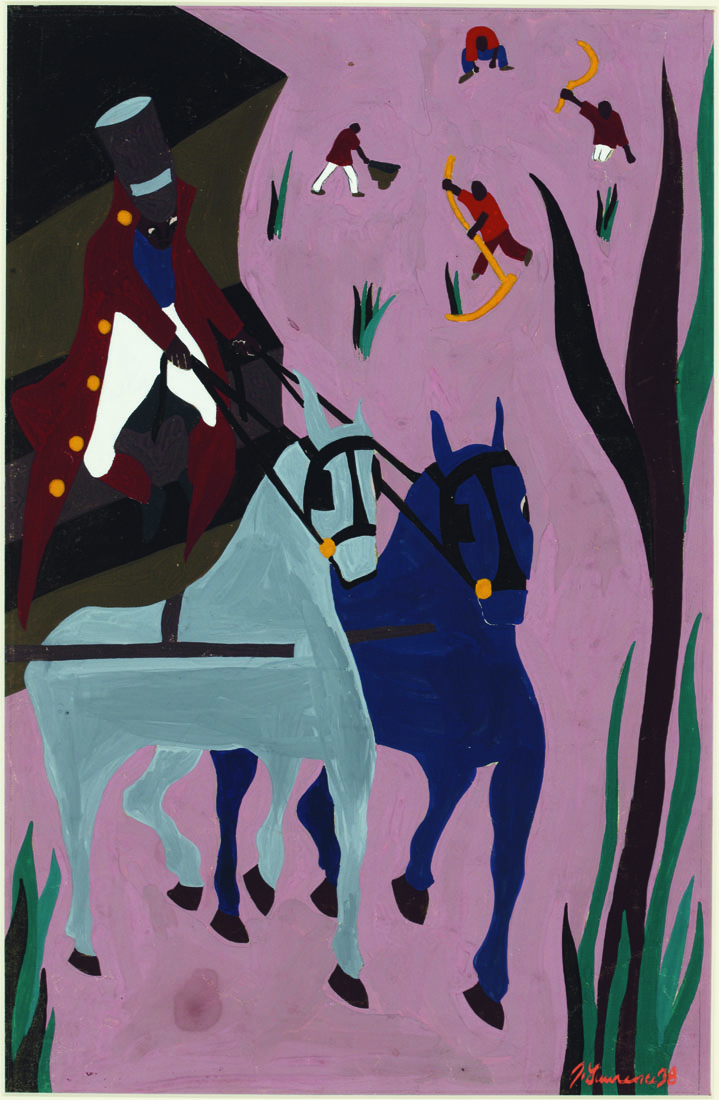
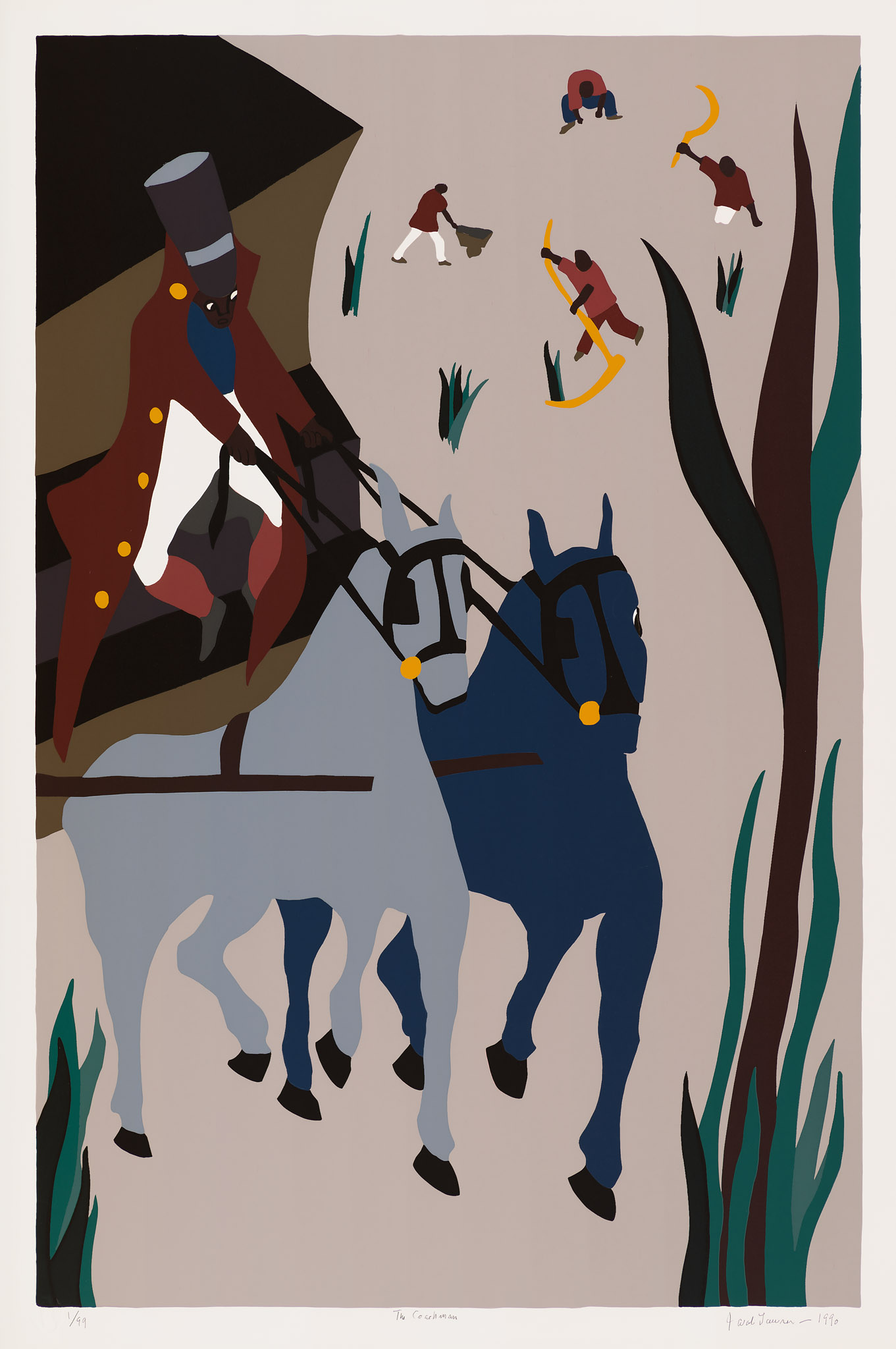
Left: In his early manhood, his seemingly good nature won for him the coachmanship for Bayou de Libertas, 1973. His job as coachman gave him time to think about how to fight slavery. During this time he taught himself to read and write (1937) / Right: The Coachman (1990)
The contrast between the dark form of the coach and the pale background highlights the tension between servitude and the aspiration for freedom. The rhythmic composition alludes to Toussaint L'Ouveture's formal role as a coachman, reflecting the contradictions of rising within Colonial Haiti's oppressive system. While this position enabled him to develop literacy and plant the seeds of rebellion, it also created a divide between him and those he sought to liberate. The imagery of workers in the fields emphasizes L'Ouverture's complex relationship with the enslaved class, whose labor sustained the plantation economy and whose resistance would fuel the revolution.
This page has paths:
- Paintings to Prints Ava Echard