Thanks for your patience during our recent outage at scalar.usc.edu. While Scalar content is loading normally now, saving is still slow, and Scalar's 'additional metadata' features have been disabled, which may interfere with features like timelines and maps that depend on metadata. This also means that saving a page or media item will remove its additional metadata. If this occurs, you can use the 'All versions' link at the bottom of the page to restore the earlier version. We are continuing to troubleshoot, and will provide further updates as needed. Note that this only affects Scalar projects at scalar.usc.edu, and not those hosted elsewhere.
12021-11-03T13:52:43-07:00Grace Morrissey8ef6d0e9b26eb4a67434bb9aafcf76ea929d67ce3944714plain2022-06-13T11:43:37-07:00Brooke Hendershottb0a907cd0f989ee79e94592378a1545647719cfbBy Grace P. Morrissey '22
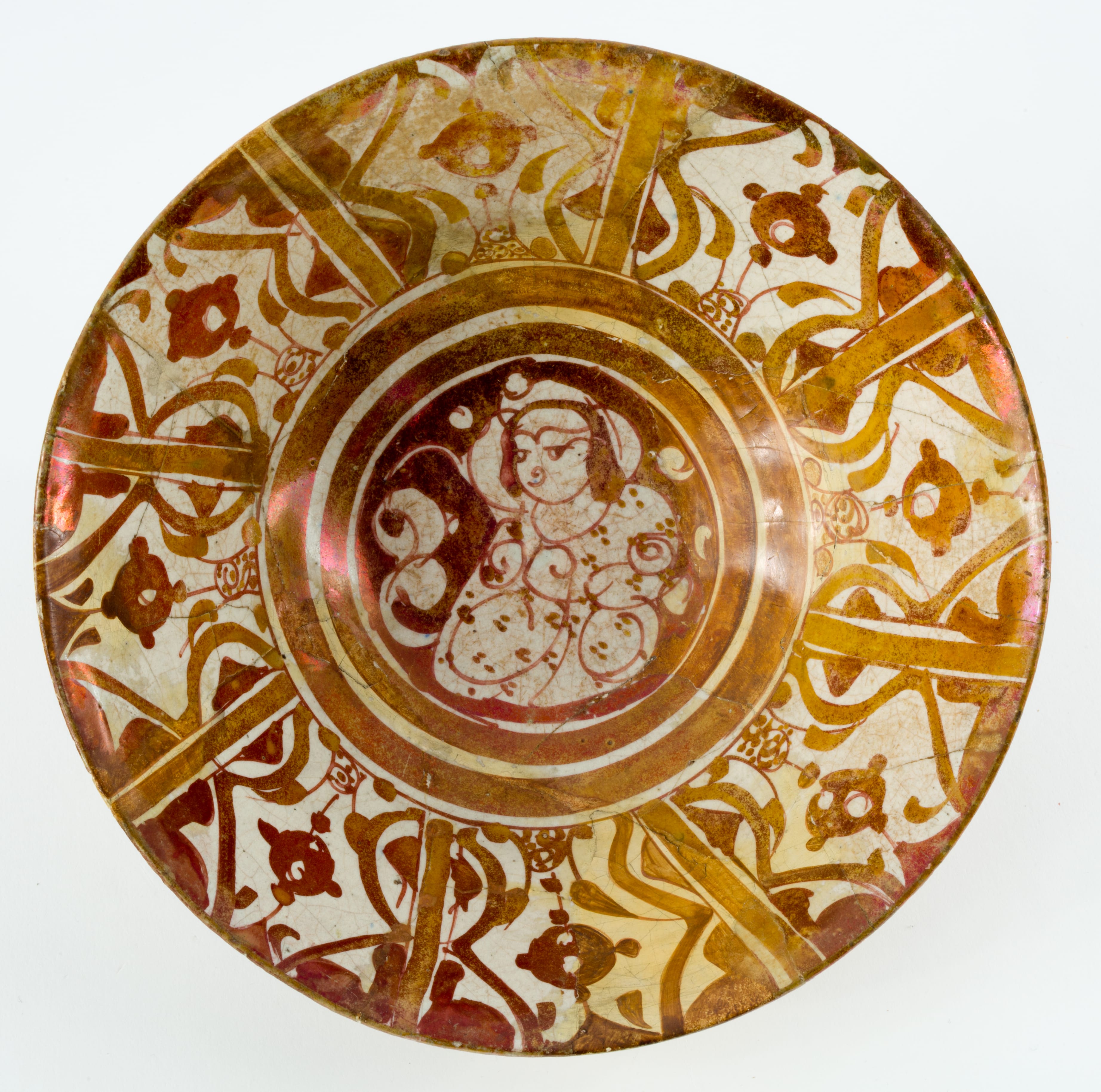
This bowl's connection to the Crusades is not visually evident, there is no use of religious imagery, no clear evidence to suggest a specific transfer from Muslim merchant to European Crusader, and no presumed change in its use. Instead this bowl asks viewers to consider what is valued across cultures; namely beauty and money.
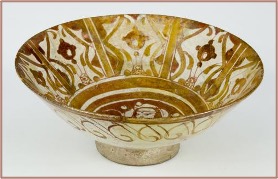
Visually striking, the Worcester Art Museum's Figural Islamic bowl is characteristic of Islamic ceramics as seen in its dynamic geometric and figural patterning, bold reserve coloring, and luster sheen. This figural bowl's visual rhythm and shimmering surface were valued by Islamic courts and Crusaders alike, simply in terms of beauty. However lusterware bowls also had financial value. Technically complex, time-intensive, and requiring the use of specialized materials, these ceramic wares were expensive to make and in limited supply. Recognized as prestigious throughout the Mediterranean, and even secondary lusterwares sold for good prices. This bowl was also universally valuable in terms of its use. Abbasid Caliphs and Crusaders alike, used these bowls for luxury feasting; eating and storing food in them the same way we use bowls today.
For traveling Crusaders, ceramics such as this lusterware bowl were valued for both their visual connotations and financial value. The bowl’s aesthetic exoticism and visual connection to the Holy Land would have made this bowl an important souvenir for a returning Crusader. Cross-cultural objects like this lustreware bowl would have visually referenced a Crusader’s travels reminding them of the mix of cultures and peoples they encountered while on Crusade. However lusterware bowls luxury status and innate monetary value also would have attracted European Crusaders. Both Islamic and Crusader cultures recognized the symbolic power of lusterware, and used it to connote power, prestige, and wealth. The shimmering iridescence that gave this bowl its prestige with Medieval viewers, continues to attract onlookers today. Evidently everyone is intrigued by an everyday object that has been dipped in the light of the sun.
This page has paths:
1media/WAM 1918.18 Bowl.jpgmedia/OB-Fig-133-BAL_7243574-min.JPG2021-11-03T14:02:37-07:00Grace Morrissey8ef6d0e9b26eb4a67434bb9aafcf76ea929d67ceBowl with a Seated Figure (WAM 1918.18)Brooke Hendershott30plain2023-01-17T14:48:08-08:00Brooke Hendershottb0a907cd0f989ee79e94592378a1545647719cfb
This page references:
1media/Elipse WAM 1918.18 Bowl 2_thumb.jpg2021-11-03T13:37:26-07:00Ellipse Figural Bowl WAM 1918.183Lusterware bowl with figure, from Rayy (Iran), thirteenth century. Ceramic (7.9 × 20.3 cm). Worcester Art Museum, 1918.18. Side viewmedia/Elipse WAM 1918.18 Bowl 2.jpgplain2022-06-09T07:52:52-07:00
1media/Screen Shot 2021-11-09 at 6.19.25 PM_thumb.png2021-12-13T12:33:28-08:00Figural WAM ruler roundel detail2Detail: figural rulermedia/Screen Shot 2021-11-09 at 6.19.25 PM.pngplain2022-06-07T12:29:48-07:00
1media/OB-Fig-133-BAL_7243574-min_thumb.JPG2022-06-10T08:16:35-07:00figural bowl hi q1Lusterware bowl with figure, from Rayy (Iran), thirteenth century. Ceramic (7.9 × 20.3 cm). Worcester Art Museum, 1918.18. Overhead viewmedia/OB-Fig-133-BAL_7243574-min.JPGplain2022-06-10T08:16:36-07:00