Thanks for your patience during our recent outage at scalar.usc.edu. While Scalar content is loading normally now, saving is still slow, and Scalar's 'additional metadata' features have been disabled, which may interfere with features like timelines and maps that depend on metadata. This also means that saving a page or media item will remove its additional metadata. If this occurs, you can use the 'All versions' link at the bottom of the page to restore the earlier version. We are continuing to troubleshoot, and will provide further updates as needed. Note that this only affects Scalar projects at scalar.usc.edu, and not those hosted elsewhere.
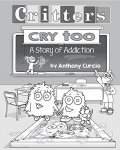
Critters Cry Too: A Story of Addiction by Anthony Curcio
12016-12-04T16:47:57-08:00Joy Wohlman Boyce25d2c599a587d37adfbc3f0183489673ec22e174134425A picture book for ages three and up to help with understanding addiction.plain2016-12-04T17:32:18-08:00Joy Wohlman Boyce25d2c599a587d37adfbc3f0183489673ec22e174Imagine you are five years old and you have a big brother who is coming home, throwing up, being mean, losing weight, and doing things that just are just not normal. What is going on? Why is he acting this way? Critters Cry Too warms the heart with a message for children and parents. Critters, like people, get "madsad" and can fall victim to boredom. When something new-- a Whateveritwas-- comes along, some Critters are okay with it while others get really sick from it. Dr. Rhymer, the roach, tells the story of Calvin the Critter as he finds his way out of Zapatos and shows that some other Critters can find their way out, too.
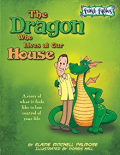
There are not many children's books that address addiction in the format of a story. Only two others, come close: An Elephant in the Living Room (1994) by Jill Hastings and Marion Typpo and The Dragon Who Lives at Our House by Elaine Mitchell and Norris Hall.
An Elephant in the Living Room has good information about alcoholism, but is a little long for this age group. However, it is a bit immature for an older child.
Dragon Who Lives at Our House also addresses alcoholism and is a bit confusing in its use of metaphor. The dragon is alcohol, and is cute. The dragon appears at barbecues and goes to Dad's office. It's not quite clear what the dragon really is. However, it is a resource that may be used along with Critters Cry Too.
Moving forward, let's see what activities and library programming ideas there are to go along with a very serious subject. Art Therapy is always a good way for a child (and adult) to express him or herself. The nice thing about these projects is you do not have to be an artist or social worker to provide a meaningful program or activity.
This page has paths:
12016-12-03T19:11:21-08:00Joy Wohlman Boyce25d2c599a587d37adfbc3f0183489673ec22e174Introduction to Youth and AddictionJoy Wohlman Boyce6If adults do not understand, how can children understand...and cope?plain2016-12-10T16:21:27-08:00Joy Wohlman Boyce25d2c599a587d37adfbc3f0183489673ec22e174